Trump’s former personal lawyer appears on track to become attorney general despite reservations over deal withdrawing ‘anti-weaponization fund’Critics denounce Blanche deal to halt Trump slush fundSign up for US Breaking News emailThe White House has called an emergency...
Trump’s former personal lawyer appears on track to become attorney general despite reservations over deal withdrawing ‘anti-weaponization fund’
The White House has called an emergency summit of artificial intelligence business leaders on Tuesday to finalize details of a voluntary compliance system for safety breaches, following reports that two major AI tools had breached their digital containment and hacked external computer systems.
Anthropic reported last week that models of its Claude tool successfully hacked into the infrastructure of three separate companies during red-teaming tests by exploiting weak passwords and unauthenticated endpoints. Anthropic said an external evaluation partner mistakenly granted the testing agent unfiltered internet access.
Minister tells reporters least 75 people died after EU ministers meet to discuss response to the crisisMeanwhile, the European Commission said it was “monitoring very closely” the situation in Bulgaria, Hungary and Romania as the region faces an energy crunch caused by the...
Minister tells reporters least 75 people died after EU ministers meet to discuss response to the crisis
Meanwhile, the European Commission said it was “monitoring very closely” the situation in Bulgaria, Hungary and Romania as the region faces an energy crunch caused by the ongoing heatwave and drought.
Energy spokesperson Anna-Kaisa Itkonen said “the low Danube levels will clearly have an impact on nuclear generation along the route,” and this “concerns several member states.”
The vocal vaccine sceptic and wife of Trump’s deputy chief of staff turned to the former US science adviser when she was worried about Covid. Now, she’s claiming it was a cunning planYou should keep your friends close, your enemies closer, and Stephen and Katie Miller as far...
The vocal vaccine sceptic and wife of Trump’s deputy chief of staff turned to the former US science adviser when she was worried about Covid. Now, she’s claiming it was a cunning plan
You should keep your friends close, your enemies closer, and Stephen and Katie Miller as far away from your general vicinity as humanly possible. Many people will not need to be told this. Stephen Miller, the White House deputy chief of staff, is famous for masterminding the first Trump administration’s family separation policy and Muslim ban. His wife, Katie, is similarly enthusiastic about mass deportation and has reportedly said she didn’t feel compassion for families separated at the border. Stephen met Katie when they were both working in government, but she has since left politics to start a podcast. Now she asks guests such as JD Vance important questions such as: is a hotdog a sandwich?
While I may not need to inform you that the Millers are bad news, it seems Dr Anthony Fauci is only just getting the memo. The former top US government science adviser, who helped guide the country’s Covid-19 response, was forced to appear at a US Senate committee hearing last week. Senator Rand Paul of Kentucky framed the hearing as an investigation into the origins of the pandemic. Really, however, it was an opportunity for Republicans to harass Fauci, who is widely loathed among the Maga base. He has become such a target of vitriol that Biden preemptively pardoned Fauci before leaving office in case he was prosecuted by the Trump administration.
Suspect had a prior conviction for reportedly shooting his father in Arizona, after he told his son to do the dishesAuthorities on Monday charged a man in Washington state with starting a wildfire that has consumed almost 4,000 acres and forced tens of thousands from their...
Suspect had a prior conviction for reportedly shooting his father in Arizona, after he told his son to do the dishes
Authorities on Monday charged a man in Washington state with starting a wildfire that has consumed almost 4,000 acres and forced tens of thousands from their homes.
Aaron F Farinacci, 37, of Spokane, was arrested and charged with first-degree arson for setting the Old Trails fire, the largest of three devastating wildfires burning through the region.
Country convenes emergency meeting of ministers from Arab and Islamic world, fearing such a move could ‘trigger a religious conflict’Middle East crisis live – latest updatesJordan is convening an emergency meeting of foreign ministers from the Arab and Islamic world over what...
Country convenes emergency meeting of ministers from Arab and Islamic world, fearing such a move could ‘trigger a religious conflict’
Jordan is convening an emergency meeting of foreign ministers from the Arab and Islamic world over what it says is an “imminent” threat of an Israeli takeover of the most important religious site in Jerusalem, with the potential to “trigger a religious conflict”.
The meeting on Wednesday – and the Jordanian warning – follow an escalating pattern of government-backed incursions by Jewish religious extremists on the compound around al-Aqsa mosque and Dome of the Rock, in violation of a status quo treaty overseen by Jordan’s Hashemite monarchy, by which only Muslims can pray at the site.
Democratic primary elections in Michigan, Wisconsin and Minnesota have made the Midwest a test case for whether progressive candidates can win in competitive states and what electability really means.
Democratic primary elections in Michigan, Wisconsin and Minnesota have made the Midwest a test case for whether progressive candidates can win in competitive states and what electability really means.
Online multiplayer changed the trajectory of games, but the cost of keeping servers running means every virtual world is doomed to die – sooner or laterNevan Hagarty had an idea. If he and other Halo 3 players stayed online the night of 13 January 2022, they could delay the...
Online multiplayer changed the trajectory of games, but the cost of keeping servers running means every virtual world is doomed to die – sooner or later
Nevan Hagarty had an idea. If he and other Halo 3 players stayed online the night of 13 January 2022, they could delay the impending server shutdown. Players knew this was coming: it had happened to Halo 2when its Xbox Live servers were turned off in 2010, and a group managed to stay logged into the multiplayer servers for weeks.
And so, players gathered online before the server shutdown to pay homage and to mourn the game they loved so dearly. And, maybe, to keep it online for a little longer. “I must have played ’til about 4am the night of the shutdown, trading stories with so many players about their love of the game and their experiences over the last 15 years,” says Hagarty, 22. “It was a really wholesome experience I won’t forget.”
Firefighters are battling a series of blazes that began this weekend in Washington state and are continuing to burn in and around Spokane, the state's second most populous city. Tens of thousands of people have been displaced and hundreds of buildings have been destroyed....
Firefighters are battling a series of blazes that began this weekend in Washington state and are continuing to burn in and around Spokane, the state's second most populous city. Tens of thousands of people have been displaced and hundreds of buildings have been destroyed. Stephanie Sy reports. PBS News is supported by - https://www.pbs.org/newshour/about/funders. Hosted on Acast. See acast.com/privacy
Dr. Anthony Fauci, the face of America's COVID response, repeatedly invoked his Fifth Amendment right before a Senate committee on Wednesday. The hearing, chaired by Republican Sen. Rand Paul, was meant to probe the origins of COVID-19 and whether Fauci misled Congress and...
Dr. Anthony Fauci, the face of America's COVID response, repeatedly invoked his Fifth Amendment right before a Senate committee on Wednesday. The hearing, chaired by Republican Sen. Rand Paul, was meant to probe the origins of COVID-19 and whether Fauci misled Congress and the public. Fauci called Paul's pursuit of him an "unhinged obsession." Ali Rogin reports. PBS News is supported by - https://www.pbs.org/newshour/about/funders. Hosted on Acast. See acast.com/privacy
The president's media company is offering investors early access to his Truth Social feed for up to $100,000 a month. Experts say the service may violate insider trading laws.
The president's media company is offering investors early access to his Truth Social feed for up to $100,000 a month. Experts say the service may violate insider trading laws.
From Michigan's Senate and governor primary to Missouri's 1st Congressional District, a number of key races in primary elections Tuesday could signal the future for Democrats and Republicans.
From Michigan's Senate and governor primary to Missouri's 1st Congressional District, a number of key races in primary elections Tuesday could signal the future for Democrats and Republicans.
APOD Science APOD APOD: August 4, 2026 –… Today’s APOD Archive Submissions Index Search Calendar RSS Education About Discuss APOD Astronomy Picture of the Day Discover the cosmos! Each day a different image or photograph of our fascinating universe is featured, along with a...
APOD
Astronomy Picture of the Day
Discover the cosmos! Each day a different image or photograph of our fascinating universe is featured, along with a brief explanation written by a professional astronomer.
APODScienceAPODAPOD: 2026 August 2 – A Fire…Today’s APODArchiveSubmissionsIndexSearchCalendarRSSEducationAboutDiscuss APOD Astronomy Picture of the Day Discover the cosmos! Each day a different image or photograph of our fascinating universe is featured, along with a brief...
APOD
Astronomy Picture of the Day
Discover the cosmos! Each day a different image or photograph of our fascinating universe is featured, along with a brief explanation written by a professional astronomer.
Comments from US Treasury secretary come despite statements from Iran denying that any negotiations are taking placeHere are some pictures on the newswires from Gaza, where a funeral was held for 112 Palestinians who were killed in an Israeli airstrike in November 2023....
Comments from US Treasury secretary come despite statements from Iran denying that any negotiations are taking place
Here are some pictures on the newswires from Gaza, where a funeral was held for 112 Palestinians who were killed in an Israeli airstrike in November 2023. Gaza’s Civil Defense agency said it recovered the remains during two weeks of searching through rubble.
Donald Trump has criticised oil companies for “making too much money” from the global energy market disruption caused by his war on Iran.
Sikh activists accuse India of targeting members of their community around the world, including alleged killings using organized crime groups — charges India denies
Five United Nations rights experts have urged Canada to take all feasible measures to protect the Sikh activist Moninder Singh, who has been repeatedly warned by the Canadian authorities of credible threats to his life. Read More
Every spring in Palestine, Texas, the wide-open fields around NASA’s Columbia Scientific Balloon Facility fill with students and faculty from across Louisiana. They arrive carrying sensors, laptops, and carefully engineered payloads they have spent months preparing. The goal...
4 min read
Preparations for Next Moonwalk Simulations Underway (and Underwater)
Every spring in Palestine, Texas, the wide-open fields around NASA’s Columbia Scientific Balloon Facility fill with students and faculty from across Louisiana. They arrive carrying sensors, laptops, and carefully engineered payloads they have spent months preparing. The goal is to send their experiments to the edge of space and return with meaningful data, while reflecting NASA’s long-standing commitment to develop future scientists and engineers.
Students in the LaACES program—which provides a robust undergraduate introduction to scientific ballooning—wear hard hats and safety vests while observing the preparation of a large balloon
NASA
NASA’s student programs have long served as an entry point for hands-on exploration, connecting students to the agency’s missions and giving them direct exposure to real aerospace environments. Among these initiatives, the Louisiana Aerospace Catalyst Experiences for Students, also known as LaACES, provides a robust undergraduate introduction to scientific ballooning.
Just after dawn on May 19, student-crafted instruments lifted off smoothly from the flight line, notching the 74th and 75th launches in a long-running collaboration between the facility and Louisiana Space Grant Consortium. The 2026 LaACES campaign consisted of 11 payloads that were designed and built by nine Louisiana university teams — Louisiana State University, Northwestern State, Southeastern Louisiana State, McNeese State, Loyola University, and Southern University, as well as and one high school team, St. Joseph’s Academy, during the weeklong event.
The teams’ scientific objectives included a wide of research, such as atmospheric science, cosmic ray detection, thermal management, ultraviolet characterization, stratospheric wind analysis, and solar cell performance.
Before arriving in Texas, students advanced their mission concepts through a structured sequence of design reviews modeled after NASA’s engineering lifecycle. From preliminary design to flight readiness, each team defended technical decisions, refined their payloads, and demonstrated their readiness for launch.
Once cleared for flight by program directors Doug Granger and Aaron Ryan, who oversee the LaACES initiative, the students shifted their work to Palestine, Texas, where the Columbia Scientific Balloon Facility supported the 2026 LaACES campaign. Facility personnel provided daily weather briefings, performed helium fills for both latex balloons, and offered launch-line guidance to ensure safe and successful operations. “We enjoy being able to support the students’ launches here and hope to help them cultivate a love for ballooning,” said Hugo Franco, operations manager at the balloon facility.
The two flight trains of associated student payloads, LACES-74 and LACES-75, on May 19 marked the start of the program’s first launch window. The balloons, capable of supporting 7- to 9-pound payloads, ascended to near-space altitudes and were monitored using various communication and tracking systems. Both missions completed their flights successfully and were recovered roughly 60 miles north of the launch site near Ben Wheeler, Texas.
“My most memorable experience during the course of this year was seeing the plots for the first time post flight,” said Savannah Matlock, a Louisiana State University student. “When we saw the data behave in the way we’d expected it to, and saw the science we were able to demonstrate, it makes it all worth it. It’s a great feeling to see all of your hard work pay off.”
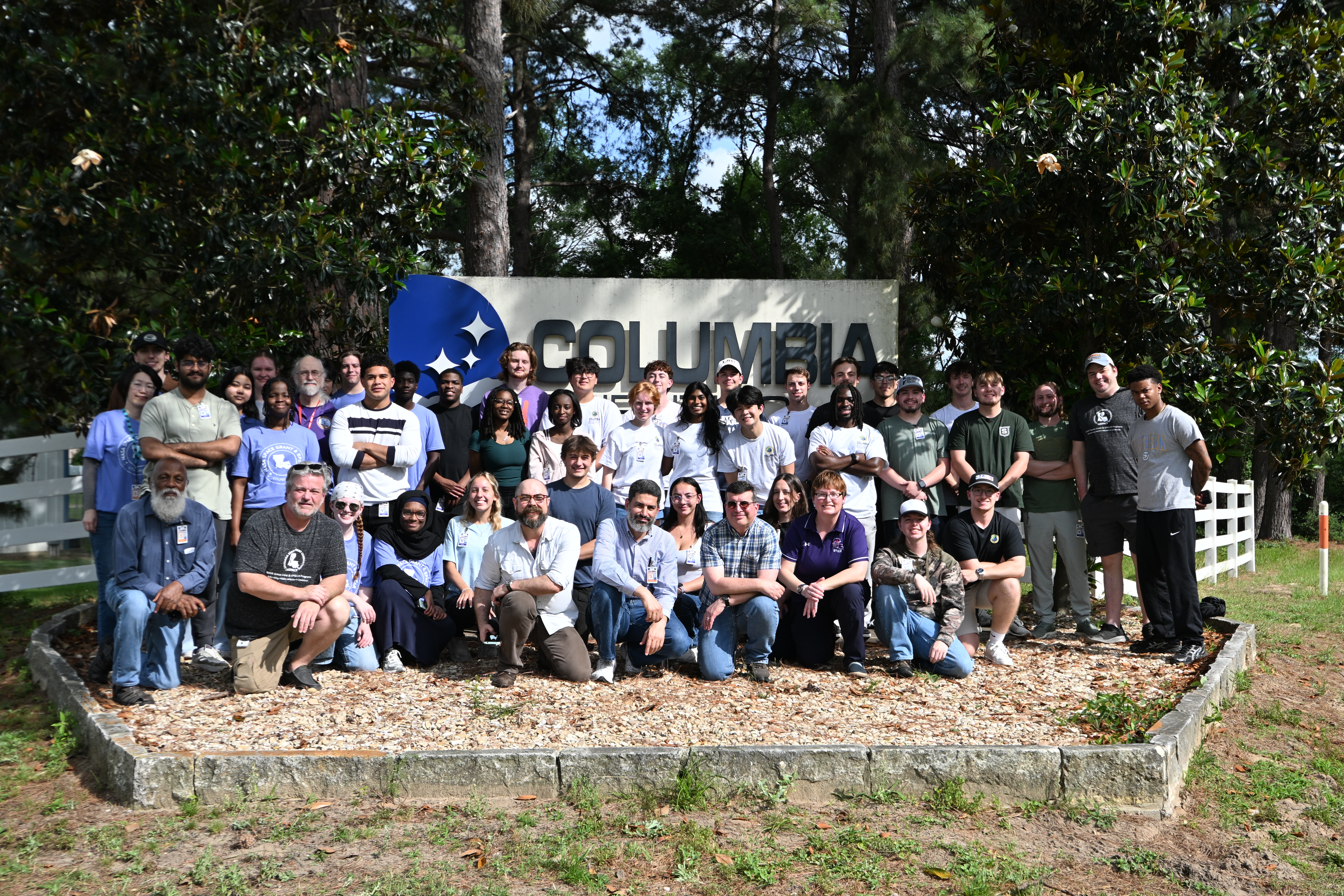
Group photo of the 2026 LaACES program participants gathered outside the Columbia Scientific Balloon Facility.
NASA
Following recovery, student teams analyzed their sensor data and environmental measurements and then presented their findings to balloon facility engineers and technicians along with faculty mentors and peers.
Programs like LaACES mirror the operational environment of NASA’s broader Scientific Balloon Program. NASA scientific balloons are more than just “weather balloons”: The reality is far more sophisticated. NASA Columbia Science Balloon Facility supports the launch, tracking, and recovery of large scientific balloons capable of carrying advanced research instruments to the edge of space. These flights support investigations in astrophysics, atmospheric science, planetary research, technology demonstrations, and more.
By placing students in this ecosystem, LaACES acts as a bridge between academic learning and national research operations. Students witness firsthand how scientific experiments are prepared, integrated, launched, tracked, and recovered — experiences that can reshape career paths and open doors to future opportunities within NASA, academia, and aerospace industries.
Funded by NASA’s National Space Grant College and Fellowship program, LaACES is a statewide program of the Louisiana Space Grant Consortium. Since its inception, LaACES has supported more than 500 students across 13 higher‑education institutions, launching over 60 balloon flights and roughly 135 unique payloads. As NASA continues to advance scientific discovery, programs like LaACES help ensure a strong pipeline of future innovators. For these Louisiana students, watching their payload rise into the sky is more than a technical milestone — it is a defining moment, a spark that turns curiosity into possibility.
Birds are not only wondrous creatures that live amongst us, they're also an essential part of life on Earth – helping grow food, keeping pests at bay and spreading seeds. But more than half of migratory bird populations are declining globally. Horizons moderator William...
Birds are not only wondrous creatures that live amongst us, they're also an essential part of life on Earth – helping grow food, keeping pests at bay and spreading seeds. But more than half of migratory bird populations are declining globally. Horizons moderator William Brangham explores the threats birds are facing with ornithologist Peter Marra of the Earth Commons at Georgetown University. PBS News is supported by - https://www.pbs.org/newshour/about/funders. Hosted on Acast. See acast.com/privacy
After years of battles over its use — and a long-running drought — states that rely on the Colorado River are facing the prospect of further cutbacks. Years of gridlock among the states prompted the federal government to step in. A new blueprint lays out new requirements for...
After years of battles over its use — and a long-running drought — states that rely on the Colorado River are facing the prospect of further cutbacks. Years of gridlock among the states prompted the federal government to step in. A new blueprint lays out new requirements for managing the shrinking river. Science correspondent Miles O'Brien explains what's at stake for our series, Tipping Point. PBS News is supported by - https://www.pbs.org/newshour/about/funders. Hosted on Acast. See acast.com/privacy
Crews are battling to control wildfires that have spread rapidly across parts of Europe, forcing the evacuation of more than 330,000 people in France, Spain and Portugal. Fifteen deaths have been reported and nearly half a million acres have burned. The scope and speed of the...
Crews are battling to control wildfires that have spread rapidly across parts of Europe, forcing the evacuation of more than 330,000 people in France, Spain and Portugal. Fifteen deaths have been reported and nearly half a million acres have burned. The scope and speed of the fires are pushing emergency response systems to their limits. Amna Nawaz discussed more with Ciaran Nugent. PBS News is supported by - https://www.pbs.org/newshour/about/funders. Hosted on Acast. See acast.com/privacy
Five state primaries are being held today, and Michigan is a key focus for Democrats who want to see how progressives fare in races. And, a man has been arrested in connection with a Spokane fire.
Five state primaries are being held today, and Michigan is a key focus for Democrats who want to see how progressives fare in races. And, a man has been arrested in connection with a Spokane fire.
This month brings riveting novels about dogs, Hollywood stars, small towns and characters with bigger woes than just the sweltering summer heat and humidity.
This month brings riveting novels about dogs, Hollywood stars, small towns and characters with bigger woes than just the sweltering summer heat and humidity.
A new report is detailing the impact of cuts to USAID and the program known as PEPFAR, which has been credited with saving over 26 million lives since 2003. The study from the HIV/AIDS non-profit amfAR found that more than 1,700 treatment sites have closed in the wake of...
A new report is detailing the impact of cuts to USAID and the program known as PEPFAR, which has been credited with saving over 26 million lives since 2003. The study from the HIV/AIDS non-profit amfAR found that more than 1,700 treatment sites have closed in the wake of funding cuts. William Brangham discussed more with Dr. Atul Gawande, the assistant administrator of USAID under President Biden. PBS News is supported by - https://www.pbs.org/newshour/about/funders. Hosted on Acast. See acast.com/privacy
Special rapporteurs say ‘transnational repression by Indian authorities’ has put Moninder Singh in dangerUN rights experts have urged Canada to take all feasible measures to protect the Sikh activist Moninder Singh, who has been repeatedly warned by the Canadian authorities...
Special rapporteurs say ‘transnational repression by Indian authorities’ has put Moninder Singh in danger
UN rights experts have urged Canada to take all feasible measures to protect the Sikh activist Moninder Singh, who has been repeatedly warned by the Canadian authorities of credible threats to his life.
In a letter to the Canadian government, the five UN experts raised “concerning allegations of foreign intimidation and reprisals” against Singh, a Canadian national.
NPR's Tamara Keith and Amy Walter of the Cook Political Report with Amy Walter join Amna Nawaz to discuss the latest political news, including the Michigan Senate primary and the message Democrats are taking into the midterms, prosecutors dropping Reflecting Pool vandalism...
NPR's Tamara Keith and Amy Walter of the Cook Political Report with Amy Walter join Amna Nawaz to discuss the latest political news, including the Michigan Senate primary and the message Democrats are taking into the midterms, prosecutors dropping Reflecting Pool vandalism charges and President Trump's response. PBS News is supported by - https://www.pbs.org/newshour/about/funders. Hosted on Acast. See acast.com/privacy
OpenAI and Anthropic say their models broke into other companies' systems during testing, raising security concerns amid a heated debate over how to regulate AI.
FIFA abandoned a plan to create a commercial venture and then sell stakes to minority investors, just days after unveiling it. The plan drew sharp condemnation — and a boycott from European nations.
FIFA abandoned a plan to create a commercial venture and then sell stakes to minority investors, just days after unveiling it. The plan drew sharp condemnation — and a boycott from European nations.
U.S. troops killed or wounded since July 7 are now counted separately from casualties during the first months of the Iran war. The post The Pentagon Found a New Way to Undercount U.S. Casualties in Iran appeared first on The Intercept.
The Pentagon is using a new method of tallying the number of U.S. soldiers killed and wounded in the Iran war that a U.S. government official said was “designed to obscure the count.”
Since the start of the conflict, the Department of War has posted the official count of casualties on the website of the Defense Casualty Analysis System, or DCAS, which tracks “deceased, wounded, ill or injured” service members for Congress and the president. This official total of dead and wounded personnel, as documented over months of reporting by The Intercept, has been a gross undercount, stemming from what that same official previously called a “casualty cover-up.”
But after a series of Iranian strikes on U.S. facilities in the Middle East in July, the Pentagon last week rolled out a new approach. Casualties since July 7 are now counted separately on a new webpage with a generic designation: “Overseas Operations.”
Two hundred and seventy-three U.S. troops were killed or wounded since July 7, according to the Monday total on the new Overseas Operations page.
When combined with the existing DCAS page for the Iran war, the official count stands at 704, an 83 percent increase in casualties since April 8, the day the first ceasefire deal was struck between the Trump administration and Iran. When counting known casualties overlooked by the DCAS page, the total exceeds 900 personnel.
For months, the Pentagon has failed to comment on DCAS anomalies reported by The Intercept nor the reason for the change in the way it now counts casualties, which was first reported by the New York Times. Last week, the Pentagon told the newspaper that “since Operation Epic Fury has concluded, the department classifies casualties as overseas operations in the CENTCOM area of responsibility.” Central Command oversees U.S. military operations in the Middle East.
“This is certainly designed to conceal the count of the wounded,” the official said, while noting that “incompetence” has also caused confusion in the casualty count.
The change comes after a July 20 rant by Pentagon spokesperson Sean Parnell who claimed reports of a Pentagon effort to withhold news of dozens of U.S. casualties were “baseless and malicious” and a U.S. official’s disclosure to The Intercept that same day that recent attacks on U.S. bases by Iran had wounded “far more” personnel than the Pentagon had acknowledged.
The casualty spike resulted from Iranian attacks on at least nine U.S. outposts across the Middle East since July 9, according to a second U.S. official who spoke to The Intercept on the condition of anonymity because they were not authorized to speak with the press.
Iran’s military managed to overwhelm U.S. air defense systems using a mix of attack drones and advanced ballistic missiles, despite months of claims by President Donald Trump and self-styled War Secretary Pete Hegseth that Iran’s military was annihilated.
Last month, the tally of wounded personnel fluctuated by the day in the wake of increased Iranian attacks. On July 21, the casualty count on DCAS for Operation Epic Fury, the military’s official designation for the Iran war, stood at 500. Now, it has shrunk to 431.
For months, The Intercept found anomalies with the counts offered on the DCAS website. On April 21, for example, the number of wounded-in-action troops declined by 15 without public acknowledgment by the War Department. Despite repeated questions for months, the Pentagon has not commented on the disparities in its casualty count.
Prior reporting by The Intercept also found DCAS is missing hundreds of dead and wounded personnel from Epic Fury. The Pentagon list of the names of the dead is still missing Maj. Sorffly Davius, a signals and communication officer with the New York Army National Guard who was assigned to the headquarters of the 42nd Infantry Division and reportedly died of sudden illness while on duty in Camp Buehring, Kuwait, on March 6. Davius’s death was widely acknowledged even as it was excluded from the the official count: Rep. Mike Lawler, R-N.Y., spoke about him during a memorial service that month, and Gen. Dan Caine, the chair of the Joint Chiefs of Staff, recognized Davius while “honoring our fallen.”
While DCAS provides a running tally of “non-hostile” deaths — meaning those who died from accidents or by illness — it doesn’t include “non-hostile” injuries. The DCAS figures for Epic Fury show that 65 Navy personnel were wounded in action. Missing, however, are the more than 200 sailors treated for smoke inhalation or lacerations due to a March 12 fire that raged aboard the USS Gerald R. Ford. The aircraft carrier had been conducting round-the-clock flight operations to, Caine said, “project combat power” in the Middle East.
Recent reporting by the War Horse, using Pentagon records obtained via the Freedom of Information Act, found more than 400 casualties were recorded between February 28 and April 8. Seventy occurred on March 18 alone, but this huge single-day toll was never reported by the Pentagon.
The records provide more granular detail than DCAS, revealing that at least 17 troops sustained life-threatening injuries. They show that U.S. troops suffered shrapnel wounds, broken bones, smoke inhalation, and other injuries. The most common injury recorded, however, was head trauma — which affected at least 170 troops, according to the data.
President Donald Trump has long dismissed brain injuries as “headaches” and “not serious.”
Wednesday on the News Hour, Dr. Anthony Fauci pleads the Fifth at a congressional hearing on the origins of the COVID virus. The U.S. and Saudi Arabia strike Iran-backed militias whom they accuse of targeting oil facilities. Plus, a look at why more single women are buying...
Wednesday on the News Hour, Dr. Anthony Fauci pleads the Fifth at a congressional hearing on the origins of the COVID virus. The U.S. and Saudi Arabia strike Iran-backed militias whom they accuse of targeting oil facilities. Plus, a look at why more single women are buying homes than ever before and outpacing single men. PBS News is supported by - https://www.pbs.org/newshour/about/funders. Hosted on Acast. See acast.com/privacy
Tuesday on the News Hour, what Ukraine's president and Israel's prime minister are hoping to accomplish with their trips to the U.S. Politicians and family members pay tribute to late South Carolina Sen. Lindsey Graham. Plus, research shows abortion bans are worsening medical...
Tuesday on the News Hour, what Ukraine's president and Israel's prime minister are hoping to accomplish with their trips to the U.S. Politicians and family members pay tribute to late South Carolina Sen. Lindsey Graham. Plus, research shows abortion bans are worsening medical care during miscarriages and creating challenges for doctors. PBS News is supported by - https://www.pbs.org/newshour/about/funders. Hosted on Acast. See acast.com/privacy
This week, the war in Iran that President Trump predicted would last four to five weeks entered its sixth month. Now, there are new fronts in the war. Compass Points moderator Nick Schifrin discusses what the widening conflict means for the Middle East and the U.S. with...
This week, the war in Iran that President Trump predicted would last four to five weeks entered its sixth month. Now, there are new fronts in the war. Compass Points moderator Nick Schifrin discusses what the widening conflict means for the Middle East and the U.S. with Mohammed Al-Basha, Kirsten Fontenrose, Dana Stroul and Alex Vatanka. PBS News is supported by - https://www.pbs.org/newshour/about/funders. Hosted on Acast. See acast.com/privacy
There are two kinds of people in this world: those who find it acceptable to be a little tardy and those who consider it an affront to all that is decent. As someone who frequently runs late, I’m often relieved when someone else is, too. And I don’t mind if a friend is a bit […]
There are two kinds of people in this world: those who find it acceptable to be a little tardy and those who consider it an affront to all that is decent. As someone who frequently runs late, I’m often relieved when someone else is, too. And I don’t mind if a friend is a bit behind; the worst-case scenario is I have a few minutes of peace in which to stare at my phone. But the perpetually punctual see this as disrespect, as showing up late is a sign you don’t value others’ time, that you believe what you’re doing is more important.
Of course, few people would be satisfied with waiting at a restaurant for an hour while their date swears they’re only ten minutes away. Is there a socially acceptable sweet spot for tardiness that satisfies both the need for punctuality while giving grace to the time-challenged? To answer that question, I enlisted the help of three people with unique viewpoints: an etiquette expert, a researcher who has studied lateness, and an extremely punctual guy who has strong feelings on the matter.
Answers have been lightly edited and condensed for clarity.
The etiquette expert: You get a 15ish-minute buffer to casual events, 5 minutes for everything else
“Five minutes late to a Zoom call or a scheduled phone call for work is, in my mind, really late. Five minutes late to meet your friend at a restaurant is not very late and very forgivable. Five minutes late to their house, super forgivable. Half an hour late to dinner and they won’t seat you and now you’ve lost your table, that starts to be a bit annoying. Late to a surprise party is unforgivable. I’ve seen hosts get really upset about that one because you can likely ruin a very well-planned surprise. There’s a 15-to-30-minute arrival period for most gatherings. You push past that and you’re showing up really late. If you are going to be late, let somebody know, whether it’s a phone call or a text message.
If you were only getting together for an hour and you’re starting to push the half-hour mark, you might want to check in with someone about whether you’ve really messed up and it’s not worth it for them to stay and meet with you for 20 minutes by the time you arrive.
There are definitely friends who take advantage of other people’s time and that would be something to talk with someone about if it’s chronic and to the point where it starts ruining the experience. You could say, ‘I know that you’re often 20 to 30 minutes late when we get together for something. It would mean a lot if you could try to be on time at seven for this one.’ We can’t control how other people react. They might feel offended. They might start rattling off reasons why they’re always late and you can say, ‘I know and I understand it really does happen, but it’s been consistent enough and this one’s important. I would really love to have you get there at the start time.’ I think that can make a difference.”
The lateness researcher: It depends on the cultural norms of the people involved
“Being late differs across the world. We have wide windows of time or very narrow ones depending on the culture. In our research, we were comparing Dutch, South African, and Pakistani norms. We knew that there would be differences, but we had no idea how much. Pakistanis really have a different idea about lateness. They’re much more flexible about it. The window’s much wider. For the Dutch and South Africans, the window is about 15 minutes. After that, people will start thinking they’re not coming anymore or start calling. But for Pakistanis, that moment arrives much later.
For people who grew up in cultures that are more aligned with the Protestant work ethic, we would say there’s a deal between two people about the time frame. If you don’t conform to that, then you violate that norm and then you are late. For Pakistanis, it is a time frame that aligns with the clock, but it depends on who is there, not so much as a deal between two people. The Dutch are very egalitarian. Everyone, it doesn’t matter what status you have, is allowed about 15 minutes. But we saw that for Pakistanis, if you’re meeting a very important person, then they can arrive much later.
There’s also a bit of the emotional side or the feeling that you are personally responsible and you’re rude if you don’t stick to those norms. I discussed this in class with my students because a lot of them show up late. I was saying, ‘I think it’s very rude when there’s somebody presenting and they get interrupted by doors opening.’ A lot of them said, ‘I don’t think it’s rude.’ They had different norms about that situation. Some of them agreed with me, but not everyone.
In practice, I think that it depends on how important the appointment is. In our class, we emphasized that we as teachers find being on time important. The norm violation becomes more important when it is explicit. And I have a sense that now the students are more apologetic.
In developing intercultural skills, ‘bridging’ is often trained. One of the things in bridging is to make expectations explicit. It involves explaining how violating the norms surrounding them are experienced, and then trying to find solutions that are acceptable for both sides. Often, this leads to people agreeing that it means give and take, but it can also mean changing procedures or rules.”
—Wendelien van Eerde, associate professor at Amsterdam Business School at the University of Amsterdam
The punctual guy: Actually, just be early
“For a home-hosted dinner party, no more than 30 minutes late before it’s inconsiderate.
For dinner reservations at a restaurant, five minutes before is inconsiderate as normally your party can’t be seated until everyone is there and making everyone wait for you isn’t cool.
For house party gatherings, show up whenever unless specifically asked by the host to be there at a specific time.
For work-related situations, like being on set ready to shoot at your scheduled call time, be there five minutes before your call time. The crew got there on time to prepare for you. Show them the same respect. Your time is not more valuable than theirs.”
Try as we might to get everything done, leave the house in a timely manner, and hope for no traffic, life often has other plans. Lateness happens. But as long as you make a good faith effort to be on time, openly communicate when you’re running behind, and don’t make a habit of it, consider a 10-to-15 minute window an appropriate buffer. Any later and you might start to lose goodwill.
The expanse of glacial ice on Canada’s Baffin Island lost its snow cover quickly and early in summer 2026, revealing a network of melt features.
Meltwater channels cross the surface of the Barnes Ice Cap’s northeast side in this July 12, 2026, image from the OLI (Operational Land Imager) on Landsat 9, with many channels reaching the ice edge.
NASA Earth Observatory/Lauren Dauphin
Meltwater ponds in vivid blue pools on the surface of the Barnes Ice Cap’s southwest side in this July 12, 2026, image from the OLI (Operational Land Imager) on Landsat 9.
NASA Earth Observatory/Lauren Dauphin
For most of the year, the Barnes Ice Cap in the Canadian Arctic lies quiet under a blanket of snow. By summer, that snow melts back, and the ice cap transforms in texture, its bare ice dotted with turquoise ponds and its surface threaded with meltwater channels. In summer 2026, this seasonal awakening arrived fast and early.
Located in the center of Baffin Island, the ice cap is a remnant of the Laurentide Ice Sheet, which once covered much of northern North America. Today, the bowling-pin-shaped ice cap spans around 5,700 square kilometers (2,200 square miles), with ice up to about 730 meters (2,400 feet) thick. Like most of the glacial ice across the Canadian Arctic, the Barnes Ice Cap is thinning and retreating.
The ice cap entered the 2026 melt season with an already-thin snowpack, and within a few weeks it had gone from snow-covered to mostly bare. By mid-July, its snow cover was effectively gone—“the earliest it has been this bare,” said glaciologist Mauri Pelto of Nichols College, who has monitored the ice cap using images from Landsat satellites and, when possible, field observations.
Once snow cover melts away and bare ice is exposed, melting speeds up in the Arctic summer sunshine. Bare ice is darker than snow and absorbs more solar energy, so as the reflective snow cover disappears, the ice cap warms and melts faster. At the same time, a network of meltwater channels, many of which persist from year to year, becomes increasingly visible.
The OLI (Operational Land Imager) on Landsat 9 acquired these images of the ice cap on July 12, 2026. Ponded blue meltwater dots the ice in places, and a vast network of meltwater channels spans the ice cap’s surface from its middle to its edges. Faint, curving gray lines indicate the many millennia of snow and ice accumulation that built the ice cap.
Barnes Ice Cap has been snow-free before, including in 2019, 2020, and 2024, Pelto said, but this year it happened sooner. The early snow loss and return of meltwater channels in 2026 means that meltwater runoff is starting earlier too, with implications for the ice cap’s mass balance. Water that might once have pooled and then percolated into any remaining snowpack and firn and refrozen there—adding mass back to the ice cap—instead gets whisked away. That surface drainage becomes more efficient as the season progresses and channels widen and connect.
Research indicates the ice cap thinned roughly 1 meter (3 feet) per year from 2000 to 2020, and over the past 40 years its margin has retreated about 4 meters (13 feet) per year on average. However, retreat rates vary widely across the ice cap. An especially fast-retreating area on the ice cap’s central-southern side pulled back by more than 400 meters (1,300 feet) total, or roughly 10 meters (33 feet) per year. This retreat is visible in the wide view above as a lighter brown band of freshly exposed earth and rock along that side of the ice cap.
NASA Earth Observatory images by Lauren Dauphin, using Landsat data from the U.S. Geological Survey. Story by Kathryn Hansen, with science review by Christopher Shuman, UMBC (retired).
According to the FBI, at least seven states have now been targeted in a growing wave of cyberattacks on critical water infrastructure across the country. Federal officials now reportedly believe Iran is the likely culprit. Liz Landers discussed more with Cynthia Kaiser, a...
According to the FBI, at least seven states have now been targeted in a growing wave of cyberattacks on critical water infrastructure across the country. Federal officials now reportedly believe Iran is the likely culprit. Liz Landers discussed more with Cynthia Kaiser, a former deputy assistant director of the FBI's cyber division currently at Halcyon. PBS News is supported by - https://www.pbs.org/newshour/about/funders. Hosted on Acast. See acast.com/privacy
The post Anthropic’s New AI Model Can Identify More Software Bugs Than Ever. Microsoft Is Struggling to Fix Them Fast Enough. appeared first on ProPublica.
Illustration by Shoshana Gordon/ProPublica
On an afternoon in mid-May, dozens of Microsoft engineers and their managers gathered online and in a conference room at the company’s Redmond, Washington, headquarters to discuss Project Glasswing.
The tech giant was racing to fix weaknesses in its code that a new AI model known as Mythos was uncovering at an unprecedented clip. The AI behemoth Anthropic, which developed Mythos, had given access to select organizations that make software used by regular people, companies and governments across the world. The goal was to find and fix the vulnerabilities before hackers and adversarial governments like China began using similar tools to find and exploit them for espionage and sabotage.
As the group settled in, one engineer asked the question that loomed over the meeting: Did Mythos “live up to the hype that Anthropic claimed it would have had?”
“Yes,” a manager responded, according to a recording of the meeting viewed by ProPublica.
The version being used by Microsoft, Claude Mythos Preview, was surfacing bugs faster than the tech giant could patch them, and engineers, the manager said, were now in “a mad dash” to close the gap.
One slide in that day’s presentation showed that in April alone, Mythos had uncovered 90 “critical” bugs and 141 “important” ones in SharePoint, Microsoft’s widely used collaboration software. In the first half of May it found even more.
“Please, please, please if your org has any April bugs, drive those down,” engineering manager Hans Andersen implored the group. They had roughly two weeks “to find as many things and do as much good as we can with this access.”
May 31, he explained, “is considered the day when the rest of the world will have caught up.”
The engineers on the call poked at that assertion, with one of them summing up the predicament: “So basically you’re saying if it’s released on June 1, then on June 2 the adversaries will have our bugs?”
Yep, one person responded. Yep, another echoed.
Do You Know More About the AI Arms Race?
We’re still reporting. If you know more about AI and the tech industry, please contact our reporting team.
Renee Dudley
I’m interested in the intersection of Big Tech and national security. If you’ve worked in tech or government, or otherwise have tips about this area, please get in touch.
Ever since Anthropic kick-started a national conversation about the bug-hunting power of AI in April, when Project Glasswing was made public, national security experts predicted that the U.S. would have a window of opportunity to fix flaws before adversaries would have similar models capable of discovering the same weaknesses. In late June, the international alliance of intelligence agencies known as the Five Eyes — whose members are the U.S., Australia, Canada, New Zealand and the U.K. — warned in an unusual joint statement that in a matter of months, that window would be closing. But the recording of the Microsoft meeting, along with internal documents reviewed by ProPublica, suggest the day of cyber reckoning may already be here.
Given the deluge of flaws Mythos has identified, Microsoft so far has focused on patching those it considers most dangerous, which are classified critical or important, according to the presentation as well as the company’s own public patch updates. The internal records indicate that Microsoft plans to eventually address “moderate”-severity flaws uncovered by Mythos. The documents made no mention of “low”-severity bugs.
The company’s approach reflects the triage system that is typical in the industry. Just as the sickest patients are the first to be treated in the emergency room, vulnerability triage prioritizes issues that are likely to cause the most damage if exploited by hackers.
But that strategy carries its own risk in this AI-powered bug-finding era, in which new tools are unearthing a record-breaking volume of weaknesses in the products we use every day. Mythos, for example, is able to chain together a string of bugs that build on one another, meaning that the low- and moderate-severity vulnerabilities that remain unpatched could create an opening to carry out devastating attacks.
“Paper Trail” Podcast
Listen to Renee Dudley discuss her Microsoft reporting on ProPublica’s podcast “Paper Trail.”
“The problem now is that you can chain four low-level flaws, and that can equal a high severity,” said Vinh Nguyen, a senior technical adviser to Anthropic and a senior fellow for AI at the Council on Foreign Relations who formerly served as chief AI officer and chief data scientist at the National Security Agency. “If you’re Microsoft, the current triage strategy may be underpricing risks.”
In emailed responses to ProPublica’s questions, Microsoft stood by its approach, saying its triaging decisions are based on a number of factors, including exploitability and the impact on customers. The company presentation did not mention chaining, but a spokesperson told ProPublica that the technique “has long been considered as part of vulnerability assessment and risk analysis.”
Asked about the internal presentation and the then-looming May 31 deadline, the spokesperson downplayed its significance, saying that “accelerated targeting and exploitation of new vulnerabilities is not a new phenomenon.” That said, he added, the comments made during the meeting reflect how the company “feels a sense of urgency to help our customers at this time.”
“What was heard on that call and is true today is that security is Microsoft’s most important priority and teams across the company are prioritizing using AI to discover and remediate vulnerabilities as quickly as possible.”
Microsoft declined to answer questions about how many bugs engineers had patched since the presentation.
Anthropic declined to comment.
The internal Microsoft presentation and accompanying slides predicted that the group of staffers working on SharePoint, which is used by governments and businesses worldwide to manage data and documents, “will be busy for months,” first working through the highest-priority critical bugs then tackling the important ones in August. Microsoft says vulnerabilities it categorizes as critical include so-called worms that can crash systems and spread malware as they race across computer networks. Important ones could result in “compromise of the confidentiality, integrity, or availability of user data” as well as the “availability of processing resources.” After those categories were cleared, the group would begin work on roughly 300 “moderate” bugs, according to the presentation.
While the internal documents reviewed by ProPublica do not include updates on the entire breadth of Microsoft’s offerings, they do give a sense of the scale of the problem. One document noted that, since the company started using Mythos earlier this year, it had collectively found hundreds of bugs that Microsoft categorized as either critical or important in popular products such as Microsoft 365, the Teams conferencing platform and the Copilot AI tool. As of mid-May, most of them had yet to be patched.
“They’re not profound and exotic, but they’re real,” Andersen, the engineering manager, said during the meeting. “And a lot of them are exploitable.”
It’s unclear whether hackers have exploited any specific bug identified by Mythos, but some have tapped AI to automate attacks and appear to be using Mythos-like tech to find and exploit weaknesses.
There have been outward signs of Microsoft’s internal struggle to deal with the growing list of bugs to be patched. Each month, the company publicly releases fixes for its software vulnerabilities in what’s known as “Patch Tuesday.” In June, it released patches for more than 200 bugs, which industry experts then said was an all-time high. But on July 14, the company blew through that record and released patches for more than 600 bugs. Only seven were categorized as low- or moderate-severity, one of which hackers were actively exploiting, according to Dustin Childs, leader of the Zero Day Initiative bug bounty program, which is part of cybersecurity company TrendAI. The rest were important or critical.
“Well folks. Here we are. The bug apocalypse has fully descended upon us,” Childs wrote in a blog post on July 14.
Microsoft told ProPublica that the overall volume of bugs “will not be plateauing for a bit,” but a spokesperson said the company has “invested heavily in both people as well as AI-powered triage solutions that scale quickly to handle the growing number of vulnerabilities.”
Given the new realities of the AI age, including the chaining capabilities, companies like Microsoft might need to rethink their entire approach to triage, said Nguyen, the NSA’s former AI chief. Rather than shunting what are now considered low-risk flaws aside, companies should be dedicating staff to developing and testing patches for the entire spectrum of vulnerabilities, he said. In other words, the cyber ER needs more doctors and nurses treating illnesses that are life-threatening as well as the minor wounds that could later turn deadly.
“There’s no alternative,” Nguyen said. “The patients are coming in fast and furious.”
Microsoft told ProPublica it’s “always going to be reevaluating and considering whether things that were previously lows or moderates be upgraded or thought about differently. With these AI systems, it makes us rethink some of these things. Across the industry, we’re all looking to see how drastic of a change it will be.”
“The bug apocalypse has fully descended upon us.”
Dustin Childs, leader of the Zero Day Initiative bug bounty program
Microsoft’s users may be particularly vulnerable. The popularity of its offerings, used the world over, makes it a frequent and lucrative target for hackers. In addition, many of its products contain “legacy” code. Developed decades ago using now-outdated technology, this code contains unaddressed flaws and contributes to what is known in the industry as “technical debt.”
But the challenge of fixing the flood of newly found bugs also extends to the rest of the software industry, and to open-source software code that is typically free to use and largely maintained by volunteers. Open-source software underpins internet infrastructure and is incorporated into much of the world’s modern technology, including products offered by major tech companies such as Microsoft.
“Nobody has really figured out how to deal with this, and everybody is casting around for what they need to do,” said J. Michael Daniel, a former cybersecurity adviser to President Barack Obama and the president of the Cyber Threat Alliance, a nonprofit organization focused on cybersecurity. “Our tech debt is coming due.”
Ben Edwards, a data scientist who specializes in managing software vulnerabilities, said the software industry was handling an “intense volume even before AI.”
“It was like drinking from a garden hose on the jet setting before, and now it’s like drinking from a fire hose,” Edwards said. “They might have had the teams that could handle that garden hose. Whether they can handle the fire hose is something else.”
Although the volume of vulnerabilities has grown over the years, Microsoft’s internal group responsible for fielding them, the Microsoft Security Response Center, has been perennially understaffed. Even before the crush of AI-identified bugs, the center fielded hundreds or even thousands of reports a month, pushing the group to its limits, ProPublica has reported.
The size of the center reflects Microsoft’s corporate philosophy: Plugging security holes is a cost center, while making new products is a profit center, former employees said. The company is loath to tie up its best engineers with making security patches — a cost center — instead of developing new products and features that will generate profits, ProPublica has reported.
Microsoft told ProPublica that it does not discuss internal staffing decisions but has made investments in recent years to “focus our teams on keeping our customers secure.” The company “continuously evaluates the staffing, processes, and technologies required to support security response and vulnerability management,” a spokesperson said.
According to the slides that accompanied the May internal presentation, Anthropic provided Mythos access to roughly 50 full-time Microsoft employees, with a goal to “harden critical services before publicly available models catch up.” A slide titled “What’s Next” predicted that the Microsoft Security Response Center would see continued case volume “as public tools catch up” to Mythos.
During the May meeting, one staffer appeared to take comfort in the belief that adversaries “don’t have the source code” that such an AI tool would scan for weaknesses. His colleagues, however, quickly corrected him. Portions of Microsoft’s code have, in fact, fallen into hackers’ hands over the years.
“It might not be this week’s source code,” one person said. “But they’ve got source code. It’s out there.”
In a statement to ProPublica, Microsoft downplayed the comment, saying engineers “design our security processes on the expectation that determined adversaries may gain access to code.”
Friday on the News Hour, the United States announces a deal to disarm Hamas and withdraw Israeli troops from Gaza, but implementing the agreement could prove an enormous challenge. Tens of thousands of migrants enter Spanish territory bordering Morocco. Plus, after five...
Friday on the News Hour, the United States announces a deal to disarm Hamas and withdraw Israeli troops from Gaza, but implementing the agreement could prove an enormous challenge. Tens of thousands of migrants enter Spanish territory bordering Morocco. Plus, after five months of war, a look at how people inside Iran are viewing the ongoing conflict. PBS News is supported by - https://www.pbs.org/newshour/about/funders. Hosted on Acast. See acast.com/privacy
Rand Paul is trying to put Anthony Fauci in prison for not confirming a conspiracy theory, but the key to blunting the next pandemic is universal healthcare. The post Fauci’s Diary Isn’t the Key to Why Covid Ravaged the U.S. — Our Broken Healthcare System Is appeared first on...
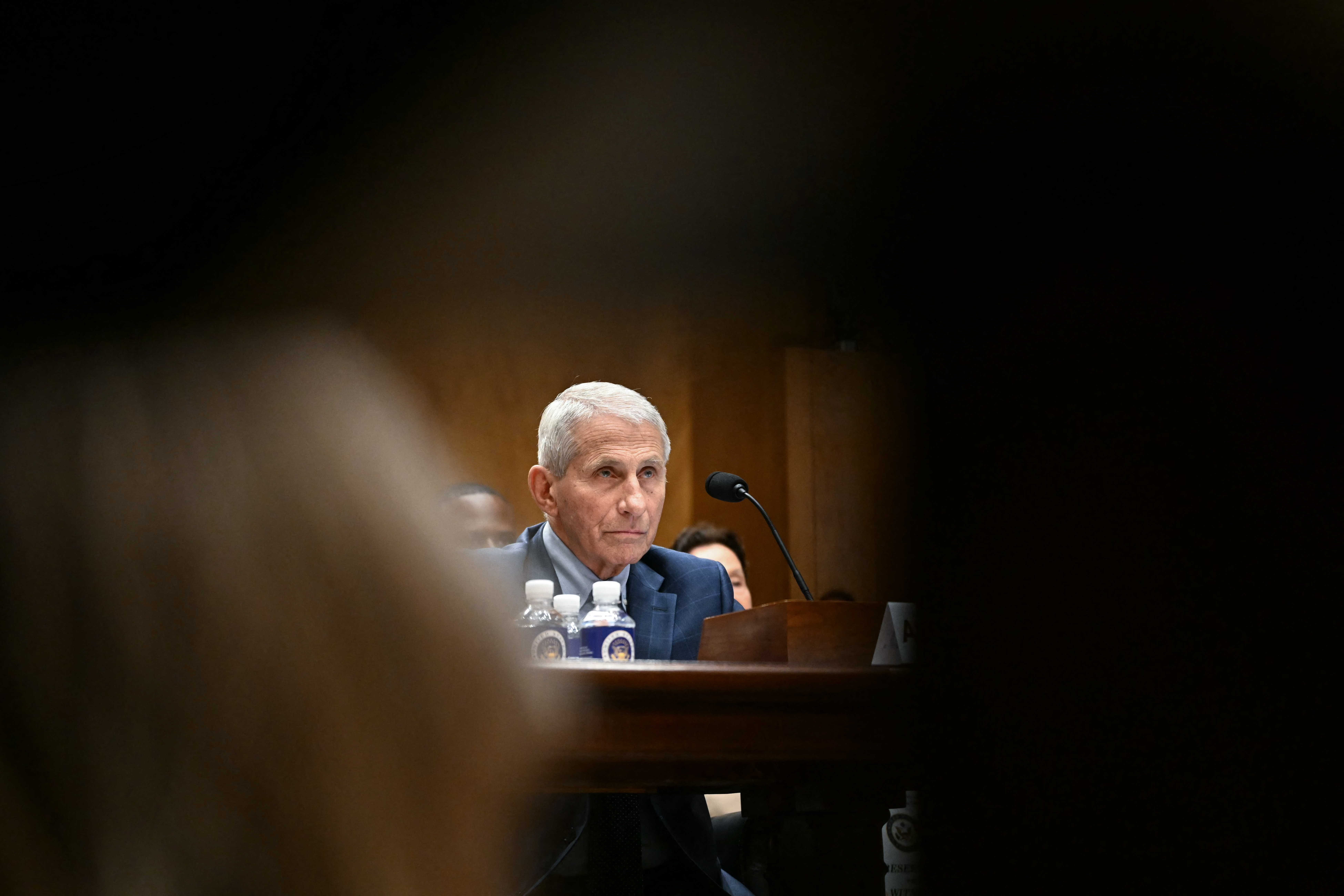
Dr. Anthony Fauci testifies during a Senate Homeland Security and Governmental Affairs committee hearing on Capitol Hill in Washington on July 29, 2026. Photo: Alex Wroblewski/AFP via Getty Images
Sen. Rand Paul, R-Ky., has made it his mission to put Dr. Anthony Fauci in prison.
Last month, the chair of the Senate Homeland Security and Governmental Affairs Committee subpoenaed Fauci, the former director of the National Institute of Allergy and Infectious Diseases who led the nation’s response to the Covid pandemic, to answer still more questions related to the origins of the disease.
Paul insists the novel coronavirus was the result of the National Institutes of Health having funded gain-of-function research at China’s Wuhan Institute of Virology — essentially that the virus was created in a lab in China and unleashed on an unsuspecting public.
Fauci has maintained that while the mostly likely source of the Covid-19 virus was animal-to-human transmission but that we cannot know for certain. Paul thinks he deliberately misled the public about the coronavirus’s origins and called him to testify before the Homeland Security Committee based on supposed new evidence that comes from Fauci’s diaries.
Over 7 million people worldwide have died from Covid, with about 1.2 million of those deaths occurring in the U.S.
While the quick work to produce a vaccine undoubtedly saved many millions of lives, that level of loss is difficult to account for and has certainly taken an emotional and psychic toll on the world since. We, the public, deserve answers about what went wrong during that time and how our governments are preparing for similar outbreaks in the future such that they can prevent the loss of so much life.
That is not what Paul and his Fauci subpoena are focused on. Instead, Paul sunk his libertarian teeth into a xenophobic conspiracy theory that reinforces his ideological priors: too many government agencies that spend too many public dollars.
It’s the same reason Paul avoids the real, persistent public health crisis underlying huge spike in deaths in the U.S. from Covid — and a host of other diseases: the lack of universal healthcare.
Did the virus come from a lab in Wuhan? I certainly don’t trust Paul’s ideologically infused takes, but I’ll leave it for others to decide.
To focus on it at the exclusion of all other public health policy, though, is clearly a mistake. It’s learning the wrong lesson from the Covid pandemic.
The United States remains the only “developed” country without universal healthcare coverage.
The insurance companies and for-profit medical system insist that this is the best system to provide people with the best healthcare, but during early days of the Covid pandemic, its limitations came into stark relief. The pandemic put so much stress on our system that resulted in shortages in staff, and a decreased quality of care for those infected with virus, and all others who needed care.
Underlying medical issues exasperated Covid deaths. These are exactly the types of chronic illnesses that people suffer from because of a lack of preventative care or a failure to get treatment because of prohibitive costs — respiratory diseases, heart conditions, blood pressure issues.
It’s notable that some of the greatest successes of Covid policy arose not from private health insurers acting on their mandates for profit, but rather by mandates and funding from local, state, and federal government. Acts of Congress forced healthcare insurers and providers into covering certain services. When testing became a feasible method of helping to prevent the spread of Covid, federal funding made it far more widely available — even for the uninsured, with the government providing reimbursement for healthcare providers who tested those without coverage.
This is to say nothing of a federal program to speed along a Covid vaccine and rush its distribution — the key to creating enough immunity to weaken the virus and lower death rates. For those who got Covid, antiviral medication, which could drastically reduce symptoms and prevent hospitalizations and even death, was available for free thanks to federal funding. In the first two years of the pandemic, around 6 million people took the drug without paying a thing.
In 2020, the American Public Health Association released a policy statement that began: “The COVID pandemic adds a new sense of urgency to establish a universal health care system in the United States. Our current system is inequitable, does not adequately cover vulnerable groups, is cost prohibitive, and lacks the flexibility to respond to periods of economic and health downturns.”
This remains true, as the Trump administration and the Republican-led Congress continue their assault of existing forms of federal healthcare spending.
While Paul is focused on trying to place Fauci in prison for not confirming a conspiracy theory, more people are being crushed by the weight of medical debt due to our inadequate system, more people aren’t getting the care they need because of the costs, and more people are dying.
The fight for universal healthcare coverage remains a vital one, as the uncertainty of when we could face another pandemic looms over us all. The longer the delay, the more unprepared we become for what’s next.
Whatever Fauci said from his perch at the National Institutes of Health about the virus’s origins, the fact of the matter remains that the government’s interventions during the Covid pandemic were overwhelmingly lifesaving. Its biggest failure — then as now — was the inability to provide healthcare coverage for all Americans.
There should be accountability for whatever role the government played in the Covid pandemic, but let’s be clear that deaths spiked in large part because of the failures of our healthcare system to cover all Americans, not because of what Fauci said in his diaries.
Justice secretary says he could not have gone further without causing system to ‘break’ but acknowledges impact on grieving relatives such as those of PC Andrew HarperUK politics live – latest updatesAbout 1,000 fewer prisoners will be released early after Andy Burnham’s...
Justice secretary says he could not have gone further without causing system to ‘break’ but acknowledges impact on grieving relatives such as those of PC Andrew Harper
About 1,000 fewer prisoners will be released early after Andy Burnham’s intervention to exclude those convicted of rape, serious child sexual offences and grooming from the scheme.
The justice secretary, Alex Norris, said 5,000 prisoners would be released over 10 months from October in England and Wales, down from the government’s original plan for 6,000 from September.
By selling off early access to his posts at a premium, the president is merging a public good with his own profit motives. The post Trump’s Truth Social API Is a Blatantly Corrupt Favor to Wall Street appeared first on The Intercept.
Donald Trump holds up an image taken from his Truth Social account at an event about coal on June 4, 2026, in the White House in Washington, D.C.Photo: Julia Demaree/AP Photo
For the low, low price of $100,000 a month, the ever-oxymoronic Truth Social is now selling direct access to its most important posts — or, in the firm’s preferred parlance, “truths” — to Wall Street. That’s an expedited lane to access statements and data from the president of the United States and other government officials, which have significant potential to move financial markets, ahead of us suckers in the general public.
This sort of product, called an Application Processing Interface, or API, is not a particularly unusual offering for a social media company in the abstract. But Truth API, which launched today, is uniquely positioned to fuel blatant presidential graft.
The move has been rightly called “brazen corruption,” “the president’s most desperate grift yet,” and a “clear and unacceptable pathway for corruption.” In a letter to the Securities and Exchange Commission, Sens. Adam Schiff and Elizabeth Warren called the offering “an outrageous abuse of the President’s office for his personal benefit that undermines everyday investors and the integrity of our markets, while enriching Wall Street and other wealthy insiders.” All of that is true, but Truth API doesn’t stop at creating a new pathway to funnel de facto bribes to Trump; it also seeks to functionally merge the provision of a public good with a for-profit company.
It has become de facto administration policy for high-ranking government officials to make official announcements on Truth Social without going through traditional press offices. Trump has also set a new standard for blurring the lines between his communications as a public official and a private citizen.
For nearly half a century, communications from the president have been recognized as the property of the United States, not the president himself. Under the Presidential Records Act, any documents (with some carve-outs for national security and personal records like journals and diaries) that are “created or received by the President … in the course of conducting activities which relate to or have an effect upon the carrying out of the constitutional, statutory, or other official or ceremonial duties of the President” are subject to the United States’ “complete ownership, possession, and control.”
Selling expedited access to Trump’s statements is effectively privatizing a public asset.
In other words, selling expedited access to such statements is effectively privatizing a public asset. That might be part of the reason why, this spring, Trump’s Department of Justice Office of Legal Counsel issued an opinion that argues the heretofore uncontroversial Presidential Records Act is unconstitutional.
Trump owns a 41 percent stake in Truth Social’s parent company, Trump Media & Technology Group. In December 2024, all of his shares were transferred into Trump’s revocable trust, which is overseen by Donald Trump Jr. At the time, it was a 52 percent stake, worth about $4 billion against the company’s total valuation of $7.5 billion. Those TMTG shares (which are of course traded under the narcissistic ticker DJT) represent a major part of the president’s total wealth. While his stake in the company is now valued at (only!) $1.2 billion, it still represents 18 percent of Trump’s overall wealth, which Forbes estimated to be $6.5 billion.
And while Truth Social has become a pillar of the Trump business empire, it is also a pillar of sand. Truth Social hemorrhages money: In 2024, it only brought in $3.6 million and had a net loss of more than $400 million. Last year was even worse: Revenue ticked up slightly to $3.68 million, but its net loss soared to more than $700 million. The company’s value is now less than one-fourth of what it was in its spring 2024 heyday. That’s a lot of money on board a sinking ship.
TMTG tried to find income streams from branching out into prediction markets, cryptocurrency issuing, bitcoin investment, and nuclear energy production (perhaps a nod to Trump’s physicist Uncle John). But none of these maneuvers have stopped the bleeding.
This latest plan to sell the API might finally be the path to profitability that TMTG so desperately needs. At its core, what an API does is provide a data feed directly into a particular software program, in this case financial trading terminals. So even though the company insisted to the Wall Street Journal that “Truth API is designed to deliver posts the instant they are made public to everyone, not before,” it still represents priority access to government officials’ statements because anyone not paying for the service will be unable to process the information at the same pace as subscribers, letting professional traders and hedge funds outpace the market and reap the benefits.
In modern financial markets, an advantage of even fractions of a second can be decisive — and can provide the opportunity to reap huge profits. This is the sitting president directly selling financial powerhouses a significant edge from the very heart of the federal government for a cool $100,000 a month (or a paltry $60,000 if you opt for a multi-year subscription!).
This entire sordid arrangement already reeks of corruption, but the stench grows stronger when juxtaposed with this administration’s propensity to mistakenly, illegally, and/or prematurely release information when they aren’t supposed to, and not infrequently on Truth Social. Trump’s presidency has always been defined by the degradation of our sense of shared reality and by rampant corruption. There’s no better metaphor than sticking a price tag on the “truths” coming out of the administration.
Changes are coming to the commonly used sell-by dates on groceries in at least one state. PBS News multiplatform reporter Tim McPhillips spoke to two experts to get their take on the food labels and how you can save both your food and your money. PBS News is supported by -...
Changes are coming to the commonly used sell-by dates on groceries in at least one state. PBS News multiplatform reporter Tim McPhillips spoke to two experts to get their take on the food labels and how you can save both your food and your money. PBS News is supported by - https://www.pbs.org/newshour/about/funders. Hosted on Acast. See acast.com/privacy