• maiweb v0.1.0
  • ★
  • Feedback

Reason

active · last success 2026-08-03 21:00

Visit site ↗ · Feed ↗

  • Reason reason.com news politics us-news us-politics 2026-08-03 20:00

    ↗

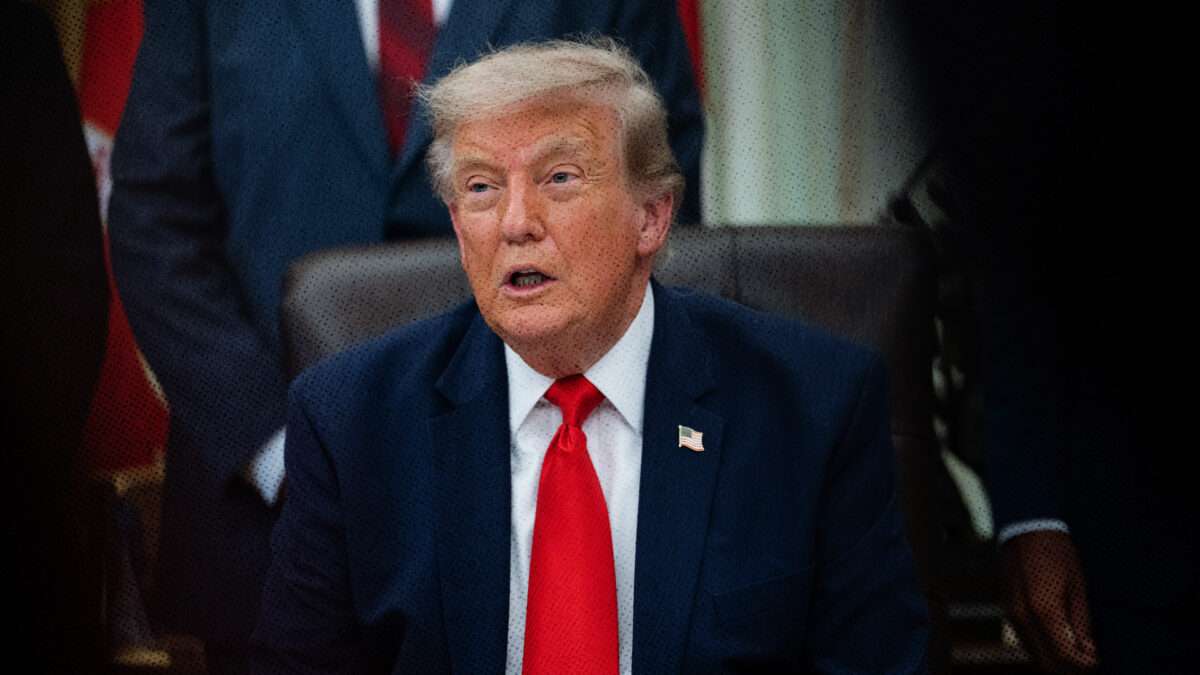
    President Donald Trump

    President Donald Trump | CNP / AdMedia/SIPA/Newscom

    President Donald Trump has repeatedly accused other countries—particularly China—of attempting to influence American politics, all while his administration is spending millions of taxpayer dollars to shape political debates abroad.

    The State Department is currently accepting applications from MAGA-aligned groups in Europe for two or three grants, ranging from $1 million to $3 million, out of a total funding pot of about $4.9 million.

    The grants are intended to fund research, conferences, cultural programs, and civil-society groups addressing "mass migration," national sovereignty, and lawfare, all in the name of defending "our common Western civilizational heritage." The agency is also looking to finance programs to "identify, analyze and respond to instances of lawfare and judicial activism that undermine democracy and national sovereignty."

    In addition to this open grant application, the State Department is considering three separate awards to named British organizations. According to documents reviewed by The Guardian, it intends to allocate $7 million to 878, a recently established group founded by former government special adviser Radomir Tylecote and former Conservative minister Jacob Rees-Mogg. The group is dedicated to "renewing our Judeo-Christian culture and civilisational mission," working with "scholars in Israel and other closely allied nations" to rejuvenate "knowledge of the origins of our constitutional tradition."

    A further $5 million has reportedly been set aside for Free Speech Union International, an offshoot of the Free Speech Union (FSU), to "promote free speech and oppose digital overregulation across Britain, Europe, and Australia." The Free Speech Union, which defends free speech in Britain (a principle constantly under attack), currently states that they "take no government money."

    "FSU International expressed interest, but hasn't yet formally applied," Toby Young, the founder and director of the Free Speech Union and a member of the House of Lords, tells Reason. "If the US government wants to spend money to project America's soft power overseas, these are the kinds of groups—promoting free speech and free markets—it should be funding."

    The department is also reportedly considering a $3 million grant to the Jobs Foundation for a project titled "Countering Overregulation to Advance American Investment." The Jobs Foundation, co-founded by former Vote Leave—the official pro-Brexit campaign group—CEO Matthew Elliot, is a charity that aims to "champion the role of business as a force for good."

    Many of the groups being considered for funding by the State Department do noble work that promotes liberty and prosperity, and Britain may be in a far more perilous state without such organizations. However brilliant that work may be, it's unclear why American taxpayers are being forced to fund these foreign groups.

    The funding opportunities sit awkwardly alongside Trump's repeated attacks on foreign aid. On his first day back in office, Trump declared that foreign-aid bureaucracy was "not aligned with American interests" and ordered that no assistance be distributed unless it was "fully aligned" with his foreign policy. The administration has since boasted of eliminating billions in "woke, weaponized, and wasteful" overseas spending. Apparently, however, using American taxpayers' money to subsidize ideologically sympathetic organizations abroad is acceptable.

    Yet over 800 federal funding opportunities for international and domestic projects have been posted on simpler.grants.gov since June 5th, totaling more than $25.34 billion. This includes various foreign funding opportunities, including $500 million for a U.S.-Africa Strategic Investment Program, a quarter of a million dollars for a conference in Korea, and thousands of dollars for a 21-month program in Jordan that would hold monthly screenings of classic American sports films for Jordanian young people to promote "American excellence."

    Trump promised to end wasteful foreign spending, not to replace left-wing nation building with MAGA nation building. American taxpayers should not be forced to bankroll either.

    The post Why Does Trump Want To Give Millions of Dollars to Right-Wing Europeans? appeared first on Reason.com.

  • Reason reason.com news politics us-news us-politics 2026-08-03 19:45

    ↗

    Robots and robot vacuums, and the U.S. flag

    Robots and robot vacuums, and the U.S. flag | Photo: Elena Karetnikova/Dreamstime. Illustration: Midjourney, Fatima Ruiz.

    The Federal Communications Commission (FCC) recently imposed a ban on new foreign-made robotic devices, drawn so broadly as to even include robot vacuums. It's an especially devastating blow, since one of the most prominent robot vacuum manufacturers has already been the victim of overzealous regulators.

    "Today, the Federal Communications Commission updated its Covered List to include two new categories of devices," the agency announced last week, including "'advanced robotic devices' (defined as mobile robots, such as humanoids and quadrupeds)."

    The Secure and Trusted Communications Networks Act of 2019 directed the FCC to "publish and maintain a list" of "communications equipment or services from a company that poses a national security risk to U.S. communications networks."

    Items on the list are "prohibited from getting FCC equipment authorization," effectively preventing their sale or use in the U.S.

    The new ban goes much further than just humanoid robots: A National Security Determination cited in the announcement includes any automated software-controlled devices weighing more than 4.4 pounds that are "capable of locomotion, obstacle avoidance, navigation, or movement on the ground."

    The ban won't apply to any devices already on the market, and it allows the government to grant exemptions "after finding that such device or class of devices do not pose such unacceptable risks." But it still seems remarkably arbitrary, especially when it's sold as a means of protecting national security.

    "The FCC isn't actually targeting companies with poor security. It's targeting basically every robovac company, regardless of their security practices—because basically every robovac is manufactured outside the US," Sean Hollister writes at The Verge.

    In fact, "the government isn't asking these companies any questions about security—not one—to get the waiver that lets them through," Hollister adds. "The FCC only wants to know where they're designed and made and assembled and tested and influenced, and get a specific commitment to start manufacturing them in the US instead. Even then, it appears the FCC will simply preference US companies without any new commitments to security or US manufacturing."

    Earlier this year, the FCC banned all foreign-made wireless routers, and it's currently considering a proposal to ban foreign-made drones, even those it had previously approved.

    But this new ban is worse, especially considering how it will hurt a company that has already endured its share of abuse from government regulators.

    Amazon announced in 2022 that it would acquire iRobot, the Massachusetts-based company that makes the Roomba robot vacuum. While it was once a pioneer in the space, iRobot had fallen behind its competitors: The New York Times' Wirecutter no longer recommends Roomba products, noting they "have not performed well in our testing in recent years."

    An acquisition by a company with pockets as deep as Amazon's could have been a much-needed lifeline, allowing iRobot to invest in research and development.

    Instead, busybody regulators in both the U.S. and Europe opposed the merger on antitrust grounds.

    In a letter to then-Federal Trade Commission Chair Lina Khan, Sen. Elizabeth Warren (D–Mass.) and five other lawmakers said the Federal Trade Commission (FTC) "should use its authority to oppose the Amazon–iRobot transaction"—which, they warned, "could harm consumers and reduce competition and innovation in the home robotics market."

    The European Commission, the European Union's governing body, also objected, fearing that "because Amazon's online marketplace is a particularly important channel," it "may have the ability and the incentive to foreclose iRobot's rivals."

    Amazon abandoned the deal rather than try to placate regulators on both sides of the Atlantic. As a result, iRobot laid off one-third of its workforce and soon faced bankruptcy. It also reported in a bankruptcy filing that tariffs on goods from Vietnam, where it made most of its products, added $23 million to its costs in 2025.

    In December, the company announced it would instead be acquired by China-based company Shenzhen Picea Robotics, its primary contract manufacturer. At the time, iRobot owed Picea nearly $100 million.

    Considering, as Reuters reported last week, that "the FCC is expected to exempt many non-Chinese suppliers from the restrictions," this means iRobot will have borne the brunt of two successive presidential administrations' regulatory actions.

    The post FCC Bans Foreign-Made Robots, Including Roombas appeared first on Reason.com.

  • Reason reason.com news politics us-news us-politics 2026-08-03 19:30

    ↗

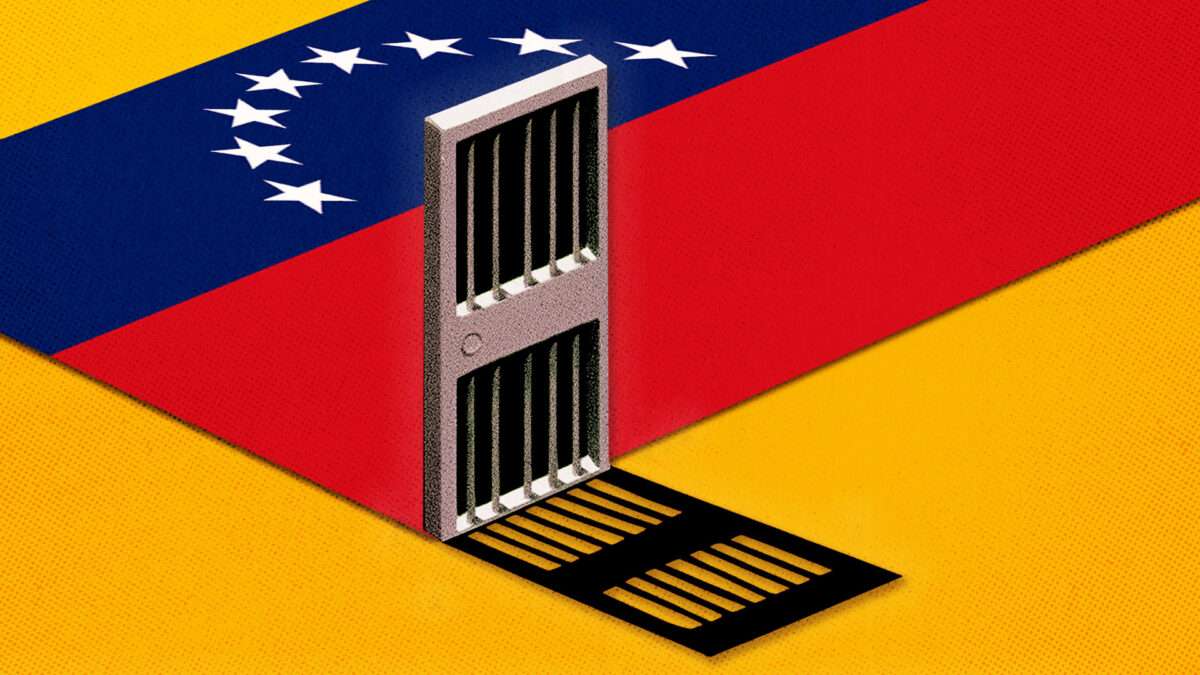
    An invented name, recycled evidence, and an openly lawless proceeding kept prisoners guessing. The clearest signs of release were extra food, sunlight, and medical attention.

    VenezuelanPrison | Illustration: Fatima Ruiz, Midjourney

    Not long after I spent 11 days in a bare-bones clinic attached to the prison, where staff struggled to provide even ibuprofen, inmates across from my cell told me the loose sheet outside my door carried a new name: Jhon Piamond. I could see the same kind of sheets outside other cells, but the angle prevented me from seeing my own.

    The name sounded invented: Jhon was a Venezuelan spelling of John, and Piamond was simply Diamond with its first letter changed.

    During bed checks, guards called for Jhon Piamond and waited for me to respond.

    "Who the hell is Jhon Piamond?" I asked.

    No one explained the name. The guards did not appear confused about who I was, and the other Americans held with me knew my identity. Yet the institution could still put an invented name outside my cell and treat it as official.

    This was not ordinary intake confusion. We were at Rodeo Uno, Venezuela's only maximum-security prison, a place whose electrical system ran through jury-rigged exposed copper wiring. Rodeo Uno held Venezuelans and foreign nationals whose detention was entangled with politics and diplomacy. At that point, I had not yet been formally charged. Nearly four months into my detention, authorities imposed the same one-size-fits-all accusations I saw used against foreign prisoners regardless of nationality or arrival date: terrorism, financing terrorism, espionage, and treason against Venezuela. The paperwork and proceedings inside gave us little reliable information about whether we would leave. The formal process could create the appearance of movement without changing our status.

    Twenty-eight days later, on January 31, 2025, four of the six Americans held at Rodeo Uno were released. Two more were brought from another prison in Caracas, replacing me and another Rodeo Uno prisoner on the six-person release list. I was moved from the fourth-floor area known as Gringolandia to a floor with Venezuelan prisoners. People across from me told me the paper outside my cell now said "Joseph St. Clair."

    No official announced a correction or acknowledged that the former identity had been false. The prison stopped calling me Jhon Piamond. Later, foreign prisoners arrived under what I understood to be their real names.

    I inferred that the false names had served a concealment function. Once the released Americans could tell the United States government who remained inside, the fiction had lost much of its value. I cannot prove that was the institution's reasoning. I can say the practice changed when the political circumstances changed.

    On March 7, the prison assembled roughly 150 detainees, first men and later women, from many countries. We spoke different languages. We wore blue uniforms and handcuffs. Masked guards carrying rifles moved through the room. We sat on small folding chairs while officials occupied a cheap folding table that looked better suited to a garage poker game than a court.

    A lawyer addressed the room in rapid Spanish. I raised my hand and told him to slow down because many of us were not native speakers. He did.

    When he finished, I asked two questions.

    "What's my name?"

    He could not answer.

    "What country am I from?"

    He could not answer that either.

    I asked how he could represent me without knowing either fact.

    The problem was larger than one unprepared lawyer. Whatever officials called the event, it was a kangaroo court. Authorities presented blanket evidence drawn from a case years earlier and reused it for each batch of prisoners, rather than connect any person to an individual accusation. The presiding judge, Carlos Enrique Liendo Acosta, made the lawlessness explicit. When prisoners invoked international law, consular access, and international agreements, he laughed and said they did not matter. Neither did our rights. We would go through the process anyway.

    When a prisoner asked a question, an armed guard stepped directly in front of him. The intimidation was obvious. But after I asked my questions and was not immediately punished, other prisoners began asking questions too. Officials eventually cut the session short.

    Then nothing happened.

    We received no ruling, sentence, deportation order, written disposition, or announced next step. We returned to our cells with the same status we had before.

    The proceeding still had an effect. It consumed a day and gave us material to analyze for weeks. Did the lawyer's arrival mean our cases were moving? Did the judge's appearance signal deportation? Were releases approaching? Official silence turned every detail into evidence.

    I came to think of that effect as breadcrumbing. The proceeding offered a sign of apparent movement, enough to renew hope and speculation, without providing useful information or surrendering control. I don't know whether that psychological effect was intended. But a proceeding that changed nothing could still occupy prisoners long after it ended.

    The reliable signals were quieter and more material.

    Before the January 31 release, I watched the treatment of the Americans housed with me change. They received substantially more food. They were taken onto the patio for the first time. Medical staff checked them more often, especially the older men.

    A similar pattern began about a week before May 14, the date I had been told I would leave. Staff fed me more, took me outside for sunlight, increased my clinic visits, and quietly provided insect repellent because I had been covered in bites.

    Those changes required resources and altered routines. They were not promises or courtroom theater. They were the clearest signs that someone expected to transfer a living person whose physical condition would soon be visible outside the prison. My release did not occur on May 14, but I left on May 20.

    By then I trusted an extra serving of food more than a judge. A cell label could be fiction. A kangaroo court could produce weeks of hope and no legal result. Food, sunlight, and medical attention were signs that the institution was preparing to act.

    The court told us nothing. The food did.

    The post Inside a Venezuelan Political Prison: False Identities and Kangaroo Courts appeared first on Reason.com.

  • Reason reason.com news politics us-news us-politics 2026-08-03 19:05

    ↗

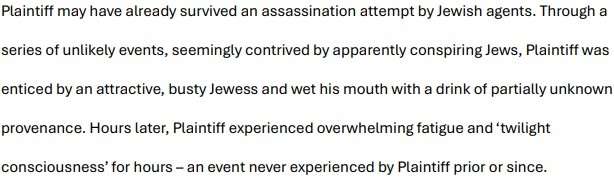
    Readers of the blog may recall a certain John Doe who is suing Penn, Dartmouth, Harvard, and Berkeley for alleged… The post Our Friend with the "Attractive, Busty Jewess" Problem Drops Case Against Harvard Rather Than Naming Himself appeared first on Reason.com.

    Readers of the blog may recall a certain John Doe who is suing Penn, Dartmouth, Harvard, and Berkeley for alleged discrimination; he argues, among other things, that "in service of their goal to [exterminate] or enslave all non-Jews, the Jewish supremacists discriminate [against] non-Jewish whites," including him. He also seeks to proceed under a pseudonym, partly because he claims a fear of physical harm:

    So far, courts have rejected his pseudonymity claim, and he's appealing the decision in his Penn case to the Third Circuit.

    But in the meantime, what to do about his other cases? Well, in the Harvard case, he asked Judge Allison Burroughs, who had denied his pseudonymity motion, to stay that case pending appeal. No, the judge held on May 20:

    Plaintiff … requests a stay of his disclosure requirements pending interlocutory appeal of the Court's denial of his motion to proceed under a pseudonym. "In determining whether to grant a stay, courts consider: (1) [W]hether the stay applicant has made a strong showing that [it] is likely to succeed on the merits; (2) whether the applicant will be irreparably injured absent a stay; (3) whether issuance of the stay will substantially injure the other parties interested in the proceeding; and (4) where the public interest lies." The first two factors are most important.

    Plaintiff has made essentially no showing, certainly not a strong showing, that he will succeed on the merits, and he has provided no credible, non-speculative argument that he will be irreparably injured absent a stay. Defendants have taken no stance as to whether a stay would cause them injury, and the Court presumes that it would not. Finally, as explained above, the public has a strong interest in transparency, weighing against Plaintiff's request for a stay…. "[T]he people have a right to know who is using their courts." … Accordingly, Plaintiff's request for a stay is DENIED. Plaintiff is directed to file a notice of his legal name and address no later than June 2, 2026.

    He then sought a stay pending the appeal of his Penn case, but the judge again said no (on July 15):

    Plaintiff's motion to stay this proceeding pending resolution of his appeal in the Third Circuit is DENIED. While "the power to stay proceedings is incidental to the power inherent in every court to control the disposition of the causes on its docket with economy of time and effort," the Court finds that a stay is not warranted here for the reasons set forth in the Court's May 20, 2026 order.

    Though a trial court may stay an action pending the resolution of independent proceedings, this Court is not bound by whatever resolution Plaintiff may achieve in the Third Circuit, and the Court finds that a stay of Plaintiff's disclosure requirements in the instant case would not promote the interests of judicial efficiency. Plaintiff is ordered to file a notice of his legal name and address no later than July 29, 2026. Failure to timely comply with the Court's order will result in dismissal of the action.

    And today, Judge Burroughs dismissed the case:

    In February 2, 2026, the Court ordered Plaintiff to file a notice of his legal name and address no later than February 16, 2026. The Court has since afforded Plaintiff multiple extensions of that deadline, including the latest extension on July 15, 2026, when the Court ordered Plaintiff to file a notice of his legal name and address no later than July 29, 2026, and provided notice that failure to comply with the Court's order would lead to dismissal of this action. As of August 3, 2026, Plaintiff has not filed a notice of his legal name and address. Accordingly, this action is hereby DISMISSED.

    Immediately after that, Doe filed a notice of voluntary dismissal of the Harvard case. Again, the Penn appeal remains pending.

    The post Our Friend with the "Attractive, Busty Jewess" Problem Drops Case Against Harvard Rather Than Naming Himself appeared first on Reason.com.

  • Reason reason.com news politics us-news us-politics 2026-08-03 18:39

    ↗

    The article is here; the Abstract: This paper examines how the European Court of Human Rights' (ECt­HR or Court) hate… The post Journal of Free Speech Law: "Positive Obligations, Hate Speech, and the Reconfiguration of Free Expression at the European Court of Human Rights,"...

    The article is here; the Abstract:

    This paper examines how the European Court of Human Rights' (ECt­HR or Court) hate speech jurisprudence has been structurally reoriented by the Court's response to an increasing number of applications brought by victims of hate speech. Whereas earlier case law predominantly assessed hate speech under Article 10 of the European Convention on Human Rights, focusing on the permissibility of restrictions on expression, recent victim-initiated claims have directed the ECtHR's analysis towards Articles 8 and 14 and thus towards the question of State responsibility for pro­tec­tion against harm caused by third-party speech.

    Through a reading of the ECtHR's case law, this paper shows how the Court's response to this applicant-driven expansion has recalibrated the balance between dignity, equality, and freedom of expression. The paper argues that the resulting framework risks limiting the doctrinal safeguards traditionally associated with Article 10 analysis.

    In addition, there has been an increasingly expansive understanding of who qualifies as a "victim" of hate speech, extending this qualification beyond direct targets who are in protected groups to include individuals who are merely associated with such groups. The paper argues that the Court's expanding expectation of positive obligations owed by States to their citizens in relation to the exercise of their rights may incentivize over-intervention by domestic authorities and chill legitimate public debate.

    The post Journal of Free Speech Law: "Positive Obligations, Hate Speech, and the Reconfiguration of Free Expression at the European Court of Human Rights," by Natalie Alkiviadou appeared first on Reason.com.

  • Reason reason.com news politics us-news us-politics 2026-08-03 18:10

    ↗

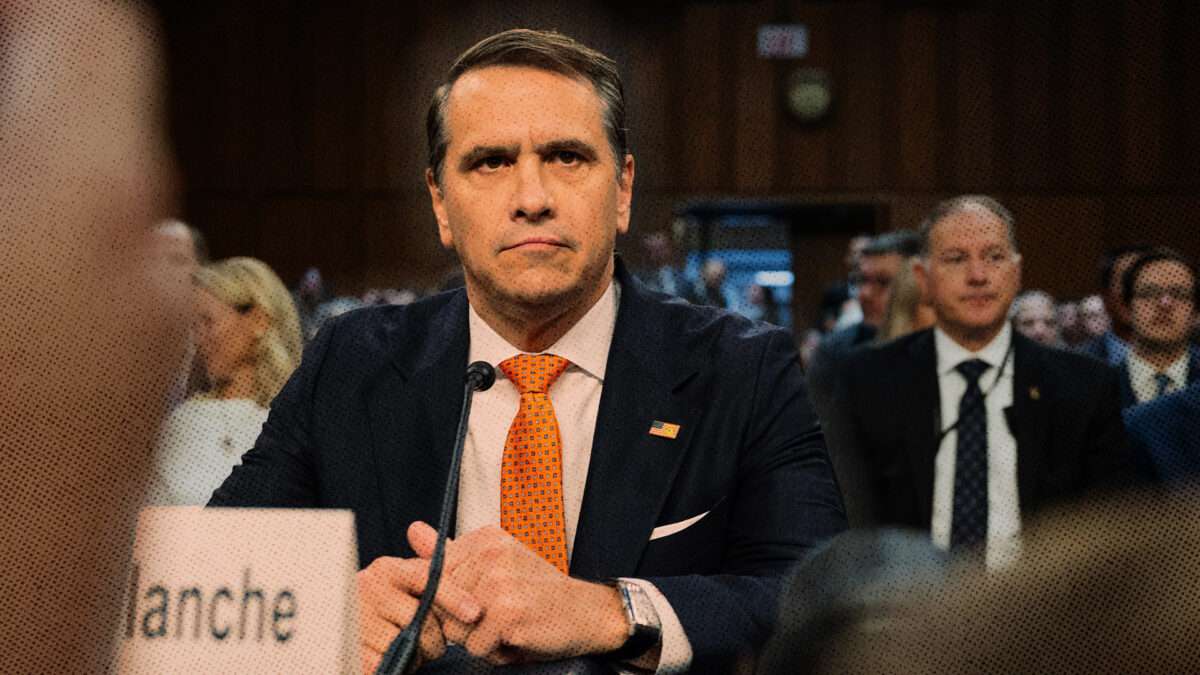
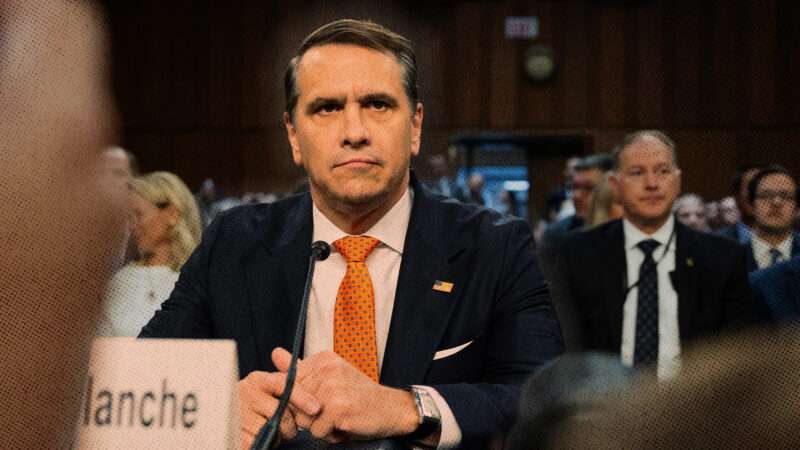
    Acting Attorney General Todd Blanche

    Acting Attorney General Todd Blanche | JNA Press/Allison Bailey/Sipa USA/Newscom

    On Sunday night, Acting Attorney General Todd Blanche announced that he had agreed to change the terms of President Donald Trump's "settlement agreement" with the IRS. Blanche formally rescinded his May 18 order establishing a $1.8 billion "Anti-Weaponization Fund" designed to benefit the president's friends and followers, and he issued a statement about the scope of the IRS immunity he gave Trump in another order issued on May 19. Those moves were aimed at addressing the concerns of two Republican senators who had held up the Senate Judiciary Committee's vote on Blanche's nomination as attorney general.

    Although Blanche's concessions may clear the way for his confirmation, they underline the flagrant phoniness of a brazenly corrupt arrangement that he dishonestly portrays as the result of a bona fide legal dispute between Trump and the IRS. Trump's lawsuit against the agency, which alleged damages from an IRS contractor's illegal disclosure of his tax returns, never involved a genuine controversy between adverse parties. It was a transparent excuse for granting Trump, his family, and his supporters huge favors at taxpayers' expense. By itself, Blanche's approval of that jaw-dropping scam makes him unfit to run the Justice Department.

    Trump's lawsuit pitted him against an agency he oversees, represented by Justice Department lawyers who also answer to him. It was legally doomed right out of the gate because he missed the statutory deadline for filing such claims. And even if he had filed his lawsuit on time, he would have faced the challenge of arguing that an IRS contractor qualifies as an "officer or employee of the United States"—a point that the Justice Department has disputed in other cases involving similar claims.

    Despite those legal weaknesses, the government's lawyers never bothered to contest Trump's claims, in sharp contrast with the way they usually handle such lawsuits. Instead, the Justice Department agreed to what Trump has described as "a settlement with myself."

    That product of admitted self-dealing included $1.8 billion in taxpayer money for Trump supporters who claim they suffered from abuses of power during the Biden administration. Blanche approved the Anti-Weaponization Fund and repeatedly defended it. But the plan provoked a bipartisan backlash so intense that he ditched the idea within two weeks, saying, "We're not moving forward with the fund, period."

    That unilateral decision contradicted the pretense that the fund was part of a "settlement agreement" between the IRS and the plaintiffs: the president, two of his sons, and the Trump Organization. Consistent with that fiction, the document describing the fund was signed by the plaintiffs' lawyers, IRS CEO Frank Bisignano, and Associate Attorney General Stanley E. Woodward Jr. Yet there was Blanche, orally negating the central feature of the "settlement" during congressional testimony without bothering to revise the "agreement" or obtain the plaintiffs' written consent.

    That move was illegitimate on its face, and Trump cast further doubt on the reliability of Blanche's assurance by continuing to push the idea of payouts to his supporters, including people convicted of participating in the 2021 riot at the U.S. Capitol. After Sens. John Cornyn (R–Texas) and Thom Tillis (R–N.C.) asked Blanche to back up his promise in writing, which they presented as a condition of voting to confirm him, Trump kept talking as if the Anti-Weaponization Fund was a live proposition.

    The fund "will not benefit me," Trump wrote on Truth Social last Friday, "but rather the great American Patriots who were hunted down like dogs and whose lives were unfairly and illegally destroyed by the Crooked Joe Biden Administration." If Cornyn and Tillis do not vote to confirm Blanche, Trump warned on Saturday, "I will keep Todd as Acting A.G." and "push hard" for legislation establishing a fund that "takes care of those who have been so badly treated by the Crooked Joe Biden (and Obuma! [sic]) Administration."

    Blanche's announcement that he has rescinded his order creating the Anti-Weaponization Fund glides over those presidential signals. Blanche "has repeatedly advised Congress through testimony, including under oath, as well as in written responses, that the Fund is not moving forward, and the Department has repeatedly represented to district courts that the Fund is not moving forward," it says. Despite that, the rescission order complains, "several frivolous lawsuits have been filed challenging the Fund, and at least one court has declined to dismiss those claims as moot."

    Contrary to Blanche's take, it was reasonable to wonder whether the Anti-Weaponization Fund might be revived given the president's public statements that he wanted to do just that. In any case, Blanche's withdrawal of his order poses the same puzzle as his previous promises: How can one side of a civil case unilaterally revise a settlement agreement? The answer, of course, is that there were never two sides in this case.

    As the federal judge who oversaw Trump v. IRS noted two days before the Senate Judiciary Committee began considering Blanche's nomination, the lawsuit was fake from the beginning because the president controlled both sides. The plaintiffs and the defendants "worked in tandem and were never actually adverse," U.S. District Judge Kathleen Williams wrote, saying the lawsuit was nothing more than a pretext for "a 'settlement' that had no viable basis in law or fact."

    Blanche's conduct confirmed that he was simultaneously acting as the head of the Justice Department and Trump's personal lawyer. Blanche's abandonment of the Anti-Weaponization Fund "demonstrates his confidence that he could speak for, and bind, both sides of this matter," Williams noted. "This certitude supports the conclusion that the Parties worked in tandem and were never actually adverse. Indeed, 'a party may not unilaterally repudiate a settlement agreement once it is reached.'"

    Blanche's grant of immunity reinforces the point that he perpetrated a fraud by pretending that the cozy arrangement he approved was simply the resolution of a legal dispute. Although Blanche presented his sweeping promise of protection as an addendum to the "settlement agreement," he was the only person who signed it. And like the Anti-Weaponization Fund, the immunity deal had nothing to do with Trump's complaint that the IRS had failed to properly supervise contractors entrusted with confidential tax information.

    On Sunday, Blanche purported to clarify that order, which says "the United States" is "FOREVER BARRED and PRECLUDED" from pursuing "any and all claims" against Trump or his relatives regarding "any matters currently pending or that could be pending" before the IRS, the Treasury Department, or "other agencies or departments." Although that broad language suggests that Trump's immunity extends far beyond the IRS, Blanche has denied that implication, and his statement addresses only the scope of the restrictions on IRS claims.

    Cornyn and Tillis wanted Blanche to clarify that his order does not apply to future conduct or extend beyond the plaintiffs. The "mutual release of claims applies by its terms only retroactively," he says. But while the order does refer to IRS claims that "have been or could have been asserted" as of May 19, the language regarding "any matters currently pending or that could be pending," which purports to bind every federal agency, is more ambiguous.

    Blanche also claims the order affects only "the named parties in the lawsuit." But that is plainly not true: The order also applies to "related or affiliated individuals" and "parties." Those categories, it says, include "families or others filing jointly," plus "trusts, parent, sister, or related companies, affiliates, and subsidiaries." It is not clear what "related or affiliated" means or whether the list of examples is exhaustive.

    Even under Blanche's dubious interpretation of the order, it relieves Trump and the other plaintiffs of liability for any tax violations they may have committed prior to May 19. Although Blanche says that benefit is "typical" of settlements between the IRS and taxpayers, no other similarly situated plaintiff has ever received such broad relief. And judging from just one dispute concerning Trump's reported business losses, the immunity approved by Blanche could save Trump more than $100 million in back taxes, interest, and penalties.

    Williams concluded that Blanche's order "directly contravenes" federal law. Under 26 USC 7217, it is "unlawful" for an executive-branch official to "request, directly or indirectly, any officer or employee of the Internal Revenue Service to conduct or terminate an audit or other investigation of any particular taxpayer with respect to the tax liability of such taxpayer."

    If we reject the preposterous premise that the ban on IRS claims was part of a "settlement agreement," here is what happened: The acting attorney general issued a seemingly illegal order that relieves the president, his sons, and his business of liability based on their past tax returns, requiring the IRS to terminate any existing audits or investigations and refrain from starting new ones. He thereby shielded them from the consequences that ordinary Americans face when they run into trouble with the IRS.

    If Blanche had simply done that out of the blue, it would be plainly outrageous. Trump's bogus lawsuit does not change that reality.

    The post Todd Blanche's Concessions Underline the Flagrant Phoniness of Trump's IRS 'Settlement' appeared first on Reason.com.

  • Reason reason.com news politics us-news us-politics 2026-08-03 17:35

    ↗

    A renewed suit seeking to leverage the Clean Air Act in pursuit of lucrative government contracts.

    As promised, government services contractor Gordon-Darby Inc. has renewed its attempt to force the state of New Hampshire to revive its vehicle emissions inspection program. On July 22, the firm filed a new lawsuit challenging the state's decision to end the program and seeking a federal court injunction to force the state to re-start it--thus giving Gordon-Darby the opportunity to pursue another lucrative contact providing emission inspection testing. As before, Gordon-Darby's suit betrays a profound misunderstanding of both the Clean Air Act and the constitutional limits on the federal government's ability to compel state action.

    The central claim in the suit is that New Hampshire is violating the Clean Air Act because it is required to have a vehicle emissions inspection program as part of its State Implementation Plan. What the suit overlooks, however, is that the Act does not authorize injunctions to compel state implementation of the Act. To the contrary (and as one of the plaintiffs' supporting exhibits makes explicit), if a state is failing to meet its SIP obligations, the remedies are for the EPA to impose sanctions, which can include the imposition of a Federal Implementation Plan (FIP)--implemented and enforced by the federal government--and the loss of federal funds (including, potentially, highway funds). Yet that is not what the plaintiffs want here (which is why they are suing New Hampshire instead of the EPA).  Rather, as they make explicit in their complaint, the purpose of the suit is to "compel New Hampshire state officials" to implement the desired program.

    The Clean Air Act has never provided for the sort of enforcement that Gordon-Darby seeks, and with good reason. As the Supreme Court has made clear in New York v. United States, Printz v. United States, and NCAA v. Murphy, the federal government lacks the authority to compel a state to adopt, administer, or implement a desired regulatory program. Further, as Murphy made explicit, this anti-commandeering principle applies to attempting to prevent a state from repealing an existing law, as the New Hampshire legislature did here.

    As it happens, the theory advanced by the plaintiffs was briefly embraced by the EPA in the early 1970s, as the Clean Air Act was first being implemented. Concerned that states were not doing enough to reduce air pollution, the EPA sought to force states to adopt specific emissions control measures, including the adoption of vehicle emission inspection programs! Three of four federal circuit courts rejected the EPA's arguments, however. The Supreme Court granted certiorari, at the federal government's request, only to dismiss the case after the Department of Justice conceded (in a footnote) that the EPA's regulations could not be lawfully enforced. Even though the Supreme Court would not articulate an anti-commandeering rule for another fifteen years, DOJ recognized the constitutional problem with trying to turn state officials into agents of the federal government. Now that the anti-commandeering doctrine is explicit, there should be even less room to debate Gordon-Darby's audacious legal claim.

    This time around Gordon-Darby is joined by an individual plaintiff, Marilyn Jonas, who claims her asthma is exacerbated by air pollution. The addition of an individual plaintiff who can claim tangible harm from air pollution increases that may result from termination of the emissions inspection program may help Gordon-Darby avoid dismissal on standing grounds, but it does not change the statutory or constitutional analysis.

    When Gordon-Darby first brought litigation seeking to keep the emissions inspection program in place, New Hampshire failed to raise commandeering arguments in its defense, preferring various procedural and jurisdictional arguments that the district court unpersuasive. As the case has been assigned to the same judge, we will see whether history repeats itself in that respect here.

    The post Gordon-Darby Renews Attempt to Commandeer New Hampshire Through the Clean Air Act appeared first on Reason.com.

  • Reason reason.com news politics us-news us-politics 2026-08-03 17:11

    ↗

    The article is here; the Abstract: When the government regulates conduct, it does not always do so directly. Increasingly, the… The post Journal of Free Speech Law: "Jawboning as Collaborative Governance," by Daniel Browning appeared first on Reason.com.

    The article is here; the Abstract:

    When the government regulates conduct, it does not always do so directly. Increasingly, the government regulates conduct indirectly—by pressur­ing some intermediary to do the direct regulatory work for it. This form of indirect regulation has raised considerable concern in the context of speech regulation. Scholars and activists have sounded alarm bells that this form of indirect speech regulation, typically referred to as "jawboning," often violates the First Amendment because it allows the government to censor expression on the cheap. Indeed, during its 2024 term, the Supreme Court heard two different First Amendment jawboning cases. While one case, Murthy v. Missouri, was dismissed on standing grounds, the Court reaffirmed, in NRA v. Vullo, that coercive jawboning of protected expression violates the First Amendment.

    Despite jawboning cases taking up a substantial portion of the Court's docket during its 2024 term, little scholarly discussion about jawboning can be found. The scholarly discussion of jawboning that does exist tends to converge on a standard picture—that jawboning is an inherent threat to freedom of expression and that it is, therefore, necessarily normatively undesirable. Thus, while scholars have identified possible perils of jawboning, practically no attention has been paid to the promises.

    This Article rejects the standard picture. In a nutshell, this Article argues that we ought to be more ambivalent about jawboning, or, in other words, that whether jawboning is normatively desirable turns on a fine-grained contextual analysis that's glossed over by the standard picture.

    But first, we must define "jawboning," as there is little consensus in the literature about what it even means for the government to jawbone. After surveying various conflicting definitions of jawboning, Part I defines jawboning as a triadic relationship between the government, an intermediary, and some third party, where (a) government official(s) communicate with a private intermediary (b) in a way that pressures—but does not persuade—the intermediary to do something that (c) influences the third party's conduct and where (d) the government official intends to target the third-party's conduct by means of its pressure on the intermediary.

    Building on the definitional work in Part I, Part II situates jawboning in relation to the broader governance literature. Part II argues that jawboning is a form of collaborative or "new" governance—a public/private regulatory partnership designed to achieve some public regulatory objective. Jawboning is a "third way" between direct government regulation and pure private ordering.

    After articulating a functionalist framework for evaluating jawboning, Part III explores the conditions under which jawboning, as a form of collaborative governance, is and is not normatively desirable. From this discussion, we see that the normative case for or against jawboning turns on a variety of contextual factors about the regulatory environment that are glossed over by the standard picture.

    Having laid the descriptive and normative foundations, Part IV turns to First Amendment jawboning doctrine. After identifying two significant deficiencies in existing First Amendment jawboning doctrine, I propose that courts should analyze several factors presently excluded from First Amendment jawboning analysis: (1) the government's motive for jawboning; (2) the value of the targeted expression; and (3) the weakness of the intermediary and, relatedly, the intermediary's independent incentives to regulate third-party speech.

    The post Journal of Free Speech Law: "Jawboning as Collaborative Governance," by Daniel Browning appeared first on Reason.com.

  • Reason reason.com news politics us-news us-politics 2026-08-03 16:13

    ↗

    In the upcoming climate change case the Supreme Court should reject the industry and Trump Administration arguments for preemption-by-penumbra.

    This morning I filed an amicus brief in Suncor Energy (U.S.A.) Inc. v. County Commissioners of Boulder County. In this case, likely to be argued in October, the Supreme Court will consider, among other things, whether the Clean Air Act or the Constitution preempt state-law claims seeking relief for injuries allegedly caused by climate change.

    Grok

    As my prior blogging on the subject has indicated, I find the preemption claims to be without merit. (I have no opinion on the procedural jurisdictional issue, but recommend the briefs by Profs. Derek Muller and Ben Johnson for an idea of the issues there.) Accordingly, my amicus brief focuses on the preemption claims. Here is the summary of my argument:

    Global climate change presents many complex and intractable legal and policy questions. Assuming this Court has jurisdiction, the legal questions in this case are comparatively simple and straightforward. Nothing in federal law, let alone the Constitution, preempts state-law claims seeking relief from injuries allegedly caused or exacerbated by petitioners' conduct.

    At issue in this case is whether allegedly aggrieved parties, including subnational governments, may seek re-dress under state law from defendants otherwise subject to state court jurisdiction for harms allegedly caused or contributed to by petitioners' conduct. In order to succeed, plaintiffs will ultimately need to show that the dam-ages they allege were caused by actions taken by defend-ants, that such actions are within the jurisdiction of state courts, and that such actions may be the subject of tort liability under state law. Allowing this case to proceed does not allow any State to impose a universal rule on all fossil fuel producers, let alone on all greenhouse gas emissions around the globe. The fact that emissions "can-not be unmixed and traced," Pet'rs' Br. 28, may complicate plaintiffs' ability to prove their case, but it does not justify—let alone require—preemption of their claims.

    Petitioners charge that respondents' claims are barred because both the Clean Air Act and the Constitution categorically preclude any claims seeking redress for harms caused by interstate pollution. Yet neither the Clean Air Act nor the Constitution imposes such a rule. To the contrary, as this Court has long understood, such suits may proceed, subject to certain limitations, even if they are viewed as efforts to seek redress for interstate pollution subject to federal regulation.

    That the Clean Air Act may constitute a broad, "comprehensive" regulatory scheme does not mean that it preempts state-law efforts to seek remedies for the alleged harms caused by the accumulation of greenhouse gases in the atmosphere. Like other federal environmen-tal statutes, the Clean Air Act was enacted against a back-ground of extensive and essential state-law environmen-tal protections, including those provided by common law causes of action. That the Clean Air Act was meant to supplement, enhance, and encourage state-level efforts, rather than supplant or preempt them, is evident from the text, history, and structure of the Act. It is also what this Court has recognized.

    The Constitution's structure provides no more basis for closing the courthouse doors on respondents' efforts to seek redress for the harms they allege. Federal common law may once have preempted state attempts to control interstate air pollution under state law, but federal common law has been displaced, and no longer serves that function. Nor does any constitutional provision or doctrine identified by petitioners provide a basis for wholly preempting state-law claims seeking redress for harms such as those alleged here. Petitioners' attempt to cobble together an argument for constitutional preemption rests upon penumbras and emanations from various constitutional provisions that cannot hold the weight of their pro-posed rule. That is insufficient. "There is no federal pre-emption in vacuo, without a constitutional text or a federal statute to assert it." Hencely v. Fluor Corp., 146 S. Ct. 1086, 1093 (2026) (quoting Puerto Rico Dep't of Consumer Affairs v. ISLA Petroleum Corp., 485 U.S. 495, 503 (1988)). And "[i]nvoking some brooding federal interest or appealing to a judicial policy preference should never be enough to win preemption of a state law." Virginia Uranium, Inc. v. Warren, 587 U.S. 761, 767 (2019) (lead opinion).

    State law—statutes, regulations, and common law court decisions—has played an essential role in this nation's history of environmental protection. Resort to state law should not be foreclosed merely because such claims threaten economically important interests or rely upon expansive theories of liability or attenuated chains of causation. If such suits are to be preempted, that is a job for Congress, not the courts.

    And from later in the brief:

    The Court should decline petitioners' invitation to craft a new constitutional rule that would categorically preclude States from seeking to use state law to address environmental problems that relate to interstate pollution. Environmental problems rarely respect jurisdictional lines. Yet this has never barred the application of state law to environmental concerns, nor foreclosed efforts by state policymakers and affected parties to utilize state law to redress environmental harms.

    The Constitution provides the federal government with ample power to direct climate change policy and limit or preempt inconsistent, ineffective, or ill-advised state laws. Such power may be exercised by the political branches, through the process of bicameralism and presentment. The power to adopt an unheralded, unprecedented, and unbounded rule concerning interstate environmental problems does not lie in this Court, and this is reason alone to reject petitioners' arguments.

    While I do not address the foreign affairs preemption argument, I find it even less persuasive than the arguments I address, largely because it is an argument without limit. The United States is not currently party to any treaty--or even an international negotiation--that even threatens to conflict with a potential damage award. The idea that such suits could nonetheless be preempted because the defendants are engaged in multinational conduct or because the atmosphere (like, say, the internet) is global does not change the analysis. Congress could certainly preempt this litigation on foreign affairs grounds and (at least under current precedent, i.e. Garamendi) executive branch action might also be relevant, but there is no action here by the political branches that could or should have such effect.

    I also do not address the First Amendment arguments raised in some of the top-side amicus briefs, largely because those questions are not before the Court. As I say in my brief, there may well be constitutional constraints on tort liability for marketing claims of the sort at issue here, but that's not an argument for preemption of these suits at the outset.

    I expect to blog more on some of the issues in this litigation (and perhaps some of the many amicus briefs filed). In the meantime, for those interested, here are my prior posts on this subject:

    • Why State Common Law Nuisance Claims Against Fossil Fuel Companies Are Not Preempted, Oct. 27, 2021;
    • Third Circuit Rejects Oil Company Efforts to Remove Climate Claims to Federal Court, Aug. 17, 2022;
    • Oil Companies Fail to Convince the Eighth Circuit Climate Cases Should Be Removed to Federal Court (Updated), Mar. 25, 2023;
    • Is Climate Change Going Back to the Supreme Court? (Minnesota Edition) [UPDATED], Dec. 11, 2023;
    • D.C. Circuit Rejects Oil Company Attempt to Remove District's Climate Suit to Federal Court, Dec. 19, 2023;
    • William Barr Responds on American Petroleum Institute v. Minnesota, Dec. 26, 2023;
    • Supreme Court Takes a Pass on Minnesota Climate Change Case, Jan. 8, 2024;
    • Are State Law Climate Change Tort Suits Preempted by Federal Law?, May 3, 2024;
    • Supreme Court Denies Certiorari in Climate Tort Suits, Jan. 13, 2025;
    • Supreme Court Rejects Red State Attempt to Sue Blue States Over Climate Suits, Mar. 10, 2025;
    • William Barr Discovers the Economics of Tort Law (and Misrepresents the Law Governing Interstate Pollution), Nov. 3, 2025;
    • Placing Climate Tort Litigation in Context (Updated), Nov. 7, 2025;
    • A Second Round with William Barr on Litigation Over Interstate Pollution, Dec. 2, 2025;
    • Court Dismisses Trump Administration Effort to Block Michigan Climate Lawsuit, Feb. 4, 2026
    • Climate Change Goes Back to the Supreme Court -- Colorado Edition, Feb. 23, 2026.
    • Previewing Suncor Energy v. Boulder County, Mar. 6, 2026.

    The post Amicus Brief in Suncor Energy v. County Commissioners of Boulder County appeared first on Reason.com.

  • Reason reason.com news politics us-news us-politics 2026-08-03 15:57

    ↗

    court holds in Speedway Bomber Brett Kimberlin's lawsuit.

    From last Monday's decision by Magistrate Judge Mark Dinsmore (S.D. Ind.) in Kimberlin v. Metro. School Dist. of Wash. Township Schools refusing to allow Brett Kimberlin to add an extra claim to his pending lawsuit (see here for more on the original claims):

    [Plaintiff] claims Defendants failed to adequately respond to a letter he sent Dr. Woodson in 2024 accusing a now-deceased schoolteacher of sexually abusing him while he was a middle school student in the 1960s. The teacher's employment with the school ended in 1969, and Plaintiff left the state of Indiana in 1978. Plaintiff currently resides in the state of Maryland, and he does not allege to have any present affiliation with the School District, aside from sending his letter to Dr. Woodson in 2024.

    The complaint alleges that rather than investigate his claims, as is required by the School District's own policies, Dr. Woodson and others engaged in an effort to dismiss and cover up his allegations. Based on these allegations, the complaint asserts claims against Defendants under Title IX and the Fourteenth Amendment Due Process Clause and Equal Protection Clause….

    [T]he proposed amended complaint asserts an additional claim against Dr. Woodson for negligence. The negligence claim alleges that Dr. Woodson failed to comply with Indiana's mandatory reporting statutes, which require school officials and others to immediately report allegations of child abuse to law enforcement. It also alleges that Dr. Woodson failed to follow the School District's own policies with respect to allegations of child abuse and that she tried to cover up Plaintiff's allegations….

    There is a consistent line of cases holding that Indiana's mandatory reporting statutes do not provide a private right of action….

    To the extent Plaintiff attempts to assert a negligence claim against Dr. Woodson for failing to comply with the School District's policies concerning reports of child abuse, that attempt is also futile because the proposed amended complaint does not create a reasonable inference that Dr. Woodson owed Plaintiff a duty of care in 2024 to investigate his allegations of abuse occurring in the 1960s. "Indiana recognizes a duty on the part of school personnel to exercise ordinary and reasonable care for the safety of their students."

    But … the proposed amended complaint does not support a reasonable inference that Dr. Woodson owed Plaintiff this duty when he sent his letter in 2024 because he was not a student at that time and no students were in danger of abuse from the now-deceased accused schoolteacher[.] By the time he sent his letter, Plaintiff had not been enrolled in the School District for approximately 50 years, and Dr. Woodson's alleged conduct could not have endangered the safety of the School District's students. Plaintiff's reply does not address this argument, and neither his motion to amend nor his proposed amended complaint supports a theory that school districts or their personnel owe a duty of care to former students to investigate allegations of past abuse….

    Jonathan Lamont Mayes (Bose McKinney & Evans, LLP) represents defendants.

    The post Schools Owe No Legal Duty "to Former Students to Investigate Allegations of Past Abuse," appeared first on Reason.com.

  • Reason reason.com news politics us-news us-politics 2026-08-03 15:47

    ↗

    President Donald Trump in a chicken costume

    President Donald Trump in a chicken costume | Illustration: Brian T. Young/Dreamstime/Aaron Schwartz - via CNP/Polaris/Newscom

    It was a whirlwind weekend for people across the Middle East. A burst of stories came out on Friday suggesting that President Donald Trump and Israeli Prime Minister Benjamin Netanyahu were thinking of resuming full-scale war with Iran, including Trump's long-threatened attacks on power plants and bridges. U.S. embassies warned Americans against travel in the Middle East. People on both sides of the Persian Gulf told me about the preparations for war: families stocking up on supplies, authorities throttling the internet, service members called up for duty.

    On Saturday night, Trump suddenly reversed course. Despite being "locked and loaded" to unleash "Military Terror," he wrote on Truth Social, the U.S. was going to "cancel the attack" because "the perimeters [sic] of a deal has been agreed to. This would include the Immediate, Complete, and Total OPENING OF THE HORMUZ STRAIT, and an end to Iran's nuclear threat."

    The cycle has become a running joke among commodities traders. Multiple times during the war and postwar clashes, Trump made an extreme threat at the beginning of the weekend, only to climb down before oil and stock trading resumed. "Middle East wars are now scheduled from 9pm Friday to 10.30pm Sunday (GMT). That's it. Fighting outside designed non-market hours isn't allowed," Bloomberg columnist Javier Blas joked in June. During the latest period of tension, U.S. officials themselves acknowledged to CBS that the administration wanted "to conclude [its planned attack] by the time financial markets open Monday."

    On Monday morning, Trump demanded on Truth Social that oil companies "get your consumer (retail!) Oil Prices DOWN, NOW!"

    The problem is more fundamental than just playing markets. Trump started the war in February expecting a quick, cheap victory. Instead, he created a situation where Iranian officials have both means and motive to make the situation as difficult as possible for the president, to discourage him from once again trying to wreck the country and kill its leaders. Because stocks of both air defense ammunition and crude oil have been emptied out, any path to an American military victory would be painful. Yet domestic U.S. politics mean that Trump would pay a political price for any concessions to Iran, both from opportunist Democrats and from earnestly hawkish Republicans.

    Ironically, the grand prize in Iranian eyes would cost Americans nothing. Iran badly needs U.S. economic sanctions to be lifted in order to conduct trade in dollars and attract international investment in the country's reconstruction. And it is exactly this prize that Trump got the most flak for offering in the last peace memorandum. While Trump offered a temporary sanctions waiver allowing Iran to sell oil in dollars—which he revoked last month—he did not unfreeze any Iranian bank accounts as promised. Secretary of State Marco Rubio hinted that any further sanctions relief would come with extra conditions not in the memorandum.

    So Iran has clung onto Hormuz as a form of leverage against sanctions. After Trump's Saturday announcement, Iranian Foreign Ministry spokesperson Esmail Baqaei did confirm that Iran was close to finalizing a deal with neighboring Oman over Hormuz, but claimed that the strait would not open immediately or return to the open prewar status quo. According to Israel's Channel 12, the deal on the table routes all inbound traffic through Iranian waters and all outbound traffic through Omani waters, essentially giving these countries a veto on Hormuz. On Sunday night, the British Navy's Maritime Trade Operations office reported "an explosion in close proximity" to an oil tanker passing by Oman.

    The last round of fighting had been sparked by Iranian attempts to hold onto that leverage. After the U.S. Navy tried to reroute shipping away from Iranian waters last month, Iranian forces began shooting at those ships and Trump declared the peace memorandum "over," beginning near-nightly air raids on the Iranian coast. It wasn't enough to restart shipping—and over the past two weeks, Iran showed that it can hold trade hostage in places other than Hormuz. Houthi forces in Yemen, allied with Iran, declared a blockade of shipping in Bab al-Mandab, the strait at the southern end of the Red Sea. They also launched drones at Saudi oil plants from Iraqi soil. On the other side of the Red Sea, a drone smashed into a gas tanker at the Egyptian port of Damietta near the Suez Canal.


    Meanwhile, Iranian air raids have apparently led the U.S. military to start pulling back from parts of the Middle East. The U.S. recently took its Patriot air defense missiles out of Iraqi Kurdistan, where Iran has regularly been bombing the airport, the U.S. consulate, and Kurdish rebel camps. Although officials insisted that this was a pre-scheduled withdrawal, the White House has repeatedly promised to withdraw from Iraq over the past decade without following through; this time was different. The Wall Street Journal reports that the U.S. military is thinking of drawing down from Kuwait, which is right next to Iran.

    Six American troops were killed during an Iranian drone raid in Kuwait on March 1, the second day of the war. Casualty data obtained by The War Horse under the Freedom of Information Act shows that the raid also wounded two generals and a colonel. The country is close enough to Iranian borders that Iran was even able to attack a U.S. base there with 1950s fighter jets. But moving U.S. forces further away doesn't guarantee their safety. Last month, an Iranian missile killed three Americans at Muwaffaq Salti Air Base in Jordan.

    The U.S. military is down to about 800 Patriot interceptors, out of 2,300 before the war, according to a paper published last week by the Center for International and Strategic Studies last week. Government sources confirmed those numbers to CNN. Meanwhile, Ukrainian President Volodymyr Zelenskyy is asking for 300 Patriot interceptors by the winter, when Russia is expected to attack energy infrastructure.

    Of course, the state of Iran's own stockpile is still a big unknown. It is clear, however, that the U.S. military cannot provide its troops and host countries the level of protection they had been used to. Gen. Alexus Grynkewich, head of U.S. European Command, recently warned the Pentagon that he would have to choose between defending Israel and defending the homeland, in a letter leaked to the Washington Post.

    Trump has two paths ahead of him. One path is diplomacy, which means making real concessions to the other side, sticking to them, and defending the deal domestically. The other path is a return to war, which means accepting increased risks, real costs, and a pace of escalation that cannot be limited to when the market is closed. Faced with this fork in the road, Trump is driving straight toward the median: He has adopted a predictable pattern of bluffing, backing down, and failing to change the situation.

    Esfandyar Batmanghelidj, an American economist who recently debated a member of Iran's negotiating team, wrote in The American Conservative that Iranian leaders are increasingly skeptical that a peace deal is even possible, given the Trump administration's indecision and dysfunction. The negotiator "insisted that Iran would not allow the Strait of Hormuz to reopen until it saw a definitive change in U.S. strategy—not just a shift in tactics. We might hope that he is wrong in that assessment, but I too am skeptical the crisis can be resolved in any other way," Batmanghelidj wrote.

    The post Trump Backs Down From Yet Another Empty Threat to Iran appeared first on Reason.com.

  • Reason reason.com news politics us-news us-politics 2026-08-03 15:35

    ↗

    Hands of a prisoner behind bars

    Hands of a prisoner behind bars | Photo: Willeecole/Dreamstime

    A Canadian man named Brandon Klayme was wrongfully imprisoned for 18 months after authorities mixed up his Kik username with the username of someone who had committed sex crimes involving a minor. The horrible mistake stems from a mistake first made by Dane County, Wisconsin, police.

    "He should never have been charged, let alone convicted," judges from the Nova Scotia Court of Appeal have now said.

    Authorities were looking for someone going by fus__ro_dah, after that account used the chat app Kik to exchange sexually explicit messages and images with a 12-year-old girl whom the court refers to as C.H.

    Klayme's username on Kik was fus_ro_dah—with just one underscore between "fus" and "ro," not two.

    It might sound odd to non-nerds that two people would have variations on such an unusual username. But "both names come from the dragon language in the role-playing console game The Elder Scrolls V: Skyrim and roughly translate to force, balance and push," notes Neil Vigdor at The New York Times.

    The investigation into Klayme's account began with the Dane County Sheriff's Office in Wisconsin. The criminal Kik messages that police there obtained show that they were sent by fus__ro_dah, with a double underscore in the first part. But when police subpoenaed Kik for account information, they said they were investigating fus_ro_dah, with a single underscore. This ended up leading authorities to Klayme's email address and eventually his identity.

    The matter wound up being referred to the Halifax Regional Police in Nova Scotia, where authorities there also failed to notice the usernames discrepancy. Halifax police seized Klayme's electronic devices in 2020 and found no material linking him to C.H., nor any evidence that he had used his Kik account at all during the time period in question. Still, they charged him with possession of child pornography, making sexually explicit material available to child, and child luring. Klayme was found guilty at trial and sentenced to 18 months in prison, which he completed.

    Klayme was following up his 18-month prison sentence with 18 months of probation when he appealed.

    Telling the court that he had not used Kik since 2012, he pointed out that his username was different than the username that had sent the sexually explicit material. "In the latter stages of preparing my appeal arguments, it was discovered that the subpoena contained a subtle mistake that changed the course of my life," Klayme wrote in a May 2026 affidavit to the court. "The police officer did not notice that the perpetrator's Kik username 'fus__ro_dah' contains a double underscore. This discrepancy went completely unnoticed at the trial. It was never brought to the attention of the trial judge."

    "We couldn't figure out how Mr. Klayme's account came into it," lawyer Zeb Brown told the Times. "So we were taking a closer look at the trial evidence and the discrepancy was readily apparent in the printouts of the social media messages."

    Klayme is now "exploring his options and getting advice in regard to seeking damages in a civil lawsuit," Brown said.

    In July, the Nova Scotia Court of Appeal acquitted Klayme of all charges. "The Wisconsin police identified Mr. Klayme as the offender using an incorrect username. His conviction rested on the internet username being attributed to him," the court pointed out in its decision. "Klayme is factually innocent of the offences."


    In the News

    Social-media age verification is coming to New York: The state has released its rules for implementing 2024's Stop Addictive Feeds Exploitation (SAFE) for Kids Ac, which "requires social media companies to restrict algorithmically personalized content feeds and overnight notifications for minors unless they obtain parental consent," reports Mid-Hudson News:

    The final rules outline how companies must verify users' ages and obtain parental approval before enabling those features and will take effect on January 25, 2027….

    The regulations establish standards for age verification while requiring companies to minimize the personal information they collect. Platforms may verify age using methods such as uploaded photos or videos or by confirming information tied to an email address or phone number. Companies must also offer at least one option that does not require a government-issued ID.


    More Sex & Tech 

    • The rise of the makeout police is bad for society, suggests Faith Hill at The Atlantic. "I'm starting to appreciate the public display of affection as a means of resistance against the surveillance mindset."

    • Missouri officials held a press conference to bash a public library after it read the LGBTQ-friendly children's books Rainbowsaurus and Big Wig. "Staff at a Columbia library read them aloud to toddlers and preschoolers during a 'rainbow story time' attended by families who chose to be there," reports the Missouri Independent. Missouri's secretary of state called it "unconscionable, if not criminal" and said that if it wasn't illegal now, he would work "to ensure this is illegal in the future."

    • A new Justice Department Office of Legal Counsel opinion "waives a 2022 law banning TikTok on federal government devices," notes The Wall Street Journal.

    • Georgia has arrested at least 20 people for misuing the state's automated licence place reader system. Reason's Autumn Billings has more details.

    • X has submitted a document to the Australian parliament calling "for the government to drop efforts to strengthen its underage social media ban," Wired reports:

    X pushed back against the "highly invasive" information gathering powers the proposed amendment would allow, accusing the commissioner of having "seemingly no understanding" of how this would work for the platforms and no safeguards for confidential and commercially sensitive information. Demanding data, documents, and compliance evidence from non-Australians in other countries could cause issues "for the comity of nations," the firm also warned.

    • AI data centers are the new boogeyman of Democratic campaigns. "Data centers are the Democratic party's en vogue bad guy, increasingly demonized by candidates running in competitive races, along with the corporations racing to build them around the country," The Bulwark points out.

    • The Trump administration just gave its blessing to the robotaxi company Zoox.

    The post Police Mix Up Usernames, Man Spends 18 Months in Prison for Someone Else's Sex Crimes appeared first on Reason.com.

  • Reason reason.com news politics us-news us-politics 2026-08-03 15:20

    ↗

    A black-and-white photo of people marching in a street, all toward the left side of the photo frame. A few of them hold signs on posts.

    A black-and-white photo of people marching in a street, all toward the left side of the photo frame. A few of them hold signs on posts. | Wikimedia Commons

    Iran's Islamic revolution was not just an Islamic revolution. A diverse set of factions, from Marxist-Leninists to religious nationalists, participated in overthrowing the monarchy. But their hopes for shaping the postrevolutionary order were soon dashed as the first theocracy in Iranian history was established.

    Afshin Matin-Asgari, an Iranian-American historian and former student activist who put his life and studies in the 1970s on the line on the streets of Tehran, has felt the disillusionment acutely. Today, he is worried that the exiled Iranian opposition is repeating the errors of the 1979 generation. It is now the supporters of restoring the monarchy, he argues, who threaten the democratic aspirations of Iranians.

    During the 1979 revolution, not everyone was on board with the exiled theologian Ayatollah Ruhollah Khomeini, whose rhetoric and views grew more intransigent over time. But he had convinced Iranians that he presented a spiritual antidote to the worldly corruption and foreign-backed repression that the Shah of Iran personified. Under an Islamic Republic, he drove home, Iran won't be a vassal state—hence the revolutionary motto "neither East nor West."

    Student activists were captivated by those ideas, as their frustrations with foreign meddling in Iran had grown. The 1953 coup, orchestrated by Britain and the United States, had stifled the prospects of democracy in the country and handed power to an autocratic leader who didn't have a popular base but did have several powerful international patrons.

    When students at the University of Tehran protested an upcoming visit by then–Vice President Richard Nixon in December 1953, the shah's security forces resorted to brute force and killed three students: Mostafa Bozorgnia, Mehdi Shariatrazavi, and Ahmad Ghandchi. Their families were not allowed to follow the Shiite tradition of hosting memorials on the third and seventh days after their death, and the ritual culmination of the 40-day mourning period was held under tight security measures.

    University students, who were not monolithically religious-minded, acted as one of the major driving forces behind the historic turn of events in 1979, a factor Matin-Asgari documented in his 2002 book Iranian Student Opposition to the Shah. But the theocracy that emerged from a movement for Iranian liberty turned its back on many of the people who had helped overthrow the monarchy. Purges eviscerated universities of critical thinkers, the government outlawed left-leaning parties that had participated in the uprising, and newspapers faced a wave of restrictions. The revolution began to disappoint those who had pinned their hopes on it. 

    Matin-Asgari came to America in 1974 to study for an undergraduate degree in history at California State University, Los Angeles. But "by December 1978, it was clear that what was happening in Iran was a mass popular revolution," he says. "I decided to go back and join. And as soon as I arrived, I joined the street protests."

    "For years and years, we've been waiting for a revolution in Iran, and I was a leftist student obsessed with revolution," he adds. "When it was happening, there was no point in just taking classes and studying revolution."

    In "Tehran Memoirs and Diaries: Winter 1979 and Summer 1997," an essay published in 2000, Matin-Asgari detailed how the protests transformed his views of Iran's rapidly changing political landscape. He saw courage, defiance, and repression—and he was lucky to leave one of the rallies unharmed. Meanwhile, the funeral of Kamran Nejatollahi, a 24-year-old professor the government had killed, became one of the most violent episodes in the lead-up to the monarchy's collapse. Thousands of mourners had turned up at the event on December 27, 1978, and several protesters were shot dead.

    The essay includes a rare reference to the death of Joe Alex Morris Jr., a Los Angeles Times correspondent who was in Tehran covering the revolution together with three other American colleagues. While reporting on a mutiny staged by air force cadets on February 10, 1979, Morris was killed when Imperial Guard soldiers opened fire to contain the uprising. The monarchy was overthrown the following day.

    Uncertainty was baked into the revolution from the beginning. The movement that defeated the shah had been united by opposition to his rule, but not by a shared vision of what should come next. Opposition was solid enough to bring down an unpopular regime, but it couldn't define the framework of the succeeding state.

    "You just had to fill in the blank," says Matin-Asgari. "There was this Islamic Republic, nobody knew what it meant, but there was a lot of support for it."

    Matin-Asgari is now a professor of history at California State University, Los Angeles. In 2015, he received his university's Outstanding Professor Award. His latest book, Axis of Empire: A History of Iran–U.S. Relations, was published earlier this year. He has watched from a distance as the revolution's authoritarian turn paved the way for the current disconnect between the state and its constituents.

    Today, much of Iran's exiled opposition hopes to replicate the revolutionary spirit of the 1979 protesters by siding with President Donald Trump and the ultranationalist government of Israeli Prime Minister Benjamin Netanyahu.

    When protests against the theocracy began in early 2026, exiled former crown prince Reza Pahlavi anointed himself as an opposition leader and frequently called for military intervention on Fox News. His supporters in the diaspora celebrated the U.S.-Israeli attacks against Iran on February 28, 2026.

    But to Matin-Asgari, diasporic observers ensconced in the safety of their adopted countries are not in a position to urge Iranians at home to accept risks or come to terms with the pains of war for specific political outcomes to be achieved.

    "This idea is very dangerous and in some ways irresponsible to expect ordinary people to go out there and get killed so that the regime would change. It's not going to fall that way," Matin-Asgari says. "I tell anyone who tells others in Iran to go out there and protest, if they're really serious, they should get an airline ticket and go back to Iran and join them. It's very easy to sit here and prescribe something, including getting killed in street protests, for others to do."

    Iranians have engaged in more acts of uprising against their government than any other nation's people in the region. The monthslong Woman, Life, Freedom protests were famously referred to as the first feminist revolution in the Middle East. In the recent protests in January, at least 3,117 protesters were killed, according to the official Iranian government data. (A D.C.-based human rights group made up of Iranian dissidents has put the figure at 6,488.)

    As the country was trying to recover from that crackdown, the U.S.-Israeli alliance launched an unprovoked war on Iran that, in the first phase, continued for 39 days, killing 3,519 more Iranians. More than 115,000 civilian buildings were damaged or destroyed. A new round of airstrikes by the U.S. military, starting on July 7, has killed at least 60 Iranians as of this writing.

    The Iranian-American historian also recognizes, based on personal experience, that immigration alters people's perceptions and that many of those who have been away from Iran for decades cannot plausibly have a full-fledged understanding of the country's fast-evolving social dynamics.

    "I haven't been back in the past three or four years, but in the past 20 years, when I was going to Iran almost every year, I realized that I didn't really know this country," he says. "The imaginary Iran that even I remember doesn't exist anymore."

    Some characteristics of the 1970s anti-shah movement can be seen among the exiles fighting the Islamic Republic now. The monarchists know that they want the current government in Tehran gone and replaced by Pahlavi, the son of the former shah. But they don't know how to get there, and they have not reflected enough on some fundamental questions about the transition.

    "Khomeini had said that once the shah goes, I'd go back to [the seminary city] Qom, and maybe I'd just play an advisory role," Matin-Asgari says. "But by the summer of 1979, about six months after that, he gave a major speech and said, 'I was wrong, I thought that I could avoid playing a direct role, and I had made a mistake.'" The ayatollah centralized power, disavowed former allies, and came up with a stern interpretation of Islamic principles to perpetuate his rule.

    Today, despite his supporters' conviction that he should revive the kingdom, the shah's son says he wishes only to facilitate a democratic transition as a bridge-builder. At Politico's Security Summit in May, Pahlavi told journalist Dasha Burns he was not seeking power for himself, saying that he would be "a transitional leader" who offers "a process whereby it's for the people of Iran to decide ultimately what they want and who do they want as their leaders."

    But Matin-Asgari notes the unpredictability of political transitions: Promises made before power is acquired do not always determine how power is exercised afterward. "Reza Pahlavi is now claiming on the one hand that he is going to be this unifying figure, that he's not a shah or leader," Matin-Asgari says. "It's a bundle of contradictions. Because in practice we see right now that he is not acting as a unifying figure, [but] acting as a divisive figure."

    Pahlavi has been the most visible Iranian calling for a bombing campaign against his home country, urging Trump and Netanyahu on multiple occasions to "finish the job" and branding the war as a "humanitarian intervention." Despite Pahlavi's efforts to ingratiate himself with Trump, the U.S. president has dismissed him as a "nice guy" without popular support. Pahlavi's characterization of the military campaign as benign hasn't matched the facts of a war in which Iran's urban infrastructure, cultural heritage sites, universities, research institutions, hospitals, and natural habitats have been heavily pounded.

    A late-March survey of Iranian Americans showed 66.1 percent opposing military action against Iran. Pahlavi has also consistently called for tighter economic sanctions to expedite a possible collapse of the government. Such sanctions against Iran led to an annual per capita income loss of $3,000 from 2012 through 2019, weakening the country's middle class dramatically. Far from being targeted at the Islamic Republic authorities alone, these sanctions have affected entire sectors of Iran's economy, harming people's daily lives. Despite claims that exemptions have been in place to enable humanitarian trade, companies involved in the sales of medical equipment and processing routine transactions to Iran have sometimes been penalized.

    Pahlavi's failure to acknowledge the civilian suffering caused by the war may be an indication of his disconnect from life in Iran, where foreign intervention has often been an unpopular concept. One of the main reasons the Mujahedin-e Khalq Organization (MEK) became widely disdained among Iranians is its founder Massoud Rajavi's unholy alliance with the former Iraqi dictator Saddam Hussein when he decided to invade Iran in 1980. 

    Meanwhile, there has been a steep rise in alarming behavior and rhetoric in the ranks of the monarchists. Diaspora activists have alienated potential allies in the countries where they live through an unvarnished anti-Muslim animus. Their factional infighting has devolved into street violence and misogynist slurs—ironically, considering that many Iranians loathe the Islamic Republic for its treatment of women. And Pahlavi's supporters have taken aim at Iran's ethnic minorities, including Kurds, as rivals for power.

    From royalist vigilantes storming diaspora-owned businesses that don't display pre-1979 Iranian flags to protesters harassing the fans of the Iranian soccer team during its FIFA World Cup matches in Los Angeles, parts of the exiled opposition do not mind being seen as militant and unreasonable. If 1979 is any guide, then attempting to purge rivals while on the sidelines is a warning about how these factions will behave once they take power.

    As a recent example, during an episode of Piers Morgan Uncensored in January, the Iranian-Canadian pro-monarchy activist Goldie Ghamari issued a thinly veiled threat to another guest on the show, political commentator Cenk Uygur, who had raised questions about Pahlavi's ties to Israel. "Shut up, you scoundrel! When this regime is done, then we're going to come after you guys, don't worry," said Ghamari, who has a history of violent rhetoric.

    Nostalgia has become a powerful force shaping exile politics. Many exiles remember the monarchy less as a political system than as an imagined period of prosperity. Such memories, Matin-Asgari argues, obscure the authoritarian structures that triggered the revolution in the first place.

    "What the shah and his father did was to destroy the foundation of constitutional government. And Reza Pahlavi is totally silent on that," Matin-Asgari says. "Given that record, why should we assume that Reza Pahlavi, who has not set foot in Iran for the past 50 years, all of a sudden is going to become a democratic king, whereas he has never seriously talked about the dictatorial rule of his father or grandfather?"

    Nearly half a century has passed since Afshin Matin-Asgari interrupted his education in Los Angeles to join a revolution that he believed would reshape his country. He has not discarded his conviction that Iran will eventually change for the better. But the spirit that drove him to the streets of Tehran is now tempered by caution about how a revolution can go awry.

    The post What Iranian Dissidents Can Learn About Regime Change From the Mistakes of 1979 appeared first on Reason.com.
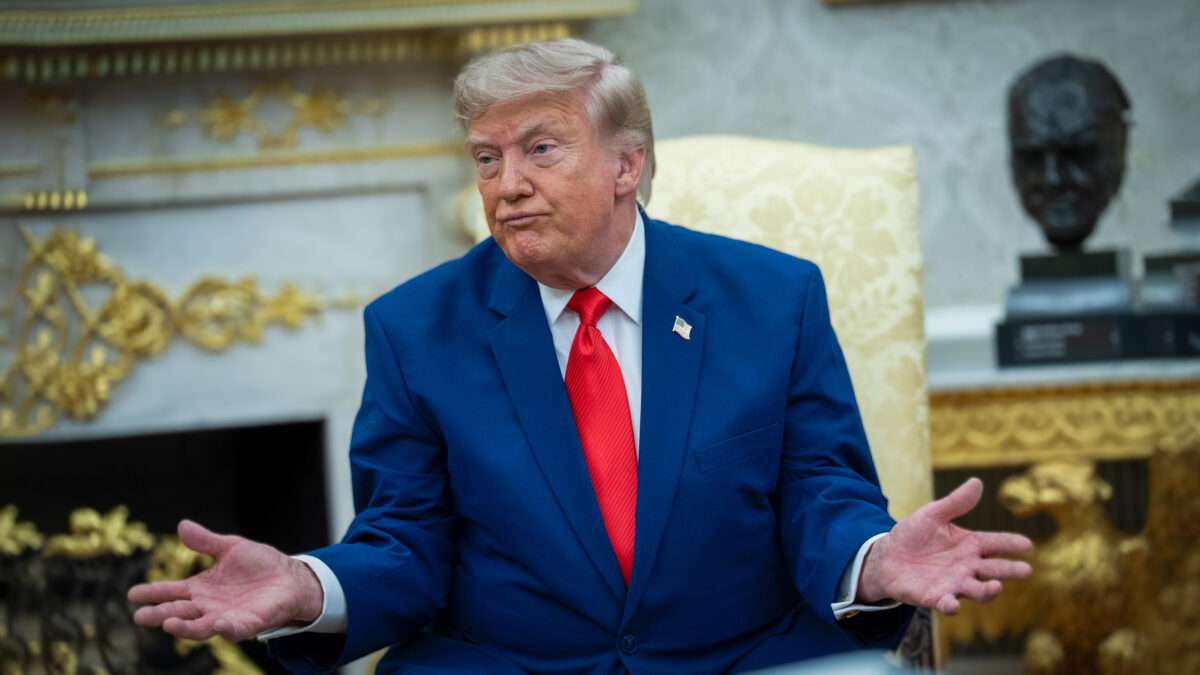
  • Reason reason.com news politics us-news us-politics 2026-08-03 15:05

    ↗

    Aaron Brown talks about how many lives USAID saved

    Aaron Brown talks about how many lives USAID saved | Illustration: Adani Samat

    California Rep. Ro Khanna (D) said last month that Elon Musk had "possibly sentenced to death" 4.5 million children by dismantling the U.S. Agency for International Development (USAID). Musk called him a liar, threatened to sue, and suggested he belonged in prison.

    Khanna was citing a 2025 study in The Lancet that claimed USAID prevented 91,839,663 deaths between 2001 and 2021 and projected more than 14 million additional deaths by 2030 if the cuts held. That study was cited in articles by NPR, the BBC, the Associated Press, NBC, The New Yorker, and The Washington Post. 

    None of these news outlets picked up on The Lancet study's absurdity. The New Yorker's legendary fact-checkers didn't catch it, nor did the journal's editors or the paper's peer reviewers.

    As I explained when I first wrote about the Lancet study for Reason in July of last year, with some basic arithmetic and a bit of common sense, you can see why the study's topline figures are nonsense. Just put the claim that nearly 92 million people were saved by USAID between 2001 and 2021 into perspective: During this period, the world's total death rate fell substantially. If the death rate prior to 2001 had remained steady for the next 20 years, about 79 million additional people would have died, according to data from the United Nations.

    Gustavo Martinez-Schmidt


    So how could USAID have saved 92 million lives? That's more than 100 percent of the global mortality decline, meaning that not only was USAID responsible for saving all 79 million people who didn't die thanks to the fall in the total death rate, but it saved an additional 13 million who otherwise would have died if not for USAID's charitable efforts.

    Since I wrote about this study, its authors have effectively backed away from their number. The Lancet published formal critiques and a non-response reply. None of this produced a correction, a retraction, or a single follow-up story in the outlets that ran the 92 million figure. The number is still in circulation, still being cited by Khanna, and still generating threats of litigation from Musk.

    Reason emailed several of the study's co-authors, laying out the criticisms cited in this article and video. They didn't respond.

    The study's authors failed to establish that USAID saved any lives at all because they built a statistical model based entirely on correlation: Funding for USAID doubled during the study period. Since global mortality fell over the same time span, the two trends correlate, which is all their evidence adds up to. The authors did do a lot of complex statistical hocus-pocus, which they explained in a dense, technical online appendix, making the analysis look sophisticated. But all they were doing was correlating two lines with no evidence that one affected the other.

    Gustavo Martinez-Schmidt

    Swap out the upward trend in USAID  funding, and the same model could have been used to credit anything that rose over this period: The S&P 500. The U.S. national debt. The proliferation of selfies.

    Pick your variable. The methodology guarantees the answer.

    On February 2, 2026, Lancet Global Health, a sister journal of The Lancet, published by the same house, ran a paper titled "The Impact of Two Decades of Humanitarian and Development Assistance and the Projected Mortality Consequences of Current Defunding to 2030." It came out of the Barcelona Institute for Global Health and the Federal University of Bahia, the same institutional pairing behind the original USAID paper, using the same two-stage, retrospective-plus-forecast design.

    The new paper looks at all official development assistance: every donor country, every agency, roughly $250 billion in 2023—and found it associated with a 23 percent reduction in age-standardized all-cause mortality across low- and middle-income countries. The original paper looked at USAID alone, which, at its peak, was somewhere around a sixth of global official development assistance, and found it associated with a 15 percent reduction.

    These estimates don't square. The same research group, using the same technique, has now credited one agency with roughly two-thirds of the mortality effect of all foreign aid on Earth. The samples aren't identical (133 countries in the first paper, 93 in the second, with slightly different windows), but no plausible adjustment closes a gap that large. Either the first estimate is wildly inflated or the second one is wildly deflated. They can't both be right.

    The projections shrank too. The original paper forecast more than 14 million additional deaths by 2030 from USAID cuts alone. The new paper forecasts 9.4 million by 2030 from the ongoing decline in aid from every major donor—the United States, United Kingdom, France, Germany—under its baseline scenario, and 22.6 million under a severe scenario involving much deeper cuts than have actually occurred. The new paper looked at much deeper cuts in foreign aid and found a smaller effect.

    That is a walkback, though it's not labeled as one. The journal published no correction and no expression of concern. The original paper still stands unamended, still says 91,839,663, and is still the citation of record for every politician and news outlet using the number.

    Writing in The Argument in June, Kobe Yank-Jacobs made the one serious counterargument I've seen. The global population grew and aged over those two decades, he argued. An older population with no medical or economic progress at all would have seen its crude death rate rise. So merely holding the death rate flat was itself an achievement, and the true "lives saved by everything, everywhere" figure is larger than 79 million.

    Yank-Jacobs is half-right, but his point fails to absolve The Lancet. Global population growth doesn't matter since my analysis cites the 2001 death rate, not the number of 2001 deaths. But an aging population does give a higher ceiling and a higher estimate of what would have happened with zero progress from any source. If I had assumed the 2001 age-adjusted death rates had remained constant, 160 million additional people would have died over the study period, rescuing The Lancet from the complete absurdity of its 92 million estimate, and replacing it with the still-absurd estimate that USAID accounts for 58 percent of the decline from all sources.

    Since I first wrote about the topic, the U.N. has gathered a tiny bit of actual data that casts doubt on that prediction.

    Egypt, a major USAID recipient, is one of the few low- and middle-income countries that report mortality data reasonably quickly. The Lancet model would predict roughly 58,000 deaths in Egypt in May 2025 following the demise of USAID, which is the only month for which the U.N. has released 2024 and 2025 data.

    Yet the U.N. reported 46,365 deaths that month. Fewer people died in Egypt in May 2025, after the cuts, than in the same month in 2024. 

    We might eventually see a spike in deaths in Egypt. It's also possible that some of the awarded money was still being spent in May 2025. This single data point also doesn't mean that USAID grants weren't doing plenty of good.

    Egypt also isn't the poorest country in the world, and we won't have full data on truly low-income countries for a couple more years. But it does at least raise doubts about the apocalyptic predictions of what shutting down USAID will mean.

    We also now have some bottom-up estimates that match actual USAID dollar cuts to specific results (this many bed nets weren't distributed; this many people went off antiretrovirals; here is the case-fatality rate). The Center for Global Development, working from lives-saved-per-dollar figures for specific programs and matching them to actual funding cuts, estimates 500,000 to 1 million lives lost in 2025 and 670,000 to 1.6 million annually going forward. Boston University's Brooke Nichols maintains a running tracker that puts the one-year projected toll from USAID's elimination at 781,343 as of July 30, 2026.

    There are data and methodology issues with these estimates as well, but they are serious attempts to get at the truth. They are also about one-third of the original 2025 Lancet paper projection, and roughly in line with the 2026 Lancet Global Health walkback. They are what a serious argument about the cost of dismantling USAID should address.

    UCLA's James Macinko, one of the co-authors of the original Lancet paper, was quoted by NPR last July, reflecting on whether USAID was "a good use of resources."

    "We found that the average taxpayer has contributed about 18 cents per day to USAID," he said. "For that small amount, we've been able to translate that into saving up to 90 million deaths around the world." Macinko didn't respond to our request for comment.

    He seems more interested in producing political slogans than in doing basic science. (I'll add that his math is wrong, and taxpayers actually contributed more like $1 a day to USAID, but that's beside the point.) The implication is that anyone who supported axing USAID valued pocket change over tens of millions of lives.

    You might think killing USAID was reckless and cruel. You might think foreign aid saves lives, as I do. Even so, you should advocate for a scientifically sound analysis that takes an honest look at the evidence, even if it's a messy picture that doesn't produce a headline-grabbing finding.

    When you hear an outrageous statistic, don't be afraid to apply some basic math. The person spouting that eye-popping number is probably betting that you won't bother.

    To keep up with our video series Wrong Number featuring Aaron Brown, and to receive bonus content and more, click here to enter your email address. By joining our list, you'll also have a chance to win a copy of Brown's new book, Wrong Number: How to Extract Truth From a Blizzard of Quantitative Disinformation.

    The post Did Elon Musk Sentence Millions to Death by Dismantling USAID? appeared first on Reason.com.

  • Reason reason.com news politics us-news us-politics 2026-08-03 14:50

    ↗

    President Donald Trump holding up his aluminum tariff order

    President Donald Trump holding up his aluminum tariff order | Michael Reynolds/dpa/picture-alliance/Newscom

    When President Donald Trump first slapped tariffs on imported aluminum, the goal was clear: Increase domestic aluminum production for national security purposes.

    The executive order Trump signed in March 2018 declared that aluminum was being imported in "such quantities and under such circumstances as to threaten to impair the national security of the United States." A Commerce Department report laid out the argument in more detail: If the U.S. found itself in a major war, it would need reliable supplies of aluminum (to make weapons, aircraft, and more) and should not depend on imports to meet that need.

    Tariffs, the administration insisted, would create the economic circumstances necessary for America to produce more aluminum.

    A lot has happened since then. Aluminum prices have increased. A lot. Products made with aluminum—from beer cans to cars—have gotten more expensive as a result. Trump has raised and changed the aluminum tariff several times. The baseline tariff has gone from 10 percent to 25 percent, and there is now an additional 50 percent tariff on products made largely from aluminum.

    But one thing hasn't happened. America is not producing more aluminum.

    You don't have to trust the economic reports. Ask the Trump administration how its aluminum tariffs are working out.

    "The domestic production and supply of primary aluminum, which is critical to the U.S. economy and defense industrial base, is still in insufficient supply," the president declared last month, citing information provided by Commerce Secretary Howard Lutnick. 

    Trump's solution, of course, is even more tariffs. In an executive order signed on July 20, Trump once again tightened the rules for the aluminum tariffs and ordered Lutnick to stop granting exemptions to the tariff regime. The order includes a new carrot alongside the many sticks: Companies that invest in expanding domestic aluminum production can earn a reduction in tariffs.

    After more than eight years of failure, you may want to be skeptical. As Supply Chain Dive, a manufacturing and logistics trade publication, notes: Applicants for the tariff relief program "are also required to submit information on major raw material sources and expected project milestones, necessitating intensive record-keeping to demonstrate ongoing compliance."

    Here's a simpler idea. Admit the aluminum tariffs have failed and try something else.

    It has been more than eight years since they were first implemented. If tariffs on aluminum were going to spur more domestic production, wouldn't that have happened by now? How many more ways does this policy have to be tried before it can be considered a failure?

    The whole "national security" rationale for these tariffs never made much sense in the first place. About 70 percent of America's imported aluminum comes from Canada, a neighbor and close ally with which the U.S. had a trade agreement (until Trump tore it up). The idea that the U.S. would find itself in a war that cuts off aluminum imports from Canada has always been a stretch, and the fact that many major aluminum producers operate on both sides of the border makes it pretty silly to fixate on domestic supplies.

    Admitting that these tariffs did not work and dropping them—at the very least, dropping them on imports from close allies and key trading partners—would make a lot of sense.

    Doubling down on bad policy is always a mistake. The aluminum tariffs have plainly failed to achieve their primary policy goal. Even the Trump administration admits as much. It's time to accept that outcome, try something new, and stop hiking prices for American industries and consumers.

    The post Trump Said Tariffs on Aluminum Would Boost Domestic Production. The White House Now Admits That Didn't Happen. appeared first on Reason.com.

  • Reason reason.com news politics us-news us-politics 2026-08-03 14:45

    ↗

    Some suggestions that might help you make better use of the opportunities available to you in law school.

    NA

    Law students around the country will be starting classes over the next few weeks. Back in 2018, I wrote a post offering advice to entering students, which I updated in 2019, 2022, 2023, 2024, and last year. I tried to focus on points that I rarely, if ever, see made in other pieces of this type. I think my original suggestions remain relevant today. So I reprint my advice from earlier posts largely unaltered, with the addition of  incremental edits and updates:

    1. Think carefully about what kind of law you want to practice.

    Law is a profession with relatively high income and social status. Yet studies repeatedly show that many lawyers are deeply unhappy, a higher percentage than in most other professions. One reason for this is that many of them hate the work they do. It doesn't necessarily have to be that way. There are lots of different types of legal careers out there, and it's likely that one of them will be a good fit for you. A person who would be miserable working for a large "Biglaw" firm might be happy as a public interest lawyer or a family law practitioner, and so on. But to take advantage of this diversity, you need to start considering what type of legal career best fits your needs and interests.

    There are many ways to find out about potential options. But one place to start is to talk to the career services office at your school, which should have information about a range of possibilities. Many also often have databases of alumni working in various types of legal careers. Talking to these people can give you a sense of what life as a practitioner in Field X is really like.  Internet resources - including AI - are also a good way to start looking at options in a range of different fields, though it's important to remember this online information isn't always accurate.

    This advice applies not just to what you do in school, narrowly defined, but what you do in the summer, as well. Law students typically get summer jobs at firms or other potential future employers. Apply widely, and look for organizations that might be good employers, or at least introduce you to areas of law that might be crucial for your future career.

    The summer clerk job I took at the Institute for Justice after my first year in law school, was a key step towards becoming a property scholar, and helped lead me to write two books and numerous articles about takings. I even got to work on an eminent domain case where Donald Trump had lobbied Atlantic City to condemn an elderly women's home so he could use it as a parking lot for one of his casinoes. Spending a summer at a public interest firm might change your life, too!

    Regardless, don't just "go with the flow" in terms of choosing what kind of legal career you want to pursue. The jobs that many of your classmates want may be terrible for you (and vice versa). Keep in mind, also, that you likely have a wider range of options now than you will in five or ten years, when it may be much harder to switch to a very different field from the one you have been working in since graduation.

    2. Get to know as many of your classmates and professors as you reasonably can.

    Law is a "people" business. Connections are extremely important. No matter how brilliant a legal thinker you may be, it's hard to get ahead as a lawyer purely by working alone at your desk - even with the help of AI and other modern tech. Many of your law school classmates could turn out to be useful connections down the road. This is obviously true at big-name national schools whose alumni routinely become judges, powerful government officials, and partners at major firms. But it's also true at schools whose reputation is more regional or local in nature. If you plan to make a career in that area yourself, many of your classmates could turn out to be useful contacts.

    The same holds true for professors, many of whom have extensive connections in their respective fields. They are sometimes harder to get to know than students. But the effort is often worth it, anyway. And many of them are actually more than eager to talk about their work.

    Even in an age of widespread social media and other online connections, in-person interaction is essential, and often difficult to fully replicate in other ways. Try it and see!

    This is one front on which I didn't do very well when I was in law school, myself. Nonetheless, I still suggest you do as I say, not as I actually did. You will be better off if you learn from my mistakes than if you repeat them.

    3. Think about whether what you plan to do is right and just.

    Law presents more serious moral dilemmas than many other professions. What lawyers do can often cost innocent people their liberty, their property, or even their lives. It can also save all three. Lawyers have played key roles in almost every major advance for liberty and justice in American history, including the establishment of the Constitution, the antislavery movement, the civil rights movement and many others. But they have also been among the major perpetrators of most of the great injustices in our history, as well.

    Robert Cover's classic book Justice Accused - a work that made a big impression on me when I was a law student - describes how some of the greatest judges and legal minds of antebellum America became complicit in the perpetuation of slavery. While we have made great progress since that time, the legal system is not as far removed from the days of the Fugitive Slave Acts as we might like to think. There are still grave injustices in the system, and lawyers whose work has the effect of perpetuating and exacerbating them. We even still have lawyers who do such things as come up with dubious rationales for deporting literal escaped slaves back to places where they are likely to face further oppression. The present administration is coming up with even more dubious rationales for doing things like using the Alien Enemies Act of 1798 (previously used only in wartime) to deport people who have not broken any laws to imprisonment, without any due process. The latter is just one of several dramatic examples of how we are now engaged in a struggle over the future of justice and the rule of law in this country. And, yes, left-wing government policies perpetrate plenty of injustices, as well.

    Law school is the right time to start working to ensure that the career you pursue is at least morally defensible. You don't necessarily have a moral obligation to devote your career to doing good. But you should at least avoid exacerbating evil. And it's easier to do that if you think carefully about the issues involved now (when you still have a wide range of options), than if you wait until you are already enmeshed in a job that involves perpetrating injustice. At that point, it may be too late - both for you and (even more importantly) for the people who may be harmed.

    4. Legal knowledge isn't as different from other kinds of knowledge as you might think.

    Students often ask me how best to study for law school classes. My answer is that there isn't one way that's best for everyone. You probably know what works for you far better than I do.

    In law school, you are likely to be bombarded with all sorts of complex methods of studying and outlining cases. Advocates of each will often tell you theirs is the One True Path to law school success. Some students really do find these methods useful.

    But I would urge you to consider the possibility that you can study for law school classes by using…. much the same methods as you used to study other subjects in the past. If you were successful in social science and humanities classes as an undergraduate, the methods that worked there are likely to carry over.

    I know because that's largely what I did as a law student myself. I did the reading, identified key points, and didn't bother with complicated outlines or spend money on study guides. If I did badly in a class, it wasn't for lack of more complex study methods (usually, I either got lazy or just had a bad day on the final exam). And I've seen plenty of other people succeed with similar approaches. You can save a lot of time and aggravation (and some money) that way. And that time, energy, and money can be better devoted to other purposes - including advancing your studies and your career in other ways!

    Ultimately, when reading a legal decision (or any assignment), you need to 1) identify the key issues, and 2) understand why they are important. With rare exceptions, the case in question was likely included in the reading because it highlights some rule, standard, or issue that has a broader significance. If you know what that is and why it matters, much of your work is done. The same goes for most other kinds of assigned reading: they are probably there because the professor thinks they elucidate some broadly important point. Figure out what it is, and you will be in good shape.

    These days, there is much discussion about the extent to which students should rely on AI to help them study. I don't have any definitive answer to that question. But, ideally, AI can augment your reading, writing, and analytical skills, but doesn't fully replace them. You should also be wary of its tendencies to hallucinate information. In addition to outright hallucinations, I often find that AI descriptions of legal and political issues feature more subtle, but still significant, distortions and errors. Use its output, but verify for accuracy. And, as with other study aids, the use of AI to study law need not be much different than its proper use for other subjects.

    I don't think I need to dwell on how recent events have reinforced the significance of Point 3 above. Suffice to say there are many recent examples of lawyers facilitating both good and evil. Even if you don't maximize the former, you should at least avoid contributing to the latter.

    The post Advice to Entering Law Students - 2026 appeared first on Reason.com.

  • Reason reason.com news politics us-news us-politics 2026-08-03 14:33

    ↗

    From Thursday's opinion by Judge John Tuchi (D. Ariz.) in Campos v. Ariz. Bd. of Regents: On April 26, 2024,… The post Court Quashes Subpoenas to Anti-Defamation League in ASU Pro-Palestine Student Protest Case appeared first on Reason.com.
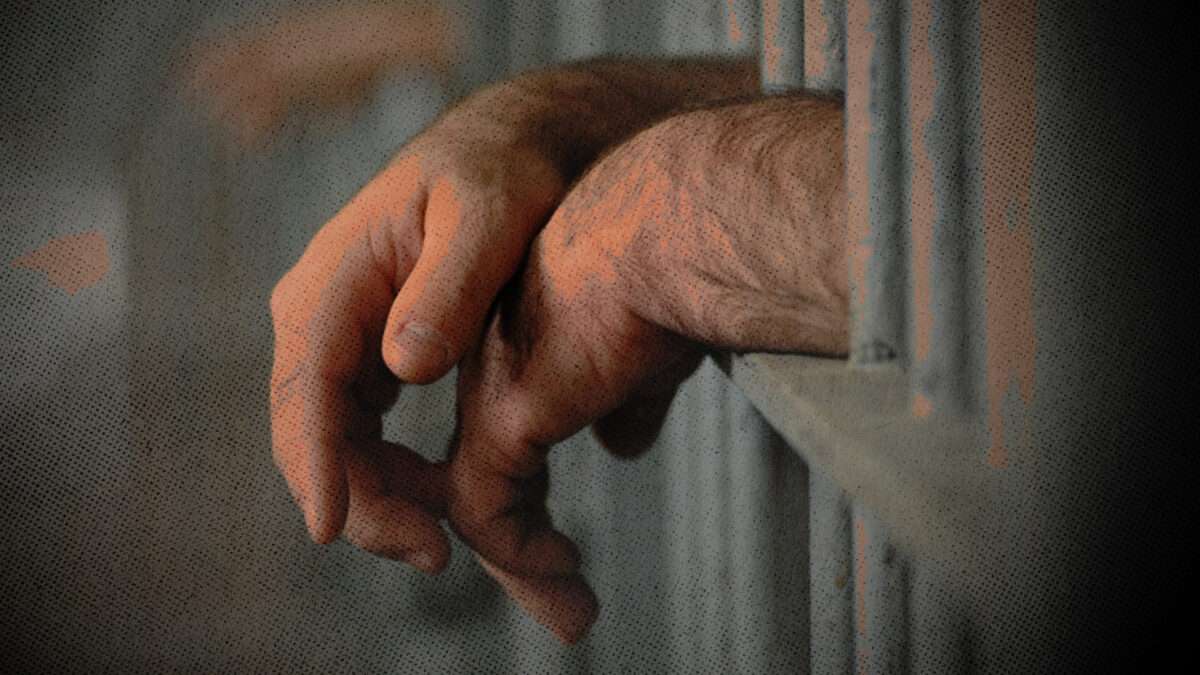
    From Thursday's opinion by Judge John Tuchi (D. Ariz.) in Campos v. Ariz. Bd. of Regents:

    On April 26, 2024, Plaintiffs participated in a pro-Palestine student protest. As relevant here, in the days leading up to the protest, "Defendants engaged in extensive communication and preparation … externally with … affiliates of political organizations such as the Anti-Defamation League [("ADL")] … all with the goal of preventing or squashing any public demonstrations against the use of public assets to fund the genocide in Gaza or affiliation with pro-Zionist entities that might take place at [Arizona State University ("ASU")] or any other public Arizona university." One such communication took place four days before the protest on April 22, [2024], wherein the CEO of the ADL, Jonathan Greenblatt, "explicitly called for ASU to prepare and coordinate with law enforcement in order to impose clear and immediate consequences on students protesting Zionism and its murderous effects in Gaza."

    Several hours into the protest, some of the Plaintiffs were forcibly removed, some were arrested, and some were injured. The next day, Plaintiffs were suspended, banned from ASU property, and prohibited from communicating with ASU faculty. Plaintiffs are now suing Defendants for violating their First Amendment right to free speech and discovery efforts are underway.

    As relevant here, [ASU President] Dr. Crow has produced 662 pages of communications between ASU and ADL, including emails between Mr. Greenblatt and Dr. Crow. Plaintiffs detail some of those communications in their response brief including, for example, an April 11, 2024 email predating the protests in which Mr. Greenblatt announced the ADL's implementation of "Campus Antisemitism Report Cards" and informed Dr. Crow that ASU earned a "C" grade.

    In November 2025, Plaintiffs served upon Mr. Greenblatt and the ADL ("Non-Parties") three subpoenas for documents and the deposition of Mr. Greenblatt. Upon Non-Parties' objection and discussion among counsel, Non-Parties agreed to provide Plaintiffs a list of the other colleges and universities to whom Non-Parties sent the same or similar April 22 [perhaps meaning April 11? -EV], 2024 email, and Plaintiffs agreed to withdraw the subpoenas. In May 2026, Plaintiffs served four subpoenas upon Non-Parties once more, this time with additional requests for document production and deposition categories.

    The ADL and Greenblatt moved to quash the subpoena, and the court agreed:

    Parties may seek the production of relevant, non-privileged documents from non-parties through a subpoena issued in accordance with Federal Rule of Civil Procedure 45 …. Importantly, though, non-parties are entitled to special consideration when it comes to subpoena requests under Rule 45…. "The proper way to afford this special consideration is to 'weigh the burden to the subpoenaed party against the value of the information to the serving party. Generally, this requires consideration of relevance, the need of the party for the documents, the breadth of the document request, the time period covered by it, the particularity with which the documents are described, and the burden imposed.'" Under this inquiry, a court may also consider whether the information requested through a non-party subpoena is readily available from another party.…

    Plaintiffs seek information circulating internally within Non-Parties regarding, for example, [the ADL's] report card program … [and] information passing between Non-Parties and other non-parties including colleges, universities, and even politicians…. Plaintiffs respond that the information goes to Defendants' motive; specifically, that Defendants restricted Plaintiffs' speech so they could receive a better report card from the ADL. Plaintiffs argue that they require the information Nonparties shared internally and with other actors not named in this matter to "test" Dr. Crow's deposition testimony that he was not influenced by Nonparties when he decided to take action against Plaintiffs. But Plaintiffs do not explain how information passing among Nonparties and other non-parties (e.g., other universities, politicians, media) relate to whatever influence Nonparties exerted upon Defendants.

    As to [information passing between Defendants and Non-Parties], Plaintiffs argue that Nonparties' production of the same communications already produced by Dr. Crow would not be duplicative because the Nonparties' version would "contain metadata showing when and to whom ADL forwarded its communications internally, BCC recipients on the emails involving Defendant, internal deliberations about ASU's Report Card score, the criteria ADL applied in evaluating ASU's campus policies, and communications on which Defendant was not copied."

    As discussed above, the Court fails to see how information internally held by Nonparties, which would have never reached Defendants, could influence decisions made by Defendants. Further, the Court is not convinced that whatever information that is relevant to Defendants' motive cannot be produced through interparty discovery. Significant production has already occurred, and Plaintiffs have not suggested that production was deficient….

    David J. Bodney and Matthew E. Kelley (Ballard Spahr LLP) represent ADL and Greenblatt.

    The post Court Quashes Subpoenas to Anti-Defamation League in ASU Pro-Palestine Student Protest Case appeared first on Reason.com.
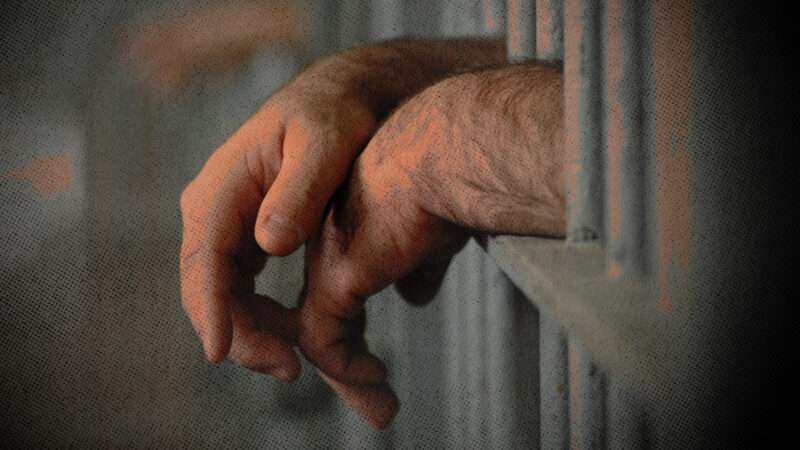
  • Reason reason.com news politics us-news us-politics 2026-08-03 13:34

    ↗

    From Woodcock v. Van Tatenhove (E.D. Ky.), decided Friday by Judge Benjamin Beaton (W.D. Ky.): Professor Ramsi Woodcock, currently suspended… The post Court Expresses Doubt About Lawprof's Attempt to Block Appointment of Federal Judge as U Kentucky Law School Dean appeared...

    From Woodcock v. Van Tatenhove (E.D. Ky.), decided Friday by Judge Benjamin Beaton (W.D. Ky.):

    Professor Ramsi Woodcock, currently suspended from his teaching duties at the University of Kentucky School of Law, has sued to block former U.S. District Judge Greg Van Tatenhove from serving as the law school's dean.

    In his view, hiring a judge rather than a tenured professor to lead the school precludes the law faculty from expressing to the outside world that their scholarship is the product of a peer-reviewed search for truth. This abridges the faculty's collective right to associate around a shared message, Woodcock maintains, even though the University has not barred him or his colleagues from speaking out about the appointment or its effect on their work. Nor do Woodcock's allegations (as clarified during a TRO hearing) suggest that the University has prevented the faculty from writing, submitting, or publishing articles or other scholarship—or indeed from imposing or threatening any sort of sanction if they do. Yet to avoid sending a message the faculty disapproves of, Woodcock has asked the federal court to override the University's appointment, bar Van Tatenhove from serving, and "appoint the Faculty Executive Committee … to the position of dean." …

    [T]he Court held a hearing on Monday, July 20, denying the request for a temporary restraining order on three principal grounds:

    1. Woodcock hadn't established his right to bring a freedom-of-association claim based on the putative message of the entire law-school faculty.
    2. Assuming the law faculty is an expressive association properly represented by Woodcock, he failed to show that the faculty had collectively articulated any message associated with its scholarship that has been skewed by the hiring of a new dean.
    3. Assuming such a collective message existed, Woodcock hadn't shown a likelihood that the appointment of a new dean had abridged the faculty's ability to express any such message regarding its scholarship or membership.

    After the hearing, the Court ordered counsel to confer in good faith regarding the most appropriate and efficient next steps in this litigation. They have done so, but to little avail. The University Defendants would file and brief a motion to dismiss in the ordinary course and treat the preliminary-injunction request as moot or futile given the TRO ruling. Woodcock seeks accelerated discovery with a view toward a preliminary-injunction hearing before the start of fall classes and the typical faculty hiring period, "on or before August 24." …

    "District courts have discretion to order expedited discovery when the moving party shows good cause." … But Woodcock still hasn't shown why discovery is "necessary for a preliminary injunction." And the burden is on him, as the party seeking emergency judicial intervention, to justify his request "to obtain documents from all defendants and their associates relating to the decision to hire Van Tatenhove."

    In effect, Woodcock seeks full discovery on a fundamentally backward-looking claim that the University wrongly hired Van Tatenhove in the first place. That perspective appears to bear little relationship to Woodcock's request for a forward-looking injunction that prevents "ongoing irreparable harm caused by the defendants' dilution of the message Woodcock seeks to send through his ongoing association with the law faculty."

    Ordinarily, federal civil procedure subjects complaints to adversarial testing before imposing the burdens of discovery on a defendant. That is why defendants may move to dismiss under Rule 12(b)(6) in lieu of an answer that shunts the case into discovery: subjecting defendants to discovery would be unjust if the plaintiff failed to state a claim. Extraordinary emergencies, to be sure, might warrant reversing this orderly procedure. But Woodcock hasn't shown any exigency that warrants upending orderly process here. And granting expedited discovery before accepting a responsive pleading would be especially inappropriate given four serious problems that litigation has already revealed in Woodcock's complaint.

    First, that the law-school faculty is a group whose expressive rights regarding scholarship may effectively supersede the University's authority to install a dean of its, rather than the faculty's, choosing.

    Second, that Woodcock may assert any such rights on behalf of the faculty. Most cases alleging a violation of a group's expressive association arise through a lawsuit filed by and in the name of a particular group. The right to do so is not obvious when a lawsuit emerges through the action of "a lone wolf."

    Third, that an implied message regarding peer review—used in the sense of administrative supervision rather than scholarly review and publication—is one subject to First Amendment protection. Woodcock has not cited any precedent to that effect. Nor has he identified any actual limit on what the faculty may say or write to express its intended message regarding a commitment to peer review, as distinct from a desire to select its own leader in place of the Government's choice. {As used by Woodcock, however, peer review has a different meaning: that the faculty of a particular academic unit, such as the faculty of a law school, decide the appointment, promotion, and retention of faculty based on a review of their scholarship.}

    Fourth, that the University's appointment distorts or compels any such message expressed by the faculty. On the facts as currently presented, it remains unclear whether or how the appointment "bars them from associating with anyone," or interferes with their "choice not to propound a point of view contrary to its beliefs." Nor is it clear whether or how Woodcock's membership in the law faculty is a "mandatory association" such that "a reasonable observer would impute some meaning to membership in the organization and the plaintiff objects to that meaning." …

    Because Woodcock has failed to carry his burden, the Court denies his motion for expedited discovery and denies, without prejudice, his request for an expedited preliminary injunction hearing.

    The court, however, ordered motion to dismiss briefing to be expedited, and announced that it "anticipates holding a hearing or issuing a written ruling promptly" after August 14, when briefing it to close.

    There's a political debate in Kentucky about Judge Von Tatenhove's appointment, and the law school faculty was also apparently opposed to the appointment. The American Bar Association's accreditation rules state that "Except for good cause, a dean should not be appointed … over the stated objection of a substantial majority of the faculty," and also generally contemplate that deans be scholars whose scholarship meets the standards for tenure: "Except in extraordinary circumstances, a dean shall also hold appointment as a member of the faculty with tenure."

    But I'm pretty confident (for some of the reasons pointed to by Judge Beaton's opinion) that First Amendment law has nothing to say on these questions. Questions about the merits and qualifications of a law school dean are a matter for the body given that authority by state law (or private university bylaw)—not for federal courts.

    Note that, while there's a recent tradition of deans being academics, it seems to me that there's a sensible argument for sometimes having experienced members of the legal profession (including judges) as deans of what are after all professional schools. For a prominent recent example of a federal judge being named dean, without having had an earlier academic career, see David F. Levi, dean emeritus at Duke Law School. (See also, though in the context of a university president rather than a law school dean, Janet Napolitano's time as President of the University of California.) But again that's a policy question, not, I think, a First Amendment question.

    Bryan Howard Beauman and Carmine G. Iaccarino (Sturgill, Turner, Barker & Moloney PLLC) and Mark B. Maier, Shannan Beverly Stamper, and William Eugene Thro, (University of Kentucky Office of Legal Counsel) represent defendants.

    The post Court Expresses Doubt About Lawprof's Attempt to Block Appointment of Federal Judge as U Kentucky Law School Dean appeared first on Reason.com.
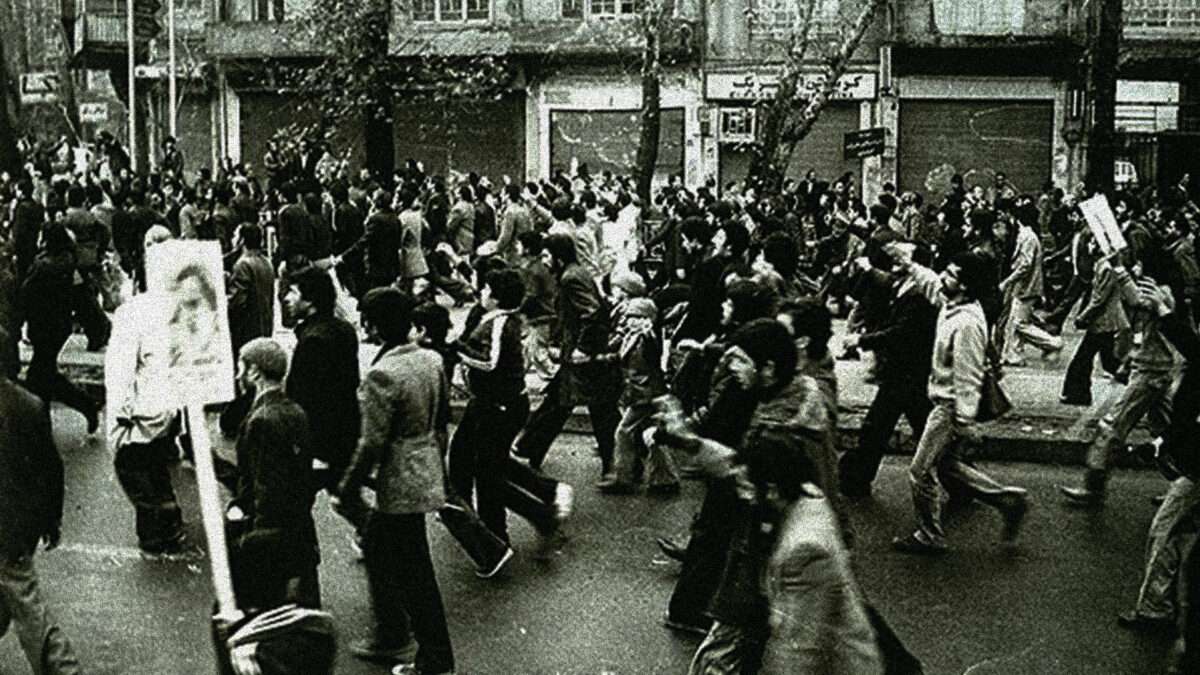
  • Reason reason.com news politics us-news us-politics 2026-08-03 13:30

    ↗

    Francesca Hong

    Francesca Hong | legis.wisconsin.gov

    Francesca Hong's friends: Over the weekend, Wisconsin candidate for governor (and democratic socialist) Francesca Hong campaigned with streamer Hasan Piker, who wants to force non-socialists out of the Democratic Party (a view he expressed while wearing a Mao Zedong outfit), and Rep. Ilhan Omar (D–Minn.), who once accused Israel of having "hypnotized" the world.

    The August 11 primary will determine which Democrat challenges Republican Tom Tiffany in November. Hong, a 37-year-old chef and bartender (in AOC fashion), is the frontrunner.

    "When people want to fight for something together, when they see something they believe in, and they start to believe in one another, I think the Dems are going to have to write a new playbook here," Hong said at the rally. So what is it, exactly, that she's fighting for?

    Hong wants the standard raft of policy proposals that politicians like New York Mayor Zohran Mamdani have promoted: universal taxpayer-funded childcare, schools funded by the "super-rich" (unclear what she means by that). Hong has also said she will roll back school vouchers, expand Medicaid, establish a public health insurance option for those without coverage currently, bring private insurance premiums down (unclear how), "crack down on claim denial processes," and "recognize gender-affirming care as medically necessary." She wants to establish a public bank to fund various business owners that she's deemed disadvantaged. "At the federal level, we need to abolish ICE and prosecute lawbreaking agents," says her website. "But here in Wisconsin, Fran will use the full force of the executive branch to protect Wisconsinites of all documentation status from secret police."

    "The lowest-earning 20% of Wisconsin households pay over 10% of their income in state and local taxes. But folks making over $1.3 million pay only 6.6%," reads her website. "When richer people aren't asked to pay their fair share of taxes, it means our tax system is effectively handing them free money." Note that when someone is taxed at a lower rate than someone else, the government has not "handed" them anything. It has simply refrained from taking money they earned.

    But more to the point, socialist types keep acting like this points to an unfairness in the structure of income taxes. What it tells us is that sales and excise taxes—taxes on consumption—end up looking pretty regressive, hitting the poor hard but being much less significant (as a share of total income) to the rich. And "fair share" doesn't mean anything: Taxation, to the extent that it must happen at all, should be about how much revenue government needs, and policymakers should raise that revenue via the least distortionary means possible. It's not about punishing the high-earning or hard-working.

    "I do not support the full platform of the national DSA [Democratic Socialists of America] and I am not endorsed by DSA National," said Hong in a recent debate, who added that she is "not here to govern by slogan." I dunno, that website I just pored over sure looks pretty slogany, with a loft of lofty rhetoric and a lot of "eat the rich" nonsense and state intrusion into private industry.

    When asked by CNN's Dana Bash whether Hong's views on defunding the police have changed since the defund fervor of the early 2020s, Hong demurred. "People can evolve," Hong said. "I am going to be a sensible and practical governor that is going to make sure that public safety is a priority." It seems like Hong is realizing that old tweets like this may be a political liability:

    I support defunding the police as a first step towards abolishing the police.

    Jacob Blake is fighting for his life but he shouldn't have to be. We must also fight for his life and get justice for all those harmed by state-sanctioned violence.

    Black Lives Matter

    — Francesca Hong For Governor (@FrancescaHongWI) August 24, 2020

    But it's not clear how much of a liability they are. "Democratic socialist Katie Wilson was elected mayor of Seattle last year and another, Janeese Lewis George, is poised to win the mayoral contest in Washington, DC, this November," reports CNN. "In Los Angeles, democratic socialist Nithya Raman is challenging incumbent mayor Karen Bass, a Democrat. They've also won a series of congressional primaries, including ousting House incumbents in New York and Colorado."

    It's also not clear that Hong herself is convinced as to the best strategy. She seems to want to portray herself as a normie everywoman who understands the average Wisconsinite, regardless of party, but also as someone who pals around with Piker and Omar. Voters might not punish her for the latter, but it's not clear whether her radical or pragmatic instincts are stronger. In the end, if she gets in office, it might not matter much: She'll be able to do plenty of damage.


    Scenes from New York: 

    Some thoughts on life in NYC:

    - Much of what makes New York great is that there's a large contingent of people who donate money the city and its institutions once they've made it. John Paulson made a fortune during the Financial Crisis, and subsequently donated $100 million to… https://t.co/Am9HvS3d6U

    — David Perell (@david_perell) August 3, 2026


    QUICK HITS

    • "Everyone knows what the problem is: The organizations that bring young staffers to Washington, D.C. have spent the last decade prioritizing blind ideological loyalty instead of competence or intelligence," a senior GOP congressional staffer told Politico. "We have a generation of rabid, incompetent idiots."
    • Axios' "three dramas to watch" after November: "Trump will flirt with running again in '28 until the bitter end, but it's all about PR and keeping Vance and Rubio in their place"; "As potential outside-the-walls competition in '28, the White House is watching Florida Gov. Ron DeSantis, Sen. Ted Cruz (Texas) and Sen. Josh Hawley (Mo.)"; "A constitutional clash over congressional oversight, among the last and most vital powers lawmakers hold dear. What happens if Trump orders his entire administration, family and friends to just ignore Congress?"
    • Homeowner associations (HOAs) "are getting more aggressive about pursuing people who rack up unpaid dues, skipping informal grace periods to make up the payments and turning delinquent accounts over to lawyers," reports The Wall Street Journal. "In the most extreme cases, they are pursuing foreclosures on these properties. There were 6,376 properties with HOA-related foreclosure filings in the first quarter of this year—spanning initial default notices to completed sales. That is up nearly 40% from two years earlier and rising faster than overall mortgage foreclosure rates, according to real-estate analytics firm Attom."
    • In case you missed it: I'm writing a book, and updating folks via Substack. Follow me there if you'd like to stay in the loop. It will be a while before a preorder link is available, but I'm already finding little chunks of research that I don't think will fit into the book but will probably be adapted into meandering Substack thoughts. If you're interested in risk/risk aversion, parenting, New York City, skateboarding, death, faith, how "gentle parenting" is screwing up a whole generation, or just YOURS TRULY, you'll like this book.

    The post Friends Like These appeared first on Reason.com.
  • Reason reason.com news politics us-news us-politics 2026-08-03 13:10

    ↗

    a drawing of a high school student holding an airsoft pistol in one hand and pellets in the other

    a drawing of a high school student holding an airsoft pistol in one hand and pellets in the other | Midjourney

    A New Jersey news outlet is asking a state appeals court to lift a judicial order censoring its coverage of an incident that led to a lockdown at New Brunswick High School on May 8. That extraordinary order, which New Jersey Superior Court Judge Thomas D. McCloskey issued on July 9, purports to bar New Brunswick Today and every other journalist in the United States from identifying the 16-year-old student who prompted the lockdown by bringing an airsoft pistol to school. It also prohibits them from sharing unexpurgated security camera video of the incident.

    In a brief filed last week with the Superior Court's appellate division, New Brunswick Today's lawyers, C.J. Griffin and Bruce S. Rosen, note that such prior restraints on freedom of the press are presumptively unconstitutional. The Supreme Court, which has never upheld such an order, has said prior restraints can be justified only when they "further a state interest of the highest order," such as stopping the release of information that would "set in motion a nuclear holocaust" or "inevitably, directly, and immediately" imperil the safety of U.S. forces at sea. Griffin and Rosen say the state interest that McCloskey invoked, protecting the privacy of the student caught with an airsoft gun, does not come close to meeting that highly demanding standard.

    "This case presents an extraordinary violation of the First Amendment—a prior restraint specifically prohibited by the United States Supreme Court," Griffin and Rosen write. "Case law is clear that prior restraints are presumptively invalid. In all its history, the U.S. Supreme Court has never permitted a prior restraint on free speech, not even when newspapers published the stolen, highly classified Pentagon Papers that the government claimed threatened national security."

    McCloskey was responding to a lawsuit filed by the New Brunswick Board of Education, which objected to New Brunswick Today's publication of leaked surveillance camera footage showing the airsoft-pistol discovery, which contradicted the board's false assurance to parents that the ensuing lockdown was "a routine security drill." On May 29, McCloskey ordered New Brunswick Today to remove the video and refrain from describing it. He also enjoined New Brunswick Today from "any and all future postings of confidential school security/surveillance video" recorded at "any of the schools in the Plaintiff's District." He did all of that "without any analysis," the appeal brief notes, and ultimately acknowledged that he had gone too far.

    The revised order, which McCloskey issued about six weeks later, allowed New Brunswick Today to describe the video, provided it did not reveal the identity of the teenager who triggered the lockdown or any other students in the vicinity. McCloskey also allowed New Brunswick Today to repost the video itself, provided it first "modify the footage by redacting or blurring out the identities of all juvenile students depicted in it" and "present the modified footage to Plaintiff and its counsel for review and approval, with copy to the Court." At the same time, McCloskey extended the targets of the order to include "the press" generally, meaning he aimed to restrict the journalism of news organizations that were not parties to the case.

    As a result of the initial order, Griffin and Rosen note, New Brunswick Today was "unconstitutionally gagged for nearly six weeks." The revised order "still imposes unconstitutional prior restraints," they say, because the expurgation requirement makes publication of the video subject to the Board of Education's approval, "effectively granting the government veto power over the press." The restrictions on other coverage of the incident likewise prohibit New Brunswick Today "and the press" from identiying the teenager caught with with the airsoft pistol.

    In his July 9 order, McCloskey said he was trying to to "appropriately balance" the "privacy rights" of students "against the prior-restraint doctrine." But the Supreme Court has repeatedly held that the privacy interests of minors, including an 11-year-old murder defendant and a 14-year-old murder suspect, cannot justify barring news outlets from identifying them.

    To support its request for censorship, the Board of Education cited federal and state laws that restrict the dissemination of information about minors. But the federal law applies to educational institutions, not news organizations, while the state law deals with "social, medical, psychological, legal and other records" held by courts, the probation division, or law enforcement agencies, which it says "shall be strictly safeguarded from public inspection." In any case, the Supreme Court has rejected state laws that authorized prior restraints on the press in the name of preserving privacy.

    The Board of Education said it had "reason to believe" that the security camera video "was recorded from a computer by an individual with access to the district's surveillance system and disseminated without authorization." New Brunswick Today's editor said the video was "lawfully obtained," although he declined to identify the source—a decision that Griffin and Rosen say was protected by New Jersey's Shield Law.

    "Even if the video was unlawfully obtained, the claimed First Amendment protection for publication would generally remain intact," McCloskey conceded in his July 9 order. "The Supreme Court and other courts have consistently held that the press may publish truthful information of public concern, even if the source obtained it illegally, so long as the press did not participate in the unlawful acquisition."

    The appeal brief cites several precedents to that effect, including the landmark 1971 case New York Times Co. v. United States, which involved the federal government's attempt to block publication of the Pentagon Papers, a secret Defense Department history of the Vietnam War. Despite the government's invocation of national security, the Court unanimously concluded, it had not met its "heavy burden of showing justification for the imposition of such a restraint." The fact that the source of the documents, military analyst Daniel Ellsberg, had purloined and surreptitiously copied them did not figure in the Court's analysis.

    Seven years later in Landmark Communications v. Virginia, the Supreme Court addressed a state law that made it a crime to divulge or publish confidential information about judicial disciplinary proceedings. The Virginian-Pilot nevertheless published an accurate article about one such case, which included a judge's name and photograph. "The newspaper's source was unidentified individuals who violated the law by divulging the information," Griffin and Rosen note. "After the newspaper was found guilty of violating the law, the Court struck down the statute and found that the First Amendment protected the newspaper's right to publish the truthful information that had been leaked to [it]."

    In the 2001 case Bartnicki v. Vopper, the appeal brief notes, the Supreme Court "squarely addressed whether the government may punish a publisher who obtained information 'from a source who has obtained it unlawfully.'" That case involved an illegally intercepted "phone call between union leaders during contentious school district negotiations" in Pennsylvania. After union leaders invoked state and federal wiretapping laws to sue a radio host who had played the recording on the air, the Court held that the First Amendment protected his disclosure.

    Griffin and Rosen also note the West Virginia Supreme Court's 2021 decision in Yurish v. Sinclair Broadcast Group, which involved surreptitious audio recordings inside an elementary school for special education students. TV stations and online news outlets shared the recordings, which documented staff abuses. The court held that the news organizations had a First Amendment right to do that. It deemed West Virginia's wiretapping statute unconstitutional to the extent that it authorized civil action against "an innocent third party who publishes information of public concern that was
    obtained by the unlawful interception of wire, oral, or electronic communication" but who "did not participate in the unlawful interception of the communication."

    Given those precedents, McCloskey "was wrong to hold the First Amendment does not apply when the media publishes material that a source leaked or illegally obtained," Griffin and Rosen say. In fact, McCloskey acknowledged that the First Amendment applies even when journalists publish information "unlawfully obtained" by their source. But then he contradicted himself by saying the source's conduct was relevant in this case.

    If New Brunswick Today had obtained the video by filing an open records request, McCloskey said, that would have been OK. But if it "obtained the surveillance footage through a leak or an independent source" or if the video was "illegally obtained by others without its participation or direction," he said, "the juvenile's statutory right to confidentiality" trumps "the severe constitutional presumption against censorship."

    In addition to criticizing McCloskey's First Amendment analysis, Griffin and Rosen argue the he erred in holding that New Jersey's Uniform Public Expression Protection Act (UPEPA), which allows defendants to recover attorney fees when they are sued based on constitutionally protected speech, does not apply in this case. UPEPA makes an exception when "a governmental unit" is trying to "enforce a law to protect against an imminent threat to public health or safety." That exception, McCloskey concluded, precludes New Brunswick Today from obtaining compensation for its legal expenses. But as Griffin and Rosen note, the Board of Education was not "enforc[ing] a law," and the main rationale for McCloskey's order was protecting student privacy, not "public health and safety."

    McCloskey did express concern that footage revealing "the location of cameras, staffing responses, and screening procedures" could "compromise school security and endanger students and staff." But those details can be readily observed by anyone passing through the school, the appeal brief notes, and knowledge of them hardly poses "an imminent threat to public health or safety." In any event, McCloskey's July 9 order, which focused on obscuring the identities of students in surveillance footage, did not address his avowed concern about school security.

    Griffin and Rosen also object to the slowness of the process for addressing McCloskey's prior restraints, given the "irreparable harm" such orders cause. They note how swiftly the Supreme Court historically has responded to prior restraints.

    In the Pentagon Papers case, the brief says, "only fifteen days elapsed between the government's motion for a preliminary injunction on June 15, 1971, and the Supreme Court's reversal on June 30, 1971." In the 1994 case CBS v. Davis, which involved footage recorded inside a meat packing plant, the Supreme Court "stayed the injunction just two days after it was imposed." Justice Harry Blackmun noted that "indefinite delay of the broadcast will cause irreparable harm to the news media that is intolerable under the First Amendment."

    New Jersey's courts showed no such alacrity in this case. On May 29, McCloskey "heard argument roughly two hours after the [Board of Education] filed suit and imposed sweeping prior restraints without conducting any First Amendment analysis," Griffin and Rosen write. He "prohibited [New Brunswick Today] from even publishing a news article about the video, relief that the [Board of Education] had not even sought." McCloskey "later conceded [he] should not have done so, but not until [New Brunswick Today] had been unconstitutionally gagged for six weeks."

    New Brunswick Today "twice sought a reversal or stay from our appellate courts but was told each time there was no irreparable injury because the restraints were only temporary to 'allow the trial court to address these issues in the first instance' and could be lifted on three days' notice," the brief says. "The appellate courts missed the point: imposing prior restraints without any First Amendment scrutiny is itself a constitutional violation, which appellate inaction sanctioned."

    After McCloskey declined to promptly consider New Brunswick Today's motion asking him to lift his initial order, the news outlet "again filed emergent applications for a stay, to have the trial court hear the motion sooner, or to have the motion assigned to a different judge," Griffin and Rosen write. "Our appellate courts denied that relief purely due to deference to a trial court's control of its own calendar. But neither the federal nor state [constitution allows] prior restraints to be imposed for weeks without any First Amendment review. To comply with the First Amendment, the prior restraints should have immediately stayed until a court could perform the correct review."

    When McCloskey issued his July 9 order, "the appellate courts again denied a stay, erroneously stating there was no 'irreparable harm,'" the brief says. "That falls far short of the immediate, exacting review the First Amendment demands."

    The post A New Jersey News Outlet Asks the Courts To Stop a Judge's Censorship appeared first on Reason.com.
  • Reason reason.com news politics us-news us-politics 2026-08-03 13:02

    ↗

    From the 36K-word decision in Laffery v. Pertl, by Wisconsin Court of Appeals Judge Maria Lazar, joined in part by… The post Foster Parents Largely Win Wisconsin Second Amendment Case appeared first on Reason.com.
    From the 36K-word decision in Laffery v. Pertl, by Wisconsin Court of Appeals Judge Maria Lazar, joined in part by Judges Lisa Neubauer and Mark Gundrum:

    Appellants and foster parents, Brian and Katie Lafferty appeal the circuit court's order on cross-motions for summary judgment executed in favor of respondents Jeff Pertl and Julie Driscoll as well as the court's decision and order denying the Laffertys' motion for a protective order. The Laffertys have been seeking to exercise their state and federal constitutional rights for five years while the Wisconsin Department of Children and Families (DCF) and Washington County Human Services Department (the County) have dithered, moved the goal posts, and changed the rules of the game every step along the way.

    The Laffertys' current appeal challenges several regulations … regarding the renewal of their foster home license, which they contend are facially unconstitutional. In 2020, Washington County began to require compliance with additional restrictions before a license could be renewed, including: (1) a storage requirement that mandated firearms be stored, in a location not readily accessible to children, locked and unloaded in the home and in a separate location from ammunition; (2) a carry ban that prohibited a foster parent with a conceal carry license from carrying a weapon in the presence of foster children; and (3) a disclosure requirement that mandated foster parents must list all firearms currently (and some formerly) owned, and to identify their locations and the separate location of ammunition. The Laffertys assert that the circuit court erroneously granted summary judgment against them on procedural grounds, and that the various rules and regulations imposed upon them by the County and/or the DCF violate their federal and state constitutional Second Amendment rights.

    The DCF disputes all of the Laffertys' arguments and further asserts the Laffertys waived their Second Amendment challenges when they sought to become foster parents. Due to the complexity of the issues presented, in mid-December 2025, we set the matter for an oral argument to be held in February 2026. Seven days before that argument, DCF's counsel wrote to advise this court that the administrative rule at issue had been amended three months earlier, effective December 1, 2025. The DCF asserted the appeal was now moot.

    We immediately cancelled the oral argument and ordered supplemental briefing to determine what issues, if any, remained for this court to resolve. The Laffertys assert the rule amendment does not render this appeal moot and that their rights were and are still being violated. The DCF asserts that there is at least one issue that requires our resolution. We agree that viable issues remain before this court; therefore, this appeal is not moot.

    As to the merits presently before us, we conclude the Laffertys did not waive their constitutional rights by volunteering to serve as foster parents. We further conclude the disclosure requirement and discovery demands were overly broad and impermissible. However, we also conclude the most recent rule change eliminates some of the Laffertys' complaints, especially with respect to concealed carry and storage requirements. We also conclude the requirement that foster parents' firearms be stored unloaded as a condition of obtaining a foster parent license violates both the federal and state constitutions and must be struck from the administrative rule.

    Finally, we conclude the DCF's belated notice to this court of the administrative rule change, mid-stream and mere days before the oral argument date, raises serious concerns that we address below….

    A few very brief excerpts from the very long opinion:

    While we acknowledge that foster parents do knowingly and voluntarily waive some aspects of their constitutional rights, most especially the right to the privacy of their hearth and home by which they allow the State to determine that the premises are appropriate for the State's wards (the prospective foster children), we do not agree that the circuit court was correct when it determined the Laffertys had waived significant parts of their Second Amendment rights when they agreed to serve the community and State as foster parents. To the contrary, they signed under protest and "picked a fight." The waiver of that benefit is not reasonably related to any benefit received. The harm to the Laffertys, and all foster parents, outweighs the DCF's interest in enforcing an overarching waiver of the Second Amendment right in these circumstances….

    There is still some confusion as to what precisely is now required to store a firearm in a foster home. A review of the rule sets out the basic requirements. First, it must be unloaded. It must be locked in an area that is not readily accessible to foster children. Then, the foster parent has two options: (1) store ammunition in a separate, locked container or store ammunition in the same container as the unloaded firearm but with an engaged trigger lock or engaged cable lock on the unloaded firearm …; or (2) store both the ammunition and the unloaded firearm in a locked, steel gun safe "with a secure functioning biometric, electronic, or combination locking mechanism" ….

    The option that would, apparently, lead to the quickest time to retrieve and load the firearm when needed appears to be under [a provision that] allows for an unloaded firearm and ammunition to be stored together, but in an appropriate gun safe. Such a gun safe is clearly an area that is not readily accessible to children….

    [W]e conclude that the most reasonable reading of the new rule requires only one locked area, that the steel gun safe restriction is not a [required] secondary safety measure, and that the steel gun safe restriction fulfills the requirement for storage where the firearm is locked and inaccessible to foster children even if the safe is not located in some other locked "area." And, because the Laffertys have waived their arguments against having only one lock, we need not apply the Bruen-Wolford test, and we need not consider whether historical analogues allow for this restriction. That is left for another day, for another lawsuit….

    [But] the current administrative rule's restriction that firearms must be stored unloaded in a foster home is unconstitutional …. [Many details on this, as on other matters, omitted. -EV]

    The majority also disapproved of the trial court's having enforced DCF's discovery request that, "[f]or every firearm You have owned since You were first licensed as a foster home, state the make and model, caliber, year purchased, and whether you still own that firearm."

    Judge Neubauer concurred in part and dissented in part:

    The majority concludes that foster parents cannot waive the rule that they may keep their firearms together with ammunition, but unloaded. The Laffertys contend that even when foster parents obtain a license to share the state's responsibility to care for and protect foster children, they cannot be required, as a condition, to delay loading their firearm for a few seconds. It is undisputed that an adjacent preloaded magazine can be combined with a handgun and prepared for firing in three to four seconds.

    The limited, narrow, and common-sense condition is directly related to the granting of a foster care license, which imposes many safety requirements on foster parents because of the state's legitimate interest in placing foster children in safe homes. {A Foster care license is a contract that requires adherence to various safety conditions to protect the children who are in the state's custody and care.} The rule is reasonable as it seeks to protect our most traumatized and vulnerable children from accessing firearms and injuring themselves and others. The circuit court did not err in addressing the cross-motions by granting the Respondents' motion for summary judgment, and I would not reverse the judgment….

    Judge Gundrum concurred in part and dissented in part, as to the interpretation of the locked storage container requirement.

    The post Foster Parents Largely Win Wisconsin Second Amendment Case appeared first on Reason.com.
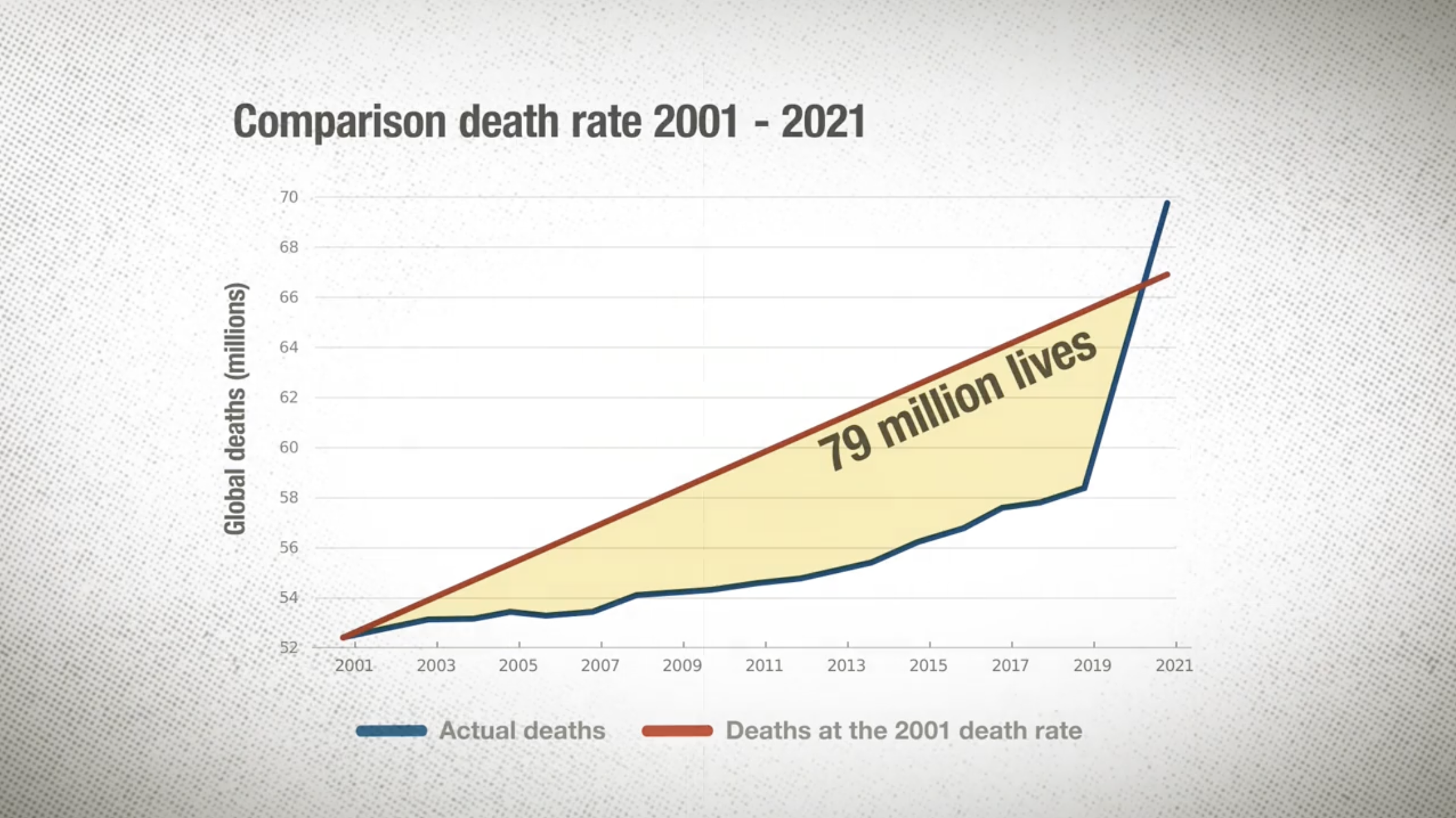
  • Reason reason.com news politics us-news us-politics 2026-08-03 12:30

    ↗

    Karim Khan, the Chief Prosecutor of the International Criminal Court from 2021 until his removal in 2026, ultimately lost his… The post Ex-ICC Prosecutor Khan's Sexual Misconduct Wasn't His Only Scandal appeared first on Reason.com.
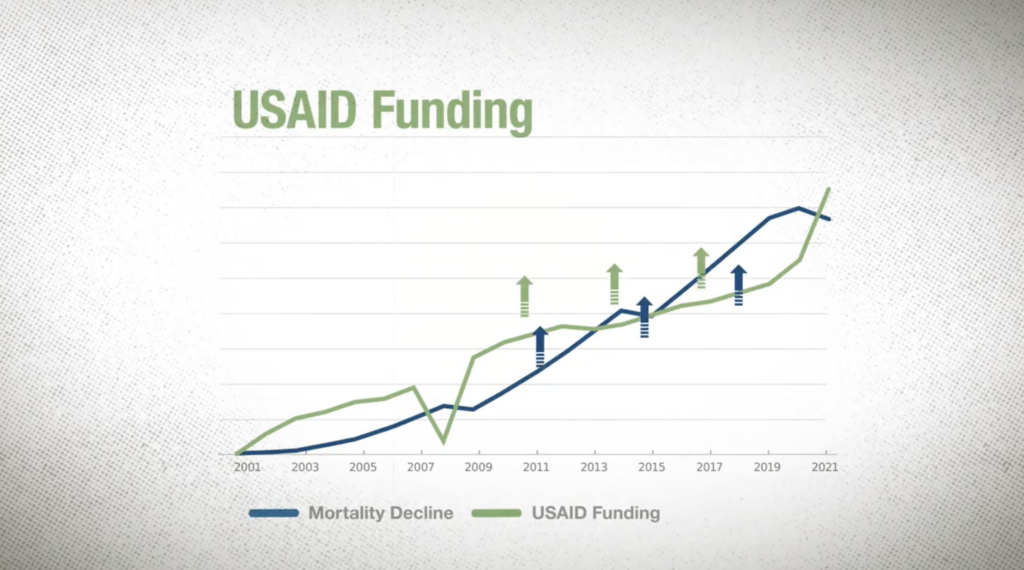
    Karim Khan, the Chief Prosecutor of the International Criminal Court from 2021 until his removal in 2026, ultimately lost his position after an investigation concluded that he had engaged in serious sexual misconduct toward a female subordinate. Khan denied the allegations, insisting they were false and politically motivated. Nevertheless, following an extensive investigation by the ICC's oversight bodies, he was first suspended and then dismissed by an overwhelming vote of the Court's member states—the first sitting ICC prosecutor ever removed from office.

    The scandal also cast a cloud over Khan's handling of the ICC's investigation into Israel. According to The Wall Street Journal, after learning in May 2024 that the allegations against him were about to become public, Khan, stunning his own staff, abruptly canceled plans to continue gathering evidence in Israel and Gaza and instead quickly announced that he would seek arrest warrants for Israeli Prime Minister Benjamin Netanyahu and Defense Minister Yoav Gallant, along with Hamas leaders. Whether or not the timing reflected an effort to divert attention from his personal scandal, it undeniably deprived the investigation of additional fact-finding that Khan himself had apparently considered necessary only days earlier. The warrants were later issued by the ICC and remain in effect despite Khan's removal because they are orders of the Court, not of the individual prosecutor.

    Anti-Israel activists such as Zohran Mamdani will no doubt continue to invoke those warrants as proof that Netanyahu is a "wanted war criminal." But even putting aside the troubling circumstances surrounding Khan's decision to seek them, the warrants suffer from a separate and fundamental legitimacy problem.

    As my colleague and co-blogger Eugene Kontorovich observed in 2024, Khan's decision-making process was compromised by his reliance on a handpicked group of advisers and outside experts who had already spent years publicly accusing Israel of war crimes and advocating legal action against it. Rather than assembling a balanced panel representing a range of views on the difficult legal questions presented by the conflict, Khan chose individuals whose public records left little doubt where they stood. To say the least, this was hardly a process designed to inspire confidence in the ICC's impartiality.

    As Kontorovich notes, the most striking example was Kevin Jon Heller of the University of Copenhagen, whom Khan publicly thanked for his assistance when announcing the charges. Heller had endorsed the anti-Israel BDS movement, described Israel as systematically denying Palestinians basic rights, called Israel "the Donald Trump of repressive states," and in 2020 referred to Benjamin Netanyahu and Donald Trump as "two criminals conspiring to commit criminal acts against Palestine." He frequently relied on anti-Israel NGOs while dismissing pro-Israel organizations as traffickers in "fake law and propaganda." Nor were these isolated remarks. For example, in 2015, Heller declared that "my political sympathies are very much with Palestine" and said that he did not doubt Israel had committed various war crimes.

    Kontorovich shows that the broader panel reflected the same pattern. Baroness Helena Kennedy had long urged ICC investigations of Israel, accused Israel of violating international law in Gaza, and publicly demanded that "enough is enough." Danny Friedman had already argued that Israel's pre-10/7 siege operations amounted to war crimes. Amal Clooney likewise had a well-established record of criticizing Israeli policy, while even the panel's Israeli member, former judge Theodor Meron, was better known for criticizing Israel's conduct than for defending it.

    Missing entirely was anyone who had publicly questioned the ICC's jurisdiction over the conflict, challenged the legal theories underlying the proposed charges, or expressed skepticism that Israeli officials had committed international crimes. A panel assembled in that fashion could scarcely be expected to provide the independent, objective review that the gravity of seeking arrest warrants against the leaders of a democratic country at war.

    The post Ex-ICC Prosecutor Khan's Sexual Misconduct Wasn't His Only Scandal appeared first on Reason.com.
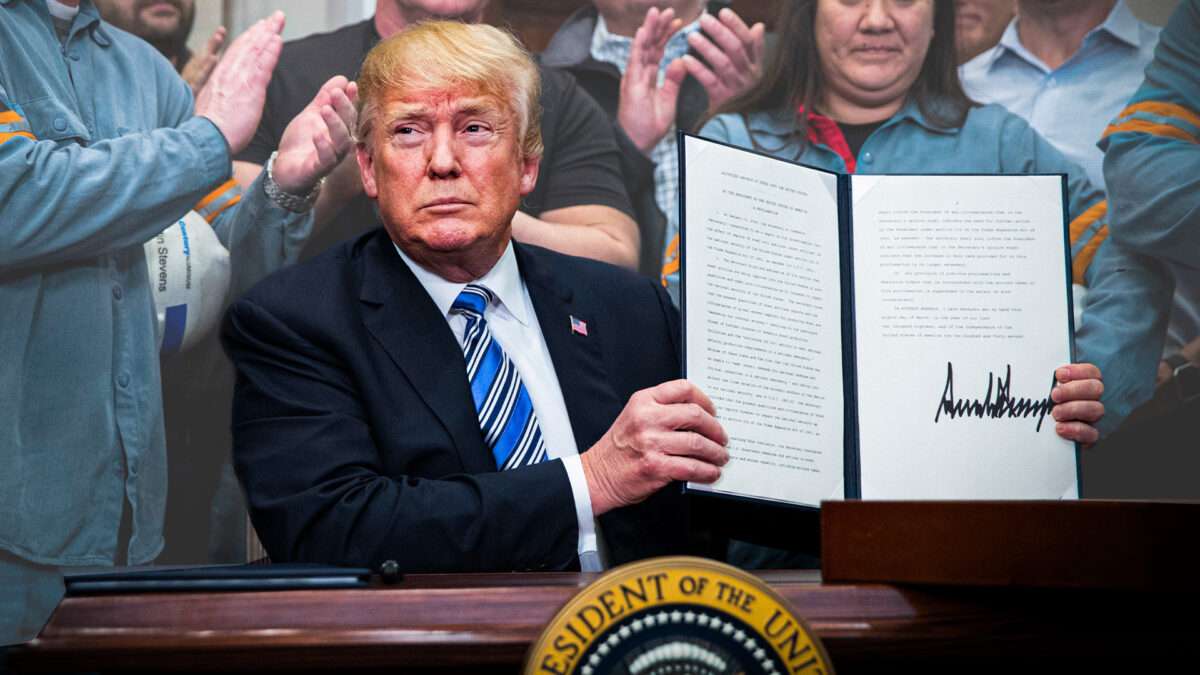
  • Reason reason.com news politics us-news us-politics 2026-08-03 12:01

    ↗

    An excerpt from Thursday's decision in Fayetteville Public Library v. Crawford County, by Judge Eighth Circuit Steven Grasz, joined by… The post Eighth Circuit Panel Rejects Overbreadth Challenge to Arkansas Law Barring Libraries from Making "Obscene-as-to-Minors" Material...

    An excerpt from Thursday's decision in Fayetteville Public Library v. Crawford County, by Judge Eighth Circuit Steven Grasz, joined by Judge Ralph Erickson:

    To "protect children from obscenity," [Arkansas] Act 372's first section criminalizes "furnishing a harmful item to a minor …." A person commits this offense "if, knowing the character of the item involved, the person knowingly … [f]urnishes, presents, provides, makes available, gives, lends, shows, advertises, or distributes to a minor an item that is harmful to minors." Section 1 defines "[h]armful to minors" as

    that quality of any description, exhibition, presentation, or representation, in whatever form, of nudity, sexual conduct, sexual excitement, or sadomasochistic abuse, when the material or performance, taken as a whole, has the following characteristics:

    (A) The average person eighteen (18) years of age or older applying contemporary community standards would find that the material or performance has a predominant tendency to appeal to a prurient interest in sex to minors;

    (B) The average person eighteen (18) years of age or older applying contemporary community standards would find that the material or performance depicts or describes nudity, sexual conduct, sexual excitement, or sadomasochistic abuse in a manner that is patently offensive to prevailing standards in the adult community with respect to what is suitable for minors; and

    (C) The material or performance lacks serious literary, scientific, medical, artistic, or political value for minors.

    Arkansas can punish violations of § 1 with up to a year of imprisonment.

    To "increase accountability for public-library curation decisions," § 5 requires county and municipal libraries to adopt two written, publicly available policies. The first policy must "establish guidelines for the selection, relocation, and retention of physical materials that are available to the public." And the second policy must allow people who are "affected by the material" to "challenge the appropriateness of material available in the county or municipal library" and must lay out certain procedures the library will follow, "at a minimum," when someone lodges such a challenge….

    An overbreadth challenge is a special "type of facial challenge traditionally restricted to the First Amendment context." To win an ordinary facial challenge, a plaintiff "must establish that no set of circumstances exists under which [a statute] would be valid." But the standard for overbreadth challenges is more lenient. A plaintiff's "showing that a law punishes a substantial amount of protected free speech, judged in relation to the statute's plainly legitimate sweep, suffices to invalidate all enforcement of that law …."

    This standard aims to balance "competing social costs." On "one hand, the threat of enforcement of an overbroad law deters people from engaging in constitutionally protected speech, inhibiting the free exchange of ideas." But "[o]n the other hand, invalidating a law that in some of its applications is perfectly constitutional — particularly a law directed at conduct so antisocial that it has been made criminal — has obvious harmful effects." To strike the right balance, the Supreme Court has "vigorously enforced the requirement that a statute's overbreadth be substantial, not only in an absolute sense, but also relative to [its] plainly legitimate sweep." And it has repeatedly warned that "[i]nvalidation for overbreadth is 'strong medicine' that is not to be 'casually employed.'" …

    [T]he Arkansas Supreme Court has interpreted § 1's definition of "'harmful to minors'" broadly, holding it cannot be read to cover only materials that are harmful to every minor, since this construction would "not protect all minors" from "material that may actually be 'harmful' to them …." And § 1 no doubt raises "greater First Amendment questions" because of this broad interpretation. So courts must use the framework set forth by the Supreme Court in NetChoice to distinguish statutes that are merely broad from those that are overbroad….

    [T]he district court speculated that some libraries and bookstores may try to comply with § 1 by "creating strict adults-only areas — into which would go potentially hundreds of books, from disposable paperback romance novels to classics of literature like Romeo and Juliet, Ulysses, Catcher in the Rye, The Handmaid's Tale, or The Kite Runner." But courts cannot conjure up their own hypotheticals en route to striking down laws as overbroad. Rather, they must "perform the necessary inquiry set forth in NetChoice," which turns on the plaintiff's actual evidentiary record…. [P]laintiffs must "demonstrate from the text of [the law] and from actual fact that a substantial number of instances exist in which the [l]aw cannot be applied constitutionally" to prevail on overbreadth challenges ….

    [T]he district court [also] stated … that "there is no set of circumstances under which [§] 1 … would be valid." If § 1 had no constitutional applications, it would of course be overbroad. But because the district court did not determine § 1's "full set of applications," it was in no position to say § 1 can never be applied without violating the Constitution. To the contrary, the Arkansas Supreme Court has recognized that books containing "graphic depictions of sexual conduct" and "nudity" are widely available.. The First Amendment does not leave Arkansas powerless to keep some of these out of children's hands…. "Two basic principles govern legislation aimed at shielding children from sexually explicit content. A state may not prohibit adults from accessing content that is obscene only to minors. But[ ] it may enact laws to prevent minors from accessing such content." … Section 1 therefore has a plainly legitimate sweep.

    "In this case, … we think it clear that if the appropriate standard is applied," Plaintiffs' overbreadth challenge will fail for two reasons….

    First, we have held "[i]t is inappropriate to entertain a facial overbreadth challenge when the plaintiff fails to adduce any evidence that third parties will be affected in any manner differently from herself." This requirement "stems from the underlying justification for the overbreadth exception itself — the interest in preventing an invalid statute from inhibiting the speech of third parties[.]"Plaintiffs did not "adduce any evidence" in this case "that third parties will be affected in any manner differently from [themselves]." Their overbreadth challenge fails as a result.

    Second, even disregarding the third-party issue and assuming some applications of § 1 violate the First Amendment, Plaintiffs' overbreadth challenge fails because we cannot determine § 1's "full set of applications" from the evidentiary record they put forward. Consequently, we cannot "evaluate which [applications] are constitutional and which are not, and compare the one to the other." When "[n]o record [i]s made in this respect," courts "cannot conclude that the [l]aw is substantially overbroad and must assume that 'whatever overbreadth may exist should be cured through case-by-case analysis of the fact situations to which its sanctions, assertedly, may not be applied.'"

    For these reasons, the district court erred when it granted Plaintiffs summary judgment on their overbreadth challenge to § 1.

    Chief Judge Colloton concurred in the judgment, and noted, among other things:

    The court says that there is no evidence that third parties will be affected differently than the libraries and booksellers who brought this action. But the libraries presented evidence that the Act would require them to segregate dozens of books in a way that would affect the manner in which third-party patrons may access the books for review and checkout. The plaintiffs presented lists of books that must be segregated under the statute because they would be "harmful" to the youngest minors while not "harmful" to older minors or obscene to adults.

    The court then says that there is "no record" concerning the "full set of applications" of Act 372 to which the court could compare the restrictions on access. The relevant comparator, however, is the statute's plainly legitimate sweep. There is no evidence or suggestion that the collections include a significant number of holdings that would be obscene to adults, older teenagers, and younger minors alike. The challenged applications of the statute to books that are harmful to younger minors are thus substantial when judged in relation to the statute's plainly legitimate sweep. If adults and older teenagers have a right to unfettered and undifferentiated access to all books in a library, then a conclusion of overbreadth seems to follow. It would be surprising if the discussion of an overbreadth challenge in Moody v. NetChoice, LLC (2024), required libraries in this sort of case to itemize their entire catalogs for the court.

    Even so, for reasons already explained at length by others, I conclude that the overbreadth claim fails because third-party library patrons have no constitutional right to receive unfettered access to books of their choice at taxpayer expense. Little v. Llano County (5th Cir. 2025) (en banc); see Bd. of Educ. v. Pico (1982) dissents. A public library, or a State that regulates a public library, may place certain books in a particular section of the facility, to shield younger minors from harm, without violating the First Amendment rights of other patrons who would prefer to have the collection made available in a different manner. Because the applications of § 1 posited by the plaintiff libraries do not in my view infringe on a constitutional right of third-party patrons, the statute is not unconstitutionally overbroad on its face.

    Arkansas Assistant AGs Autumn Hamit Patterson, Mary Erica Crouse, and Noah P. Watson, as well as Forrest C. Stobaugh, James D. Rankin, III, and Samuel S. McLelland, represented the defendants.

    The post Eighth Circuit Panel Rejects Overbreadth Challenge to Arkansas Law Barring Libraries from Making "Obscene-as-to-Minors" Material Available to Minors appeared first on Reason.com.
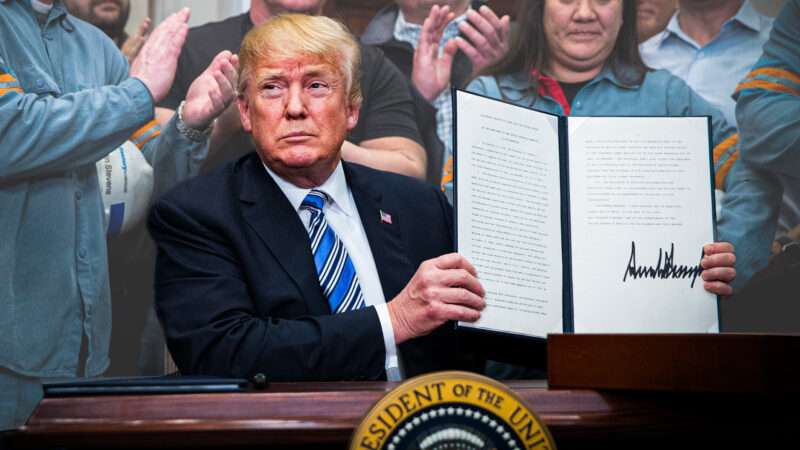
  • Reason reason.com news politics us-news us-politics 2026-08-03 11:00

    ↗

    8/3/1994: Justice Stephen Breyer takes oath. The post Today in Supreme Court History: August 3, 1994 appeared first on Reason.com.
    8/3/1994: Justice Stephen Breyer takes oath.

    Justice Stephen Breyer

    The post Today in Supreme Court History: August 3, 1994 appeared first on Reason.com.

  • Reason reason.com news politics us-news us-politics 2026-08-03 11:00

    ↗

    New York Mayor Zohran Mamdani, and a claw picking up a house

    New York Mayor Zohran Mamdani, and a claw picking up a house | Illustration: Admedia, Inc/Camara Porter/AdMedia/Sipa USA/Newscom/Midjourney

    Making an enemies list is creepy. Publishing the names of people you dislike to fuel political supporters' prejudices is even creepier and potentially dangerous. That's what New York City Mayor Zohran Mamdani's administration has done with the introduction of a property tax surcharge on relatively high-value second homes linked to a searchable online database of those who could be affected. The socialist mayor's defenders point out that tax and property information is a matter of public record in New York, but the packaged publication of surcharge targets and Mamdani's history of calling out opponents by name suggests something nastier is going on.

    A Tax on Second Homes Worth $1 Million or More

    "If you have a second home in New York City worth more than $5M, check your mailbox when you're back in the five boroughs — because you've got mail," Mamdani announced on July 23. "Today, we sent notification letters to property owners, letting them know that our new pied-à-terre tax is coming soon."

    The non-primary residence property surcharge, as it's called on the Department of Finance website, actually applies to "one-, two-, and three-family homes valued by DOF at more than $5 million" and "condominium and cooperative units valued by DOF at $1 million or more." The surcharge can add up to anything from 0.8 percent to 6.5 percent of market value.

    The application of the surcharge to million-dollar-plus condos and co-ops sounds like a rarefied segment of property owners to many Americans, but it scoops up a large number of homes in the city's pricey housing market. As of 2024, the average price for condos in Manhattan was $2.98 million and for coops was $1.34 million, according to The New York City Broker. The outer boroughs are less expensive, though Brooklyn condos still average $1.28 million.

    Publicly Targeting Alleged Owners of Second Homes

    More concerning, though, is that the people and properties allegedly affected by the surcharge are broken out in a searchable database accessible through the Department of Finance website. Such tax information is publicly available in New York, but it's not often so neatly packaged.

    "While the information cited in the database is part of the public record, it is unusual for it to be aggregated and compiled into a user-friendly searchable platform that provides easy access to the locations of many prominent business and entertainment figures," reported Phil Hall for Weekly Real Estate News.

    That's concerning at a time when politicians have grown increasingly comfortable publicly vilifying people who disagree with them or who are simply wealthier than their political allies like.

    "This was in poor form as publishing names/addresses singles out people who have done nothing wrong, at a moment when the far extremes of the political spectrum already treat success itself as something to be punished," warned Steven Fulop, president and CEO of the Partnership for New York City, a nonprofit organization that boosts the city. "Most of the people on that list aren't billionaires by any stretch—they're people that believed in NYC, worked hard and bought a second home. All this does is make people feel less safe in their own city, and less welcome in it."

    The suspicion, based on Mamdani's past conduct, is that making some people feel less safe and less welcome in New York City is the whole point. The mayor initially announced the second-home surcharge in a video recorded outside a building where hedge fund CEO Ken Griffin owns a large condo. The video cited Griffin by name as a tax target.

    "This pied-à-terre tax is specifically designed for the richest of the rich, those who store their wealth in New York City real estate but don't actually live here," Mamdani claimed in the April 2026 video. He also insisted the tax would apply only to "luxury properties worth more than $5 million, whose owners do not live full-time in the city."

    But as mentioned above, the tax is being applied to properties worth less than the average price in Brooklyn and Manhattan, totaling up to roughly 960,000 properties in the database, though most will ultimately not be subject to the surcharge. By New York City standards, those owners are not necessarily the richest of the rich at all. But they're prosperous enough to stir the socialist mayor's backers into a frenzy of envy, which is probably the intention.

    "To class warriors like Mamdani, success in a capitalist economy is akin to theft," cautioned the Washington Post editorial board. "Political leaders are role models for young people. In New York, the most prominent politician is sending a message to them: Resent success rather than trying to emulate it."

    Where Malice Meets Incompetence

    Many of those drawing the ire of the mayor and his backers appear to be victims of incompetence as much as of malice. Writer Alex Berenson says his 81-year-old mother received a notice that she owes $55,048 in second-home taxes even though the named townhouse is her sole property and residence of 30 years. She's not alone. Department of Finance Commissioner Richard Lee admitted during a July 29 press conference that the city may have used outdated information in compiling its list of properties subject to the tax. Amidst a chorus of outrage, the city extended the deadline for homeowners to demonstrate that they're exempt. Whether or not they succeed, their names and addresses remain available in the database.

    Even some of Mamdani's backers regret the malicious way the tax has been implemented. Podcaster and New York University marketing professor Scott Galloway, whose property appears in the database, complained "I've been doxed" about the publication of his information. "He's taken a legitimate source of tax revenue and he's turning it into a wanted poster," Galloway commented about the mayor. "18 months after a health-care CEO was executed in the street….What is the upside here? Why is he doing this?" he asked, referring to the murder of UnitedHealthcare CEO Brian Thompson.

    Thompson was assassinated in New York City by, allegedly, a man motivated to stalk and kill by his disapproval of the CEO's business decisions. That should be warning enough that calling out perceived class enemies and playing to your political base's hatreds is dangerous.

    But we live in dangerous times. In an age of weaponized hatreds, just being suspected of success can get you on politicians' enemy lists.

    The post Mamdani's Tax Database Doxed Wealthy New Yorkers appeared first on Reason.com.

  • Reason reason.com news politics us-news us-politics 2026-08-03 08:00

    ↗

    Male and female sidewalks

    Male and female sidewalks | Photo: Oblong1/Dreamstime Illustration: Fatima Ruiz

    City officials in Bnei Brak, Israel, have set up gender-segregated sidewalks near event halls and wedding venues, with signs and barriers directing men and women to walk on opposite sides of the street. This followed a directive from the city's ultra-Orthodox rabbis, who want to promote modesty and let wedding guests arrive already separated by sex. City council member Yaki Vider strongly criticized the plan, saying the municipality should focus on real problems like fixing infrastructure, cleaning streets, improving transportation, and providing basic services, instead of acting as a "modesty patrol" that polices public behavior.

    The post Brickbat: The Other Side of the Street appeared first on Reason.com.

  • Reason reason.com news politics us-news us-politics 2026-08-03 07:00

    ↗

    What’s on your mind?

    The post Open Thread appeared first on Reason.com.

  • Reason reason.com news politics us-news us-politics 2026-08-02 11:00

    ↗

    An illustration of Donald Trump holding a folder of papers

    An illustration of Donald Trump holding a folder of papers | Illustration: Joanna Andreasson; Source images: iStock, Wikimedia

    Since returning to office last year, President Donald Trump has imposed numerous immigration restrictions that he argues will benefit the American people. The Trump administration recently amended one such measure, a development that suggests it might not be having its intended effect.

    Starting in January, the Trump administration froze "decisions on visa extensions, work permits and green cards for citizens of 39 countries," The New York Times reported. A presidential proclamation cited the need to protect Americans "from foreign nationals who intend to commit terrorist attacks, threaten our national security and public safety, incite hate crimes, or otherwise exploit the immigration laws for malevolent purposes." It outlined very narrow exceptions—for example, "any athlete or member of an athletic team" traveling "for the World Cup, Olympics, or other major sporting event."

    In May, the Trump administration tacitly admitted this broad restriction is not in the national interest. U.S. Citizenship and Immigration Services quietly updated its website "to indicate that physicians are no longer subject to the processing hold," and the Department of Homeland Security confirmed that it would "resume issuing visas and work permits for the group," The New York Times reported.

    Foreign-born professionals are critical to the country's medical workforce: A quarter of American doctors are international medical graduates. Rural counties and communities are especially dependent on foreign-born physicians. They will prove even more important during the next decade, because the U.S. will face a shortage of up to 86,000 physicians by 2036, according to an estimate from the Association of American Medical Colleges. The visa pause was "forcing physicians who've lived in the U.S. for years to stop working and exacerbating staffing shortages that are a longstanding headache for hospital administrators," Politico reported in April.

    Plenty of obstacles remain for foreign doctors. Delays in processing visa waiver applications for a program run by the Department of Health and Human Services could mean that "hundreds of foreign doctors about to complete training in the U.S. will have to leave the country" imminently, KFF Health News reported in May. Hospitals are also having a hard time sponsoring international physicians because of the $100,000 H-1B visa fee that the Trump administration introduced last fall. "Canada and other countries are trying to recruit these doctors away from the U.S., offering incentives like fast-tracked permanent resident status," Axios noted in March.

    The foreign doctor carveout is a positive development, but it is a narrow solution to a bigger problem. Imprecise immigration restrictions harm the country in ways that decision makers can't—or won't—imagine.

    The post Why Trump Quietly Carved Out Doctors From His Own Visa Freeze appeared first on Reason.com.

  • Reason reason.com news politics us-news us-politics 2026-08-02 11:00

    ↗

    8/2/1923: President Calvin Coolidge's Inauguration. He would appoint Justice Harlan Fiske Stone to the Supreme Court. The post Today in Supreme Court History: August 2, 1923 appeared first on Reason.com.
    8/2/1923: President Calvin Coolidge's Inauguration. He would appoint Justice Harlan Fiske Stone to the Supreme Court.

    President Calvin Coolidge

    The post Today in Supreme Court History: August 2, 1923 appeared first on Reason.com.
  • Reason reason.com news politics us-news us-politics 2026-08-02 10:00

    ↗

    Excerpts from Reason's vaults

    archives | Photo: Man on Wire; J.L. Blondeau/Polaris, August/September 2011 issue of Reason

    5 years ago
    Aug/Sept 2021

    "In the two decades since the September 11 attacks, the absence of REAL ID enforcement has not made domestic flights more vulnerable to terrorism. Meanwhile, the federal government and the states have not been able to implement REAL ID at scale, and the general public does not seem to see a need for it. The next time Congress debates the future of REAL ID, it should repeal the requirement for good."
    Scott Shackford
    "Even COVID-19 Couldn't Kill 
REAL ID"

    15 years ago
    Aug/Sept 2011

    "After the terrorist attacks of September 11, 2001, it became fashionable on the right, and among some hawkish liberals, to defend and even promote the idea of an American Empire to keep us safe from terrorists, hold rogue nations in check, and secure global commerce…..In the middle years of the last decade, as the wars in Iraq and Afghanistan grew steadily worse, this jingoism fell out of favor, leaving only a shrinking core of committed neoconservatives to champion the virtues of empire. Still, the questions posed by American global military dominance were far from settled in public opinion."
    John Payne
    "Temptations of Empire"

    "If we are getting over 9/11 in ways big and small, it's not because we have worked through the pain and the terror and the anger but simply because we are forgetting it ever happened in the first place. Within another decade at most, we will walk by 9/11 memorials the same way we stroll by the World War I cenotaphs installed in town squares across the country. Catharsis be damned; this is probably the way we always get over trauma. Repression and historical amnesia are among the most powerful tools God or evolution has handed us."

    Nick Gillespie
    "Why Art Failed Us After 9/11"

    "Looking back at the few bright moments during those first days and weeks after the attacks, I can think of hardly any that emanated from a politician or figure of influence….The strength of America on display 10 years ago did not result from centralizing new bureaucracies in Washington, unionizing new sets of federal employees, or devising easier ways for the government to snoop on and even kill its own citizens. It came from individual human beings, accustomed to living in freedom, acting in a decentralized manner to make an atrocious event slightly less painful. There's an important lesson there, waiting to be learned."
    Matt Welch
    "The Day Everything Continued To Change"

    55 years ago
    September 1971

    "The [Federal Communications] Commission has an impossible job; it cannot police the thousands of licensees across the nation to ensure that they remain within the charters granted them. Lacking an overall conceptual framework, it cannot respond rationally to the technological advances which continually outpace and outscope the political and jurisdictional rules and regulations it sets forth."
    Michael Bloom
    "The Data Communications Battle"

    "The Democratic Party Platform of 1888 called tariffs and quotas the 'mother of monopoly.' The famous trusts of the time (e.g., sugar and tobacco) were protected from foreign competition. It was wisely argued that free trade would protect the American consumer by allowing the whole world to compete for his business. Monopolizing the world production of a product is infinitely more difficult than monopolizing a national market. When Brazil tried to restrict her coffee sales to raise prices, she only succeeded in causing coffee to be grown in other countries, which meant greater production and lower prices than before."
    Rod Manis
    "Free Enterprise and the Monopoly Myth"

    The post Archives: August/September 2026 appeared first on Reason.com.
  • Reason reason.com news politics us-news us-politics 2026-08-02 07:00

    ↗

    What’s on your mind?

    The post Open Thread appeared first on Reason.com.

  • Reason reason.com news politics us-news us-politics 2026-08-01 22:17

    ↗

    The local government sought to use eminent domain to block a housing project local NIMBYs objected to.

    Rhode Island property targeted for condemnation to prevent construction of affordable housing on the site. (PLF).


    Last year, I wrote about SCLS Realty v. Town of Johnston, a case where property owners challenged a Rhode Island town's plan to use eminent domain as a tool for blocking a housing project opposed by local NIMBYs. A few days, ago a federal district court invalidated the use of eminent domain there. But not on the "public use" grounds discussed in my 2025 post. Rather, the Court ruled that the Town was never delegated the authority to use eminent domain for this kind of purpose in the first place. In Rhode Island (as in other states) eminent domain is a power of the state government, and localities can only wield it in so far as the state legislature authorizes them to do so.

    Robert Thomas of the Pacific Legal Foundation (the public interest law firm that represented the property owners) has a helpful and more detailed summary of the court's ruling at the Inverse Condemnation blog.

    NOTE: PLF is also my wife's employer. But she has no involvement in this case and does not work on property rights issues.

    The post Federal Court Rules Against Rhode Island Town's Use of Eminent Domain for NIMBY Purposes appeared first on Reason.com.

  • Reason reason.com news politics us-news us-politics 2026-08-01 21:45

    ↗

    US Supreme Court

    US Supreme Court
    The Supreme Court Justices (2023). (Pool/ABACA/Newscom)


    Debate over the Supreme Court's performance in recent years has become highly polarized. So it's worth noting that prominent left-liberal Georgetown law professor  David Cole recently published a qualified defense of the Supreme Court's recent rulings in the New York Review. He emphasizes their crucial role in constraining abuses of power by Trump. Cole is also the former National Director of the ACLU, and thus - to understate the point - not a natural ally of the Court's conservative majority. As we shall see, he's far from an unqualified fan of their recent performance, and still takes them to task on some points. But the more positive aspect of his appraisal is still notable:

    Can we rely on the courts, and most importantly the Supreme Court, to resist major assaults on the rule of law by the Trump administration? That question was front and center during the Court's recently concluded 2025–2026 term. With its six Republican appointees—three nominated by Trump—some feared that, much like the Republican-controlled Congress, the Court would reflexively back the president….

    By the end of the term, however, the story was more nuanced. The Court blocked four of Trump's major initiatives: ending birthright citizenship, imposing worldwide tariffs, firing Federal Reserve governor Lisa Cook, and dispatching National Guard troops to Chicago, Portland, and other cities. In other significant cases as well, the Court rejected positions advanced by Trump. In a decision that he called "a tremendous loss," it held that federal law permits the counting of mail-in ballots posted by election day but received thereafter. And it refuted the Trump administration's assertion of constitutionally unchecked power to demand that Google turn over the cell phone location histories of unlimited numbers of Americans. The justices may not be, as Trump called them after he lost the tariffs case, "fools and lapdogs for the RINOs and the radical left Democrats," but this is not Donald Trump's Court….

    These are not the decisions of a Court doing the president's bidding or voting exclusively along party lines. By contrast, had these issues been put to a vote in Congress, would a single Republican have broken ranks?

    The rulings cannot be dismissed as mere token losses for Trump. Each one established important guardrails on the executive branch. The tariffs decision rejected the president's assertion of emergency powers, a step courts rarely take. Justice Samuel Alito called the birthright citizenship case "one of the most important decisions in the history of the Court." The decision blocking the firing of Cook protected the independence of the Federal Reserve, the nation's most powerful financial institution. And the National Guard decision kept troops off our streets, halting Trump's invocation of a classic authoritarian move.

    Some argue that all these cases that went against Trump were so easy and clearcut that the Court deserves little or no credit for them. Cole disagrees:

    Nor can the decisions be discounted on the ground that no reasonable judge could rule in Trump's favor. They all raised serious and unresolved questions. In Trump v. Barbara, the Court ruled that the Fourteenth Amendment, which extends citizenship to all persons born in the United States and "subject to the jurisdiction thereof," was intended to adopt the then-existing common law rule of birthright citizenship….

    In 1898 the Court affirmed this common law understanding in United States v. Wong Kim Ark. But that case involved the child of Chinese nationals who were permanently and legally domiciled in the United States, so it did not technically involve the classes of persons to whom Trump sought to deny citizenship: children of foreign nationals here illegally and children of transient visitors….

    The tariffs case also presented a close question. The majority ruled that the president's power to "regulate" imports under the International Emergency Economic Powers Act (IEEPA) does not include the power to impose tariffs, as the Constitution generally assigns the power to tax to Congress, a tariff is a type of tax, and the IEEPA does not explicitly delegate the authority to tariff to the president. But Kavanaugh wrote a thoughtful dissent for three justices that echoed an earlier decision by Judge Richard Taranto, a widely respected moderate member of the US Court of Appeals for the Federal Circuit. The Supreme Court had previously interpreted the IEEPA broadly, and President Richard Nixon had imposed tariffs under a predecessor statute. Reasonable people could differ on the legal question, yet the Court sided against the president.

    Cole makes similar points about some of the other major cases that Trump lost.

    I actually think the birthright citizenship and tariff cases were more clear than Cole suggests. While there were indeed "reasonable" arguments on both sides, the plaintiffs' arguments were much stronger than those of the administration. In the birthright citizenship case, the administration's arguments would have undermined the main purpose of the Citizenship Clause: guaranteeing citizenship to freed slaves and other Blacks. In the tariff case (which I helped litigate), there was a long list of strong arguments against the Trump's position, any one of which would have been enough to justify ruling against him. I summarized many of them here. Still, both cases raised largely unprecedented issues, and in both a Supreme Court inclined to do Trump's bidding could have found at least minimally respectable rationales for doing so. The same is true of the National Guard case, and others.

    Overall, I very much agree with Cole's point that the Court has been a crucial check on Trump's power grabs, even if some of the cases weren't that difficult, and even if it hasn't always constrained him as much as it should. I have made similar arguments, myself (e.g. here and here). But, in some ways, it means more coming from Cole, as he is more ideologically distant from the Court's majority than I am.

    It's possible to dismiss the Court's rulings against Trump on the grounds that, even if they went against Trump, they were still in line with the interests of at least some in the Republican Party. Thus, the Court could still be considered "partisan." After all, in each of these cases, there were at least some Republicans - including influential Republican legal elites and prominent conservative legal commentators - who opposed the administration's position.

    But that claim runs into the painful reality that - at this point - the GOP overwhelmingly backs Trump's policies, including on the issues at stake in these cases. If having the support of a few Republicans or conservative legal commentators is enough to make a decision partisan, the claim would be nonfalsifiable. After all, almost any plausible resolution of any major case has the support of at least a few prominent Republicans. For example, there are pro-choice Republicans like Maine Sen. Susan Collins who would have preferred to see the Court preserve abortion rights and Roe v. Wade. It doesn't follow that a decision reaffirming Roe (the opposite of what the present Court actually did) would be a partisan Republican ruling!

    It is fair to say, as liberal Justice Elena Kagan recently did, that this is a conservative Court, reflecting primarily conservative jurisprudential philosophies. As she puts it, "there's a conservative court doing things that conservative jurists have long thought it appropriate to do." But, as she also pointed out, that's different from being either a Trump Court or a bunch of GOP partisans.

    In the last part of Cole's article, he takes the Court to task for neglecting the principle of stare decisis, overruling some precedents and severely narrowing others. I agree with his critiques of some of these decisions (e.g. - the awful Haitian TPS immigration ruling), and differ on others. But in each of these situations, it isn't so much the doctrine of precedent that is doing the work, as our (sometimes divergent) perceptions of whether the precedent the Court overruled or narrowed was right in the first place.

    Few judges, legal scholars, or commentators are genuinely willing to apply stare decisis to preserve constitutional precedents they believe to be badly wrong - and rightly so. I wrote about this in a 2019 post, that I think remains relevant today:

    I simply do not believe that stare decisis will prevent either the liberal or the conservative justices from overruling constitutional precedents they believe to be badly wrong, though both are happy to wave the stare decisis flag whenever precedents they like are imperiled…

    The liberal justices who appeal to stare decisis today also applaud the work of the New Deal-era and Warren courts, both of which overturned numerous longstanding constitutional precedents. Given the opportunity, they would likely happily overrule such precedents as Citizens United and the travel ban case, both much reviled on the left (the latter deservedly so, in my view)….

    The Supreme Court needs to have the power to overturn flawed constitutional precedent, as this is usually the only way to correct wrong constitutional decisions, short of using the extraordinarily difficult amendment process.

    If precedent were sacrosanct, the Supreme Court could not have reversed or superseded any of its most notorious past decisions…  [I]n the travel ban case, the Court repudiated Korematsu v. United States, the notorious 1944 decision that upheld the World War II-era racially-based internment of over 100,000 Japanese-Americans. Hardly anyone objected that it was somehow inappropriate for the justices to junk a 74-year-old precedent….

    Few people, particularly on the left, pine for the return of Bowers v. Hardwick, the 1986 case in which a narrow majority upheld the constitutionality of anti-sodomy laws. The Court eventually overruled Bowers in Lawrence v. Texas (2003)….

    Today, pretty much every…. legal commentator can name Supreme Court decisions they would like to see overruled….

    The justices' highest legal obligation is not to the Court's past precedents, but the Constitution. If they are convinced that the latter conflicts with the former, they should overrule, if at all possible. There is a good case for adhering to precedent in situations where the court is uncertain whether it is correct or not. In such situations, it might be reasonable to defer to the seeming accumulated wisdom of earlier judges, especially if there was a broad cross-ideological consensus among them…. [I]t is also justifiable to maintain wrong precedent in some instances where massive reliance interests would be upset otherwise.

    But none of these considerations justifies maintaining precedents that the Court believes are badly wrong, and causing more harm than good in the real world. In such scenarios, the Court has a special obligation to help undo the evil that it had a major role in creating

    See also my discussion here, of overturning precedents that protect individual rights.

    I am far from an unequivocal defender of the current Supreme Court majority, and I think they have gotten some issues badly wrong. Just this term, we had the TPS case, and a severely flawed Takings Clause ruling. Earlier, there were clunkers like the Trump immunity decision, Trump v. Anderson, and the travel ban case, mentioned above. But when the Court goes wrong, it's generally not because they showed too little respect for precedent.

    The Court's work could use significant improvement in a number of areas. But it's also important to acknowledge its very real achievements. And to resist efforts to destroy those achievements - and judicial review generally - by measures such as court-packing.

    The post David Cole's Qualified Defense of the Supreme Court appeared first on Reason.com.

  • Reason reason.com news politics us-news us-politics 2026-08-01 15:56

    ↗

    Some excerpts from N.Y. Saratoga County trial court judge Jonathan Schopf's long decision in Anonymous School Dist. v. Anonymous a… The post N.Y. Judge Rejects School's Request for "Red Flag" Order Against 13-Year-Old, Including No-Knock Search Warrant appeared first on Reason.com.

    Some excerpts from N.Y. Saratoga County trial court judge Jonathan Schopf's long decision in Anonymous School Dist. v. Anonymous a week ago:

    This matter stems from the filing of a Petition for a Temporary Extreme Risk Protection Order (herein "TERPO") under … New York State's "Red Flag Law" …. Respondent is a thirteen (13) year-ol…

    On June 16, 2026, a Petition was filed seeking the issuance of the Temporary Order preventing the Respondent from purchasing, possessing or attempting to purchase or possess a firearm, rifle or shotgun as well as seeking a "no knock" search warrant executable at any time of the day or night without notice of the officer's authority or purpose for an address associated with the Respondent's father and an address associated with the Respondent's mother, and the seizure of any firearms, rifles, or shotguns located therein pursuant to such warrant.

    In support of this Petition, the district filed an Affidavit of L., a teacher's aide, an Affidavit of the superintendent of the school district, and a printout of the Respondent's disciplinary referral record for the current academic year. {The sole basis in the Petition for the search warrant was that on June 16, 2026: "[w]hile [Respondent] and another student were in the hallway, he said to another student: 'I can't wait to shoot up the school.' When speaking with an administrator, [Respondent] initially denied making the comment but then admitted to making the comment."}

    For the reasons set forth herein, the Court denied the TERPO application and set the matter down for a hearing for a Final Extreme Risk Protection Order on June 23, 2026….

    At the outset, in issuing the denial of the Temporary Order, the Court found the request for a no-knock search warrant lacked evidentiary support in the Petition to grant the relief. The TERPO Application in this matter requested a search warrant for the homes of both Respondent's mother and father, and to seize any firearms found therein. The application specifically requested the Court to authorize execution of the search "at any time of the day or night" and "without notice of the officer's authority or purpose"—colloquially known as a "no-knock warrant." The standard for the issuance of a search warrant pursuant to CPLR Article 63-A is governed by the Criminal Procedure Law.

    The supporting affidavit of the superintendent appears to support the request for the search warrant by stating that: "[s]tudent's father is known in the community as a licensed firearm dealer thereby indicating that student has access to firearmsin the home …" The affidavit further states that "[b]ased on my 26 plus years as an educator, the comment Student made to a peer, and the access Student has to and familiarity with firearms, I believe that Student represents a danger to himself and others and that he should not be permitted to use or possess firearms, or be in a household where he has access to them." …

    The Respondent, and his parents, are not convicted felons and Respondent was not charged with a felony crime, let alone any crime, despite the allegations contained in the Application.

    The Court likewise finds no evidence that the alleged lawfully owned and secured firearms possessed by the Respondent's father were actually accessible by Respondent. Rather, the Application states in a conclusory manner bereft of facts that Respondent has access to firearms because his father holds a Federal Firearms License (FFL) and runs a firearms business from his home. The Court notes that … the New York State "Safe Storage Act" … as well as regulations governing FFL dealers require secure storage of any firearms and ammunition that would be present at Respondent's father's home. {Notably, at the hearing Respondent's father's uncontroverted testimony was that Respondent has no access to firearms and that Respondent's father had voluntarily allowed Saratoga County Sheriff's Deputies to verify that all firearms were appropriately secured.}

    That Constitutional rights are of paramount importance is a bedrock of our legal system, which flows to the search and seizure of an individual's property …. "[No-knock warrants are] a very drastic procedure. In view of the harshness of the statute, it should be the obligation of our police officials to make a thorough and precise investigation when securing the facts and evidence upon which supporting affidavits are based; to do less is not only a violation of our civil liberties, but is also a fraud upon the court" ….

    Other than the truthful allegations confirmed at the hearing that the Respondent's father is a federally licensed firearms dealer, there was no support offered in the Petition or at the hearing to justify seizure of business (or personal) property of a non-party to this proceeding. There was no support or justification for the speculative and conclusory statements contained in the Petition that the Respondent possessed or was indeed familiar with firearms….

    The Court now denies the issuance of a Final Extreme Risk Protection Order ("FERPO") following the June 23, 2026 hearing. There are several reasons for this denial. Firstly, the Respondent is thirteen (13) years old….

    The power of a court adjudicating a Red Flag Law petition is limited to separating the respondent from firearms by issuing an TERPO or FERPO. Critically in this case, and with most cases involving minors, even that power is limited because the Red Flag Law does not prohibit the presence of firearms in the home of the respondent if those guns lawfully belong to another person…. [I]t is illegal in the State of New York for a 13-year-old child to handle a firearm, much less to possess or own one. Indeed, the State makes it illegal for anyone under the age of 16 to possess a gun of any kind…. In short, before any TERPO petition was brought, the Respondent was legally barred from possessing any gun as a matter of law and the Court could grant no other relief greater than that which was already imposed.

    The law does exempt from the under-16 prohibition the possession of a shotgun or rifle by the holder of a duly-issued hunting license. The youngest a person may be issued a hunting license is age 12, thus the Respondent is eligible. The Court inquired on the record as to whether or not the Respondent had a state issued hunting license; the response was "no." Thus, the foregoing provisions establish that there is a blanket prohibition on the Respondent from owning, purchasing or possessing firearms of any kind. In light of that comprehensive legal bar already in place under statutory law, the Court agrees with Justice Schreibman and hereby finds that, it is plainly "unwarranted under existing law" to seek an ERPO against a child under eleven (11) years of age or any child under sixteen (16) years of age who has not been issued a state issued hunting license….

    [T]he Respondent was taken into custody by the Saratoga County Sheriff for a mandatory psychiatric evaluation, he was transported, alone, in the back of a patrol vehicle to the hospital for the evaluation—in this case, without the knowledge or consent of his parents. The Respondent was then sued and brought to court to appear in front of a judge for a proceeding to determine whether he should not possess guns that he already could not legally possess. For a thirteen-year-old child, such an event would likely be terrifying and traumatizing. The Court questions how the bringing of a TERPO against any minor under sixteen (16) years old can be justified where there is no resolution that can be achieved under the current statute to advance the interests of the public or the potentially troubled minor child.

    Here, it would appear that the Saratoga County Sheriff's Office believed that Respondent might suffer from a mental illness. This must be, because they took Respondent into custody for an involuntary mental health evaluation and they have no lawful authority to do so unless they conclude that the subject "appears to be mentally ill and is conducting themself in a manner which is likely to result in serious harm to the person or others."

    At the FERPO hearing, other than testimony of the principal that Respondent left school that day with "our SRO [School Resource Officer] due to concerns over mental health stability with homicidal ideation," Petitioner did not present a scintilla of medical evidence regarding Respondent's mental health, either from medical professionals or from family or community members familiar with Respondent….

    As the Court made clear on the record, the Respondent in this case has an extensive disciplinary history this academic year. There were twenty-seven (27) total disciplinary referrals …. As was testified to on cross-examination, none of these referrals (other than the subject referral) discusses a physical threat to another person or facility and could not be so construed by the Court upon review.

    The referrals range from tardiness to class and copying homework to making wildly inappropriate comments and taunting other students and faculty. Taken on their face, these disciplinary referrals would make the Respondent appear to be a child who constantly and fundamentally has issues with authority and disrespects peers and teachers. As disheartening as it is to read some of the material therein, nothing in these referrals provides evidentiary support to the instant application, but it does underscore the fact that Respondent is a vulnerable child who needs continued guidance, discipline, and structure from his parents and community institutions such as his school.

    {It would appear from the testimony that Respondent's parents had not received notification of any of the prior disciplinary referrals this year. It also appears that the failure to receive these, as well as Respondent's behavior in school, were discussed amongst the principal and the Respondent's parents the prior year while other disciplinary referrals were discussed that year. The details of this are not clear from the testimony, but it seems that the current year referrals may not have been received by the parents due to Respondent having not received a suspension from school this academic year.

    Both the mother and the principal testified that they have a good relationship and that the school has been supportive of Respondent in navigating behavioral challenges. The Court questions whether this application jeopardizes, to the detriment of the Respondent, that therapeutic and supportive relationship.} …

    [T]he Court cannot forsee what impact, if any, the issuance of a FERPO would have upon Respondent. Equally, the Court cannot predict how the Respondent may evolve from a relatively young child into an adult and along the way hopefully begin to make better life decisions and become a productive and beneficial member of society. The Court finds that the best interests of the Respondent (and arguably society) are promoted by giving him every opportunity to begin adulthood without a strike against him. Notably, the current statutory sealing provision … has five express exemptions that would follow the Respondent for his life if a FERPO were to be issued.

    The Appellate Courts have recognized that while a FERPO is sealed upon its expiration, its potential legal consequences endure: "as the ERPO nonetheless remains accessible to New York courts, New York police forces and departments, agencies responsible for issuing gun licenses, and any prospective employer of a police officer or peace officer, with respect to an application for such employment. Beyond legal consequences, an ERPO could additionally pose reputational consequences …."

    Every responsible adult involved in such decision making has an obligation to at least think about the potential consequences to the minor child of the outcome of a FERPO. If nothing else, had the FERPO issued, Respondent would always know that the educational system and the court branded Respondent as a danger in our society, namely a potential "school shooter." A stigma such as that, coupled with the permanency of a FERPO on a [person's] background, surely carries a lifetime of consequences that are still unknown. As it stands Respondent already must carry this stigma at school amongst his peers and will carry the stigma for at least the remainder of his educational experience….

    The Respondent's mother testified that the responding School Resource Officers of the Saratoga County Sheriff's Office told her a "completely different story than the story I'm hearing today." She testified in sum and substance that the investigation of the Sheriff revealed that the discussion amongst the children at issue in the incident surrounded a video game (Roblox) where there is a simulated school shooting game imbedded in the playing module. She thought that the investigation was cleared, that her son would be punished for talking about the school shooting portion of the video game and the matter would be resolved….

    Taking the pleadings and record as a whole, the Court finds that the school district has not met its burden to prove by clear and convincing evidence that Respondent is subject to a FERPO. The only testimony which was not equivocal or inconsistent with other submissions and testimony in the case was the alleged statement by the Respondent to the principal following at least three rounds of questioning. The Court finds that this statement, while having been made by the Respondent to the principal, after the occurrence of the event, is tantamount to hearsay when evaluated in the context of the denials made in the prior interviews with the Respondent. Importantly, no first-hand witnesses were called to testify regarding the context in which the alleged statement was made.

    There are two equally credible reasons for a thirteen (13) year old with an extensive disciplinary history to make such a confession to such a serious statement, (1) the child confesses because it is true; or (2) lies because it is convenient or satisfies the interrogation, and perhaps protects another child who said it. As such, absent testimony from the Respondent, the Court must consider this an out of court statement that is equivocal and inconsistent, and as it is not substantiated by other proof, it does not rise to the level of clear and convincing evidence ….

    The post N.Y. Judge Rejects School's Request for "Red Flag" Order Against 13-Year-Old, Including No-Knock Search Warrant appeared first on Reason.com.
  • Reason reason.com news politics us-news us-politics 2026-08-01 12:01

    ↗

    From Fifth Circuit Judge Don Willett, joined by Judges Carl Stewart, James Graves, Stephen Higginson, Dana Douglas, and Irma Carrillo… The post Fifth Circuit Judges' Cert. Petition in Deray Mckesson Black Lives Matter Protest Liability Case appeared first on Reason.com.
    From Fifth Circuit Judge Don Willett, joined by Judges Carl Stewart, James Graves, Stephen Higginson, Dana Douglas, and Irma Carrillo Ramirez, dissenting on Thursday in Ford v. Mckesson from denial of rehearing en banc:

    The Supreme Court has already called the constitutional issue presented here "undeniably important": whether the First Amendment tolerates a negligent-protest theory that substitutes the mere foreseeability of a stranger's violence for intent. After a decade of litigation, full discovery, and another appeal, every threshold obstacle is gone. At last, the question is cleanly presented….

    Every obstacle that complicated Supreme Court review in 2020 is now gone. The state-law uncertainty that prompted the Court's vacatur has been resolved. Discovery is complete. The pleading-stage assumptions have been tested. The district court entered final summary judgment. Counterman intervened, and the panel expressly held that it changes nothing. The en banc court has now declined to intervene.

    The constitutional question is therefore squarely presented and unavoidable: may a political speaker be held liable under a negligence theory for an unidentified stranger's violence without proof that the speaker authorized, directed, ratified, or intentionally incited that violence? Claiborne, Counterman, and Brandenburg answer no. Our court now answers yes….

    The Court should grant review and restore the constitutional line between advocacy and violence. Political speakers may be held to account for violence they commit, authorize, direct, ratify, or intentionally incite. But they may not be conscripted as insurers of a crowd—or as substitute defendants for an unknown assailant—simply because they were visible, prominent, and nearest the microphone.

    This last paragraph is addressed to the Supreme Court; Judge Willett's opinion, in keeping with frequent legal usage, uses "the Court" to refer to the Supreme Court and "the court" to refer to the Fifth Circuit itself.

    And here are some excerpts from the body of the opinion:

    Baton Rouge Police Officer John Ford was grievously injured when someone hurled a rock or piece of concrete into his face during a political protest. The assailant has never been identified. Neither has the assailant's affiliation, motive, or connection—if any—to DeRay Mckesson. Yet today the court sends Mckesson to trial—not because evidence connects him to the assault, but because he was a prominent activist, allegedly helped lead demonstrators into a roadway, and could have foreseen that disorder might follow.

    The First Amendment does not permit prominence to substitute for proof. Under NAACP v. Claiborne Hardware Co. (1982), liability for another person's violence demands proof that the defendant authorized, directed, or ratified the specific tortious activity —or that his speech was directed to inciting or producing imminent lawless action and likely to do so under the demanding rule of Brandenburg v. Ohio (1969). And Counterman v. Colorado confirms why ordinary negligence cannot do that work when legal sanctions burden political advocacy at the First Amendment's core. Negligence supplies neither personal responsibility nor the culpable mental state the Constitution demands.

    The panel reaches the opposite result through four substitutions. An alleged direction to obstruct traffic becomes a direction to assault an officer; prominence in a national movement becomes command of a particular crowd; proximity becomes causation; and foreseeability becomes intent. Those substitutions evade three constitutional requirements: Claiborne demands personal responsibility and direct, proximate causation; Counterman rejects objective negligence and requires a culpable mental state tied to the conduct for which liability is imposed; and Brandenburg requires intent to produce imminent lawless action and a likelihood that the action will occur. The panel supplies none. Together, its substitutions erase the constitutional boundary between advocacy and violence.

    Strip away the euphemisms, and the rule is stark: a freestanding tort of negligent protest—liability imposed on Mckesson not for causing Ford's injury, but for failing to foresee that someone else might cause it.

    Nor will the rule remain confined to Mckesson, Black Lives Matter, or protests against police conduct. It will govern every cause and every viewpoint. The most visible speaker may become the ready-made defendant whenever an unidentified person in the crowd—even an interloper or provocateur—turns violent. The predictable consequence is self-censorship. Citizens will think twice before organizing, promoting, attending, or lending their names to public causes. Civil damages can chill political expression as surely as criminal punishment—and often more effectively….

    Ford's injuries are abhorrent. He deserves a remedy from whoever is legally responsible for them. But grievous injury does not relax the First Amendment's demand for proof. The Constitution does not let courts solve the mystery of an unknown assailant by turning the most recognizable speaker into a substitute defendant.

    Those inclined to applaud today's result should consider how the same rule will operate in tomorrow's case. Today's defendant is associated with Black Lives Matter. Tomorrow's may be a gun-rights advocate, a pro-life leader, a pastor protesting a government mandate, or parents addressing a school-board meeting. Constitutional rules cannot turn on the cause, the crowd, or the speaker. The First Amendment must protect advocacy without regard to whether the cause is popular or unpopular, favored or disfavored. Otherwise, constitutional guarantees become fair-weather guarantees….

    Claiborne arose from a civil-damages judgment imposed after a political boycott that included both protected advocacy and violence. The Supreme Court reversed and identified three possible bases for liability: (1) unlawful conduct the defendant personally committed; (2) another person's unlawful conduct, but only upon proof that the defendant "authorized, directed, or ratified specific tortious activity"; or (3) speech satisfying the constitutional test for incitement.

    Those categories enforce a foundational First Amendment principle: association may be collective, but culpability is personal. Membership in a movement, participation in a demonstration, even leadership of a political campaign or rally does not make a person answerable for every unlawful act committed by someone associated with the cause. "Civil liability may not be imposed merely because an individual belonged to a group, some members of which committed acts of violence."

    Ford does not contend that Mckesson threw the rock. No evidence shows that he asked anyone to throw objects, approved the assault, ratified it afterward, or even knew the assailant. The negligence theory instead treats Mckesson's alleged direction of demonstrators into a roadway as creating a foreseeable risk of violence.

    That theory changes the subject—and with it, the constitutional inquiry. The "specific tortious activity" for which Ford seeks damages is the assault that shattered his jaw—not the obstruction of traffic. Claiborne's three verbs—authorized, directed, ratified—require a personal nexus between the defendant and the violence of others.They are not satisfied merely because Mckesson allegedly directed demonstrators into the road. Intent to commit one unlawful act does not establish authorization of another person's violent felony. I previously called this maneuver by its true name: a "negligent protest" theory that lets a stranger's foreseeable violence stand in for Mckesson's own wrongdoing.

    Our 2023 decision purported to require a "sufficiently close relationship" between the leader's conduct and the third party's tort, yet deemed that requirement satisfied whenever a leader negligently created conditions in which injury was likely. That formulation supplies no meaningful boundary. Large demonstrations, marches, labor actions, sporting celebrations, and political rallies all carry some foreseeable risk that an attendee will act unlawfully. If furnishing the occasion for possible violence is enough, Claiborne's personal-responsibility rule disappears precisely when it is needed most.

    Claiborne itself exposes the gulf. Charles Evers unquestionably led the boycott. His speeches included threatening language, and violence did occur. Even so, the Court refused to hold him liable without proof that he had authorized, directed, or ratified the particular violence at issue. Mckesson's connection to the Baton Rouge assault is far weaker: the assailant is unknown, and no evidence ties that person's act to anything Mckesson said or did….

    Counterman v. Colorado (2023) identifies a second constitutional defect: Ford's theory rests on objective negligence untethered to the assault. The panel dismisses Counterman as an inapposite criminal true-threat case. The Supreme Court's holding concerned true threats, but its reasoning speaks directly to the constitutional problem here.

    Counterman rejected objective negligence for threatening speech and required at least subjective recklessness. More important here, the Court distinguished incitement. Incitement decisions "demand more," the Court explained, because political advocacy lies "a hair's-breadth away" from punishable incitement. Those cases require specific intent—purpose or knowledge—to prevent legal sanctions from bleeding into "dissenting political speech at the First Amendment's core." The Court cited Claiborne as part of that line.

    A negligence action arising from a protest against government conduct sits squarely within that concern. The panel's rule imposes liability without proof that Mckesson intended violence, knew that his own words or conduct would cause it, or consciously disregarded a substantial risk that they would do so. It asks only whether a reasonable person should have foreseen some confrontation at some point.

    That is the very objective-negligence standard Counterman rejected, applied in a setting where the Court said the Constitution demands more protection, not less. Counterman does not mechanically convert every First Amendment case into a true-threat prosecution. It does, however, foreclose the premise underlying our 2023 decision—that protest-related speech may support liability for another person's violence with no "intent condition." …

    The panel says Counterman is satisfied because a jury could find that Mckesson intended "disorder" when he allegedly directed people into a public street. The panel invokes the right mens rea but attaches it to the wrong act.

    The required mental state must attach to the violence for which Ford seeks damages—a rock thrown into his face, not delayed traffic. Intent to obstruct traffic is not intent to shatter an officer's jaw. Proof that Mckesson intended civil disobedience does not show that he intended, knew of, or consciously disregarded a substantial risk of this particular assault by an unknown person. Otherwise, any intent to violate a minor law during a protest would expose the speaker to liability for every foreseeable crime that followed….

    Judge James Ho disagreed, and wrote a short opinion concurring in the denial of rehearing en banc:

    The dissent calls for principled enforcement of the First Amendment: … "The First Amendment must protect advocacy without regard to whether the cause is popular or unpopular, favored or disfavored." I certainly agree: "Popular speech doesn't need protection. It's only when speech is unpopular that you need the First Amendment." … So our rulings must be scrupulously viewpoint neutral….

    Where I ultimately part company with my distinguished dissenting colleague is that, unlike him, I see no violation of viewpoint neutrality in this case—only the dutiful application of a simple principle: "The First Amendment protects protest, not trespass." This principle "applies with equal force to pro-police protestors" (or to, say, "pro-life and pro-choice protestors alike") "who unlawfully obstruct a public highway." And Plaintiff has presented ample evidence for a jury to put this case in the category of trespass, not protest—as our court has already detailed on more than one occasion.

    And an excerpt from the 2023 panel majority in the case, which set forth the First Amendment rule followed by the panel opinion that was the subject of the en banc call; it's written by Judge Jennifer Walker Elrod, joined by Judge Grady Jolly:

    [T]he negligence theory Doe pursues fits quite comfortably into two of the theories for protest-leader liability identified in Claiborne.

    First, Doe plausibly alleges that Mckesson "directed … specific tortious activity" insofar as Doe contends "that his injuries were the result of Mckesson's own tortious conduct in directing an illegal and foreseeably violent protest." Claiborne reaffirmed that the First Amendment does not prohibit States from imposing tort liability even if the tort occurs in the context of expressive activity. The conduct the State deems unlawful here—creating unreasonably dangerous conditions—is a quintessential tort. Plainly that is within the scope of "tortious activity" contemplated by the Claiborne Court

    The only other thing required for this cause of action to accord with the First Amendment is that it be sufficiently tailored to target the tortious activity without sweeping up legitimate expressive conduct…. [W]e are confident that Doe's negligence theory satisfies that requirement.

    Start with the "breach" element. The State of Louisiana does not put ordinary protest leaders at risk by recognizing that Mckesson's actions fell below a reasonable standard of care. On the contrary, Doe has alleged that Mckesson created unreasonably unsafe conditions in at least three significant respects. First, he organized the protest to begin in front of the police station, obstructing access to the building. Second, he personally assumed control of the protest's movements, but failed to take any action whatsoever to prevent or dissuade his fellow demonstrators once they began to loot a grocery store and throw items at the assembled police. And third, Mckesson deliberately led the assembled protest onto a public highway, in violation of Louisiana criminal law.

    Plainly the State has a strong interest in preventing unreasonably dangerous conduct such as this. But neither does that standard unnecessarily sweep in expressive conduct. Protest leaders who organize their demonstrations with at least a minimal level of care will not be responsible for any actions taken by rogue participants.

    And then there is the cause-in-fact requirement. It is not enough that Doe show that Mckesson breached his duty of care—he must also prove that Mckesson's actions were a necessary antecedent to Doe's injuries. Restated, Doe must prove that he would not have been injured but for the manner in which Mckesson organized and led the protest. That is a tall task, and the standard will only be met in the exceptional cases where, as here, the well-pleaded allegations support the inference that the leader's specific actions caused the plaintiff's injuries.

    To recap, where a defendant creates unreasonably dangerous conditions, and where his creation of those conditions causes a plaintiff to sustain injuries, that defendant has "directed" his own "tortious activity" for purposes of Claiborne. In these circumstances, imposing liability goes far more to preventing tortious conduct than it does to suppressing any legitimate expressive activity. The cause of action therefore satisfies Claiborne's demand for "precision of regulation."

    The dissenting opinion reads Claiborne as limiting the authorize/direct/ratify theory of liability to torts committed by someone other than the defendant, but that reading conflicts with settled First Amendment law. It is well-established that expressive activity is not a defense to an individual's own unlawful conduct. It follows that a protest leader who commits a tort cannot avoid liability for that tort merely by pointing to his participation in a protest. Doe may pursue claims against Mckesson even though the latter did not throw the projectile because, according to the complaint, Mckesson committed an intendent tort that caused Doe's injuries.

    In addition, the dissenting opinion contends that Mckesson cannot be held liable for his unviolent conduct because the Supreme Court declined to impose liability on Evers in Claiborne. But that fails to account for the significant differences between Claiborne and this case. First, according to the allegations, Mckesson had a closer connection to the unlawful components of the protest than Evers did. Mckesson personally led the protest in the field and directed its movements. To be sure, Evers was a protest leader and gave various speeches relating to the boycott. But it was never alleged that Evers actually participated in the particular activities that became unlawful. And so although Evers "led the protest," he did so in a manner that is legally distinguishable from how Mckesson led the protest at issue here.

    Second, and relatedly, Mckesson is alleged to have caused the protest to become unlawful more directly than did Evers. Perhaps, as the dissenting opinion says, the protest in Claiborne was "foreseeably violent," but the evidence failed to attribute the foreseeability to Evers. Here, by contrast, Mckesson's organization and operation of the protest in an unsafe manner directly created foreseeable violent conduct. Contrary to the dissenting opinion, there is no tension between the result here and the one in Claiborne….

    The negligence cause of action at issue is also consistent with the second theory of protest-leader liability identified in Claiborne. The Court explained that a protest leader could be liable for his actions where it was shown that he or she "were likely to incite lawless action," and that "unlawful conduct … in fact followed within a reasonable period." That is precisely what Doe alleges Mckesson did here. That is, Doe contends that Mckesson organized and directed the protest in an unsafe manner such that it was likely that a violent confrontation with the police would result, and in fact did result. To be sure, this liability theory is seen more commonly in the context of allegedly inciteful speech. But it logically includes other actions tending to incite unlawful behavior.

    A close example is National Organization for Women v. Operation Rescue (D.C. Cir. 1994). That case involved a series of protests of clinics that perform abortions. Pro-life demonstrators obstructed access to and physically blockaded several clinics, sometimes involving trespass on and damage to private property. Based on a combination of Virginia state law and federal law, the district court enjoined the protesters from engaging in such behavior, as well as from taking any actions that would incite such behavior. In an order clarifying its injunction, the district court explained that the protesters were prohibited from "specifically planning and organizing unlawful blockades." The protesters initially declined to comply with the injunction, and so the district court held them in contempt and imposed monetary sanctions.

    Pertinent here, the D.C. Circuit upheld the injunction and sanctions over the protesters' objection that the orders violated the First Amendment as understood in Claiborne. In doing so, the court carefully distinguished between actions that encourage legitimate expressive activity, which are protected by the First Amendment, and actions that provide for unlawful behavior, which are not. State law may not prohibit "the organizing of lawful demonstrations which may ultimately include unauthorized unlawful acts." But "[i]t is well settled that incitement to specific unlawful acts may be prohibited without running afoul of First Amendment guarantees."

    This case would be different if all Mckesson had done was organize a lawful protest, and if an unidentified protester had nonetheless assaulted Doe. But that is not what Doe alleges happened. Rather, Doe alleges that Mckesson organized and led the protest in such a manner that his actions "were likely to incite lawless action."

    As described above, these alleged actions include directing the protesters to obstruct a public highway, organizing the protest to begin in front of the Baton Rouge police station, and doing nothing to discourage the demonstrators from looting a grocery store and throwing water bottles at the police, despite Mckesson's allegedly exercising some degree of direction and control of the protest. And as is clear from Doe's injuries, "unlawful conduct … in fact followed within a reasonable period." As explained above, Doe's allegations fit within the "directed, authorized, or ratified" theory set forth by the Supreme Court in Claiborne. In addition, for the reasons discussed here, the allegations also fit within the "likely to incite lawless action" theory….


    The post Fifth Circuit Judges' Cert. Petition in Deray Mckesson Black Lives Matter Protest Liability Case appeared first on Reason.com.

  • Reason reason.com news politics us-news us-politics 2026-08-01 11:00

    ↗

    8/1/1942: Military commissions conclude for eight Nazi saboteurs. The Supreme Court upheld the constitutionality of these trials in Ex Parte… The post Today in Supreme Court History: August 1, 1942 appeared first on Reason.com.

    8/1/1942: Military commissions conclude for eight Nazi saboteurs. The Supreme Court upheld the constitutionality of these trials in Ex Parte Quirin.

    The Stone Court (1942)

    The post Today in Supreme Court History: August 1, 1942 appeared first on Reason.com.

  • Reason reason.com news politics us-news us-politics 2026-08-01 10:00

    ↗

    Walt Whitman

    Walt Whitman | Photo: Walt Whitman; George Collins Cox/Adam Cuerden/Library of Congress

    On Democracy, by Walt Whitman, introduction by David Bromwich, Library of America, 210 pages, $12.50

    When Walt Whitman was born in 1819, traversing Long Island took days and was probably best done on foot. Brooklyn, still independent of New York City, was a farm-country alcove for Quakers, freethinkers, and country writers and educators. Whitman became a teacher while still a teenager (and included a student of color in his classes, a rare thing for teachers to accept at the time). His home was the sort of scene you might see on a gigantic puzzle today: old wooden fences, dirt roads, a few lonely wisps of chimney smoke out in the hilly distance.

    Over the next two to three decades, New York City and the surrounding area experienced probably the most turbulent era in its history. First a transportation revolution extended roads, canals, and railroads across the east. Then a market revolution connected the economies of the coast, the hinterlands, and the globe. Finally, a communications revolution knit the young country together with telegraph lines. Everything changed during the formative period of Whitman's life. The city's politics reflected the constant flux of a new country launching itself forward in history. A good two centuries later, as we reach the country's 250th birthday, it's a fitting time to rediscover Whitman's political writings—especially Democratic Vistas, a long-form musing on the meaning of America and the American people. On Democracy, a new collection from the Library of America, offers a useful selection.

    During this rapid development, New York became the country's population and economic center. It also became the focal point of the most significant challenge to mainstream politics: the Locofoco movement, represented electorally by New York's Equal Rights Party, then the Free Soil Party, and finally a critical faction within the early Republican Party. The Locofocos left a long legacy, and Whitman read their work voraciously during his youth. His politics was a young artist's locofocoism, and his master was the editor, poet, Navy man, and theater critic William Leggett.

    Leggett was born in the Old West but moved east as a young man. He was interested in studying math and writing poetry, but instead joined the Navy and always regretted it. Leggett was court-martialed for neglecting his duties and for threatening his commanding officer during a suicidal spell. The officer had led a long bullying campaign against him, and Leggett never stopped resenting being exploited by the powerful and privileged.

    Leggett was hired as a theater critic at William Cullen Bryant's New York Evening Post, and he worked through the early 1830s under the condition that he never be asked to write about politics. He just wasn't interested. But after a few years, Bryant took an extended trip to Europe and left the paper in Leggett's hands—including the responsibility of serving as politics editor. The city was never the same (and the paper nearly failed from chronic financial mismanagement).

    Leggett turned out to be a radical among radicals, and the more he wrote, the more radical he got. He was a free market extremist, an absolute abolitionist, virtually an anarchist. He was for free trade, free banking, free coinage—a libertarian before the word's common usage. He was a radical abolitionist who called for the dissolution of the Union even earlier than William Lloyd Garrison did. He opposed special grants of incorporation and opposed intellectual property laws back when each of those positions was considered as radical as abolition. He championed the rights and liberties of all persons, bridging the color line and Jacksonian workingman's democracy more clearly and consistently than any other figure of the era. His premature death from respiratory disease in 1839 was a hard blow to passionate young men such as Whitman.

    Leggett helped found two sister movements: the Equal Rights Party (nicknamed the Locofoco Party) and the Young America arts movement. Young radicals aligned with Leggett's Evening Post challenged the mainline Democratic Party in its stronghold of Tammany Hall from 1835 to 1837. The radicals pushed both major parties toward libertarian positions by controlling the balance of power in the city's elections. Leggett was unrelenting on every issue, but the Democrats expelled him when he crossed the color line and advocated abolition. The Whitmans of the city gleefully fled with Leggett to more principled ground. The Locofoco Party fell victim to the usual fate: endless factional infighting, poor organization, and betrayal by its own elected officials (mostly disguised Whigs). But where the political quest failed, the artists' mission began.

    Young America began as a conscious effort on behalf of New York City's literati, functioning as a sort of dinner circle. The group expanded to wider cultural producers, such as John L. O'Sullivan's Democratic Review, which showcased up-and-coming writers and visual artists. Their glue was Locofoco politics and a firm conviction that the American arts must distinguish themselves from their European forebears. The Young Americans believed the United States occupied a unique place in history, able to leapfrog past the feudal societies of the Old World to a grandiose and free future.

    Fueled by radical, abolitionist politics and nationalist, futuristic artistic commitments, Whitman launched into a career as a journalist (and a vocal critic of the Mexican-American War)—and into his life's mission to find and cultivate the great American literatus who could bring the nation's world-historical mission for emancipation to fruition. He sought the poet, the artist, the bard who could speak into existence the freest country on earth. He cherished American democracy and sought its perfection here, now, and then, but he did not seek to force it abroad. The Republic could welcome sisters into the fold, but not through a war for slaveowners.

    The fundamental force driving that perfection forward was individualism. This was the core of Leggett's political theory: the morally absolute, universal, equal individual rights shared by all human beings. Put that political principle into practice in a nation like the United States, and you have the perfect mix for the maximal human being: each of us like a nesting doll with infinite layers of the self to explore; each of us containing multitudes, like New York or America itself.

    This infinite play of the self within the infinite possibilities of America led to what Whitman called "personalism," which complements individualism with a feeling of "adhesiveness or love, that fuses, ties and aggregates, making the races comrades, and fraternizing all." For Whitman, the limits of America's possibilities depended upon the quality of its individuals, stacked back up into the infinite nesting doll of the nation. When its people failed their promise, their possibilities, so the country failed its potential, its historical abilities.

    For Whitman, depression set in after he begrudgingly voted for slaveholder James K. Polk in the presidential election of 1844. Whitman remembered Polk's locofoco leanings as speaker of the House, but as president Polk helped end the locofoco era of hopeful, emancipationist expansionism by taking half of Mexico for the planters. Rather than see America turned into a slaveholding empire, Whitman dedicated the rest of his life to finding the right person, in politics or literature, who could reunite the country on the grounds of individual liberation and the expansion of every self within our borders.

    While Democratic Vistasis hampered by Whitman's artistic spirit and the relative fuzziness with which he described political concepts, the more journalistic writings included in this volume put the case as forthrightly as Leggett did in the old Evening Post. "The berths, the Presidency included, are bought, sold, electioneered for, prostituted, and filled with prostitutes," Whitman wrote. "In the North and East, swarms of dough-faces, office-vermin, kept-editors, clerks, attaches of the ten thousand officers and their parties, aware of nothing further than the drip and spoil of politics—ignorant of principles, the true glory of a man."

    Add to that: "The President eats dirt and excrement for his daily meals, likes it, and tries to force it on The States. The cushions of the Presidency are nothing but filth and blood. The pavements of Congress are also bloody….All outside the influence of government, (for ever the largest part,) thrives and smiles. The sun shines, corn grows, men go merrily about their affairs, houses are built, ships arrive and depart. Through evil and through good, the republic stands, and is for centuries yet to stand, immovable from its foundations."

    And then there is this blunt warning about life in Whitman's day: "The United States are destined either to surmount the gorgeous history of feudalism, or else prove the most tremendous failure of time." If the United States is currently a failure, there is no possible denying that the failure is simply ours. Unfortunately, Whitman's observation of his own times feels shamefully resonant now—but perhaps we can follow his example, his quest to carry our project of infinitude forever forward. To do that, we need to rediscover William Leggett's fire and relight the quest for radical reform.

    The post Walt Whitman's American <i>Vistas</i> appeared first on Reason.com.

  • Reason reason.com news politics us-news us-politics 2026-08-01 07:00

    ↗

    What’s on your mind?

    The post Open Thread appeared first on Reason.com.

  • Reason reason.com news politics us-news us-politics 2026-07-31 23:09

    ↗

    The Fourth Circuit considers "a question that has divided ... courts ...: whether the character combinations on personalized license plates ... are government speech or private speech."

    From today's opinion in Whateley v. Lackey, written by Fourth Circuit Judge Pamela Harris and joined by Judges Agee and Keenan:

    In Virginia, drivers may personalize their license plates with their own chosen character combinations. Virginia allows them to do so for a fee, and subject to certain restrictions for vulgarity and the like. Curtis Whateley took advantage of this opportunity and applied for a personalized license plate with the characters "FTP&ATF"—by which he meant, "Fuck the Police & Alcohol, Tobacco, and Firearms." Virginia first issued the plate but then revoked it on the grounds that it was vulgar and could be understood to promote violence….

    This appeal requires us to address a question that has divided district courts and state supreme courts in recent years: whether the character combinations on personalized license plates (or "vanity plates") are government speech or private speech. Does Virginia speak for itself through the character combinations on the personalized plates it issues—in which case, it is entitled to express the views of its choice? Or do Virginia's personalized plates convey the private speech of drivers like Whateley—in which case, government restrictions on that speech must pass muster under the First Amendment? We conclude that Virginia's personalized license plate messages are private speech subject to First Amendment protection….

    Whateley's private speech is entitled to First Amendment protection under the public forum doctrine, but whether he will prevail under that doctrine is a different question. That analysis will turn on the nature of the forum Virginia has provided for private speech on its personalized license plates and on Virginia's reasons for recalling Whateley's "FTP&ATF" message. {Oversimplifying somewhat, in traditional and designated public forums, open to all speakers on all topics, "governments have limited leeway to restrict speech," and restrictions generally are subject to strict scrutiny. In a nonpublic forum, by contrast, speech restrictions "only need to be reasonable and viewpoint-neutral."}

    The forum analysis can be complicated and fact-intensive. Compare Mitchell v. Md. Motor Vehicle Admin. (Md. 2016) (holding that Maryland vanity plates are private speech subject to First Amendment scrutiny, but that denial of the plaintiff's requested "MIERDA" message was permissible as a reasonable and viewpoint-neutral restriction in a nonpublic forum), with Hart v. Thomas (E.D. Ky. 2019) (holding that Kentucky vanity plate messages are private speech, and that denial of the plaintiff's "IM GOD" vanity plate violated First Amendment limits applicable to nonpublic fora because it was unreasonable and viewpoint-based). Because "we are a court of review, not first view," we follow our usual practice and leave this issue to the district court on remand.

    For more on the court's analysis, and in particular why the case isn't controlled by Walker v. Texas Divisions, Sons of Confederate Veterans, Inc. (2015), which dealt with license plate designs as opposed to the personalized vanity tags themselves, see the opinion.

    Matthew William Callahan and Eden B. Heilman (ACLU Foundation of Virginia) represent Whateley.

    The post First Amendment Might Protect FTP&ATF License Plate appeared first on Reason.com.

  • Reason reason.com news politics us-news us-politics 2026-07-31 22:00

    ↗

    From today's decision by Judge Trevor McFadden (D.D.C.) in Soffer v. George Washington Univ.: Two former George Washington University ("GWU")… The post Error 888: Complaint Too Long appeared first on Reason.com.

    From today's decision by Judge Trevor McFadden (D.D.C.) in Soffer v. George Washington Univ.:

    Two former George Washington University ("GWU") students and a student organization on behalf of its members sue GWU for its treatment of Jewish students and its handling of on-campus antisemitism. Though the Complaint paints a dark picture, its length—spanning nearly two hundred pages and over one thousand paragraphs—violates basic pleading rules. The Court will thus dismiss the Complaint without prejudice and permit Plaintiffs to file an amended complaint that complies with federal pleading rules….

    The Complaint before the Court describes a multi-year pattern of unaddressed antisemitism at GWU that came to a head with the Hamas terrorist attacks in October 2023 and worsened in following months. Sabrina Soffer and Ari Shapiro, two Jewish students who attended GWU, along with an organization called "Compliance, Accountability, Policy, Ethics-Ed," sue GWU over these events and seek damages and a variety of injunctive relief….

    Federal Rule of Civil Procedure 8(a) requires complaints contain "a short and plain statement of the claim showing that the pleader is entitled to relief." Rule 8 "underscore[s] the emphasis placed on clarity and brevity by the federal pleading rules." …

    A complaint may offend Rule 8 in more ways than one. "[E]xcessively long" and "rambling" complaints that are "full of irrelevant and confusing material" violate its requirements. Indeed, while pleading rules generally provide plaintiffs "wide latitude in framing" claims, courts have "unhesitatingly dismissed" complaints that consist of "a labyrinthian prolixity of unrelated" charges. Likewise, "repetitive, discursive and argumentative account[s] of the alleged wrongs suffered by the plaintiff" pose a problem.

    Plaintiff's Complaint flouts these requirements. Recall that Plaintiffs' allegations span nearly two hundred pages and over one thousand paragraphs. Significantly shorter complaints often earn dismissal. And much of its length stems from excessive narrative. See Compl. ¶¶ 150–179 (nearly thirty paragraphs "On Jewish Identity and the Meaning of Antisemitism"); id. ¶¶ 455–543 (nearly ninety paragraphs describing speakers and events hosted by the Middle Eastern studies department); id. ¶¶ 714–880 (over 160 paragraphs narrating the encampment day-by day, recounting every communication between students and the administration). Rule 8 prevents Plaintiffs from "forc[ing]" either the Court or GWU "to select the relevant material from [this] mass of verbiage."

    Plaintiffs make no attempt to justify the Complaint's length or otherwise address GWU's argument about Rule 8. And unlike the less "regrettable" scenario in which a pro se complaint breaches Rule 8, "the complaint here was crafted and signed by lawyers who are members of the bar of this court." These features favor dismissal.

    The Court recognizes the serious nature of allegations at issue. It emphasizes that it dismisses only the Complaint without prejudice rather than dismissing the lawsuit…. The Court accordingly grants Plaintiffs leave to file an amended complaint within 30 days of this Order….

    If you really want to, you can read the Complaint here.

    The post Error 888: Complaint Too Long appeared first on Reason.com.

  • Reason reason.com news politics us-news us-politics 2026-07-31 20:55

    ↗

    President Donald Trump

    President Donald Trump | Aaron Schwartz/Pool via CNP/Picture Alliance/Consolidated News Photos

    Last month, Acting Attorney General Todd Blanche said the Justice Department is "not moving forward with" the $1.8 billion "Anti-Weaponization Fund" described in President Donald Trump's May 18 "settlement agreement" with the IRS. "Period," Blanche added.

    Sens. John Cornyn (R–Texas) and Thom Tillis (R–N.C.), whose objections to that agreement have delayed the Senate Judiciary Committee's vote on Blanche's nomination as attorney general, want him to put his assurance in writing, which he so far has refused to do. On Friday, Trump himself reinforced the motivation for that condition by saying his supporters "should be given compensation for what has been done to them."

    The Anti-Weaponization Fund was the central feature of the original IRS "settlement," even though it had nothing to do with Trump's lawsuit against the agency, which alleged damages from an IRS contractor's illegal disclosure of his tax returns. The fund was designed to reward Trump's friends and followers by offering compensation to people who claim they suffered from politically motivated abuses of power during the Biden administration.

    That idea provoked a bipartisan backlash so intense that Blanche, who approved the fund and repeatedly defended it, abandoned the scheme two weeks after announcing it. Republican senators, including Cornyn and Tillis, were especially dismayed by the prospect that the fund's beneficiaries would include Trump supporters who assaulted police officers during the 2021 riot at the U.S. Capitol. After all, Trump had already pardoned 1,600 or so rioters, including people convicted of violent crimes, and he had repeatedly portrayed them as victims of government persecution.

    Even after Blanche said he had nixed the fund, Trump re-upped the idea and confirmed the impression that he thought Capitol rioters deserved to receive taxpayer-funded awards. He did not rule out awards for people convicted of assaulting police officers, suggesting they may have pleaded guilty under pressure even though they were innocent.

    Trump was at it again on Friday morning. The Anti-Weaponization Fund "will not benefit me," he wrote on Truth Social, "but rather the great American Patriots who were hunted down like dogs and whose lives were unfairly and illegally destroyed by the Crooked Joe Biden Administration….Perhaps there has never been a group of people treated so badly in our Nation's history. They are suffering still, many ruined, and I felt that they should be given compensation for what has been done to them….I will always feel that these victims of government abuse should be paid back for what they were forced to endure."

    Trump "made it clear today that the so-called Anti Weaponization Fund is still alive, which is exactly why we are attempting to formally end it," Tillis responded on X. "While I never disagreed that the Biden Administration pursued a number of vindictive prosecutions related to January 6, the criminals who assaulted police officers and defiled our nation's Capitol are not 'great American patriots' who are 'victims of government abuse.' Anyone who attacked law enforcement should still be in prison, not getting a check from the federal government."

    The President made it clear today that the so-called Anti Weaponization Fund is still alive, which is exactly why we are attempting to formally end it. While I never disagreed that the Biden Administration pursued a number of vindictive prosecutions related to January 6, the… https://t.co/Ebe2nsePnl

    — Senator Thom Tillis (@SenThomTillis) July 31, 2026

    Tillis raised the same basic objection after the fund was announced. The prospect that the fund "could potentially compensate someone who assaulted a police officer" is "absurd," he said in May. Sen. Mitch McConnell (R–Ky.) likewise said "a slush fund to pay people who assault cops" was "utterly stupid" and "morally wrong."

    The Anti-Weaponization Fund "is not popular," Tillis noted on Thursday. "The president's not winning on this issue. It is killing some of our candidates because they can't explain it. And now it looks like they weren't being honest when they said it was inoperative."

    In his X post, Tillis said he and Cornyn "have been working with Acting AG Todd Blanche to end the Anti Weaponization Fund, and he has been forthright, thoughtful and patient." He added that he would "continue working in good faith to put an end this legal and political albatross and prevent any potential misallocation of taxpayer dollars."

    Tillis attributed the difficulty in obtaining a written promise that the fund is dead for good to the influence of "an incompetent personal advisor to the President" who "refuses to amend the bogus settlement." He presumably was referring to Trump lawyer Boris Epshteyn, who played a key role in "the bogus settlement."

    The senator's description of the arrangement, which Trump has called "a settlement with myself," is accurate. Two days before the Senate Judiciary Committee began considering Blanche's nomination, the federal judge who oversaw Trump's case concluded that it was phony from the beginning, since he controlled both sides in the supposed dispute.

    The case pitted Trump against an agency he oversees, represented by Justice Department lawyers who also answer to him and who never bothered to contest his claims. The plaintiffs and the defendants "worked in tandem and were never actually adverse," U.S. District Judge Kathleen Williams wrote, saying the lawsuit was nothing more than a pretext for "a 'settlement' that had no viable basis in law or fact."

    In addition to the supposedly defunct Anti-Weaponization Fund, that "settlement" included an order in which Blanche purported to shield Trump and his family from liability for tax violations and any other federal offenses they may have committed. That part of the agreement likewise had nothing to do with Trump's complaint against the IRS, which in any case was legally doomed from the outset because he missed the statutory deadline for filing such claims. But unlike the fund, Blanche says, that promise of protection, which could save Trump more than $100 million in back taxes, interest, and penalties, remains in place, although Cornyn and Tillis want Blanche to clarify its scope.

    Given all that, it is puzzling that Cornyn and Tillis seem satisfied to haggle over the details of the huge favors Blanche approved for his boss, as opposed to asking how anyone fit to run the Justice Department could have signed off on such a brazenly corrupt product of self-dealing. That act alone is enough to disqualify Blanche from this job, since it shows he is so eager to please Trump that he is willing to abandon legal ethics, shirk his official duties, and make a joke of the civil justice system while pretending all of this is business as usual at the Justice Department.

    The post Trump Re-Ups the Anti-Weaponization Fund, Reinforcing the Demand That Todd Blanche Kill It for Good appeared first on Reason.com.

  • Reason reason.com news politics us-news us-politics 2026-07-31 20:34

    ↗

    Flock surveillance device

    Flock surveillance device | Photo: Paul Weaver/ZUMAPRESS/Newscom

    Arrests in Georgia for the misuse of Flock Safety's surveillance system by public officers continued to rise this week, climbing to at least 20 statewide. 

    On Monday, Andrae Wright was arrested and charged for allegedly accessing the license plate reader system over 60 times between June 15 and July 5 while employed as an investigator with the Ogeechee Circuit District Attorney's Office northwest of Savannah, reports WSB-TV Atlanta. And on Friday, the Habersham County Sheriff's Office in north Georgia announced that Deputy Christian Brewer had been fired and arrested for allegedly misusing license plate data. The misuse, according to NowGeorgia.com, involved "an individual with whom Brewer had a personal relationship at the time."

    To avoid incidents like these, Flock Safety—the largest provider of automatic license plate readers (ALPR) in the country with over 120,000 cameras nationwide—introduced its Audit Assistance tool in April. And according to a statement from the company last week, its new trust and compliance tool "has helped several agencies identify misuse cases that might otherwise have gone undetected." 

    But privacy and police accountability experts say there's an obvious reason so much misuse goes undetected not only in Georgia but nationwide: There's almost no oversight over police who search license plate data. Rather, license plate data searches by law enforcement are routinely conducted without reasonable suspicion, probable cause, or a warrant. 

    What's happening in Georgia is "just the tip of the iceberg," says Michael Soyfer, an attorney at the Institute for Justice (I.J.) who specializes in Fourth Amendment cases. There are almost certainly more cases of law enforcement abuse of this kind lurking, according to Soyfer, who believes this is an extensive problem threatening Americans' constitutional rights. 

    Soyfer is skeptical of whether Flock Safety's auditing tool will help curb the abuse. "There isn't much public information on how they work," he said, likening the capability to a "black box" and noting that "Flock's ultimate customer is the police department." Relying on these tools, says Soyfer, is essentially "leaving the police to police themselves." 

    Setting the obvious conflicts of interest aside, Soyfer argues that at this point, law enforcement agencies are conducting so many warrantless searches within Flock Safety's license plate data, it'd be "impossible to find all the misuse." In a lawsuit filed in April against the city of San Jose, California, I.J. found that the data collected from San Jose's network of 474 Flock cameras was searched "nearly 2.5 million times in the last six months of 2025, an average of over 15,000 searches per day," all with almost no oversight. 

    Additionally, officers using license plate data often provide incredibly scant details when searching license plate data, even using rationales as vague as a mere "criminal justice," according to Soyfer. Misuse simply can't be found without officers providing critical details as to why they are searching the data in the first place, he continued. 

    But even if Flock Safety's auditing tools were used correctly and consistently, it'd still amount to just "a game of Whac-A-Mole," says Soyfer. And when it comes to protecting Americans' constitutional rights, "it's being reactive instead of proactive." 

    Alternatively, Soyfer says "the Constitution spells out safeguards when police invade personal privacy," including requiring police to obtain a warrant before conducting a search. And while it's an evolving legal question as to whether police mining license plate data is considered a search under the Fourth Amendment, a question made more complicated by recent Supreme Court rulings, Soyfer remains resolute that, in his view, license plate data searches don't fall under the relatively few recognized warrant requirement exceptions. 

    The "inefficiency" baked into the warrant requirement to slow police down, Soyfer argues, is intentional. "It's meant to be prophylactic," he continued, preventing rights violations before they happen. But so far, courts have declined to require law enforcement officers to obtain a warrant before searching license plate data. 

    The post Georgia Has Arrested At Least 20 Officials for Misusing the Flock Surveillance Database appeared first on Reason.com.

  • Reason reason.com news politics us-news us-politics 2026-07-31 19:40

    ↗

    An illustration of Kathy Hochul alongside the Kalshi logo

    An illustration of Kathy Hochul alongside the Kalshi logo | Bianca Otero/ZUMAPRESS/Newscom/Timon Schneider

    New York is attempting to squeeze $36 billion from the prediction market Kalshi for operating in the state without cutting in state regulators. 

    In a move that would make Tony Soprano proud, New York Democratic Gov. Kathy Hochul and Attorney General Letitia James announced on Friday that the state was suing Kalshi for "running an illegal gambling operation" despite the company being a federally regulated exchange. As restitution for violating New York's gambling laws, James wants the state Supreme Court to permanently ban Kalshi from operating within its borders until it obtains "all the required licenses" from the state's Gaming Commission.

    James wants Kalshi to identify "each of its customers," along with an accounting of their itemized bets, the amount of money they've lost, and the amount of revenue earned by Kalshi during its operations in New York. Should the state prevail in its case, James has asked for Kalshi to "make full restitution" to anyone in the state who used the platform, as well as a "penalty of three times the amount" of revenue generated by Kalshi in New York.

    James is also seeking a penalty of $100,000 for "each offering" or "attempt to offer" sports gambling in New York by Kalshi, which comes to a total of at least $36 billion, according to a court filing from her office.

    Gambling is tightly restricted in New York. The state constitution bans all forms of gambling except for specifically named exceptions, including the state lottery, horse racing, casino games, bingo, and lottery games run by nonprofits. Operating as a contract market, not a sportsbook, has allowed Kalshi and its users to skirt related New York taxes. 

    The state has not been pleased with that workaround. Since 2025, New York lawmakers have waged a minicampaign to ban prediction markets. 

    Last October, the state's Gaming Commission sent Kalshi a cease-and-desist letter accusing the company of operating an "unlicensed mobile sports wagering platform." James has also used her position as the state's highest legal official to issue consumer alerts arguing prediction markets are "unregulated" gambling platforms that pose "significant financial risk." In April, James sued Coinbase and Gemini Titan, alleging that, like Kalshi, their prediction platforms violated state gambling laws. A day later, Hochul signed an executive order banning state employees from engaging in insider trading on prediction markets, even though federal law and the platforms' own rules already outlaw this practice.

    There's a chance New York will lose this fight, since federal law gives the U.S. Commodity Futures Trading Commission (CFTC) exclusive jurisdiction to regulate prediction markets. 

    CFTC Chairman Mike Selig says New York's lawsuit seeks to force an "unprecedented sudden shutdown of prediction markets nationwide." The CFTC already sued New York in April to stop the state from applying its gambling laws to prediction markets. On Thursday, the CFTC filed a motion for an emergency temporary restraining order against New York to block the state from pursuing criminal or civil enforcement actions against prediction markets.

    So far, two federal courts have agreed with the CFTC's interpretation of this law. 

    In April, the 3rd Circuit Court of Appeals granted Kalshi an injunction against New Jersey regulators, barring the state from enforcing its law prohibiting wagers on collegiate sports. This week, a federal court in Minnesota used similar reasoning when it ruled in Kalshi's favor, issuing an injunction that prevents the state from enforcing its ban on prediction markets. 

    In both cases, the courts found that federal law expressly preempts statewide bans against prediction markets. However, the ruling in Minnesota left the door open for states to regulate event contracts that fall outside of the federal definition of a swap, such as futures contracts that hedge investments made in energy or agricultural markets.

    James says that "no matter what they call themselves, prediction markets like Kalshi are gambling platforms, plain and simple." Minnesota Attorney General Keith Ellison made similar statements to Reason after a district court struck down the state's ban on prediction markets.

    Still, despite the recent wins in other states for prediction markets, there is reason for James to feel optimistic, as New York has already found success with the courts on this issue. In July, Kalshi failed twice to get a preliminary injunction against New York's enforcement actions. In denying Kalshi's appeal for an emergency injunction on Monday, the New York district court found the state was "likely to succeed on the merits" of its case that Kalshi's sports contracts were akin to sports gambling. 

    Kalshi is seeking to move the suit to a "potentially friendlier" Manhattan federal court, according to The Wall Street Journal. 

    In the press release announcing the suit, Hochul framed this legal action against Kalshi as necessary to "protect consumers, prevent problematic gambling, deliver funding for critical public services, and ensure that every company plays by the same rules." But the real justification seems pretty clear: Casting Kalshi and other prediction markets as reckless, out-of-control gambling hotbeds makes it easier for New York lawmakers to extract the tax revenue they're really after. 

    The state is fully willing to allow gambling, provided businesses and users pay a premium in corporate and income taxes.

    The post New York Wants a $36 Billion Cut From Kalshi, Calling It an 'Illegal Gambling Operation' appeared first on Reason.com.

  • Reason reason.com news politics us-news us-politics 2026-07-31 19:30

    ↗

    Prosecutor professional misconduct, detention without bond, and wanton statch interpretation.

    Please enjoy the latest edition of Short Circuit, a weekly feature written by a bunch of people at the Institute for Justice.

    New case! Last fall, masked, heavily armed CBP agents raided IJ client Leo Feler's property in Chicago because they saw some construction workers out in front of his home. The agents didn't have a warrant (nor does any exception to the warrant requirement apply), jumped a locked gate, and caused a bunch of damage and left behind puddles of blood. On their way out, they tear gassed neighbors "for fun" (per an agent on bodycam). So we're suing under Bivens, the FTCA, Illinois tort law, and the Westfall Act, and one of these days the Supreme Court is going to say that there is in fact a way to hold federal officers accountable for violating the Constitution. Click here to learn more.

    New on the Short Circuit podcast: Tim Sandefur tells us all about his new book Proclaiming Liberty: John Adams, Thomas Jefferson, and the Declaration of Independence.

    • Remember how they started restricting the "good Sudafed" because of all the meth? But then there was this other stuff called "PE" that they claimed did the same thing? Turns out it was basically snake oil and that's been known since 2016. Class action plaintiffs: Drug companies did The RICO. District court: No. Second Circuit: Mostly affirmed. If the FDA says snake oil can be sold to fight cold symptoms, then you can't blame manufacturers for repeating those lies. But remanded on the claim that it's "maximum strength."
    • Law professors and nonprofit file a slate of grievance complaints against prosecutors in New York State, then bring First Amendment lawsuit to challenge the secrecy of the disciplinary proceedings that ensue. New York: You lose under Younger abstention! And O'Shea abstention too! And your case isn't ripe! District court: Cool it dudes. The plaintiffs absolutely have the right to be here. Also, they're right on the merits. Second Circuit: Chyeah. Attorney-disciplinary proceedings have been public since 1275.

    • White supremacist kills 10 and injures three, all victims black, in livestreamed Buffalo, N.Y. grocery store shooting. Were his statements beforehand that were meant to inspire copycat killings First Amendment-protected? District court: Yes. Second Circuit: No, they can be used as an aggravating factor (one of many) when the jury considers the death sentence.
    • In which the Third Circuit (over a dissent) holds that "you guys can just go pray somewhere else" is not a defense to an RLUIPA claim.
    • Atlantic City casino hotels provide occupancy and pricing data to AI company, which generates "suggested" prices for rooms. Casino guests allege the result is illegal price fixing, leading to significantly more expensive rates. Third Circuit: "Is it ok for a guy named Bob to collect confidential price strategy information from all the participants in a market, and then tell everybody how they should price? If it isn't ok for a guy named Bob to do it, then it probably isn't ok for an algorithm to do it either." Case un-dismissed.
    • Federal courts generally aren't permitted to intervene in ongoing state court prosecutions. Third Circuit (over a dissent): And these plaintiffs are challenging Lancaster County, Penn.'s pretrial incarceration procedures, which will not interrupt and has naught to do with the merits of their criminal cases. No Younger abstention. No O'Shea abstention. Case undismissed!
    • Octogenarian with medical issues and no criminal record, whose family is all here, and who was told to self-deport in 1998 (but didn't) now seeks to adjust his immigration status. BIA: Bummer, but we can't adjust solely on humanitarian grounds. Third Circuit (unpublished, over a dissent): That is not only wrong, but so wrong that we'll forgive his forfeiture of the argument.
    • Allegation: Though he promises not to snitch, Texas inmate (who saw another inmate having sex with a female guard) is attacked with metal fan inside a pillowcase, resulting in, among other injuries, "severely twisted" broken fingers. He's given only Ibuprofen for his "intense, blinding" pain and isn't taken to the hospital for three weeks. District court: Dismissed with prejudice. Fifth Circuit (unpublished): No, some of these claims can go forward.
    • Safe harbors aren't just technology that Odysseus was notoriously unable to secure. They're often used in the law, and one in particular gives certain Medicare providers a way to avoid liability. But, says the Sixth Circuit in remanding to an ALJ, the right standard must be applied.
    • An 'umble scrivener, your correspondent lacks the writing chops to fully convey the scale of this epic saga, complete with cop allegedly digging up dirt on ex-wife's new beau; and ex-wife and beau suing cop and cop's buddy and Hamilton County, Ohio, for all sorts of things; and ex-wife then getting held in contempt in state-custody proceeding for divulging ex-husband-cop's home address in federal-court filings; and ex-wife then seeking preliminary injunction in federal court against the state-court contempt order. Sixth Circuit: Let no one ever again say that Younger abstention is dreary.
    • Congress reformed the immigration removal system three decades ago, allowing some—but not all—aliens to be released on bond pending their hearing. A regulation issued soon after explaining that bond was available only for people already within the U.S., not for those arriving at the border. The feds reversed course last summer; now, no bond for any aliens. Cool? Fifth, Eighth circuits: Yup. Second, Sixth, Tenth, Eleventh, and now Seventh and Ninth circuits: No.
    • Chobani's "sugar free" yogurt actually contains four grams per serving of allulose, a sugar substitute that doesn't spike blood sugar and is naturally occurring (in foods other than yogurt, like dates). Seventh Circuit: Consumers may not care, but that doesn't mean they haven't been deceived. Case undismissed!
    • After a high-speed chase and deployment of stop sticks, Independence, Mo. cops arrest the driver & find a .22 pistol, along with a soda bottle "modified into a smoking apparatus." He admits he's done meth regularly for 10 years. Eighth Circuit: And with only those facts to go on he just might have a Second Amendment defense to possessing a firearm while being an unlawful user of a controlled substance. Reversed & remanded.
    • Church offers employee with previous history of abusing children as a babysitter, and he abuses more kids. The church settles with the families and then sues its insurers for declining to cover the church's costs. District court: Insurers win because abusing separate children at separate times in separate places constitutes multiple occurrences. Tenth Circuit: Reversed. It's ambiguous, and Utah law says ambiguity means coverage.
    • Oklahoma protestors are charged with felony incitement to riot after they approach a patrol car, yell abuse, then run after the car as it drives away (they later plead guilty to misdemeanors). Two years later, they file a lawsuit alleging that Oklahoma's riot statute is facially unconstitutional and seek a preliminary injunction. Tenth Circuit: Denied. The law is neither facially overbroad nor unconstitutionally vague.
    • This Tenth Circuit opinion, dismissing a defamation lawsuit against the producers of a Netflix documentary about the "troubled teen" industry, has it all: First Amendment analysis, a rebuke for citing AI-hallucinated cases, and a citation to The Accountant 2 (Artists Equity 2025).
    • Apartment maintenance worker harasses resident, culminating with entering her unlocked apartment and raping her. He was in uniform and had previously sent harassing texts from his work phone. Is his employer liable under the Fair Housing Act? Tenth Circuit: Any member of the public could have entered the unlocked apartment, so no. The fact that he had a master key doesn't help, since he didn't use it.
    • Nonprofit that promotes black community empowerment applies to Pinellas County, Fla. for COVID-relief funds. Their first request is initially approved but later revoked, with the stated reason that the project wouldn't directly counteract COVID's effects; the second request is denied outright. Nonprofit: Three other groups that serve predominantly white communities got money despite their projects not directly counteracting COVID's effects. Eleventh Circuit: Those are plausible allegations of First Amendment and Equal Protection Clause violations. Undismissed.
    • Two bowfishers sustain severe injuries after they crash into an unmarked, partially submerged duck blind at night in the navigable waters of the United States. But can you even sue the feds for that kind of negligence and wantonness? Eleventh Circuit: Luckily for plaintiffs, they were in waters subject to the Tennessee Valley Authority's purview, and the TVA statute waives sovereign immunity. Concurrence: Sovereign immunity is waived in the other navigable waters, too, and we should reconsider our precedent that wantonly imports the Federal Tort Claims Act's discretionary-function exception into the Suits in Admiralty Act.
    • And in en banc news, the Fifth Circuit will not reconsider its decision that a Baton Rouge, La. police officer wounded by a thrown rock or some such can sue a prominent Black Lives Matter activist (who did not throw the rock or incite rock throwing). Dissental: "Citizens deciding whether to organize, publicize, attend, or lend their names to a demonstration must now weigh the risk of financial ruin for an unknown stranger's violence before exercising a First Amendment right."

    At the Center for Judicial Engagement, we do not cash in on pop culture like it's a Trojan horse. So this post about judicial opinions quoting a 2,700-year-old poem has no movie spoilers. But you'll learn how litigation can be an "odyssey"; about the stars of the unconstitutional conditions doctrine, Scylla and Charybdis; that APA-compliant review can't work nights like Penelope; that legislative history's like a Siren's song; that Argos's sniff is (wrongly) held to not be a search; and how, even when Homer nods, there's a rosy-fingered dawn on the jurisprudential wine-dark sea.

    The post Short Circuit: An inexhaustive weekly compendium of rulings from the federal courts of appeal appeared first on Reason.com.

  • Reason reason.com news politics us-news us-politics 2026-07-31 19:16

    ↗

    From Lento Law Group PC v. Estrada, decided last week by Judge Mia Roberts Perez (E.D. Pa.): This case involves… The post Law Firm Sues Ex-Client for Libel, Judge Lays Out Firm Owner's Disciplinary Record appeared first on Reason.com.

    From Lento Law Group PC v. Estrada, decided last week by Judge Mia Roberts Perez (E.D. Pa.):

    This case involves negative online reviews posted by a client who retained Plaintiffs Lento Law Group PC and Lento Law Firm (together, "Lento Law") as counsel in two legal matters in the fall of 2024. Dissatisfied with Lento Law's communication, advice, and representation, Defendant Kris Emmanuel Estrada wrote critical reviews on multiple online platforms asserting Lento Law was unprofessional, unethical, and uncommunicative, and that it altogether provided inadequate legal services.

    Lento Law holds itself out as a national law firm specializing in education matters. Lento Law Group was founded by Joseph D. Lento, who was also the sole owner of Lento Law Firm. As of July 2024, Mr. Lento was Lento Law Firm's only employee and Lento Law Group's managing attorney. Mr. Lento has been suspended from practicing law in multiple jurisdictions for a multitude of violations of the professional rules of conduct occurring both before and after the events of this case.

    Nonetheless, Lento Law has sued its former client for defamation and other torts, asserting his negative online reviews have harmed its reputation and business prospects. {Lento Law has brought numerous other defamation cases, including at least ten in the Philadelphia Court of Common Pleas in 2025 alone. E.g., Lento Law Group PC v. Schaffer, Case Id. No. 251201836 (Phila. Ct. Comm. Pls., Dec. 13, 2025); Lento Law Firm LLC v. Jones, Case Id. No. 251201833 (Phila. Ct. Comm. Pls., Dec. 13, 2025); Lento Law Group PC v. Bahram, Case Id. No. 251103741 (Phila. Ct. Comm. Pls., Nov. 26, 2025); Lento Law Group PC v. Christenson, Case Id. No. 251002164 (Phila. Ct. Comm. Pls., Oct. 20, 2025); Lento Law Group PC v. Coombes, Case Id. No. 250503786 (Phila. Ct. Comm. Pls., Aug. 21, 2025); Lento Law Group PC v. Anozie, Case Id. No. 250503791 (Phila. Ct. Comm. Pls., May 30, 2025); Lento Law Group LC v. Sejour, Case Id. No. 250503782 (Phila. Ct. Comm. Pls., May 30, 2025); Lento Law Group v. Coombes, Case Id. No. 250503786 (Phila. Ct. Comm. Pls., May 30, 2025); Lento Law Group PC v. Feuerborn, Case Id. No. 250201901 (Phila. Ct. Comm. Pls., Feb. 12, 2025); Lento Law Firm v. Walker, Case Id. No. 250202270 (Phila. Ct. Comm. Pls., Feb. 17, 2025); Lento Law Firm v. Doe 1-8, Case Id. No. 231102406 (Phila. Ct. Comm. Pls., Nov. 20, 2023); Lento Law Firm v. Ibrahim, Case Id. No. 240400659 (Phila. Ct. Comm. Pls., Apr. 4, 2024); Lento Law Firm v. Pandey, Case Id. No. 231100674 (Phila. Ct. Comm. Pls., Nov. 4, 2023); Lento Law Firm v. Myers, Case Id. No. 230900741 (Phila. Ct. Comm. Pls., Sept. 8, 2023).} Estrada moves to dismiss, arguing, inter alia, the statements contained within his online reviews of Lento Law cannot sustain a defamation claim because they are not capable of defamatory meaning. The Court agrees. The online reviews are either admittedly true, statements of opinion, or otherwise not capable of the defamatory meaning Lento Law ascribes to them. For these reasons, and the reasons discussed herein, Lento Law's claims must be dismissed.

    Moreover, because Lento Law's claims are based on Estrada's protected public expression and Lento Law has failed to state a claim, Estrada is immune under Pennsylvania's Uniform Public Expression Protection Act and is entitled to his attorneys' fees, court costs, and expenses of litigation….

    In August 2024, Estrada retained Lento Law for representation in a university-level disciplinary matter at American University in Washington, D.C., and a criminal matter in Washington, D.C. Superior Court. Thomas Terrill was assigned to oversee the university-level matter, and Terrell Ratliff, who is not licensed to practice law in D.C., was assigned to handle the criminal matter. Estrada executed separate fee agreements provided by Lento Law and paid $15,000 for the university-level engagement and $5,000 for the criminal matter.

    For the criminal matter, Estrada had court dates scheduled in September, October, and November 2024. Ratliff needed to move for pro hac vice admission in the Washington, D.C. Superior Court and could not enter his appearance in the case or represent Estrada at the court dates until he was admitted. Ratliff did not move for pro hac vice admission before Estrada's September, October, or November court dates. Nor did Ratliff appear at those court dates. On November 8, 2024, before the missed November court date, a conference call was held between Estrada, his mother, Mr. Lento, Terrill, Ratliff, and Groff, during which Estrada was told Ratliff could not enter an appearance until admitted pro hac vice.  Beginning in April 2025, Estrada began posting negative reviews about Lento Law's attorneys and services on more than a dozen online platforms.  For example, on Avvo, Estrada wrote:

    After paying $5,000 for court representation, Mr. Lento and his firm failed to represent me by missing three court dates. Mr. Lento also included a media article about my ongoing case on his website without asking for my consent. I also sent Mr. Lento and his firm emails asking for updates on the status of Mr. Terrell Ratliff entering his appearance for my case, and I never received any clear responses. I eventually had a conference call with Mr. Lento and Mr. John E. Groff, who informed me they would draft a statement for the court and also email me the following day with an update. Yet, this never happened, and my follow-up emails were upsettingly ignored. If they could not appear for me in DC Superior Court because they needed a DC lawyer for support, then I wish they would have informed me about this in advance, especially considering that an office address in Washington DC is listed on their website [emphasis added to statements Lento Law contends are false].

    On a social media site, Estrada wrote:

    I am very disappointed with the Lento Law Group. I spent a total of $15,000 for services with Mr. Thomas Terrill, a New York State attorney and University of Miami faculty member who was handling my matter in Washington DC. First, I could not locate their physical office as listed in Regus – Coral Springs – Heron Bay. Second, non-refundable fees are precluded by the Rules of Professional Conduct in Washington DC, yet the Lento Law Group was charging me with non-refundable fees for services rendered in Washington DC. Also, Tom failed to realize that my matter did not fall under Title IX policy, but rather a Non-Title IX policy for which I was not given any right to due process by reviewing evidence and/or any reports. Further, the Lento Law Group published a news article about my case on their website without my permission. It's frustrating because I trusted them to be experienced in student defense, but they proved the opposite to me based on their lack of organization in my opinion. They refused to issue any refund of the $15,000 and failed to answer formal emails sent to them asking for such refunds when confronted with the DC Rules of Professional Conduct (In re Robert W. Mance)….

    The statements Lento Law highlights as being false or creating a false impression can be grouped into four categories:

    1. Inadequate or unclear communications, see, e.g., ECF No. 18 ¶("I never received any clear responses" and "[m]y follow-up emails were upsettingly ignored."), 14 (Ratliff "failed to provide me with regular updates on the progress of entering an appearance for my case.");
    2. Inadequate legal representation, see, e.g., ECF No. 18 ¶("Terrill did not deliver any results for me other than advising me to not do anything."), 22 & 24 (Terrill failed to review university policy and "failed to realize that my matter did not fall under Title IX policy, but rather a Non-Title IX policy for which I was not given any right to due process by reviewing evidence and/or any reports.");
    3. Lento Law was unprofessional and unethical, see, e.g., ECF No. 18 ¶¶ 28, 32; and
    4. Estrada could not locate Lento Law's law offices, see e.g., ECF No. 18 ¶¶ 22, 24, 26.

    Lento Law does not dispute all of the statements Estrada wrote within the reviews. For example, Lento Law does not dispute that Ratliff failed to enter his appearance in the criminal matter or missed the three court dates. Nor does Lento Law aver it was false that they never drafted a letter to the Court explaining the delays, despite promising to do so. Lento Law argues instead that those statements are misleading and create a false impression that it never explained the reason for the delays because, Lento Law contends, they explained to Estrada the pro hac vice requirement. However, Lento Law also avers only that they explained the pro hac vice requirement and related delays on November 8, 2024—after the first two court dates were missed….

    In substance, much of the SAC faults Estrada, not for falsely describing what occurred, but for declining to accompany his criticism with Lento Law's preferred account of it. Lento Law does not deny the unentered appearance, the missed court dates, or the unanswered communications before at least two of those missed court dates. Lento Law's objection is that Estrada's reviews did not also convey Lento Law's explanations for them.

    The court ultimately concluded granted defendant's motion to dismiss, on various grounds, including that "Many of the Statements Are Non-Actionable Opinions." It also held that the New Jersey anti-SLAPP law's attorney fee shifting provisions applied in federal court, and defendant was entitled to be reimbursed for his reasonable attorney fees. But in the process, it also wrote this, under the heading "Lento Law's Reputation":

    As noted above, Lento Law is inextricably intertwined with the managing attorney and/or sole owner and the companies' namesake, Joseph Lento. Independent of Estrada's online reviews, Mr. Lento has a publicly documented disciplinary history spanning multiple jurisdictions. In July 2024, the Disciplinary Board of the Supreme Court of Pennsylvania issued a 135-page Report and Recommendation unanimously recommending Mr. Lento be suspended for five years due to his serious professional misconduct in connection with six matters. The Supreme Court of Pennsylvania followed that recommendation on November 19, 2024, and suspended Mr. Lento from the Bar of Pennsylvania for five years. The Supreme Court of New Jersey followed suit in April 2026, suspending Mr. Lento's New Jersey license for two years because the same unethical conduct also violated New Jersey's Rules of Professional Conduct. On April 28, 2026, the Supreme Court of Pennsylvania referred Mr. Lento to the Disciplinary Board to determine the extent to which he was engaging in the unauthorized practice of law while his license was suspended.

    These recent disciplinary actions, however, are not fully representative of Mr. Lento's significant disciplinary history. In Pennsylvania, he received a one-year suspension on July 17, 2013 for violations of multiple professional rules. On April 26, 2017, New Jersey suspended his license to practice law for one year, based on the 2013 Pennsylvania suspension, the conduct for which also violated New Jersey's professional rules. In June 2025, the Virginia State Bar Disciplinary Board suspended Mr. Lento from practicing law in the Commonwealth of Virginia for violations of the Virginia Rules of Professional Conduct requiring, inter alia, competence, diligence, communication, reasonable fees.

    In the July 2024 Report & Recommendation, the Disciplinary Board of the Supreme Court of Pennsylvania found that Mr. Lento "placed profit over professionalism," "employed a predatory style of taking on client representation, failing to ascertain whether the client's goals could be accomplished, and nevertheless accepting legal fees," failed to supervise the attorneys he assigned to clients' cases or "himself failed to do the work," and chose "to operate a law practice outside the bounds of the rules." The Board concluded that the record contained "no evidence that [Mr. Lento] had genuine concern for his clients." The Commonwealth of Virginia's Disciplinary Board likewise observed that "[a]fter 17 years of practicing law, in which he has received sanctions for his misconduct, [Mr. Lento] appears to have learned little from that experience."

    The Court includes this background information for very limited purposes: this context does not bear on the merits determination of whether Lento Law has stated a defamation (or any other) claim. However, it does bear on Estrada's anti-SLAPP arguments and the nature of online reviews of legal professionals and whether those reviews constitute protected public expression. It also bears on the practicality of Lento Law's claim for damages, though that is not an issue for this stage of the litigation.

    The Court recognizes that Pennsylvania has not "adopted the libel-proof plaintiff doctrine as a bar to liability, at the pleading stage or otherwise." "To the contrary, … the Pennsylvania Supreme Court appears to treat the issue of a plaintiff's already tarnished reputation as going to damages." The Court, therefore, does not rely on any of the facts recounted in this Section as grounds for its decision, and the analysis that follows—whether Estrada's statements are actionable under Pennsylvania defamation law—would be the same on a spotless disciplinary record.

    The Court notes this history only because it bears on the practical viability of these claims: were they to proceed, Lento Law would face steep challenges in proving they suffered damages from Estrada's online reviews. That is true whether or not Lento Law proceeds on a theory of defamation per se….

    Seth A. Goldberg (Pashman Stein Walder Hayden) represents Estrada.

    Below is a statement from Paul Batista, counsel for Joseph Lento, regarding the decision in the Estrada case:

    We have read Judge Perez's opinion, and we disagree with her opinion. We will, of course, file an appeal to the Third Circuit Court of Appeals.

    We note that Kris Estrada is a convicted voyeurism offender who was expelled from American University because his voyeurism conviction involved a violation of University policy. Those were facts that had nothing to do with the firm's representation. Judge Perez made no mention at all of Estrada's conviction of a crime. [EV adds: Estrada pleaded guilty to five counts of misdemeanor voyeurism; he had been accused of videorecording people using toilets in a public restroom (see also this news story [WUSA9, Jordan Fischer & Sophie Rosenthal]). -EV]

    Fundamentally, the anti-SLAPP laws that have become prevalent in the United States, while originally intending to protect First Amendment rights, have been interpreted so broadly that they have emasculated the constitutional right to reputation of the person or business about whom the post is directed. This must end.

    Additionally, while stating that it was not relevant to her decision, Judge Perez discussed Mr. Lento's disciplinary history in unnecessary detail. This was not only superfluous, but it clearly evidenced an improper bias against Mr. Lento that influenced the judge's decision.

    There are other errors in the Judge's decision that we will note in our appeal.

    Despite emphatically maintaining his integrity and competence, Mr. Lento has faced unjust disciplinary decisions before. These unjust decisions were propagated by an incredibly wrongful Pennsylvania 2024 disciplinary decision, which, among other failures, ignored evidence and improperly based its decision on the incorrect standard of proof.

    It is also true that Mr. Lento and the firms he founded have successfully represented literally thousands of satisfied clients across the United States, many of whom also faced injustice by those wrongfully holding sway over others. Mr. Lento will always fight the good fight. Over two decades of practice, Mr. Lento has stood tall, and will always stand tall, personally, and on behalf of all who face injustice.

    History has unfortunately proven that wrongful or incorrect decisions can be made, be it by a judge, a disciplinary authority, or the like. Judge Perez's opinion is but another example of an incorrect decision, and it will be appealed.

    The post Law Firm Sues Ex-Client for Libel, Judge Lays Out Firm Owner's Disciplinary Record appeared first on Reason.com.

  • Reason reason.com news politics us-news us-politics 2026-07-31 19:15

    ↗

    Jim Dailey

    Jim Dailey | Florida Department of Corrections
    https://dts.podtrac.com/redirect.mp3/d2h6a3ly6ooodw.cloudfront.net/reaontv_audio_8393919.mp3
    :15 :15
    Download

    How Jailhouse Snitches Send Innocent People to Death Row

    Paul Skalnik's resume was long. At different times throughout his life, he was a Southwest Airlines executive, a high-powered attorney, a Vietnam War hero, and one of the most prolific jailhouse snitches in American history. Even more impressive is that only the latter was actually true.

    How is it possible for those things to coexist?

    Such is one question at the heart of Catch the Devil, the New York Times best-selling book by Pamela Colloff. The author chronicles Skalnik's storied career as prosecutors' trusted tool for securing dozens of convictions—despite that the state was well aware Skalnik himself was a serial liar, fraudster, and criminal. Indeed, his adult life was essentially a revolving door between two places and two modes: crime sprees known for their escalating gravity and elaborate dishonesty, and jailhouse stints where he was suddenly supposed to be a beacon of sincerity.

    Skalnik "would produce these incredible quote-unquote confessions," Colloff, a staff writer at ProPublica and The New York Times Magazine, tells me in the latest episode of The Reason Interview. "And in return for his testimony about those confessions, he would usually be let free….At what point does someone say, 'What are the odds that this guy in the jail has a better batting record than our best detectives?' No one ever says that."

    In particular, how did this guy have a better batting record? A guy who lived double, triple, quadruple lives? A guy whose crimes included swindling multiple people out of their savings and sexually abusing children? Even still, Skalnik was relied upon to testify in case after case—with vivid, theatrical confessions he allegedly procured—helping send multiple people to prison or death row.

    That includes one man awaiting execution who is now widely believed to be innocent. Jim Dailey was sentenced to die in 1987 for the murder of a Florida teenager named Shelly Boggio. The evidence against him, to put it mildly, was thin. That was not the case, however, for another man: Jack Pearcy, who was last seen with Boggio, who had a history of violence against women, and who had formerly been implicated in a murder-for-hire plot. As Catch the Devil recounts, Pearcy realized during his initial interrogation that things weren't looking good for him. So he pivoted to a new story that cast himself as a mere bystander and pinned the homicide on his roommate, Dailey. Pearcy was ultimately convicted and sentenced to life; Dailey to death.

    "There's no physical or forensic evidence tying [Dailey] to the crime, or any motive whatsoever," says Colloff. The case against Dailey, who is now in his 80s, rested largely on a graphic confession he allegedly, and unbelievably, gave Skalnik—who, by that point, was well-known among inmates to be a snitch.

    "Since the early '70s, there have been over 200 people in the U.S. who had been sentenced to death who have since been exonerated," notes Colloff in our interview. "And we know that jailhouse informants, who are notoriously unreliable, are a factor in 25 percent of those wrongful convictions." Catch the Devil, accordingly, is about the broader consequences of prosecutors relying heavily on such informants.

    But it is also about how difficult it is to overturn a wrongful conviction. Over the years, as information comes to light potentially exonerating Dailey, Catch the Devil shows many onlookers finding it hard to ignore that something may have gone dreadfully awry in his case.

    Yet his fortunes in the courtroom do not improve. "I am sort of obsessed with this idea that the system is built to compound its own errors," says Colloff. "There's a lot of new evidence that comes out over the years in this case that really points toward his innocence, that you would think that would be enough….But what you see as this moves through the [system] is that courts really look backward at precedent and jury verdicts, rather than forward at new evidence."

    Colloff acknowledges that "for some very good reasons, a jury verdict is sacrosanct." But she also raises a harder question: Why should testimony from a liar like Paul Skalnik be deemed more worthy than evidence pointing to a condemned man's innocence, simply because the lies came first?

    The post A Serial Liar Likely Sent an Innocent Man to Florida's Death Row. Why Is He Still There? appeared first on Reason.com.

  • Reason reason.com news politics us-news us-politics 2026-07-31 19:00

    ↗

    Mason Grimmett stands near an ALPR camera in Wichita

    Mason Grimmett stands near an ALPR camera in Wichita | Kansas Justice Institute

    By themselves, license plates, which debuted in the United States at the turn of the 20th century, are pretty low-tech. But when combined with a network of AI-assisted automatic license plate readers (ALPRs), those aluminum rectangles stamped with numbers and letters become tracking devices that can provide a comprehensive history of a driver's movements, potentially revealing sensitive information about his habits, health, relationships, political affiliations, and religious beliefs.

    Police departments across the country nevertheless deploy such systems and routinely search the information they collect without reasonable suspicion, probable cause, a warrant, or any sort of judicial supervision. Police in Wichita, Kansas, for instance, have access to data from about 200 Flock Safety ALPR cameras, which are deployed widely enough that it is nearly impossible for the average driver to avoid surveillance as he goes about his daily life. That program violates the Kansas Constitution's privacy protections, according to a lawsuit that the Kansas Justice Institute (KJI) filed this week in the Sedgwick County District Court.

    The plaintiff in Grimmett v. Wichita, local privacy activist Mason Grimmett, "is a law-abiding citizen trapped in Wichita's warrantless ALPR dragnet surveillance program," says Sam MacRoberts, KJI's litigation director. "He's done absolutely nothing wrong, but he's still being tracked, monitored, and databased. That's unconstitutional. If Wichita wants to track its citizens, it needs to go to a judge and get a warrant."

    Information from Wichita's ALPR surveillance system, which includes photographs, locations, and many other details that can be inferred from them, is retained for at least 30 days but "can be stored indefinitely" in some circumstances, Grimmett's complaint says. The database, which offers both real-time and historical information, can be accessed by "virtually every police officer in Wichita," plus "hundreds of other law enforcement agencies."

    In practice, police can search that database at will on computers or mobile phones, conducting sophisticated queries that specify vehicle characteristics, generate travel maps and route predictions, and may include "convoy analysis," which "documents vehicles that have been spotted in the vicinity of a target vehicle." The lawsuit notes that ALPR photos include bumper stickers and decals, which can alert police to a driver's political views.

    Wichita police are supposed to use the city's surveillance network and database only when they have a "legitimate law enforcement purpose." But Wichita police Lt. Brian Safris has conceded that it's "not even possible" to enforce that policy by making sure that each search complies with it. The lawsuit mentions several cases in Kansas and other states where cops have been caught using ALPR systems for unapproved purposes such as stalking ex-girlfriends, possibly unfaithful spouses, and objects of romantic interest.

    "One situation of an outside agency one time misusing the Flock system is not shocking to my conscience at all," Capt. Casey Slaughter, who oversees Wichita's ALPR program, said after one of those abuses came to light in 2022. "It's just not. And I'm just being real honest. I knew it was going to happen eventually. And it happened."

    When such abuses are discovered, they may result in disciplinary action, dismissal, or criminal charges. But given frequently lax internal supervision and the complete lack of independent oversight, we can be confident that the cases we know about are just the tip of the iceberg. And the potential for abuse is multiplied many times because information collected by one agency is typically shared with many others.

    The Wichita Police Department officially shares its ALPR data with a long list of Kansas law enforcement agencies, which may in turn share the information with others. "Wichita would not know whether Junction City [one of its many ALPR partners] was providing information from Wichita's surveillance database to Junction City's partner agencies" or "any other agency," the complaint says. And when Wichita police officers serve on federal task forces, they may "provide Wichita's data to the federal law enforcement agencies for which they are deputized, even if Wichita does not formally share its Flock data with those federal agencies."

    The broad dissemination of ALPR data means that even a department with relatively strict internal rules cannot know how the information is used. "Once the surveillance data is shared," The Wichita Eagle noted in 2022, "Wichita police officials have no control over how those outside agencies use it and no way to flag unlawful searches of its license plate reader database."

    That situation is replicated in the thousands of municipalities that use ALPR cameras. In 2020, according to a 2024 Congressional Research Service report, "nearly 90% of sheriffs' offices with 500 or more sworn deputies reported using the technology," while every police department serving more than 1 million people had ALPRs.

    The extent of ALPR surveillance has surely grown in the six years since that survey. Flock alone has installed some 90,000 cameras in over 5,000 local jurisdictions. Even tiny towns like Greers Ferry, Arkansas, have deployed ALPRs based on the expectation that they will help deter, detect, and investigate crime.

    As the KJI lawsuit emphasizes, that strategy entails routine surveillance of innocent people who are not suspected of criminal activity. And even when ALPR systems identify criminal suspects, they may be wrong in many cases, given their estimated accuracy of 80 percent to 85 percent.

    During a single month this year (from June 26 to July 27), Wichita's ALPR network "conducted 904,603 license plate searches," the lawsuit notes. That suggests the system misidentified vehicles somewhere between 135,690 and 180,920 times. "One innocent Kansas couple has been pulled over multiple times, once at gunpoint, because the Flock ALPR dragnet surveillance system wrongly flagged their minivan as a stolen pickup truck," the complaint says.

    Police departments like Wichita's have concluded that such risks are acceptable given the usefulness of ALPR technology. But that is not their call to make, the lawsuit argues.

    Like the Fourth Amendment, Section 15 of the Kansas Bill of Rights prohibits "unreasonable searches and seizures," although it broadly protects "persons and property," as opposed to "persons, houses, papers, and effects." Also like the Fourth Amendment, Section 15 requires that warrants be based on "probable cause, supported by oath or affirmation," and that they "particularly" describe "the place to be searched and the persons or property to be seized."

    Even assuming that Section 15 provides no more protection than the Fourth Amendment, the lawsuit says, Wichita's ALPR surveillance qualifies as a "search" under the Supreme Court's 1967 ruling in Katz v. United States. According to that decision, the Fourth Amendment applies when someone has an "expectation of privacy" that "society is prepared to recognize as 'reasonable,'" as Justice John Marshall Harlan II put it in his concurring opinion.

    Do drivers like Grimmett have a reasonable expectation that they will not be electronically tracked whenever they hit the road? KJI thinks so.

    The lawsuit offers several reasons for reaching that conclusion. Even in public, it notes, an individual "maintains a legitimate expectation of privacy in the record of his physical movements," as the Supreme Court recognized in the 2018 case Carpenter v. United States, which involved phone location information collected by cell sites. "Society's expectation," the Court added, "has been that law enforcement agents and others would not—and indeed, in the main, simply could not—secretly monitor and catalogue every single movement of an individual's car for a very long period." Carpenter and Chatrie v. United States, which was decided in June, established that "individuals have a reasonable expectation of privacy in the whole of their movements," the lawsuit says.

    The complaint also notes that Kansas has criminalized stalking, which includes "utilizing any electronic tracking system or acquiring tracking information to determine the targeted person's location, movement or travel patterns." And the Wichita Police Department has itself recognized that ALPR technology raises legitimate privacy concerns: In 2022, it urged state legislators to enact a law that exempted ALPR data from public record requests, precisely because such information is personal and sensitive.

    "Wichita's warrantless ALPR dragnet surveillance program gives police access to information previously unknowable, including the ability to reconstruct a person's movements," the lawsuit says. And that fact has aroused local objections: "Wichitans have publicly denounced and criticized Wichita's warrantless ALPR dragnet surveillance program. Around the Nation, countless other citizens have publicly denounced warrantless ALPR surveillance programs."

    Some citizens have gone further than criticism, the complaint notes: "Multiple ALPR cameras were reportedly damaged or cut down" in Houston, Texas; in Volusia County, Florida; in Arlington County, Virginia; and in North and South Carolina. A couple of years ago, Wichita police Capt. Aaron Moses "told the City Council that the City keeps the locations of its Flock cameras secret because it's afraid that the public will vandalize or destroy the cameras."

    In addition to meeting the Katz test, the lawsuit argues, Wichita's ALPR surveillance qualifies as a search based on the property-focused analysis that the Supreme Court applied prior to that case and continues to use from time to time. "Under its traditional use, verifying payment of registration taxes and adequate insurance, a government-mandated license plate might not have been a trespassory search under Section 15," the complaint says. "However, when coupled with Wichita's ALPR dragnet surveillance program, it is now the functional equivalent of affixing a GPS tracking device, which constitutes a trespassory search."

    The Supreme Court recognized the latter point in the 2012 case United States v. Jones, saying police needed to obtain a warrant before attaching a GPS tracking device to a drug suspect's car. "The Government physically occupied private property for the purpose of obtaining information," Justice Antonin Scalia wrote in the majority opinion. "We have no doubt that such a physical intrusion would have been considered a 'search' within the meaning of the Fourth Amendment when it was adopted."

    Under either the Katz test or the approach exemplified by Jones, the lawsuit says, the implication for Wichita's ALPR surveillance system is clear: Police are conducting searches when they use that system to track people's movements. And that matters because "warrantless searches are presumptively unreasonable and therefore invalid, subject to a few narrowly established exceptions" that do not apply to most uses of ALPR networks.

    Wichita's ALPR program "is akin to an unconstitutional general warrant or writ of assistance," the complaint says. "It is subversive of the liberty of every individual, including the Plaintiff's. It violates Plaintiff's privacy and security against arbitrary invasions. It has become too permeating. It permits, authorizes, and implements unreasonable, nonconsensual, suspicionless, and warrantless surveillance, tracking, cataloging, and databasing, which includes the ability to reconstruct the movements of every motorist in Wichita, which was previously unknowable." For these and other reasons, the lawsuit argues, the program "violates the text, structure, history, and
    purpose of Section 15 of the Kansas Constitution Bill of Rights."

    Last April, the Institute for Justice deployed similar arguments, based on the Fourth Amendment, in a federal lawsuit challenging San Jose's "creepy" and "deeply intrusive" ALPR network. But Flock, which has a contract with San Jose as well as Wichita, is unfazed by civil liberties concerns about its business. The company says its "mission" is "to eliminate crime" by "collect[ing] the objective evidence police need to solve crime, which includes license plates and vehicle information." Garrett Langley, the company's founder and CEO, says he envisions "a Flock camera on every street corner."

    The post Kansas Lawsuit: ALPRs Turn a License Plate Into the 'Functional Equivalent' of a 'GPS Tracking Device' appeared first on Reason.com.

  • Reason reason.com news politics us-news us-politics 2026-07-31 17:40

    ↗

    Hugo Chávez holds bananas and a bottle of cooking oil beside Zohran Mamdani.

    Hugo Chávez holds bananas and a bottle of cooking oil beside Zohran Mamdani. | NYCMayor/X/Jerry Lara/ZUMA Press/Newscom

    New York City Mayor Zohran Mamdani held up a bunch of plantains at a press conference on Monday and promised that New York City shoppers would pay 30 percent less than "typical retail prices" when the city opens five government-run grocery stores at a cost to taxpayers of $70 million.

    "How are you going to keep people from taking advantage of that deal?" one reporter asked the mayor. "Is there going to be a limit on the number of items that someone can take?"

    "Our RFP [Request for Proposals] makes very clear that this is a program for New Yorkers to be able to put food on the table, not a program for people to be able to make a quick buck through reselling," the mayor responded, before turning it over to Jeanny Pak, the interim president of the New York City Economic Development Corporation. She said the city was looking into a "library card-esque" system that would allow the city to "manage who's buying," with a focus on "everyday New Yorkers."

    The city's plan rests on the assumption that it can control who buys subsidized goods. Yet Venezuela's experience with government-run grocery stores suggests that assumption deserves scrutiny.

    When Venezuela's socialist president, Hugo Chávez, created a nationwide network of government-run grocery stores called "Mercal" in 2003, he faced the same conundrum of how to control excess demand when prices are set artificially low.

    At first, Mercal seemed to work. It quickly became one of Chávez's most popular social programs. In a 2007 episode of his talk show, Aló Presidente, Chávez compared Mercal's prices with those at a nearby grocery store. A kilo of sugar at Mercal cost 740 bolívares, compared with a price of 1,300 bolívares elsewhere. Chicken sold for 1,900 bolívares instead of 4,550. The discounts were roughly 43 percent to 62 percent below prices already regulated by the government. Chávez called Mercal an instrument for building "socialist commerce."

    More than 70 percent of households reported buying at least one item at Mercal during the program's peak in popularity in 2005. But eventually artificially low prices led shoppers to clear out the shelves, and the stores became famous for lines that would wind around the block. The share of households shopping at Mercal plummeted below 40 percent by 2014.

    The gap between Mercal's subsidized prices and prices at other grocery stores created an obvious resale opportunity. There were complaints of diverted goods, fictitious purchases, store clerks allowing their friends and relatives to jump the line, and corruption in procurement and distribution. Hauling food across the border to resell at market prices in Colombia became a booming industry. Black-market reselling even spawned a new profession: bachaqueo.

    The government responded to the shortages with tighter controls. It capped purchases, assigned shoppers a weekday based on the final digit of their national ID number, and registered sales by ID and fingerprint. Some stores required shoppers to bring a baby or present a birth certificate before they could buy diapers.

    Centralized procurement created another set of problems. In 2010, Venezuela's Comptroller General audited the state food distributor and found unjustified direct awards, food containers stored outdoors, damaged products, and major discrepancies between inventory and port warehouse records.

    Mercal alone did not cause Venezuela's food shortages. It operated inside a larger system of national price and exchange controls, subsidized imports, expropriations, precarious property rights, monetary financing of government deficits, and declining oil production.

    Thankfully, Mamdani's program is limited to New York City.

    New York's experiment is local, far more limited, and therefore, lower-stakes. Private contractors will operate the stores, while auditors, courts, reporters, and the public can scrutinize the results. Chávez, by contrast, clamped down on the free press and suppressed reporting on his failed policies.

    New Yorkers will also have plenty of alternatives. The city's five municipal stores will become part of a food retail market that includes more than 1,100 grocery stores and 10,000 bodegas. 

    But the comparison is still useful because, like Chávez, Mamdani will find that he can't escape the laws of supply and demand. His evasive response to the reporter's question suggests that he hasn't given much thought to how the city would manage high demand for cheap groceries. One way or another, the program will require quotas. The alternative is to tolerate price-sensitive shoppers lining up outside stores to buy discount plantains.

    The spectacle of food lines would be a public relations disaster for the media-savvy mayor, who has pointed to his policies as evidence that "socialists not only understand economics, just as well as the capitalists who came before." Mamdani's rhetoric evokes Chávez's, who called Mercal "an instrument" for proving that socialism works and that Adam Smith's theory of the invisible hand was a capitalist lie.

    Like Chávez, Mamdani is a socialist, an economic populist, and a gifted politician. He understands the rhetorical power of holding up a bushel of plantains. A government can dictate the price, but it cannot guarantee that the plantains will still be there.

    The post What Mamdani Can Learn From Hugo Chávez's Government-Run Grocery Store Debacle appeared first on Reason.com.

  • Reason reason.com news politics us-news us-politics 2026-07-31 17:20

    ↗

    Senator Rand Paul and text from the Expedited Access to Biosimilars Act

    Senator Rand Paul and text from the Expedited Access to Biosimilars Act | Michael Brochstein/Sipa USA/Newscom/senate.gov

    Sen. Rand Paul's (R–Ky.) proposed Expedited Access to Biosimilars Act was unanimously voted out of the Senate Health, Education, Labor, and Pensions (HELP) Committee last week. This is good news.

    Biosimilars are medications that are highly similar to biologic medications that have already been approved by the Food and Drug Administration (FDA). Biologic medications are drugs produced using living systems, such as microorganisms, plant cells, or animal cells. Examples include antibodies used to treat allergies, arthritis, or cancer, and GLP-1 agonists and VEGF inhibitors to help ameliorate maladies like diabetes and macular degeneration, respectively.

    Paul's legislation would permanently codify earlier Food and Drug Administration (FDA) guidance, making it easier for competing pharmaceutical manufacturers to get their own versions of biosimilars approved more quickly and at less expense. Even though biosimilar manufacturers make biologic medications that are essentially identical to brand-name drugs, the FDA has previously required them to conduct full clinical trials before winning approval.

    Under the act, the agency would approve biosimilars if analytical tests show that patients metabolize them in much the same way as comparator brand-name compounds. As Paul points out, no biosimilar that has passed such testing has failed to gain FDA approval. In other words, biosimilar clinical trials are unnecessary redundant expenses.

    In March, former FDA Commissioner Martin Makary estimated that these reforms could save biosimilar manufacturers up to $150 million in development costs and bring the drugs to patients two to four years earlier. Currently, biosimilars cost about 15 percent to 35 percent less than their respective brand-name compounds.

    The introduction of biosimilars also generally prompts the brand-name manufacturers to lower prices for their drugs. Paul's reforms would not only further speed up patient access, but also would likely result in even lower prices for these medications.

    The post Rand Paul's Biosimilar Drug Bill Could Cut Costs, Speed Patient Access appeared first on Reason.com.

  • Reason reason.com news politics us-news us-politics 2026-07-31 16:00

    ↗

    Zoox robotaxi

    Zoox robotaxi | Photo courtesy of Zoox, Inc.

    Riding in a car without brake pedals* or a steering wheel might soon be a regular occurrence for residents of Las Vegas and San Francisco.

    On Thursday, the Transportation Department's National Highway Traffic Safety Administration (NHTSA) announced it is granting a two-year temporary exemption to autonomous robotaxi company Zoox for commercial deployment of up to 2,500 vehicles annually.

    Last August, Zoox became the first American autonomous vehicle (A.V.) company to receive a demonstration exemption for its fleet. The company has been operating free rides in Las Vegas and San Francisco, with plans to expand to Austin, Texas, and Miami in the near future.

    The move aligns with Transportation Secretary Sean Duffy's "transportation innovation agenda," which aims to "unleash innovation" and "enable commercial deployment" of A.V.s through deregulation and modernization of federal motor vehicle standards. The agency is simplifying its application process for Part 555 exemptions—a regulatory carveout that allows car companies to test new technology by deploying products in small batches—so more A.V. companies can demonstrate their ability to deploy commercially. 

    In the same press release, the NHTSA also announced it would enter into a three-year partnership with the technology trade association SAE Industry Technologies Consortia to "gather data and accelerate creation" of a national safety standard for A.V.s and replace the "patchwork" of state regulations. 

    In a statement sent to Reason, the NHTSA says it will provide funding for the $5 million consortium of experts responsible for making recommendations.

    Current motor vehicle standards often fail to consider that required features in typical cars—like rearview mirrors, foot pedals, manual gear shifts, steering wheels, or front-facing seats—are often unnecessary in autonomous vehicles. The NHTSA recognizes this, telling Reason it plans to remove mandates applicable only to human drivers, such as those for "manual brake pedals, transmission shifters, and windshield wipers and defrosters." 

    The agency also intends to update federal standards for "controls and displays, vehicle lighting, mirrors and rearview display, electronic stability control systems, and sun visors and warning labels." It also says its new standards will be "technology neutral," and will give A.V. developers the ability to self-certify that their vehicles meet all safety requirements. NHTSA Administrator Jonathan Morrison says the agency is "taking a balanced approach to AV regulation," one focused on removing barriers instead of adding new ones. 

    However, it's fair to wonder how "technology neutral" standards for A.V.s will be. Since Zoox is the first and only A.V. company to receive a commercial exemption, it has all the advantages of incumbency, which could enable regulatory capture. It doesn't help that the NHTSA is apparently planning to build its oversight structure to "evolve as Zoox's technology advances." 

    That's hardly a neutral approach to creating new standards that treat each A.V. company the same. 

    Still, plenty of people are excited about the commercial deployment of A.V.s. Zoox got support for its exemption from all corners of the political spectrum, including cyclists, right-wing women's groups, road safety organizations, and disability rights groups. Of course, the exemption also drew the ire of transportation workers unions, who couched their fears of replacement with concern for public safety.

    Thursday's announcement was a major step forward for the A.V. industry. But it could also lead to regulatory capture and keep competitors out of the market if the government's standards are based on the technology of its favored company. 

    *CORRECTION: This article originally misstated the braking feature available in Zoox vehicles.

    The post The Trump Administration Just Named a Front-Runner in the Robotaxi Race appeared first on Reason.com.

  • Loading more…
Maibook — your private personalized AI community
  • rcanand.com
  • mlaillc.com
  • @rcanand (X)
  • LinkedIn
  • Feedback
  • Credits