• maiweb v0.1.0
  • ★
  • Feedback

quantamagazine.org

Visit site ↗

All items hosted on this domain, most recent first.

  • Quanta Magazine quantamagazine.org biology computer-science longform math mathematics physics quanta science 2026-06-18 14:12
    ↗

    Our genetic heritage is not a blueprint or an algorithm, as many biologists have imagined, but something else entirely. The post Why the Human Genome’s Tangled Physicality May Confound AI first appeared on Quanta Magazine

    Since its molecular structure was deduced in the 1950s, DNA has been hailed by many biologists as the secret of life. They’ve read and studied the information stored in the DNA found in the cells of living organisms, known as their genomes, and claimed that this genetic database must be some kind of blueprint, code script, or computer. But if DNA really does harbor some greater secret about how…

    Source

  • Hacker News - Front Page quantamagazine.org community hacker-news links tech technology y-combinator 2026-06-18 09:08
    ↗

    Comments

    Comments
  • Quanta Magazine quantamagazine.org biology computer-science longform math mathematics physics quanta science 2026-06-17 14:35
    ↗

    A decades-old proof showed that seven shuffles are enough to mix up a deck of cards. But it requires you to cut the deck with the precision of a professional magician. A new proof gets around that obstacle. The post Seven Perfect Shuffles Randomize a Deck of Cards. But How...

    In 1992, mathematicians famously proved that seven “riffle shuffles” — the kind where a player splits a deck of cards into two piles, then uses their thumbs to interleave them back together in a zipperlike motion — are enough to mix up the deck. When Dave Bayer and Persi Diaconis came up with this proof, they also revealed something surprising about what happens along the way: At first…

    Source

  • Quanta Magazine quantamagazine.org biology computer-science longform math mathematics physics quanta science 2026-06-15 15:07
    ↗

    Plausible answers range from 17 to — in all seriousness — 995.5. The post How Many Elementary Particles Are There, Really? first appeared on Quanta Magazine

    Every time I write about particle physics, I encounter a moment of uncertainty about a quantity that, at first glance, ought to be clear. How many kinds of elementary particles should I say there are? In experiments at the Large Hadron Collider, physicists smash together beams of protons, breaking them up into all possible elementary bits and pieces. Meanwhile, they have an incredibly accurate…

    Source

  • Quanta Magazine quantamagazine.org biology computer-science longform math mathematics physics quanta science 2026-06-12 14:04
    ↗

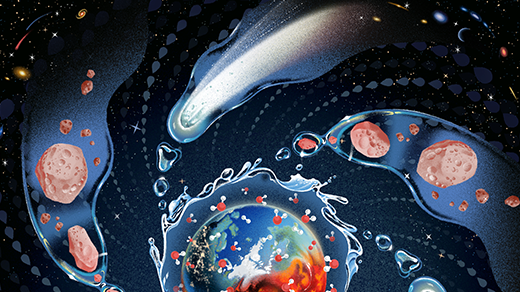
    At first, scientists thought Earth’s water came from comets. Then, asteroids. Now, they wonder if Earth’s water is homegrown. The post Where Did Earth Get Its Oceans? Maybe It Made Them Itself. first appeared on Quanta Magazine

    At this moment, a spacecraft is headed from Earth to Europa, an ice-veiled moon of Jupiter thought to contain an ocean similar in some ways to one of our own. NASA engraved a metal plate affixed to the spacecraft with a poem, commissioned from Ada Limón during her time as poet laureate of the United States. It reads, in part: And it is not darkness that unites us, not the cold distance of…

    Source

  • Quanta Magazine quantamagazine.org biology computer-science longform math mathematics physics quanta science 2026-06-11 13:37
    ↗

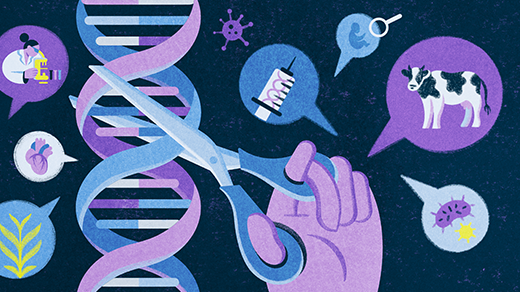
    In the first episode of the new season of ‘The Joy of Why,’ Nobel Laureate Jennifer Doudna discusses how she discovered CRISPR’s genome-editing power, the breakthroughs and hurdles during its explosive growth, and what lies ahead for this groundbreaking technology. The post...

    One of the most surprising and remarkable discoveries in recent scientific history has been CRISPR. Short for Clustered Regularly Interspaced Short Palindromic Repeats, CRISPR is a form of immune system that evolved in bacteria more than a billion years ago to defend against persistent viral threats. Under attack, bacteria can snip a small fragment of a virus’s DNA, store it in the CRISPR region…

    Source

  • Quanta Magazine quantamagazine.org biology computer-science longform math mathematics physics quanta science 2026-06-10 14:57
    ↗

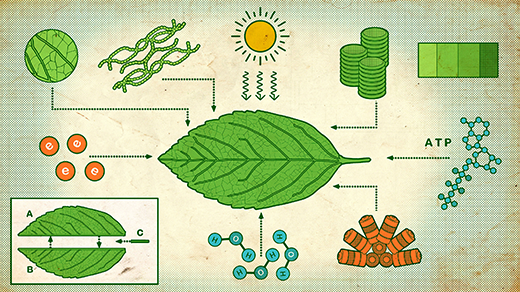
    An ancient lineage of cyanobacteria is helping biologists uncover an early evolutionary stage of the mind-boggling process that turns light into life. The post An Early Step on the Long, Strange Road to Photosynthesis first appeared on Quanta Magazine

    Every second, trillions of watts of solar energy — more than 10,000 times the energy used by modern humans — blast the Earth’s surface. Around 2.4 billion years ago, life took an evolutionary leap when bacteria learned to harness these photons to break apart water molecules and stitch carbon atoms into sugars. Along the way, they flooded Earth’s atmosphere with oxygen and rewrote the rules of life.

    Source

  • End of feed
Maibook — your private personalized AI community
  • rcanand.com
  • mlaillc.com
  • @rcanand (X)
  • LinkedIn
  • Feedback
  • Credits