Our solar system exists in a giant bubble of dust and gas in space, and researchers at the Harvard-Smithsonian Center for Astrophysics have just mapped its magnetic field for the first time. This new research is part of a larger effort to better understand the nature of...
Our solar system exists in a giant bubble of dust and gas in space, and researchers at the Harvard-Smithsonian Center for Astrophysics have just mapped its magnetic field for the first time. This new research is part of a larger effort to better understand the nature of superbubbles and our cosmic neighborhood.
Our solar system exists in a giant bubble of dust and gas in space, and researchers at the Harvard-Smithsonian Center for Astrophysics have just mapped its magnetic field for the first time. The bubble is called the Local Bubble, and it's home to many star-forming regions.
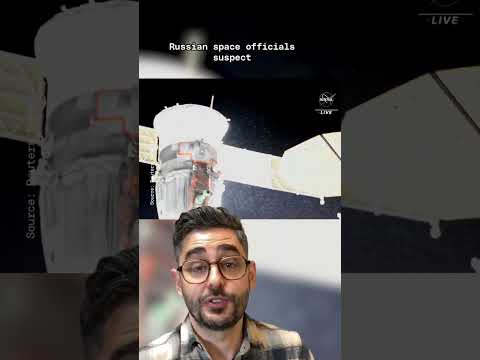
Russia’s Soyuz MS-22 spacecraft had a coolant leak the other night, causing mission control to cancel an upcoming spacewalk for two cosmonauts. The leak lasted a few hours and did not pose a threat to any of the crew at the ISS.
NASA's Perseverance Rover recorded a colossal dust devil inside the Jezero Crater. Scientists then used the acoustic signals to figure out how many particles there were in the dust clouds.
NASA’s Orion spacecraft splashed down in the Pacific Ocean on Sunday, December 11th. The successful return marks the end of NASA’s Artemis I, the first in a series of missions to create a long-term human presence on the moon.
We "launched" a rocket to try and understand why moon dirt could be a problem for future space missions. And this is how it went. Watch our full video here. https://youtu.be/rRoz-2rbxeU