theverge.com
All items hosted on this domain, most recent first.
-
-
Emma Roth, The Verge: eBay and three former executives will pay $55.7 million as part of a settlement with a Massachusetts couple targeted with a bizarre harassment and cyberstalking campaign in 2019, as reported earlier by CNBC. The settlement will resolve a lengthy legal...
Emma Roth, The Verge:
eBay and three former executives will pay $55.7 million as part of a settlement with a Massachusetts couple targeted with a bizarre harassment and cyberstalking campaign in 2019, as reported earlier by CNBC. The settlement will resolve a lengthy legal saga that revealed how eBay’s former executives sent live insects, a bloody pig mask, a funeral wreath, and other strange items to David and Ina Steiner over their newsletter’s coverage of eBay.
The Steiners, who operate the EcommerceBytes newsletter, sued eBay and its former executives — including ex-CEO Devin Wenig — in 2021. The lawsuit accused the company and its executives of launching a coordinated effort to “intimidate, threaten to kill, torture, terrorize, stalk and silence” the Steiners in an attempt to “stifle” their eBay-related reporting.
I don’t think I’ve ever linked to this saga before, but I’m not sure why. One of those stories that slipped through the cracks. It’s an astonishing tale. Could be the basis for a Coen brothers movie.
From David Streitfeld’s 2020 overview of the saga for The New York Times (gift link):
Prosecutors say that on Aug. 7, Ms. Popp — the “Mom” to Mr. Baugh’s “Dad” — began sending Twitter messages to Ms. Steiner via a fake account, @Tui_Elei. The profile picture was a skull, and he seemed to be an eBay user from Samoa who believed that EcommerceBytes had harmed his sales. Ms. Steiner ignored the messages, even as the tone got angrier and more abusive. @Tui_Elei wrote: “I guess im goin to have to get ur attention another way bitch…”
A parade of disturbing deliveries began at 4 p.m. on Aug. 10, when a package containing a bloody pig mask arrived at the Steiners’ home. Fourteen minutes later, @Tui_Elei wrote: “DO I HAVE UR ATTENTION NOW????”
The Steiners received a book titled “Grief Diaries: Surviving the Loss of a Spouse” and a funeral wreath. They got fly larvae and live spiders and a box of cockroaches. Copies of the September issue of “Hustler: Barely Legal” touting “eye-popping 18-year-olds” arrived at the homes of neighbors with David Steiner’s name on them. The Twitter bombardment continued, as @Tui_Elei began to hint at violence: “wen u hurt our bizness u hurt our familys… Ppl will do ANYTHING 2 protect family!!!!”
It’s certainly not how anyone would plan a business strategy, but this settlement seemingly makes the Steiners some of the most successful independent writers in history. Here’s Ina Steiner’s piece on the settlement at eCommerceBytes.
-
-
Sean Hollister, reporting for The Verge (gift link): Here’s Google’s full statement on withdrawing its proposed modifications to Judge Donato’s permanent injunction, via Google spokesperson Dan Jackson: We’ve agreed with Epic to withdraw our motion to modify the US Court’s...
Sean Hollister, reporting for The Verge (gift link):
Here’s Google’s full statement on withdrawing its proposed modifications to Judge Donato’s permanent injunction, via Google spokesperson Dan Jackson:
We’ve agreed with Epic to withdraw our motion to modify the US Court’s injunction rather than prolonging this process which creates uncertainty for the ecosystem. This allows us to focus on executing our recently announced global business model evolution to deliver greater app store choice, lower prices, and more opportunities for developers and users. We remain committed to maintaining Android’s industry-leading security and fostering a competitive ecosystem where every app store and developer has the freedom to compete. In parallel, we continue to comply with the US Court’s injunction.
Google had previously announced that it would launch its sideloaded Registered App Store program in the rest of the world, beginning with the new version of Android later this year. That means there may be two different tracks for Android: stores-within-a-store in the United States and Registered App Stores everywhere else.
Google is already informing US app developers that their apps and game listings will automatically be provided to third-party app stores starting July 22nd, unless they opt out, and it’s launched a specific page for its Play Catalog Access Program for third-party app stores to enroll.
I presume that this new agreement between Google and Epic includes ripping up the “no criticism of Play Store” gag order that the highly principled Tim Sweeney had agreed to in exchange for $800 million back in March?
Anyway, it will be interesting to see what developers do. My guess is that all the big app developers will opt out of this. Games, though, maybe not?
-
-
-
Valve, in a statement to The Verge, explaining why it doesn’t sell its handheld Steam Deck or new Steam Machine gaming devices at a loss (gift link): While this might seem like an easy solution, it doesn’t align with our beliefs about how healthy ecosystems are built. If...
Valve, in a statement to The Verge, explaining why it doesn’t sell its handheld Steam Deck or new Steam Machine gaming devices at a loss (gift link):
While this might seem like an easy solution, it doesn’t align with our beliefs about how healthy ecosystems are built. If there’s anything we’re religious about at Valve, it’s our belief that open systems are better in the long run, for ourselves and customers. The openness of the PC ecosystem in particular has enabled it to be the primary driver of hardware and software innovation, because anyone with an idea for a way to do something better was able to take a shot at it. When companies sell their hardware under cost for competitive advantage, or buy exclusive content for it, they’re doing that to build a more closed system, one where you don’t get to choose what software you want to use.
We don’t want that for PC hardware, and we don’t think you should want it either. You shouldn’t feel like you have to buy Valve hardware; you should be able to view it as just one option alongside all the devices for playing games, and select the one that makes sense for you. This means you get to decide which device fits your personal tradeoffs around things like price, performance, form factor, peripheral support, and everything else you care about. That’s the strength of the open PC platform, and subsidizing hardware runs counter to it.
Valve published a shorter version of this on their own Steam Machine launch post, but the statement to The Verge articulates their stance more fully.
I’ve long been frustrated by the arguments that subsidized hardware is definitional to gaming console platforms. Microsoft, in particular, has leaned on it as a whiny excuse ever since they launched the first Xbox. Just last week they emphasized the point again when announcing another increase in Xbox prices. It’s a strategic choice, that’s all, and a rather obviously predatory choice at that. So I say kudos to Valve for refusing to play the game, and selling their devices at honest prices. (They just raised the prices for Steam Deck by $250–300, due to the rising costs of RAM and storage.)
It’s worth noting that the mobile phone market is sort of subsidized — but by carriers, not Apple (or Samsung or the other lesser Android makers). Apple sells iPhones directly, unsubsidized, so we know the actual cost of each model. And even when sold by the carriers at a subsidy, it’s the carriers, not Apple, who are taking the point-of-sale loss with the intention of making it up over time through monthly service bills that customers agree to pay by contract. I’d be very curious to know what percentage of new iPhone sales are sold at the full one-time payment retail price.
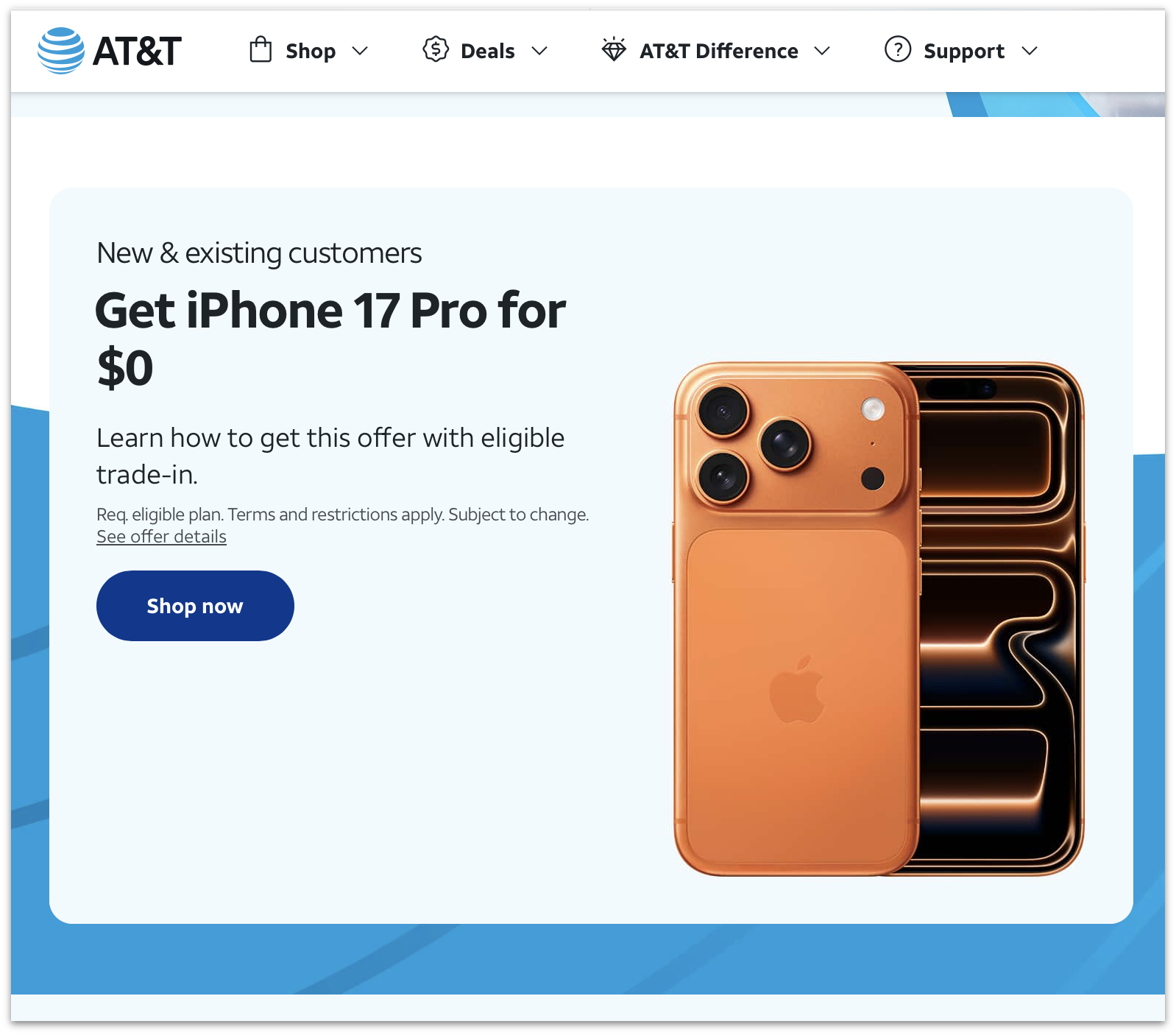
That’s a very different type of subsidy than Sony and Microsoft strategically selling each PlayStation and Xbox unit at a loss. When you buy a PlayStation, you don’t sign a contract to buy a certain number of games to make sure Sony turns a profit on your purchase in the long run. They’re gambling, effectively — and they make more money from a customer who buys more games than a customer who buys fewer games. When a phone carrier promotes something like “Get an iPhone 17 Pro for $0”, they know exactly how much money they’re going to make if you agree to the deal.
-
-
-
Sean Hollister, writing for The Verge (gift link): If you’ve visited a cannabis club in Spain, [Sammy] Azdoufal says, chances are your photo ID was among them — and possibly your phone number, address, your favorite strains of cannabis, and how much you consumed each month...
Sean Hollister, writing for The Verge (gift link):
If you’ve visited a cannabis club in Spain, [Sammy] Azdoufal says, chances are your photo ID was among them — and possibly your phone number, address, your favorite strains of cannabis, and how much you consumed each month while there. Azdoufal says celebrities are in the database, too, and visitors from all over the world, including 30,000 from the United States. “They have famous people,” says Azdoufal. “People who don’t want everyone to know they smoke weed.”
But when Azdoufal decompiled that PuffPal app, he explains in his report, he discovered that Nefos had no meaningful level of security. He discovered a secret key for the Stripe payments platform sitting inside the app in plain text. He discovered he could pull up any member’s profile just by changing one number. If those profiles included their phone number, home address, passport, and weed preferences, he now had access to them too.
And then, he discovered that those passports, drivers licenses, and photo IDs were stored at public URLs as simple as this:
https://ccsnubev2.com/v8/images/_{club}/ID/{user_id}-front.jpgThose clubs were uploading 5,000 new photo IDs with these insecure URLs every day, Azdoufal tells me.
Azdoufal’s full report on the leak, including the ease with which he discovered it, is worth reading.
Note what happened. A high-value credential — a passport — was used in an ancillary low-value authentication system: ID verification for cannabis dispensaries. And it’s the low-value system that got hacked, putting the high-value credential at risk.
Access to cannabis clubs has to be age verified. The security ought not be shit, but age verification is part of the industry. But now think about the legislation being proposed and passed around the world requiring age verification for just doing anything online. This sort of identity leaks is the inevitable result. And for a lot of these use cases for age verification, the security expertise is going to be even lower.
-
-
Sean Hollister, writing for The Verge (gift link): Since the Magnavox Odyssey came out in 1972, game consoles have been built with the same basic goal: to effortlessly play proprietary games on a TV screen. Nintendo, Sony, and Microsoft have spent decades essentially selling...
Sean Hollister, writing for The Verge (gift link):
Since the Magnavox Odyssey came out in 1972, game consoles have been built with the same basic goal: to effortlessly play proprietary games on a TV screen. Nintendo, Sony, and Microsoft have spent decades essentially selling the same product. A few consoles could do more, but the formula you know and love remains buy box, plug into TV, insert game, play.
The Steam Machine aims to be something bigger. It’s a vision of a box with fewer restrictions and an almost endless catalog of games — for those willing to spend nearly twice the price of a PlayStation 5.
That’s right. Today, Valve has announced the Steam Machine will start at $1,049 without a gamepad or $1,128 bundled with one, but you aren’t getting a significant boost in performance over the 5.5-year-old Sony PS5 you can still buy today. Even after three price hikes, a vanilla $650 PS5 offers sharper images in Cyberpunk 2077 and Horizon Zero Dawn Remastered in my tests. So how can Valve possibly charge over a grand, you might ask?
It’s because the Steam Machine is, let’s say, a PC-plus. It’s a PC that acts more like a console than any you’ve used before. It’s incredibly cool and quiet, so much smaller than a PS5, surprisingly smooth, and completely navigable with any modern gamepad you own. You don’t need a mouse, keyboard, or even Valve’s own touchpad-equipped Steam Controller to download, launch, or play games. Joysticks do the job.
The price is eye-opening, but that’s the theme across all consumer hardware this year. It’s hard not to root for Valve with its expanding hardware ambitions, but Hollister’s review shows just how far they have to go to achieve “plug it in, insert game, play” simplicity.
-
Jay Peters, The Verge (gift link): Snap is finally launching augmented glasses for the public. Specs, which Snap describes as “a wearable computer built into see-through augmented reality glasses,” will cost $2,195. You can preorder a pair of Specs now at specs.com with a...
Jay Peters, The Verge (gift link):
Snap is finally launching augmented glasses for the public. Specs, which Snap describes as “a wearable computer built into see-through augmented reality glasses,” will cost $2,195. You can preorder a pair of Specs now at specs.com with a $200 refundable deposit, and Snap says they’re expected to ship “this fall” in the US, UK, and France. [...]
The company says that Specs are “fully standalone, with no puck and no tether.” (Which is perhaps a jab at Apple’s Vision Pro, which is tethered to a separate battery pack.) They’ll be offered in two sizes, a 47mm model weighing 132g and a 52mm model weighing 136g, and will have removable inserts that Snap says will support “a wide range of prescriptions.”
Unlike Vision Pro, Snap is presenting Specs as eyeglasses that users will wear out and about in their daily lives. Viewed perfectly straight-on and photographed by a professional fashion photographer — as presented on the Specs website — they’re a bold look. Viewed from any other angle and captured normally, they look like goggles, not glasses. The frames look orthopedic and the lenses are not even close to clear. They make you look like you forgot to take off your goggles leaving the theater after a 3D movie — goggles that are big enough to wear over regular glasses.
Maybe Specs are useful enough to justify looking so orthopedic, but I doubt it.
-
Thomas Ricker, writing for The Verge: I’ll just work from the car, I thought. But after a few minutes of staring at my screen on quick mountain switchbacks I could feel the first signs of cold, coagulated nausea bubbling up from that sweaty place in my gut. I looked to the...
Thomas Ricker, writing for The Verge:
I’ll just work from the car, I thought. But after a few minutes of staring at my screen on quick mountain switchbacks I could feel the first signs of cold, coagulated nausea bubbling up from that sweaty place in my gut. I looked to the horizon for relief, but nothing helped... until I remembered Apple’s magic dots.
Introduced in 2024, Apple’s Vehicle Motion Cues promise to tap into your device’s accelerometer and gyroscope to reduce or, in my case, even eliminate the motion sickness felt when trying to use an iPhone, iPad, or MacBook inside a moving vehicle.
My son has suffered from motion sickness in cars his whole life, and Apple’s Vehicle Motion Cues work like a charm for him too. What a great feature.
-
David Pierce, host of The Vergecast: So where did Markdown come from? It came from John Gruber. John joins the show, along with Anil Dash, to tell the story of where Markdown came from and how it took over the world. Markdown has been growing steadily for years, but it’s seen...
David Pierce, host of The Vergecast:
So where did Markdown come from? It came from John Gruber. John joins the show, along with Anil Dash, to tell the story of where Markdown came from and how it took over the world.
Markdown has been growing steadily for years, but it’s seen a step change in popularity now that it’s been embraced as the lingua franca of LLM agentic systems. I had an interesting all-too-brief chat last week in Cupertino with some people from Apple’s developer tools team about how it feels to see Markdown spread everywhere — including WWDC. In a word, gratifying.
But the biggest reason for Markdown’s continuing success isn’t Markdown itself. It’s the triumph of plain text files, both for system configuration and for the interchange of human-readable (and thus, LLM-readable) prose. Markdown isn’t really a “syntax”. It’s a set of conventions for formatting plain text. If everyone agrees to the same basic conventions, plain text can be significantly more expressive than a string of unformatted characters.
That’s it. So what I find gratifying isn’t that my “language” continues to thrive, because it’s not a language. It’s that the way I like to format plain text when I’m writing, and the way I like to see plain text formatted when I’m reading, has so thoroughly won the world’s mindshare battle. “Ha-ha”, I say, to people who want *this* to mean bold, not italic. (And to Slack and WhatsApp, I say “Fuck you.”)
- End of feed