General Description: In this series of videos, we will be using the TensorFlow Python module to perform regression on the MPG (miles-per-gallon) dataset. The intent of this video series is to predict the MPG of a car given a number of attributes of the car, i.e. horsepower,...
General Description:
In this series of videos, we will be using the TensorFlow Python module to perform regression on the MPG (miles-per-gallon) dataset.
The intent of this video series is to predict the MPG of a car given a number of attributes of the car, i.e. horsepower, number of cylinders, year of production, etc.
This video is part of a series on Machine Learning in Python. The link to the playlist may be accessed here:
http://bit.ly/lp_mlearn
This video is inspired by the wonderful Tensorflow tutorials provided here:
https://www.tensorflow.org/tutorials/keras/regression
Python Code:
https://github.com/vprusso/youtube_tutorials/blob/master/machine_learning/regression
MPG Dataset:
https://archive.ics.uci.edu/ml/datasets/auto+mpg
Do you like the development environment I'm using in this video? It's a customized version of vim that's enhanced for Python development. If you want to see how I set up my vim, I have a series on this here:
http://bit.ly/lp_vim
⭐ Kite is a free AI-powered coding assistant that will help you code faster and smarter. The Kite plugin integrates with all the top editors and IDEs to give you smart completions and documentation while you’re typing. I've been using Kite for 6 months and I love it! https://www.kite.com/get-kite/?utm_medium=referral&utm_source=youtube&utm_campaign=lucidprogramming&utm_content=description-only
== Support and Subscribe==
If I've helped you, feel free to buy me a beer :)
PayPal: https://www.paypal.me/VincentRusso1
If you've found this video helpful and want to stay up-to-date with the latest videos posted on this channel, please subscribe:
http://bit.ly/lp_subscribe
#tensorflow #pythondev #machinelearning
General Description: In this series of videos, we will be using the TensorFlow Python module to perform regression on the MPG (miles-per-gallon) dataset. The intent of this video series is to predict the MPG of a car given a number of attributes of the car, i.e. horsepower,...
General Description:
In this series of videos, we will be using the TensorFlow Python module to perform regression on the MPG (miles-per-gallon) dataset.
The intent of this video series is to predict the MPG of a car given a number of attributes of the car, i.e. horsepower, number of cylinders, year of production, etc.
This video is part of a series on Machine Learning in Python. The link to the playlist may be accessed here:
http://bit.ly/lp_mlearn
This video is inspired by the wonderful Tensorflow tutorials provided here:
https://www.tensorflow.org/tutorials/keras/regression
Python Code:
https://github.com/vprusso/youtube_tutorials/blob/master/machine_learning/regression
MPG Dataset:
https://archive.ics.uci.edu/ml/datasets/auto+mpg
Do you like the development environment I'm using in this video? It's a customized version of vim that's enhanced for Python development. If you want to see how I set up my vim, I have a series on this here:
http://bit.ly/lp_vim
⭐ Kite is a free AI-powered coding assistant that will help you code faster and smarter. The Kite plugin integrates with all the top editors and IDEs to give you smart completions and documentation while you’re typing. I've been using Kite for 6 months and I love it! https://www.kite.com/get-kite/?utm_medium=referral&utm_source=youtube&utm_campaign=lucidprogramming&utm_content=description-only
== Support and Subscribe==
If I've helped you, feel free to buy me a beer :)
PayPal: https://www.paypal.me/VincentRusso1
If you've found this video helpful and want to stay up-to-date with the latest videos posted on this channel, please subscribe:
http://bit.ly/lp_subscribe
#tensorflow #pythondev #machinelearning
In this video series, we will be building a Python script that utilizes PyTube; a Python module used for downloading video content from YouTube in addition to the YouTube Data API provided from Google and YouTube to directly access specific metadata from YouTube URLs. In this...
In this video series, we will be building a Python script that utilizes PyTube; a Python module used for downloading video content from YouTube in addition to the YouTube Data API provided from Google and YouTube to directly access specific metadata from YouTube URLs.
In this project, we process a list of YouTube URLs and download the respective title, description, and high-quality download of the video at the link.
This is a mini-project that showcases something that you can build from the ground up and something that hopefully you can expand upon!
Some other playlists on this channel that may be of interest to you:
Web Scraping and Automation Playlist:
bit.ly/web_automation
Selenium Playlist:
bit.ly/lp_selenium
Robobrowser Playlist:
bit.ly/robobrowser
Scrapy Playlist:
bit.ly/lp_scrapy
Software that is written in this video:
https://github.com/vprusso/youtube_tutorials/tree/master/youtube_python
Do you like the development environment I'm using in this video? It's a customized version of vim that's enhanced for Python development. If you want to see how I set up my vim, I have a series on this here:
http://bit.ly/lp_vim
If you've found this video helpful and want to stay up-to-date with the latest videos posted on this channel, please subscribe:
http://bit.ly/lp_subscribe
If you like my content, I've been working on some projects during the past couple of months. If you would like to stay up-to-date, please consider subscribing to my mail list. I really appreciate the support. I hope that the content I provide there will enhance the videos on my YouTube page:
http://bit.ly/lp_email
== Support and Subscribe==
If I've helped you, feel free to buy me a beer :)
PayPal: https://www.paypal.me/VincentRusso1
If you've found this video helpful and want to stay up-to-date with the latest videos posted on this channel, please subscribe:
http://bit.ly/lp_subscribe
== Video Sponsor==
This video is brought to you by DevMountain, a private coding boot camp that offers in-person and online courses in a variety of subjects including web development, mobile programming, user experience design, software quality assurance, and salesforce development.
Promo Link:
https://devmountain.com/?utm_source=Lucid%20Programming
#youtubeapi #python #automation
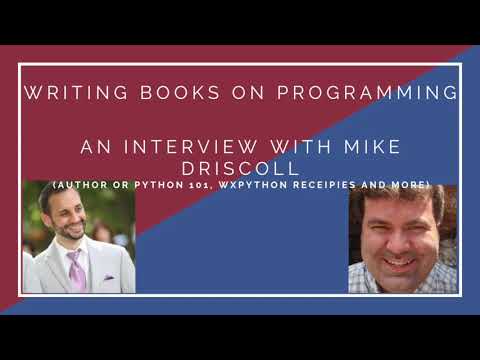
It is my great pleasure to welcome Mike Driscoll as the fourth guest on the "LucidProgramming Podcast". Mike is a computer programmer by trade and uses Python almost exclusively to make his living. Python has been in Mike’s toolbox since 2006 and he has written extensively on...
It is my great pleasure to welcome Mike Driscoll as the fourth guest on the "LucidProgramming Podcast".
Mike is a computer programmer by trade and uses Python almost exclusively to make his living. Python has been in Mike’s toolbox since 2006 and he has written extensively on the subject. From blogging for the Python Software Foundation among hosting his own blog entitled “The Mouse vs. The Python”, Mike has also written a number of highly acclaimed Python books, namely: Python 101, Python 201: Intermediate Python, wxPython Recipies, Python Interviews, among others.
The links for Mike’s books and where to obtain either an electronic or printed copy will be posted below if those titles sound intriguing to you and you would like to show your support for Mike’s work.
Other than Python, according to Mike’s website he enjoys engaging in Christian apologetics, reading novels, listening to a wide variety of music, and photography.
In this podcast, we discuss a number of topics, one of the main ones being the subject of writing a technical book. If you’ve ever wanted to self-publish or work with a publishing company to write a book yourself or if you’re curious about the publishing and writing process, this podcast will provide an interesting look into the inner workings on both fronts. We dive into what processes Mike has used to be such a prolific author as well as his reasons for writing the books that he has written.
If any of the above sounds like it would be interesting, please join me in welcoming Mike Driscoll to the LucidProgramming Podcast.
This video is part of a podcast series on this channel. The playlist for which can be accessed here:
http://bit.ly/lp_podcast
Support this podcast:
PayPal: https://www.paypal.me/VincentRusso1
Subscribe: http://bit.ly/lp_subscribe
Show Notes:
@1:00 Introduction and Overview of Mike.
@2:30 How did Mike get into the world of Python.
@3:00 How did Mike get into programming.
@4:15 The choice to focus on Python.
@6:30 What led Mike to take on the daunting task of writing a book.
@8:00 The tipping point for Mike to write a book.
@10:00 Self-publishing vs. going with a publisher.
@12:15 Working with a publisher for technical writing.
@14:30 Advice for new writers to go with a publisher or not.
@15:45 Mike’s process for planning a technical book.
@17:30 Market research for writing Python books.
@20:00 Process on consistency for book writing.
@23:30 How to isolate key elements and outlining for writing.
@26:00 Sit down. Write. Get started.
@27:00 Tools for writing a technical book.
@31:00 Finding balance in writing.
@ 33:00 Writing as a creative outlet.
@34:15 Tim Ferriss Question 1: When you feel overwhelmed or unfocused, or have lost your focus temporarily, what do you do? (If helpful: What questions do you ask yourself?)
@34:45 Tim Ferriss Question 2: What advice would you give to a smart, driven college student about to enter the “real world”? What advice should they ignore?
@35:45 Tim Ferriss Question 3: What is the book (or books) you’ve given most as a gift, and why? Or what are one to three books that have greatly influenced your life?
Relevant Links:
Mike’s website:
http://www.blog.pythonlibrary.org/
Twitter:
https://twitter.com/driscollis?lang=en
StackOverflow Profile:
https://stackoverflow.com/users/393194/mike-driscoll
Book - Python 101
https://www.blog.pythonlibrary.org/books/python-101/
Book - Python 201: Intermediate Python
https://www.blog.pythonlibrary.org/books/python-201-intermediate-python/
Book - wxPython Cookbook
https://www.blog.pythonlibrary.org/books/wxpython-cookbook/
Book - wxPython Recipies
https://www.blog.pythonlibrary.org/books/wxpython-recipes/
Book - Jupyter Notebook 101
https://www.blog.pythonlibrary.org/books/jupyter-notebook-101/
Book - Reportlab: PDF Processing in Python
https://www.blog.pythonlibrary.org/books/reportlab-pdf-processing-with-python/
Book - Python Interviews: Discussions with Python Experts
https://www.blog.pythonlibrary.org/books/python-interviews-discussions-with-python-experts/
#lucidprogramming #mikedriscoll #python101 #technicalwriting
General Description: In this series of videos, we will be using the TensorFlow Python module to perform regression on the MPG (miles-per-gallon) dataset. The intent of this video series is to predict the MPG of a car given a number of attributes of the car, i.e. horsepower,...
General Description:
In this series of videos, we will be using the TensorFlow Python module to perform regression on the MPG (miles-per-gallon) dataset.
The intent of this video series is to predict the MPG of a car given a number of attributes of the car, i.e. horsepower, number of cylinders, year of production, etc.
This video is part of a series on Machine Learning in Python. The link to the playlist may be accessed here:
http://bit.ly/lp_mlearn
This video is inspired by the wonderful Tensorflow tutorials provided here:
https://www.tensorflow.org/tutorials/keras/regression
Python Code:
https://github.com/vprusso/youtube_tutorials/blob/master/machine_learning/regression
MPG Dataset:
https://archive.ics.uci.edu/ml/datasets/auto+mpg
Do you like the development environment I'm using in this video? It's a customized version of vim that's enhanced for Python development. If you want to see how I set up my vim, I have a series on this here:
http://bit.ly/lp_vim
⭐ Kite is a free AI-powered coding assistant that will help you code faster and smarter. The Kite plugin integrates with all the top editors and IDEs to give you smart completions and documentation while you’re typing. I've been using Kite for 6 months and I love it! https://www.kite.com/get-kite/?utm_medium=referral&utm_source=youtube&utm_campaign=lucidprogramming&utm_content=description-only
== Support and Subscribe==
If I've helped you, feel free to buy me a beer :)
PayPal: https://www.paypal.me/VincentRusso1
If you've found this video helpful and want to stay up-to-date with the latest videos posted on this channel, please subscribe:
http://bit.ly/lp_subscribe
#tensorflow #pythondev #machinelearning
In this video series, we will be building a Python script that utilizes PyTube; a Python module used for downloading video content from YouTube in addition to the YouTube Data API provided from Google and YouTube to directly access specific metadata from YouTube URLs. In this...
In this video series, we will be building a Python script that utilizes PyTube; a Python module used for downloading video content from YouTube in addition to the YouTube Data API provided from Google and YouTube to directly access specific metadata from YouTube URLs.
In this project, we process a list of YouTube URLs and download the respective title, description, and high-quality download of the video at the link.
This is a mini-project that showcases something that you can build from the ground up and something that hopefully you can expand upon!
Some other playlists on this channel that may be of interest to you:
Web Scraping and Automation Playlist:
bit.ly/web_automation
Selenium Playlist:
bit.ly/lp_selenium
Robobrowser Playlist:
bit.ly/robobrowser
Scrapy Playlist:
bit.ly/lp_scrapy
Software that is written in this video:
https://github.com/vprusso/youtube_tutorials/tree/master/youtube_python
Do you like the development environment I'm using in this video? It's a customized version of vim that's enhanced for Python development. If you want to see how I set up my vim, I have a series on this here:
http://bit.ly/lp_vim
If you've found this video helpful and want to stay up-to-date with the latest videos posted on this channel, please subscribe:
http://bit.ly/lp_subscribe
If you like my content, I've been working on some projects during the past couple of months. If you would like to stay up-to-date, please consider subscribing to my mail list. I really appreciate the support. I hope that the content I provide there will enhance the videos on my YouTube page:
http://bit.ly/lp_email
== Support and Subscribe==
If I've helped you, feel free to buy me a beer :)
PayPal: https://www.paypal.me/VincentRusso1
If you've found this video helpful and want to stay up-to-date with the latest videos posted on this channel, please subscribe:
http://bit.ly/lp_subscribe
== Video Sponsor==
This video is brought to you by DevMountain, a private coding boot camp that offers in-person and online courses in a variety of subjects including web development, mobile programming, user experience design, software quality assurance, and salesforce development.
Promo Link:
https://devmountain.com/?utm_source=Lucid%20Programming
#youtubeapi #python #automation
In this video series, we will be building a Python script that utilizes PyTube; a Python module used for downloading video content from YouTube in addition to the YouTube Data API provided from Google and YouTube to directly access specific metadata from YouTube URLs. In this...
In this video series, we will be building a Python script that utilizes PyTube; a Python module used for downloading video content from YouTube in addition to the YouTube Data API provided from Google and YouTube to directly access specific metadata from YouTube URLs.
In this project, we process a list of YouTube URLs and download the respective title, description, and high-quality download of the video at the link.
This is a mini-project that showcases something that you can build from the ground up and something that hopefully you can expand upon!
Some other playlists on this channel that may be of interest to you:
Web Scraping and Automation Playlist:
bit.ly/web_automation
Selenium Playlist:
bit.ly/lp_selenium
Robobrowser Playlist:
bit.ly/robobrowser
Scrapy Playlist:
bit.ly/lp_scrapy
Software that is written in this video:
https://github.com/vprusso/youtube_tutorials/tree/master/youtube_python
Do you like the development environment I'm using in this video? It's a customized version of vim that's enhanced for Python development. If you want to see how I set up my vim, I have a series on this here:
http://bit.ly/lp_vim
If you've found this video helpful and want to stay up-to-date with the latest videos posted on this channel, please subscribe:
http://bit.ly/lp_subscribe
If you like my content, I've been working on some projects during the past couple of months. If you would like to stay up-to-date, please consider subscribing to my mail list. I really appreciate the support. I hope that the content I provide there will enhance the videos on my YouTube page:
http://bit.ly/lp_email
== Support and Subscribe==
If I've helped you, feel free to buy me a beer :)
PayPal: https://www.paypal.me/VincentRusso1
If you've found this video helpful and want to stay up-to-date with the latest videos posted on this channel, please subscribe:
http://bit.ly/lp_subscribe
== Video Sponsor==
This video is brought to you by DevMountain, a private coding boot camp that offers in-person and online courses in a variety of subjects including web development, mobile programming, user experience design, software quality assurance, and salesforce development.
Promo Link:
https://devmountain.com/?utm_source=Lucid%20Programming
#youtubeapi #python #automation
In this video series, we will be building a Python script that utilizes PyTube; a Python module used for downloading video content from YouTube in addition to the YouTube Data API provided from Google and YouTube to directly access specific metadata from YouTube URLs. In this...
In this video series, we will be building a Python script that utilizes PyTube; a Python module used for downloading video content from YouTube in addition to the YouTube Data API provided from Google and YouTube to directly access specific metadata from YouTube URLs.
In this project, we process a list of YouTube URLs and download the respective title, description, and high-quality download of the video at the link.
This is a mini-project that showcases something that you can build from the ground up and something that hopefully you can expand upon!
Some other playlists on this channel that may be of interest to you:
Web Scraping and Automation Playlist:
bit.ly/web_automation
Selenium Playlist:
bit.ly/lp_selenium
Robobrowser Playlist:
bit.ly/robobrowser
Scrapy Playlist:
bit.ly/lp_scrapy
Software that is written in this video:
https://github.com/vprusso/youtube_tutorials/tree/master/youtube_python
Do you like the development environment I'm using in this video? It's a customized version of vim that's enhanced for Python development. If you want to see how I set up my vim, I have a series on this here:
http://bit.ly/lp_vim
If you've found this video helpful and want to stay up-to-date with the latest videos posted on this channel, please subscribe:
http://bit.ly/lp_subscribe
If you like my content, I've been working on some projects during the past couple of months. If you would like to stay up-to-date, please consider subscribing to my mail list. I really appreciate the support. I hope that the content I provide there will enhance the videos on my YouTube page:
http://bit.ly/lp_email
== Support and Subscribe==
If I've helped you, feel free to buy me a beer :)
PayPal: https://www.paypal.me/VincentRusso1
If you've found this video helpful and want to stay up-to-date with the latest videos posted on this channel, please subscribe:
http://bit.ly/lp_subscribe
== Video Sponsor==
This video is brought to you by DevMountain, a private coding boot camp that offers in-person and online courses in a variety of subjects including web development, mobile programming, user experience design, software quality assurance, and salesforce development.
Promo Link:
https://devmountain.com/?utm_source=Lucid%20Programming
#youtubeapi #python #automation
In this video series, we will be building a Python script that utilizes PyTube; a Python module used for downloading video content from YouTube in addition to the YouTube Data API provided from Google and YouTube to directly access specific metadata from YouTube URLs. In this...
In this video series, we will be building a Python script that utilizes PyTube; a Python module used for downloading video content from YouTube in addition to the YouTube Data API provided from Google and YouTube to directly access specific metadata from YouTube URLs.
In this project, we process a list of YouTube URLs and download the respective title, description, and high-quality download of the video at the link.
This is a mini-project that showcases something that you can build from the ground up and something that hopefully you can expand upon!
Some other playlists on this channel that may be of interest to you:
Web Scraping and Automation Playlist:
bit.ly/web_automation
Selenium Playlist:
bit.ly/lp_selenium
Robobrowser Playlist:
bit.ly/robobrowser
Scrapy Playlist:
bit.ly/lp_scrapy
Software that is written in this video:
https://github.com/vprusso/youtube_tutorials/tree/master/youtube_python
Part 1:
Part 2:
Part 3:
Part 4:
Do you like the development environment I'm using in this video? It's a customized version of vim that's enhanced for Python development. If you want to see how I set up my vim, I have a series on this here:
http://bit.ly/lp_vim
If you've found this video helpful and want to stay up-to-date with the latest videos posted on this channel, please subscribe:
http://bit.ly/lp_subscribe
If you like my content, I've been working on some projects during the past couple of months. If you would like to stay up-to-date, please consider subscribing to my mail list. I really appreciate the support. I hope that the content I provide there will enhance the videos on my YouTube page:
http://bit.ly/lp_email
== Support and Subscribe==
If I've helped you, feel free to buy me a beer :)
PayPal: https://www.paypal.me/VincentRusso1
If you've found this video helpful and want to stay up-to-date with the latest videos posted on this channel, please subscribe:
http://bit.ly/lp_subscribe
== Video Sponsor==
This video is brought to you by DevMountain, a private coding boot camp that offers in-person and online courses in a variety of subjects including web development, mobile programming, user experience design, software quality assurance, and salesforce development.
Promo Link:
https://devmountain.com/?utm_source=Lucid%20Programming
#youtubeapi #python #automation
General Description: In this series of videos, we will be using the TensorFlow Python module to construct a neural network that classifies whether a given image of an article of clothing We will be obtaining image data from the Fashion MNIST dataset. The intent of these...
General Description:
In this series of videos, we will be using the TensorFlow Python module to construct a neural network that classifies whether a given image of an article of clothing
We will be obtaining image data from the Fashion MNIST dataset. The intent of these videos is to showcase the use of TensorFlow as well as showing a simple example of how to construct and use a simple neural network.
This video is part of a series on Machine Learning in Python. The link to the playlist may be accessed here:
http://bit.ly/lp_mlearn
Part 1: https://youtu.be/4jDAKS2V3jY
Part 2: https://youtu.be/57sdqEd48Fc
Part 3: https://youtu.be/Fv1cvFEYPwA
Python Code:
https://github.com/vprusso/youtube_tutorials/blob/master/machine_learning/image_classification/fashion_mnist.py
Fashion MNIST Dataset:
https://github.com/zalandoresearch/fashion-mnist
Do you like the development environment I'm using in this video? It's a customized version of vim that's enhanced for Python development. If you want to see how I set up my vim, I have a series on this here:
http://bit.ly/lp_vim
⭐ Kite is a free AI-powered coding assistant that will help you code faster and smarter. The Kite plugin integrates with all the top editors and IDEs to give you smart completions and documentation while you’re typing. I've been using Kite for 6 months and I love it! https://www.kite.com/get-kite/?utm_medium=referral&utm_source=youtube&utm_campaign=lucidprogramming&utm_content=description-only
== Support and Subscribe==
If I've helped you, feel free to buy me a beer :)
PayPal: https://www.paypal.me/VincentRusso1
If you've found this video helpful and want to stay up-to-date with the latest videos posted on this channel, please subscribe:
http://bit.ly/lp_subscribe
== Video Sponsor==
This video is brought to you by Springboard.
If you’re considering kick-starting a new career in machine learning, Springboard has helped its graduates do just that.
Tracks for going from developer to proficient data scientist are among the many options offered. Springboard allows you to learn in-demand skills with online courses and provides mentoring by industry professionals.
Springboard prepares you for rewarding jobs at top employers. Certain tracked programs include job guarantees, and many of the graduates have landed jobs at companies including Google, IBM, Visa, Salesforce, and many more.
Promo Link:
https://www.springboard.com/workshops/ai-machine-learning-career-track/?utm_source=lucidprogramming&utm_medium=youtube&utm_content=lucidprogrammingvideo
#tensorflow #pythondev #machinelearning
General Description: In this series of videos, we will be using the TensorFlow Python module to construct a neural network that classifies whether a given image of an article of clothing We will be obtaining image data from the Fashion MNIST dataset. The intent of these...
General Description:
In this series of videos, we will be using the TensorFlow Python module to construct a neural network that classifies whether a given image of an article of clothing
We will be obtaining image data from the Fashion MNIST dataset. The intent of these videos is to showcase the use of TensorFlow as well as showing a simple example of how to construct and use a simple neural network.
This video is part of a series on Machine Learning in Python. The link to the playlist may be accessed here:
http://bit.ly/lp_mlearn
Part 1: https://youtu.be/4jDAKS2V3jY
Part 2: https://youtu.be/57sdqEd48Fc
Part 3: https://youtu.be/Fv1cvFEYPwA
Python Code:
https://github.com/vprusso/youtube_tutorials/blob/master/machine_learning/image_classification/fashion_mnist.py
Fashion MNIST Dataset:
https://github.com/zalandoresearch/fashion-mnist
Do you like the development environment I'm using in this video? It's a customized version of vim that's enhanced for Python development. If you want to see how I set up my vim, I have a series on this here:
http://bit.ly/lp_vim
== Support and Subscribe==
If I've helped you, feel free to buy me a beer :)
PayPal: https://www.paypal.me/VincentRusso1
If you've found this video helpful and want to stay up-to-date with the latest videos posted on this channel, please subscribe:
http://bit.ly/lp_subscribe
== Video Sponsor==
⭐ Kite is a free AI-powered coding assistant that will help you code faster and smarter. The Kite plugin integrates with all the top editors and IDEs to give you smart completions and documentation while you’re typing. I've been using Kite for 6 months and I love it! https://www.kite.com/get-kite/?utm_medium=referral&utm_source=youtube&utm_campaign=lucidprogramming&utm_content=description-only
#tensorflow #pythondev #machinelearning
General Description: In this series of videos, we will be using the TensorFlow Python module to construct a neural network that classifies whether a given image of an article of clothing We will be obtaining image data from the Fashion MNIST dataset. The intent of these...
General Description:
In this series of videos, we will be using the TensorFlow Python module to construct a neural network that classifies whether a given image of an article of clothing
We will be obtaining image data from the Fashion MNIST dataset. The intent of these videos is to showcase the use of TensorFlow as well as showing a simple example of how to construct and use a simple neural network.
This video is part of a series on Machine Learning in Python. The link to the playlist may be accessed here:
http://bit.ly/lp_mlearn
Part 1: https://youtu.be/4jDAKS2V3jY
Part 2: https://youtu.be/57sdqEd48Fc
Part 3: https://youtu.be/Fv1cvFEYPwA
Python Code:
https://github.com/vprusso/youtube_tutorials/blob/master/machine_learning/image_classification/fashion_mnist.py
Fashion MNIST Dataset:
https://github.com/zalandoresearch/fashion-mnist
Do you like the development environment I'm using in this video? It's a customized version of vim that's enhanced for Python development. If you want to see how I set up my vim, I have a series on this here:
http://bit.ly/lp_vim
== Support and Subscribe==
If I've helped you, feel free to buy me a beer :)
PayPal: https://www.paypal.me/VincentRusso1
If you've found this video helpful and want to stay up-to-date with the latest videos posted on this channel, please subscribe:
http://bit.ly/lp_subscribe
== Video Sponsor==
⭐ Kite is a free AI-powered coding assistant that will help you code faster and smarter. The Kite plugin integrates with all the top editors and IDEs to give you smart completions and documentation while you’re typing. I've been using Kite for 6 months and I love it! https://www.kite.com/get-kite/?utm_medium=referral&utm_source=youtube&utm_campaign=lucidprogramming&utm_content=description-only
#tensorflow #pythondev #machinelearning
It is my great pleasure to welcome Adam Gordon Bell third guest on the "LucidProgramming Podcast". Adam is a software engineer who loves building software and learning things. Adam is based in Peterborough, Canada, but works remotely with developers all over the world. Adam...
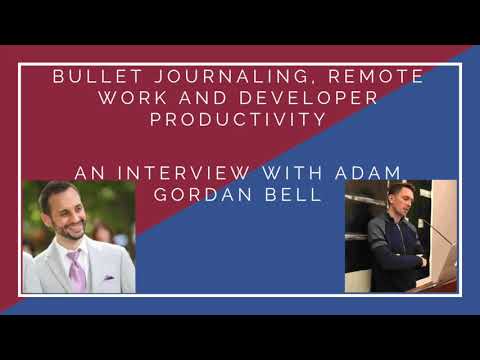
It is my great pleasure to welcome Adam Gordon Bell third guest on the "LucidProgramming Podcast".
Adam is a software engineer who loves building software and learning things. Adam is based in Peterborough, Canada, but works remotely with developers all over the world.
Adam is also the host of the CoRecusive Podcast; a podcast where you can learn from experts about the field of software development.
In this podcast we touch on a number of things, but the two big ones that stand out are the technique of “bullet journaling” and how this technique can be applied to the realm of software development.
Bullet journaling is a write-efficient process by which you can quickly jot down your thoughts, to-dos, etc. using one go-to system, bullet journaling, that reduces much of the friction in writing long-form. We speak on the merits on using a pen and paper as opposed to using a more tech-driven solution, like an app for this technique.
We also touch on remote software development work. As Adam is a software developer who primarily works remotely, I pick his brain to figure out how he has adjusted to this lifestyle. What are the pitfalls of the remote work lifestyle, and how can you setup your environment to optimize your productivity in this setting?
If any of the above sounds like it would be interesting, please join me in welcoming Adam Gordon Bell to the LucidProgramming Podcast.
This video is part of a podcast series on this channel. The playlist for which can be accessed here:
http://bit.ly/lp_podcast
Support this podcast:
PayPal: https://www.paypal.me/VincentRusso1
Subscribe: http://bit.ly/lp_subscribe
Show Notes:
@1:00 Introduction and Overview of Adam.
@2:00 Adam’s blog and a bit more about him.
@3:00 Adam talks about his podcast for programmers: CoRecursive.
@4:00 Balance between acquiring and applying content to learn.
@7:00 How to stay relevant as a programmer.
@9:30 “JIL”: Just-in-Time Learning.
@10:40 What is bullet journaling?
@13:00 Bullet journaling technique for software developers.
@15:00 “Cooking for Engineers”.
@16:00 The psychology of “writing vs. typing”.
@20:30 Bullet journaling and tech.
@23:00 Bullet journaling application?
@26:00 The physicality of learning.
@28:00 Docker containers and bullet journaling technique.
@32:00 Finding balance in remote software work.
@34:00 Home office strategies for avoiding stagnation.
@36:30 Advice for staying productive as a developer in colder climates.
@40:00 Deep work and interest driving focus.
@45:00 Avoiding procrastination and remote work
@50:00 The importance of social interaction and remote work.
@54:00 Tim Ferriss Question 1: When you feel overwhelmed or unfocused, or have lost your focus temporarily, what do you do? (If helpful: What questions do you ask yourself?)
@55:00 Tim Ferriss Question 2: What advice would you give to a smart, driven college student about to enter the “real world”? What advice should they ignore?
@56:00 Tim Ferriss Question 3: What is the book (or books) you’ve given most as a gift, and why? Or what are one to three books that have greatly influenced your life?
Relevant Links:
Adam Gordon Bell’s personal website:
https://adamgordonbell.com/
CoRecursive Podcast:
https://corecursive.com/
Adam’s Blog:
https://adamgordonbell.com/pages/blog.html
The Bullet Journal Method: Track the Past, Order the Present, Design the Future:
https://amzn.to/2XPfysU
Deep Work by Cal Newport:
https://amzn.to/2IJ8xq5
#bulletjournaling #remotedev #lucidprogramming
Python and TensorFlow: Text Classification -- Part 5 General Description: In this series of videos, we will be using the TensorFlow Python module to construct a neural network that distinguishes whether a given movie review is either positive or negative. We will be obtaining...
Python and TensorFlow: Text Classification -- Part 5
General Description:
In this series of videos, we will be using the TensorFlow Python module to construct a neural network that distinguishes whether a given movie review is either positive or negative.
We will be obtaining movie reviews from IMDB (Internet Movie Database) and using that as our dataset. The intent of these videos is to showcase the use of TensorFlow as well as showing a simple example of how to construct and use a simple neural network.
This video is part of a series on Machine Learning in Python. The link to the playlist may be accessed here:
http://bit.ly/lp_mlearn
Part 1: https://www.youtube.com/watch?v=-vAgZpyfv40
Part 2: https://www.youtube.com/watch?v=Rc2XHfk_jss
Part 3: https://www.youtube.com/watch?v=qnpMplNJF6g
Part 4: https://www.youtube.com/watch?v=tC1amOAkojE
Part 5: https://www.youtube.com/watch?v=2erlC7R3OEI
Python Code:
https://github.com/vprusso/youtube_tutorials/blob/master/machine_learning/text_classification/imdb.py
If I've helped you, feel free to buy me a beer :)
PayPal: https://www.paypal.me/VincentRusso1
Do you like the development environment I'm using in this video? It's a customized version of vim that's enhanced for Python development. If you want to see how I set up my vim, I have a series on this here:
http://bit.ly/lp_vim
If you've found this video helpful and want to stay up-to-date with the latest videos posted on this channel, please subscribe:
http://bit.ly/lp_subscribe
This video is brought to you by DevMountain, a private coding boot camp that offers in-person and online courses in a variety of subjects including web development, mobile programming, user experience design, software quality assurance, and salesforce development.
https://devmountain.com/?utm_source=Lucid%20Programming
Python and TensorFlow: Text Classification -- Part 4 General Description: In this series of videos, we will be using the TensorFlow Python module to construct a neural network that distinguishes whether a given movie review is either positive or negative. We will be obtaining...
Python and TensorFlow: Text Classification -- Part 4
General Description:
In this series of videos, we will be using the TensorFlow Python module to construct a neural network that distinguishes whether a given movie review is either positive or negative.
We will be obtaining movie reviews from IMDB (Internet Movie Database) and using that as our dataset. The intent of these videos is to showcase the use of TensorFlow as well as showing a simple example of how to construct and use a simple neural network.
This video is part of a series on Machine Learning in Python. The link to the playlist may be accessed here:
http://bit.ly/lp_mlearn
Part 1: https://www.youtube.com/watch?v=-vAgZpyfv40
Part 2: https://www.youtube.com/watch?v=Rc2XHfk_jss
Part 3: https://www.youtube.com/watch?v=qnpMplNJF6g
Part 4: https://www.youtube.com/watch?v=tC1amOAkojE
Part 5: https://www.youtube.com/watch?v=2erlC7R3OEI
Python Code:
https://github.com/vprusso/youtube_tutorials/blob/master/machine_learning/text_classification/imdb.py
If I've helped you, feel free to buy me a beer :)
PayPal: https://www.paypal.me/VincentRusso1
Do you like the development environment I'm using in this video? It's a customized version of vim that's enhanced for Python development. If you want to see how I set up my vim, I have a series on this here:
http://bit.ly/lp_vim
If you've found this video helpful and want to stay up-to-date with the latest videos posted on this channel, please subscribe:
http://bit.ly/lp_subscribe
This video is brought to you by DevMountain, a private coding boot camp that offers in-person and online courses in a variety of subjects including web development, mobile programming, user experience design, software quality assurance, and salesforce development.
https://devmountain.com/?utm_source=Lucid%20Programming