This summer marks 70 years since the Dartmouth Conference that gave the field of Artificial Intelligence its name. See the AI story continue (and dive into its past) in our Chatbots Decoded: Exploring AI exhibit.
This summer marks 70 years since the Dartmouth Conference that gave the field of Artificial Intelligence its name.
See the AI story continue (and dive into its past) in our Chatbots Decoded: Exploring AI exhibit.
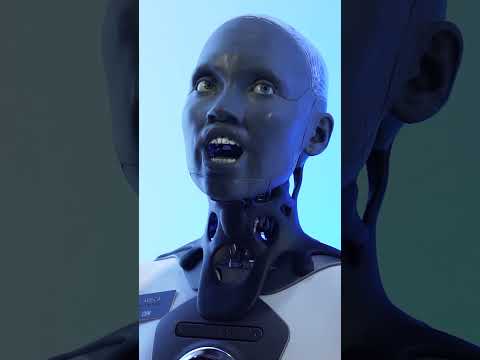
Some of our artifacts need regular dusting. Others... need a dental cleaning. Meet AMECA in our Chatbots Decoded: Exploring AI exhibit, alongside other chatbot pioneers like ELIZA and A.L.I.C.E. (who don't need teeth to chat). What's another piece of museum maintenance you'd...
Some of our artifacts need regular dusting. Others... need a dental cleaning.
Meet AMECA in our Chatbots Decoded: Exploring AI exhibit, alongside other chatbot pioneers like ELIZA and A.L.I.C.E. (who don't need teeth to chat).
What's another piece of museum maintenance you'd like to see behind the scenes?
Herschel H. Loomis, Jr. is an electrical engineer, educator, and retired U.S. Naval Reserve captain whose career has spanned more than six decades in academia, national security, and space systems. After earning degrees from Cornell University, the University of Maryland, and...
If this computer had a LinkedIn profile, it would be... impressive. Meet LEO, the world's first business computer built in 1951. 📸 Image sources: Maurice Wilkes + EDSAC images - Copyright Department of Computer Science and Technology, University of Cambridge. Reproduced by...
If this computer had a LinkedIn profile, it would be... impressive.
Meet LEO, the world's first business computer built in 1951.
📸 Image sources:
Maurice Wilkes + EDSAC images - Copyright Department of Computer Science and Technology, University of Cambridge. Reproduced by permission.
LEO computer console - Science Museum Group Collection
Lyons Cakes advertisement - Lyons Coffee
Herschel H. Loomis, Jr. is an electrical engineer, educator, and retired U.S. Naval Reserve captain whose career has spanned more than six decades in academia, national security, and space systems. After earning degrees from Cornell University, the University of Maryland, and...
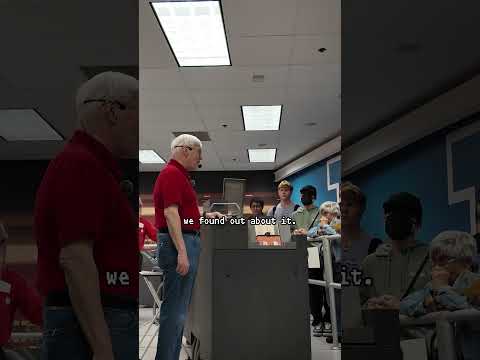
This IBM 1401 almost disappeared after going unsold at a German auction in 2003. We like to think it fate that brought it to our location at 1401 N. Shoreline Blvd. See it in operation at the museum Wednesdays at 3pm and Saturdays at 11am and 1pm.
This IBM 1401 almost disappeared after going unsold at a German auction in 2003.
We like to think it fate that brought it to our location at 1401 N. Shoreline Blvd.
See it in operation at the museum Wednesdays at 3pm and Saturdays at 11am and 1pm.
Dr. Masahiro Yanagisawa participated in the early development of various aspects of HDD technology in Japan, with a consortium of companies that included NTT (Nippon Telephone and Telegraph), NEC, Fujitsu, and Hitachi. He worked at NEC, where he started in 1973, working on...
Eighteen years ago today, the App Store launched with 500 apps and changed what a phone could be. Our curator Hansen Hsu reminisces on the impact of this moment. Can you remember your first app? Photo credits: AP, Apple, Inc.
Eighteen years ago today, the App Store launched with 500 apps and changed what a phone could be. Our curator Hansen Hsu reminisces on the impact of this moment.
Can you remember your first app?
Photo credits: AP, Apple, Inc.
This oral history records an interview with Thomas Coughlin, one of the best known professionals in the data storage industry. Tom, president of Coughlin Associates, is today a digital storage analyst and business and technology consultant. He has over 40 years in the data...
CHM volunteer Jack programmed this 1959 IBM 1401 to print an accurately scaled American flag from a punch card object deck, using only alphabetic characters. See the IBM 1401 in action at the Computer History Museum in Mountain View!
CHM volunteer Jack programmed this 1959 IBM 1401 to print an accurately scaled American flag from a punch card object deck, using only alphabetic characters.
See the IBM 1401 in action at the Computer History Museum in Mountain View!
[Recorded June 30, 2026] Despite decades of investment, healthcare has been slow to embrace a digital transformation. Inefficiencies and problems with electronic health records persist. With the rise of AI, is healthcare finally at a turning point? Join us for a CHM Live book...
[Recorded June 30, 2026]
Despite decades of investment, healthcare has been slow to embrace a digital transformation. Inefficiencies and problems with electronic health records persist. With the rise of AI, is healthcare finally at a turning point?
Join us for a CHM Live book talk with Robert Wachter, MD, chair of the Department of Medicine at UCSF and one of the nation’s leading voices on healthcare innovation. In his new book, _A Giant Leap: How AI Is Transforming Healthcare and What That Means for Our Future,_ Wachter explores how artificial intelligence is beginning to reshape medicine—from reducing administrative burden and clinician burnout to improving diagnosis, communication, and patient care.
But AI's power to read and synthesize vast amounts of medical data comes with risk. Wachter and journalist Katie Hafner will discuss both the promise and the peril of AI in healthcare.
What You’ll Experience:
-A clear look at how AI is already changing healthcare—and where it’s headed next.
-Insight into opportunities and risks of AI in high-stakes, real-world settings.
-A thoughtful discussion of trust, human judgment, and the future of the doctor–patient relationship.
FEATURED PARTICIPANTS
Moderator
Katie Hafner
Author of nine books, including Cyberpunk and Where Wizards Stay up Late; contributor to The New York Times; Host and Executive Producer, Lost Women of Science Podcast
Katie Hafner is a journalist and author. She is host and coexecutive producer of the Lost Women of Science podcast. Hafner writes frequently for The New York Times and The Washington Post and is the author of a memoir, novel, and six non-fiction books, including Where Wizards Stay Up Late: The Origins of the Internet (with Matthew Lyon), The Well: Love, Death, and Real Life in the Seminal Online Community, and Cyberpunk: Outlaws and Hackers on the Computer Frontier (with John Markoff). Her first novel, The Boys, was published in July 2022.
Speaker
Robert Wachter, MD
Professor and Chair of the UCSF Department of Medicine; Author of A Giant Leap: How AI is Transforming Healthcare and What That Means for Our Future
Robert Wachter, MD, is professor and chair of the UCSF Department of Medicine and author of 300 articles and six books, including the bestseller A Giant Leap: How AI is Transforming Healthcare and What That Means for Our Future. He coined the term “hospitalist” and is often considered the father of the hospitalist field. An elected member of the National Academy of Medicine, Modern Healthcare magazine ranked him among the 50 most influential physician-executives in the US more than a dozen times; he was #1 on the list in 2015.
Catalog Number: 300000324
Acquisition Number: 2026.0151
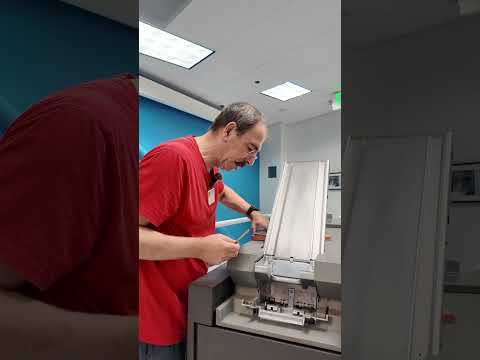
Before USB and cloud storage, there was… the punch card. There wasn’t even a single worldwide standard until IBM’s 80-column card became dominant (IBM switched to rectangular holes on 80-column cards in 1928). Watch a keypunch in action in CHM’s IBM 1401 Demo Lab. Bonus: the...
Before USB and cloud storage, there was… the punch card.
There wasn’t even a single worldwide standard until IBM’s 80-column card became dominant (IBM switched to rectangular holes on 80-column cards in 1928).
Watch a keypunch in action in CHM’s IBM 1401 Demo Lab. Bonus: the “salary” offer in the demo is $0.90/hour (historically accurate, per our volunteers).
How did the early internet help shape today's transgender identity and activism? Join CHM Book Prize winner and scholar Avery Dame-Griff as he uncovers the digital origins of a movement that began long before today's social platforms existed. Drawing from his award-winning...
How did the early internet help shape today's transgender identity and activism? Join CHM Book Prize winner and scholar Avery Dame-Griff as he uncovers the digital origins of a movement that began long before today's social platforms existed.
Drawing from his award-winning book, _The Two Revolutions: A History of the Transgender Internet,_ Dame-Griff reveals how early online spaces like bulletin boards and chat rooms became lifelines for people exploring gender beyond the limits of their offline worlds.
Here's what you'll experience:
-Gain insights into how queer and trans people used and repurposed available technologies to build networks of support and visibility.
-Explore how message boards, listservs, and online forums created spaces for identity formation, resource-sharing, and activism.
-Learn why understanding this digital past offers urgent context for today's debates around trans rights, representation, and online culture.
Speaker:
Avery Dame‑Griff. Author, The Two Revolutions: A History of the Transgender Internet
Moderator:
Joshua K. Reason, Assistant Professor of Africana Studies, College of Ethnic Studies, San Francisco State University
[Recorded June 23, 2026]
Catalog Number: 300000323
Acquisition Number: 2026.0147
To commemorate the 250th anniversary of the signing of the Declaration of Independence, CHM volunteer Jack programmed an ASCII-art American flag to run on an IBM 1401 and print on an IBM 1403, both of which can be seen in action during one of our demonstrations (check with...
To commemorate the 250th anniversary of the signing of the Declaration of Independence, CHM volunteer Jack programmed an ASCII-art American flag to run on an IBM 1401 and print on an IBM 1403, both of which can be seen in action during one of our demonstrations (check with our front desk for the schedule).
Jack used a web-based simulation system to write, assemble, and test the program in IBM 1401 Autocoder. This software saves time, simplifies troubleshooting, and reduces wear and tear on the vintage equipment. Once the program was complete, Jack transferred it to 74 punched cards and printed the design on an IBM 1403.
Created in the 1960s, ASCII became a common language that allowed different computers to exchange text reliably. ASCII art was prevalent in an era before computer graphics and is still made today.
Is healthcare finally at a turning point? Robert Wachter, MD, chair of the Department of Medicine at UCSF and one of the nation’s leading voices on healthcare innovation, discusses his new book, A Giant Leap: How AI Is Transforming Healthcare and What That Means for Our...
Is healthcare finally at a turning point? Robert Wachter, MD, chair of the Department of Medicine at UCSF and one of the nation’s leading voices on healthcare innovation, discusses his new book, A Giant Leap: How AI Is Transforming Healthcare and What That Means for Our Future.
With journalist Katie Hafner, Wachter explores how artificial intelligence is beginning to reshape medicine—from reducing administrative burden and clinician burnout to improving diagnosis, communication, and patient care—and examines the opportunities and risks of AI in high-stakes, real-world settings.
Fifty-two minutes. That’s how long the experimental Manchester “Baby” ran a 17-instruction program using a “memory tube” devised by Freddy Williams and Tom Kilburn. On June 21, 1948, the first stored-program computer had been born. By 1949, the Manchester University team had...
Fifty-two minutes. That’s how long the experimental Manchester “Baby” ran a 17-instruction program using a “memory tube” devised by Freddy Williams and Tom Kilburn. On June 21, 1948, the first stored-program computer had been born.
By 1949, the Manchester University team had developed a full-scale version: the Manchester Mark I.
What if the roots of Silicon Valley’s culture weren’t written in code but taught in a classroom? A new film by This is the World documentary studio, _The Godmother of Silicon Valley,_ reveals the quiet but profound influence of Esther Wojcicki, a trailblazing educator,...
What if the roots of Silicon Valley’s culture weren’t written in code but taught in a classroom?
A new film by This is the World documentary studio, _The Godmother of Silicon Valley,_ reveals the quiet but profound influence of Esther Wojcicki, a trailblazing educator, journalist, and mother of tech leaders (Susan Wojcicki, YouTube / Google; Janet Wojcicki, UCSF; and Anne Wojcicki, 23andMe). Through radical teaching methods that encouraged curiosity, independence, and resilience, Wojcicki helped cultivate a mindset that would ripple far beyond the campus and into the heart of global technology.
After the screening, a live Q&A will feature Esther Wojcicki and the film's executive director Maciej Kawecki.
[Recorded June 2, 2026]
Catalog Number: 300000306
Acquisition Number: 2026.0143
Dr. Peter Goglia has had an illustrious career in the disk drive industry. He was part of the Magnetic Memory Division at Hewlett Packard in the early 1980’s and was involved in some of the industry leading technologies (MR heads, thin film disks) that HP was developing. He...
Introduced in 1956, IBM’s RAMAC (Random Access Method of Accounting and Control) 350 was the world’s first disk drive. CHM volunteer, RAMAC restoration team member, and former IBM hard drive engineer John Best explores the pioneering technology that helped make fast, random...
Introduced in 1956, IBM’s RAMAC (Random Access Method of Accounting and Control) 350 was the world’s first disk drive.
CHM volunteer, RAMAC restoration team member, and former IBM hard drive engineer John Best explores the pioneering technology that helped make fast, random access to data possible.
Historical images courtesy of the IBM Corporate Archive and the Official Report of the 1960 Olympic Winter Games, digitally published by the LA84 Foundation.
How did the early internet help shape today's transgender identity and activism? Join CHM Book Prize winner and scholar Avery Dame‑Griff as he uncovers the digital origins of a movement that began long before today’s social platforms existed. Drawing from his award-winning...
How did the early internet help shape today's transgender identity and activism? Join CHM Book Prize winner and scholar Avery Dame‑Griff as he uncovers the digital origins of a movement that began long before today’s social platforms existed.
Drawing from his award-winning book, The Two Revolutions: A History of the Transgender Internet, Dame‑Griff reveals how early online spaces like bulletin boards and chat rooms became lifelines for people exploring gender beyond the limits of their offline worlds..
Will Apple unveil anything this week as impressive as resizing a fish in your word processor? At the 1984 Macintosh introduction to the Boston Computer Society, Apple’s team demos MacWrite: point, click, paste, and see an image appear inside a document. Then, resize it...
Will Apple unveil anything this week as impressive as resizing a fish in your word processor?
At the 1984 Macintosh introduction to the Boston Computer Society, Apple’s team demos MacWrite: point, click, paste, and see an image appear inside a document. Then, resize it instantly on-screen.
It may look simple now, but this was a major shift in how people interacted with computers, a visual, direct, “what you see is what you get” experience at a time when many workflows still relied on typed commands.
Watch a Q&A with author and scholar Avery-Dame Griff and San Francisco State University’s Joshua K. Reason, highlighting topics they will discuss at the upcoming CHM Live event, Out Online: Trans and Queer Community on the Early Net, on June 23. Register for the event here:...
Watch a Q&A with author and scholar Avery-Dame Griff and San Francisco State University’s Joshua K. Reason, highlighting topics they will discuss at the upcoming CHM Live event, Out Online: Trans and Queer Community on the Early Net, on June 23.
Register for the event here: https://computerhistory.org/events/out-online/
About the Event:
How did the early internet help shape today's transgender identity and activism? Join CHM Book Prize winner and scholar Avery Dame‑Griff as he uncovers the digital origins of a movement that began long before today’s social platforms existed.
Drawing from his award-winning book, The Two Revolutions: A History of the Transgender Internet, Dame‑Griff reveals how early online spaces like bulletin boards and chat rooms became lifelines for people exploring gender beyond the limits of their offline worlds.
Here’s what you’ll experience:
- Gain insights into how queer and trans people used and repurposed available technologies to build networks of support and visibility.
- Explore how message boards, listservs, and online forums created spaces for identity formation, resource‑sharing, and activism.
- Learn why understanding this digital past offers urgent context for today’s debates around trans rights, representation, and online culture.
Meet the Comptometer: a keyboard adding machine patented in 1887 that helped transform accounting. CHM exhibit developer Kiera pulls out this artifact from the museum’s Education Collection for a special appearance. By allowing multiple keys to be pressed at once, skilled...
Meet the Comptometer: a keyboard adding machine patented in 1887 that helped transform accounting.
CHM exhibit developer Kiera pulls out this artifact from the museum’s Education Collection for a special appearance. By allowing multiple keys to be pressed at once, skilled operators could calculate at remarkable speeds.
[Recorded May 26, 2026] In 1985, Steve Jobs left Apple—the company he had cofounded—after a dramatic power struggle. Soon after, he launched a new venture called NeXT. Though often described as his “wilderness years," the NeXT era proved transformative, reshaping Jobs as a...
[Recorded May 26, 2026]
In 1985, Steve Jobs left Apple—the company he had cofounded—after a dramatic power struggle. Soon after, he launched a new venture called NeXT. Though often described as his “wilderness years," the NeXT era proved transformative, reshaping Jobs as a leader and creating technologies that would later form the foundation of modern Apple platforms.
Join the Computer History Museum for a special CHM Live book talk with Geoffrey Cain, author of _Steve Jobs in Exile: The Untold Story of NeXT and the Remaking of an American Visionary,_ and key figures from NeXT’s history, including Dan’l Lewin, Rich Page (by video), Avie Tevanian, and Bud Tribble.
The event will explore how Jobs built NeXT, was transformed by its near failure and rethought his approach to leadership, product design, and innovation, setting the stage for one of the most remarkable comebacks in business history and even playing a role in the early development of the World Wide Web.
Join us for an inside look at the NeXT era's bold ideas, technical breakthroughs, and intense culture that transformed Steve Jobs and the future of computing.
What You’ll Experience
-The untold story of Steve Jobs’s “lost decade” and the founding of NeXT—and its vital impact on Apple's success today.
-Firsthand reflections from key players at NeXT, including Dan'l Lewin, Rich Page (by video), Avie Tevanian, Bud Tribble, and others.
-New insights into how failure, reinvention, and technology shaped one of Silicon Valley’s greatest comebacks.
FEATURED PARTICIPANTS
Moderator
Geoffrey Cain
Author, _Steve Jobs in Exile: The Untold Story of NeXT and the Remaking of an American Visionary_
An award-winning author and correspondent, Geoffrey Cain's latest book is _Steve Jobs in Exile: The Untold Story of NeXT and the Remaking of an American Visionary._ His book _Samsung Rising_ was longlisted for the Financial Times and McKinsey Business Book of the Year, and _The Perfect Police State_ was named NPR’s “Book of the Day.” Cain appears in The Wall Street Journal, Time, The Economist, and Wired and has been featured on CNN and Bloomberg TV. He also advises executives and government officials on innovation.
Speaker
Dan'l Lewin
Cofounder and VP of Sales and Marketing, NeXT
Dan’l Lewin is a technology executive with more than 30 years of experience across Silicon Valley companies and civic institutions. He most recently served as president and CEO of the Computer History Museum, following a 17-year career at Microsoft, where he was corporate vice president leading global work in civic engagement, environmental sustainability, and startup partnerships. Earlier roles include leadership at Apple, cofounder of NeXT, and leadership roles at Go Corporation, and SONY. He currently serves on startup boards and the Norman Rockwell Museum and previously chaired the Silicon Valley Community Foundation.
Speaker
Rich Page
Cofounder and VP of Hardware Engineering / Manufacturing, NeXT
Rich Page cofounded NeXT, where he served as vice president of hardware engineering, leading development of the NeXT cube hardware, and as vice president of manufacturing. Before NeXT, he worked at Apple on the Lisa project alongside Steve Jobs and became one of the first four Apple Fellows. After NeXT, he founded several startups and served as executive chairman of Chowbiotics (acquired by DoorDash) and chairman of Secure Thingz (acquired by IAR Systems).
Speaker
Avadis "Avie" Tevanian, Jr.
VP of Engineering, NeXT
Avie Tevanian started at NeXT as chief operating system officer working on the NeXTSTEP operating system for the NeXT cube. He later managed the core operating system group and then all engineering after NeXT left the hardware business and was responsible for NeXTSTEP, OpenStep and WebObjects. He later became senior vice president of software engineering at Apple, helping lead the transition to Mac OS X after Apple acquired NeXT. Currently, he is cofounder and managing director of NextEquity Partners. At Carnegie Mellon before joining NeXT, he was a principal designer and engineer of the Mach operating system upon which NeXTSTEP, and now macOS and iOS, are based.
Speaker
Bud Tribble
Cofounder and VP of Software Engineering, NeXT
Bud Tribble was a cofounder of NeXT and served as vice president of software engineering, helping guide software architecture and product strategy in the company’s early years. Before NeXT, he was a software lead of the original Macintosh team at Apple and coined the term “reality distortion field” about Steve Jobs. After NeXT, he returned to Apple in senior engineering and product roles and retired as vice president of software technology. He also worked at Eazel Inc. as vice president of engineering and at Sun Microsystems as chief technology officer for the Sun-Netscape Alliance.
Catalog Number: 300000305
Acquisition Number: 2026.0128
For one year, Joanna Stern invited AI into nearly every part of her life. Along the way, she found herself asking a bigger question: what kind of future are we building for our kids? Watch the full conversation on our channel.
For one year, Joanna Stern invited AI into nearly every part of her life. Along the way, she found herself asking a bigger question: what kind of future are we building for our kids?
Watch the full conversation on our channel.
In 1986, computer scientist Alan Kay, whose ideas shaped everything from GUIs to modern programming, made an observation at the ACM Conference on the History of Personal Workstations: Effort is not always the issue. Sometimes the real problem is context. Nearly 40 years...
In 1986, computer scientist Alan Kay, whose ideas shaped everything from GUIs to modern programming,
made an observation at the ACM Conference on the History of Personal Workstations: Effort is not always the issue. Sometimes the real problem is context.
Nearly 40 years later, does this sound like Silicon Valley has changed, or are we still digging in the wrong place?