• maiweb v0.1.0
  • ★
  • Feedback

theconversation.com

Visit site ↗

All items hosted on this domain, most recent first.

  • The Conversation US theconversation.com explanatory-journalism journalism 2026-06-18 13:17
    ↗

    One Black Texas family’s Juneteenth memories show how food became a powerful expression of emancipation, self-determination and remembrance.

    A Juneteenth celebration at Franklin Park in Boston's Roxbury neighborhood in 2014. Zack Wittman/The Boston Globe via Getty Images

    “Visiting Comanche Crossing on Juneteenth felt like freedom,” my father said as we pulled into Booker T. Washington Park, the site near what used to be known as the historic Comanche Crossing on Lake Mexia in Texas. “Listen, Bobby, this place would be full of Black folks cooking, dancing, and playing music. It was a big festival with fireworks and a party.”

    It had been more than six decades since my father had visited the park in the summer of 1965. But he sounded like a little kid again as he breathlessly recounted all the food: “We would have barbecue ribs, chicken, brisket, blood sausage, raccoon, armadillo, fried chicken, potato salad, beans and yellow meat watermelon, and we had to have that Big Red Soda – you know it was created in Waco, right? – banana pudding, peach cobbler, pecan pie, white coconut cake, German chocolate cake, berry cobblers, pies and homemade ice cream.”

    Long before Juneteenth became a national holiday in 2021 and Texas commemorated it as a state holiday in 1980, the park was where generations of my family would join thousands of Black Texans every June to celebrate June 19, 1865. That was the day Union troops informed enslaved Africans in Texas that they were free, two-and-a-half years after the Emancipation Proclamation and six months before the ratification of the 13th Amendment, which officially abolished slavery in the U.S.

    Comanche Crossing lies less than 3 miles north of the site where the region’s enslaved people first learned of their freedom, and it’s where they decided to celebrate with a feast from their harvest.

    Yet the story of Black Texans – and how they shepherded the traditions of Juneteenth celebrations through food for over a century – is a central part of this history that receives scant attention.

    Black youth wave and cheer at a parade float.
    Spectators watch a Juneteenth parade commemorating the end of slavery in the U.S. on June 19, 2021, in Galveston, Texas. Go Nakamura/Getty Images

    I’m a native Black Texan, so Juneteenth is personal. And I thought I fully understood its significance while I devoured smoked pork ribs, summer sausage and brisket, year after year, at my paternal grandmother’s house in my hometown of Fort Worth.

    But now, as a scholar of Black food culture, I see these celebrations differently. The mouthwatering spreads that were laid out each year did more than nourish Black Texans. They celebrated the way food was wielded as a tool of resistance and a symbol of freedom during and after slavery.

    The freedom feast

    As we continued walking through Comanche Crossing, I asked my father what he remembered about preparing food for Juneteenth.

    By summer 1965, he recalled, they were living in Fort Worth but traveled back to his hometown of Waco the night before Juneteenth to help his family cook for their annual Comanche Crossing trip. He recalled that the cooking lasted all night, with the meat smoked to perfection over the pit, while other family members, including my grandmother, assembled dishes for the next day, using mostly fresh ingredients and farm-raised livestock. The food was packed up on the morning of June 19, and then the whole family headed for Comanche Crossing.

    “And that’s when we would really have a time,” he said.

    As my father excitedly described all the food and its preparation, I thought of culinary historian Jessica B. Harris, who, in her 2011 book, “High on the Hog, wrote, "The backbone of Juneteenth festivities has always been the table.”

    Each family that came to Comanche Crossing prepared their own unique dishes for the Juneteenth spread.

    “You can’t pinpoint how each family would prepare the foods,” my father said, “but you know you would see smoked meat for sure because that was our main tradition.”

    For my family, smoked meat and potato salad were nonnegotiable.

    The smoked meat echoes the ritual of hog killing that has long been part of the rural Black experience. The practice was one of the few moments when enslaved people exercised a measure of control over their food. Potato salad symbolized the abundance of the harvest of the land, putting on full display the agricultural knowledge and labor of the enslaved.

    After emancipation, these traditions symbolized more than just celebration for Black Texans. They reflected what I called “emancipatory food power” in my first book, “Food Power Politics” – the ability of Black communities to use food as a resource for survival, self-determination and freedom.

    A Black woman and a Black man eat pie from paper plates.
    Sweet potato pie was on the menu at a Juneteenth celebration at Nichol Park in Richmond, Calif., in 2004. David Paul Morris/Getty Images

    A portal into the past

    When we approached the large, elevated dance pavilion, the park’s largest structure, my father remarked, “It seemed much bigger to me as a kid.”

    He wasn’t wrong. The current structure isn’t the original, which was destroyed by a fire in the 1990s. But for my father, it nonetheless conjured memories of him and his cousins “running around it and watching the adults dance and just be free.”

    He said it reminded him “of that Sugar Shack picture.” He was referring to the iconic 1970s painting by Black artist Ernie Barnes depicting a group of exhilarated Black men and women enthusiastically dancing, arms and legs splayed every which way, to live music at a juke joint – a type of informal gathering place that emerged in rural Black communities in the American South after emancipation.
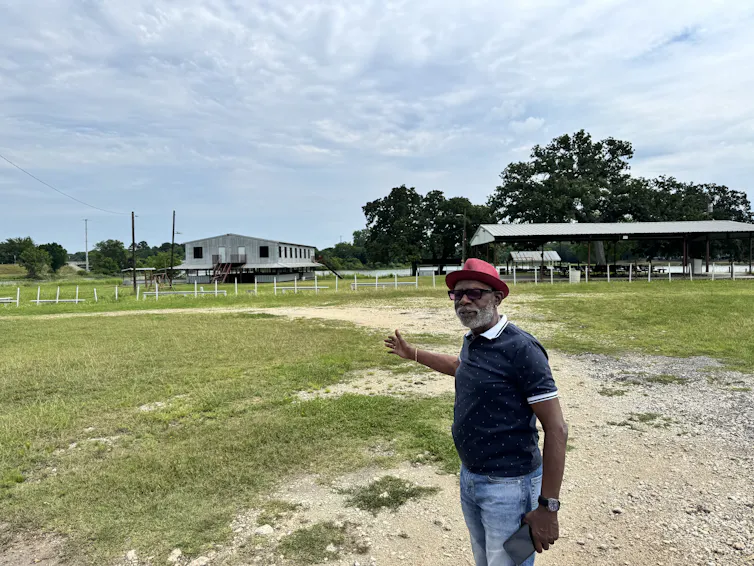
    An older Black man wearing a red hat gestures in a field under a cloudy sky.
    The author’s father during his return to Comanche Crossing in Mexia, Texas, for the first time in 60 years. Bobby J. Smith II, CC BY-SA

    I watched as my father walked under the pavilion and around the park and thought about his recollections: a portal into those earlier Juneteenth celebrations in Texas, when those who attended were just one or two generations removed from enslavement. It was a brief glimpse into how deeply they treasured that day.

    Black Texan and historian Amilcar Shabazz picks up on that thread in his 2004 book, “Advancing Democracy”:

    “Before Black Texans had their own history, schools, churches … they had Juneteenth. It may not have looked like much in the eyes of an arrogant world, but it was everything Black Texans had, and they each loved and cherished that day with all their heart … and most important of all, they remembered.”

    A homecoming 60 years in the making

    As my father and I walked back to the car to get back on the road, I could tell that he could have stayed there, reminiscing, for hours.

    He kept glancing around, as if his cousins, aunts, uncles, mother, grandmother and great-grandparents were right there with him in spirit, in their own little corner of Comanche Crossing, passing around dishes, filling plates and toasting to freedom.

    But once we were in the car, his tone changed. He began talking about the 1981 tragedy at the park, which rocked the Mexia community to the core. Three Black boys, known as the “Comanche Three,” were being transported by three police officers across Lake Mexia in a small aluminum boat. Some type of accident occurred on the water, and all three boys drowned. The three police officers survived. To this day, the circumstances of what happened that night remain unclear.

    Attendance at the annual Juneteenth celebration dropped sharply after the drownings of the ‘Comanche Three.’

    While the tragedy disrupted the future of Juneteenth celebrations in Comanche Crossing, the events continued, though the number of visitors declined dramatically. But it didn’t erase the past from the minds of Black Texans like my father.

    Clearly, the smell of barbecue, the sound of music and the love of community and family lingered in him.

    In many ways, returning to Comanche Crossing after more than 60 years was a homecoming for my father. It was one for me, too. Through his memories, I came to see myself in the Juneteenth story – both personally and intellectually.

    “I’m glad that I got the chance to see this place again in my lifetime,” my father said, holding back tears as Comanche Crossing disappeared in the rearview mirror.

    The Conversation

    Bobby J. Smith II does not work for, consult, own shares in or receive funding from any company or organization that would benefit from this article, and has disclosed no relevant affiliations beyond their academic appointment.

  • The Conversation US theconversation.com explanatory-journalism journalism 2026-06-18 13:06
    ↗

    President Donald Trump has talked of a potential role for Syrian forces in fighting Hezbollah – a move that would raise alarm in Lebanon.

    Smoke rises from Israeli bombardment near the village of Kfar Tibnit in southern Lebanon on June 14, 2026. AFP via Getty Images

    The United States and Iran inked a long-awaited provisional ceasefire deal on June 17, 2026. After months of uncertainty, the people of the Gulf region can, potentially, breathe a sigh of relief, and global markets look set to be boosted by the reopening of the Strait of Hormuz.

    What about those who have endured the war’s spillover in Lebanon? After all, the memorandum of understanding signed is not just a peace agreement between the U.S. and Iran alone. Rather, on Tehran’s insistence, the deal is intended to provide a cessation of hostilities on all fronts – including in Lebanon.

    President Donald Trump is framing the deal as a win for the U.S. and the closing of the latest chapter in Washington’s Middle East entanglement. But Israeli Prime Minister Benjamin Netanyahu, whose country was reportedly shut out of the diplomatic process, may have other plans that would challenge Trump’s authority in the region.

    After news of the emerging deal broke on June 14, Netanyahu almost immediately announced that Israel will occupy Lebanon “indefinitely.” Israel then followed up with a fresh wave of airstrikes that killed four people in Lebanon.

    A clearly displeased Trump publicly criticized those actions and even suggested that Syria could go in and dismantle Hezbollah, the Tehran-backed Lebanese group that has for nearly five decades fought Israel in southern Lebanon.

    With Israel continuing to bomb Lebanon and remove Lebanese citizens from their lands – in defiance of Washington’s wishes – the fate of the U.S.-Iran deal in Lebanon remains obscure.

    As a scholar of Middle East studies, I fear the agreement leaves more questions about the delicate situation in Lebanon that it solves. Moreover, any split in Israel-U.S. policy aims over Lebanon may have grave implications for Trump’s de-escalation attempts with Iran and also hamper hopes for a peace deal between Lebanon and Israel days before representatives of both countries plan to meet in Washington.

    A defiant Israel

    History shows that any U.S. failure to rein in Israeli military action north of its border can have disastrous consequences.

    A similar scenario happened back in 1982 after Israel launched “Operation Peace for Galilee,” invading Lebanon and imposing a brutal siege on Beirut that killed over 17,000 Lebanese and Palestinian civilians and fighters.

    Two men in suits shakes hands.
    President Donald Trump shakes hands with Israeli Prime Minister Benjamin Netanyahu during a news conference at Mar-a-Lago in late 2025. AP Photo/Alex Brandon

    In an angry phone call in August 1982, U.S President Ronald Reagan asked Israeli Prime Minister Menachem Begin to stop the heavy bombardments of Beirut. “Menachem, this is a holocaust,” Reagan recalled saying.

    But Israel ignored the U.S. demands for a ceasefire. As a result, Reagan sent a an international peacekeeping force into Lebanon. Composed of French, Italian and American troops, this multinational force in Lebanon was tasked to act as a buffer zone between feuding parties and provide port security to Palestinian fighters leaving Lebanon.

    Not only did Israel ignore Reagan’s attempts at de-escalation, it also defied the multinational force, harassed its troops and endangered their lives, according to U.S. military leaders.

    Ironically, when Israel invaded Beirut in 1982 and threatened the American troops, it did so using weapons supplied by Washington as part of the two countries’ long-standing defense arrangement.

    History repeats itself

    A similar scenario is unfolding today.

    Just like Reagan and Begin’s clash in 1982, Trump and Netanyahu are engaged in what looks like a deadlock. In a recent phone call about Lebanon, Trump was reportedly overheard yelling at Netanyahu, “You’re f–king crazy. You’d be in prison if not for me,” while pressing the Israeli government to scale back its operation in Lebanon.

    Today, as in 1982, Israel continues to benefit from U.S. support and arms sales. Congress has even moved to integrate U.S. and Israeli militaries.

    Also, just like 1982, the American president is considering sending foreign troops into Lebanon.

    But despite the American military and political support, Israel continues to brush aside any U.S policy that aims to place limits on its regional power, effectively showing a glaring limitation of U.S. dominance over the region.

    A man walks by a giant billboard.
    A man passes by a giant billboard in south Beirut that shows the late Iranian leader Ayatollah Ali Khamenei, center, and Iranian Supreme Leader Ayatollah Mojtaba Khamenei, with Arabic writing that reads: ‘Thank you Iran.’ AP Photo/Hussein Malla

    Lebanon as an afterthought

    When the U.S. and Iran initially agreed to a two-week ceasefire in April 2026, there was confusion over whether Lebanon was included in that deal. While Iran asserted Lebanon’s inclusion, Israel denied it and continued to bomb the country.

    Lebanon became part of the equation because of Hezbollah’s actions after the U.S.-Israeli attack on Iran in late February 2026. Similar to how the Tehran-backed group vowed solidarity with Hamas after Israel bombed Gaza in response to Palestinian militants’ attack on Israeli soil on Oct.7, 2023, Hezbollah struck Israel when Iran was hit.

    It reignited the simmering Hezbollah-Israeli war. Today, Israel occupies south Lebanon and is threatening to annex it.

    The U.S.-released text of the latest Iran peace plan explicitly includes Lebanon.

    While that will introduce serious points of friction with Israeli designs on the country, the people in Lebanon, too, will have many questions and concerns.

    I believe the deal will be seen as a welcome step but also a potential blow to Lebanon’s sovereignty. While the text aims to protect Lebanon’s “territorial integrity,” it does not reference Israel’s actual withdrawal from these lands, and it is unclear whether this issue will be discussed in future negotiations between Israel and Lebanon or between the U.S and Iran.

    Furthermore, the new deal ignores Lebanon’s efforts to free itself from Iran’s influence in the country through its Hezbollah ally.

    In an unprecedented move in May, Lebanon filed a formal complaint against Iran at the United Nations Security Council, directly accusing Tehran of violating the Vienna Convention on Diplomatic Relations for interfering in its sovereign decisions and dragging the country into war.

    In spite of Hezbollah’s open threats against the Lebanese government, Lebanese representatives held the first of several planned direct negotiations with Israeli counterparts in Washington.

    A tank fires in a black and white photo.
    Israeli troops cover their ears as they fire their American-made howitzer in June 1982. AP Photo/Harry Koundakjian

    Lebanon, Syria and a rocky path forward

    Indeed, the new U.S.-Iran deal can be interpreted as a step back for the strength of an already weak Lebanese state. Indirectly, the deal cements Iran’s control on the country’s politics and, by extension, Hezbollah.

    Furthermore, and just like in 1982, the U.S. is proposing a foreign force to enter Lebanon and help end the violence. In fact, Trump has now twice mentioned the possibility of Syria playing a role in Lebanon to enter and execute “a surgical attack on Hezbollah.”

    It is unclear whether the U.S. president is using these comments just as a way to pressure Israel over Lebanon or whether there is an actual plan that includes a Syrian role in the country’s future. But just the mention of Syrian intervention evokes that country’s longtime occupation of Lebanon.

    In fact, at the end of the Lebanese civil war in 1991, Syria established what amounted to absolute political, military and economic hegemony over Lebanon, during which thousands of Lebanese disappeared.

    The assassination of Lebanese Prime Minister Rafic Hariri in 2005 and the Cedar Revolution that followed forced the Syrian troops out of Lebanon.

    The fact that the new leadership in Syria is Sunni adds another complication due to Lebanon’s delicate sect-based balance of power. If Damascus interferes in Lebanon, sectarian violence could follow, as the Syrian military presence would likely be interpreted as direct opposition to Hezbollah’s Shiite fighters.

    This is particularly true since Ahmed al-Sharaa’s government was accused of violence against religious minorities in Syria, including the Alawites – a religious sect close to Shia Islam – and the Druze.

    Whether Syria plays a decisive role in Lebanon going forward, there is little doubt that the future of the U.S.-Iran deal depends on both Iran and Israel’s actions. So far, Israel seems uninterested in following Trump’s leadership in the region and is gearing up to play a spoiler role.

    For now, and absent new breakthroughs, Lebanon, with its sovereignty almost entirely eroded, seems destined to remain at the mercy of its larger neighbors in Iran, Israel and Syria – and the erratic involvement of the U.S. abroad.

    The Conversation

    Mireille Rebeiz is affiliated with the American Red Cross.

  • The Conversation US theconversation.com explanatory-journalism journalism 2026-06-18 12:39
    ↗

    There was a time when you could be fired from your job for being gay. It took LGBTQ employees at companies like Kodak to challenge workplace discrimination and transform corporate culture.

    Kodak employees attend Toronto's Pride parade in 2005. Remembering the Lambda Network at Kodak, CC BY-SA

    As corporations sponsor floats and employee marches during Pride Month parades, it’s important to remember just how recently the majority of American office workers felt they had to conceal their sexuality in the workplace.

    In the 1970s there were no legal protections for LGBTQ workers outside of a handful of cities. If a company found out you were gay, it could fire you on the spot.

    It took a group of pioneering LGBTQ workers in the 1980s and ’90s who challenged widespread homophobia in corporate America to make workplaces safer and more inclusive, not only for LGBTQ workers but for everyone.

    Since 2021, I’ve been studying LGBTQ workplace rights activists at one of those corporations: Kodak.

    The iconic camera and film manufacturer has been headquartered in Rochester, New York, since 1881. At a time when most employees were closeted, a group of the company’s gay, lesbian, bisexual and trans employees came together to form the Lambda Network to reshape Kodak’s corporate culture and company policies. The company officially recognized the group in 1993.

    Alongside my undergraduate research assistants at the Rochester Institute of Technology, I’ve been documenting and preserving the history of the Lambda Network.

    We’ve interviewed more than 30 Lambda members and their allies. Even as Kodak filed for bankruptcy in 2012 and emerged as a significantly smaller company, many Lambda members kept their records, giving us access to a unique archive that includes corporate policies, correspondence, photographs and video footage.

    ‘The early years were scary’

    Many Lambda members shared their stories with us and explained how difficult it was to remain closeted at work in the 1970s and ’80s.

    It could mean silently tolerating homophobic jokes, having to conceal one’s private life from co-workers, and living in fear of the consequences of being outed, which could include being socially ostracized and even losing your job.

    As Kodak executive Cynthia Martin, who later came out as a lesbian and became a corporate champion for Lambda, recalled, “Rochester was a Kodak town, so you’d always run into people (from work). … If it was Valentine’s Day and you were out at a restaurant (with your partner) or, you know, even just grocery shopping, it was awkward. And that was just an everyday occurrence, so it was hard. It was stressful.”

    A 16-story skyscraper with a spire designed in the French Renaissance style standing against a backdrop of dramatic clouds.
    The Kodak Tower has been a fixture of the Rochester, N.Y., skyline since 1914. Rich Barnes/Getty Images

    At a time when there were few workplace protections for LGBTQ workers, coming out was even more terrifying. The U.S. Supreme Court would not rule until 2020 that workers cannot be terminated based on their sexual orientation, and few states had LGBTQ labor protections in place. The AIDS crisis of the 1980s amplified homophobia; some companies, like Cracker Barrel, were firing employees for being gay as recently as 1991.

    Analytical chemist Emily Jones, who started working at Kodak in 1975, was one of Lambda’s founding members. She began coming out in her private life in the 1980s but remained closeted at work.

    “The early years were scary,” Jones said. “I remember coming out to my boss, who told me he sent his son to Utah to be saved for being gay. You worried about it, you got stomachaches, you threw up, you thought about leaving your job. I was a single mom then.”

    Kodak employees who joined the Lambda Network reflect on their experiences.

    Part of what gave Jones the courage to come out and to become a leader at Lambda was the broader LGBTQ workplace equality movement taking place in companies across the U.S.

    LGBTQ employees at Xerox, AT&T, Apple, Bausch and Lomb, IBM and Corning were also forming employee resource groups to provide support, build community for queer workers and encourage them to come out of the closet. They educated co-workers and managers about the challenges LGBTQ workers faced and advocated for equitable benefit policies, including health insurance for domestic partners, bereavement leave and adoption benefits.

    Beginning in the mid-1990s, LGBTQ activists from leading Fortune 100 corporations would meet at yearly Out & Equal conferences to network and share strategies for creating LGBTQ-inclusive workplace cultures. They also shared data in order to overcome wrongful assumptions about how much implementing health insurance for domestic partners would actually cost corporations and to advocate for changes to the federal tax code, which imposed penalties on health insurance benefits for same-sex domestic partners but not for heterosexual married couples.

    Photography as activism

    At the 1990 Gay Games in Vancouver – the world’s largest LGBTQ sporting event – two Kodak employees met and discussed creating a monthly support group for their gay and lesbian colleagues.

    Encouraged by Susan Connelly, the leader of Kodak’s Human Resources Diversity Initiative, they began meeting regularly. In 1993 the group hosted its first public event, which featured Deb Price, the first nationally syndicated columnist on gay life. In 1995, Lambda invited Elizabeth Birch, who had secured domestic partner benefits at Apple and would go on to lead the Human Rights Campaign, to headline their first educational event with Kodak’s executives. It was attended by Kodak CEO George Fisher and his wife, Anne, and their support for Lambda proved decisive in transforming the corporate culture.

    While Kodak’s LGBTQ workers soon found they had much in common with their queer colleagues at other corporations, their activism also built upon Kodak’s distinctive identity as a photography company.

    At Lambda events, the group often included a popular photo booth equipped with Kodak technology to provide free, professional-grade portraits to attendees. Queer people were encouraged to get their portraits taken with their partners and to display them in their workplaces as a way of coming out.

    Two queer people in a relationship pose for a portrait resting their heads against one another.
    The Lambda Network at Kodak often encouraged attendees at events to take portraits using the company’s photo technology. Remembering the Lambda Network at Kodak, CC BY-SA

    The group also brought important early LGBTQ family photography projects, such as Love Makes a Family and FAMILY: A Portrait of Gay and Lesbian America, to Rochester, staging exhibitions of the works in several locations across Kodak’s campuses.

    Both initiatives helped convey the same messages: It was important to be visible. LGBTQ couples might be unique in some ways, but they were also similar to heterosexual couples in many other ways. And behind all the heated political rhetoric were real people with real families.

    By incorporating queer family photography into their activities, Lambda members smartly tied their own organization’s goals and identity to that of Kodak. For decades, the company had encouraged Americans to take and display family photographs via its iconic advertisement campaigns.

    People sit behind fake, red TV monitors on a stage.
    A 2002 rendition of Kodawood Squares, a humorous, educational skit LGBTQ Kodak employees put on for their colleagues to highlight the experiences of being queer in the workplace. Remembering the Lambda Network at Kodak, CC BY-SA

    Simply the right thing to do

    Lambda’s educational efforts at Kodak didn’t just compel the corporation to change its own policies, which included implementing domestic partner and adoption benefits, as well an early policy on gender transitioning in the workplace. They also led to Kodak becoming a national leader in LGBTQ rights, with executives testifying before Congress in favor of nondiscrimination in employment bills.

    Because of Lambda, Kodak’s marketing team implemented gay and lesbian themes into the corporation’s advertisements. This helped normalize depictions of same-sex couples and contributed to Americans’ broader acceptance of LGBTQ rights and people in the 1990s and 2000s.

    A colorful print advertisement for Kodak featuring a digital frame of a young, gay couple.
    A Kodak print advertisement for digital picture frames from the late 2000s features a gay couple. Dan Sapper/Remembering the Lambda Network at Kodak

    Perhaps most importantly, workplace activists in Lambda and beyond transformed American corporate culture from one in which sexist, racist and homophobic jokes and remarks were commonplace and tolerated into one that generally aspires to value diversity and celebrate differences.

    Lambda’s straight allies at Kodak, like those at many other companies, learned that an inclusive environment allowed everyone to be more authentic at work.

    To me, Lambda’s history reveals the power that workers have when they come together as a group and share their stories. It also reveals how much is at stake in current efforts to roll back protections for LGBTQ people – particularly trans rights – and to dismantle diversity, equity and inclusion programs.

    In 2002, Kodak’s vice president of human resources, Robert Berman, told Congress that embracing diversity wasn’t just a business imperative. It was simply the right thing to do.

    I know that’s still true today.

    The Conversation

    Tamar Carroll does not work for, consult, own shares in or receive funding from any company or organization that would benefit from this article, and has disclosed no relevant affiliations beyond their academic appointment.

  • The Conversation US theconversation.com explanatory-journalism journalism 2026-06-18 12:38
    ↗

    Polarization and negative partisanship have lowered the standards for whom Americans are willing to support.

    U.S. Senate nominee Graham Platner speaks to supporters on June 9, 2026, in Blue Hill, Maine. CJ Gunther/Getty Images

    Every election cycle sees its share of controversial, scandal-plagued candidates running for office. But the 2026 midterm elections will feature two such candidates – one from each party – in two of the highest-profile U.S. Senate races.

    In Texas, the state’s attorney general, Ken Paxton, recently secured the Republican Party’s nomination over incumbent Sen. John Cornyn.

    Cornyn and others have insisted that Paxton’s substantial legal and personal baggage – including corruption and bribery accusations that got him impeached by the GOP-led state House of Representatives – might lose Republicans a seat they’ve held for decades.

    Democrats in Maine, meanwhile, have nominated Graham Platner, a political novice whose grassroots campaign and brash communication style propelled him to a decisive victory over the state’s Democratic governor, Janet Mills, who remained on the ballot but suspended her campaign in April.

    This, despite Platner facing a series of personal scandals ranging from alleged sexual misconduct to a tattoo that turned out to be an emblem of Hitler’s paramilitary Schutzstaffel, or SS. Platner has claimed he was unaware of the symbol’s origins and has since covered it up.

    Both Paxton and Platner won resounding victories in their primaries over more establishment candidates who were comparatively free of scandal.

    As a scholar who studies Congress and elections, and the co-host of a podcast about political scandals, I believe political science offers answers about how Paxton and Platner pulled off victories in their states’ primaries – and why they might win in November.

    Historic distance and distaste between the parties

    Both Paxton’s and Platner’s flaws were well known prior to primary voting.

    Early polling indicates that most of Texas’ Republican voters are likely to back Paxton in November. Polling also shows that Platner will continue to consolidate his party’s support in Maine.

    Both parties’ leadership in Congress and beyond have also rallied behind their respective candidates. And both parties have used the opposing candidate’s scandals against them in the campaign, despite propping up flawed candidates themselves.

    These actions can coexist thanks to two forces that political science has much to say about, precepts that have been steadily increasing in relevance over the past few decades: party polarization – or the distance between the two parties – and negative partisanship, voters’ tendency to vote based on negative feelings toward the other party.

    Several women hold signs and look toward a stage.
    Supporters in Plano, Texas, celebrate Texas Attorney General Ken Paxton’s win on May 26, 2026. AP Photo/Tony Gutierrez

    Democrats and Republicans are far away from each other on policy preferences, issue positions and culture. They are also distant in terms of where they live, whom they support, how they feel and even whom they love.

    Political science tells us that this polarized distance has increased feelings of personal animus between members of the two parties. Political psychology says the more different Americans are from each other, the easier it is for them to not just disagree with the other side but to dislike the other side to the point of viewing them as a threat.

    These are trends Americans frequently see reflected in public opinion studies, many of which use the “feeling thermometer” to ask respondents to rate their personal feelings toward a person or party on a scale of zero degrees, or coldest/most unfavorable, to 100 degrees, or warmest/most favorable.

    In the late 1970s, the average voter in each party was more or less neutral toward the opposing party, with scores hovering just below 50 degrees. By 2024, the average voter sentiment toward the other party had plummeted to 19 degrees.

    In 1978, only 9% of Democrats and 7% of Republicans had a very negative opinion of the opposing party. By 2024, vast majorities in both parties – 64% apiece – reported such negative opinions.

    Political science also tells us that these negative feelings about the other party are not simply prevalent. They are the driving force behind many voters’ election choices.

    In other words, Americans are increasingly making voting decisions based not on who should win elections but rather on who shouldn’t. The opposing party is not just the less preferred option – it’s a threat that must be stopped at all costs.

    When feelings about the other side are this negatively polarized, then winning – even with a less-than-ideal candidate as your standard-bearer – becomes more crucial than ever.

    In fact, researchers have found that scandals involving candidates in a voter’s own party trigger a “defensive partisanship” that increases their hostility toward the other side. That is, scandals in a voter’s own party can make them more – not less – loyal to their team.

    A rear view of a multiracial group of people standing in a long line in order to vote in the election.
    Voters constantly report feeling the need to vote for the ‘lesser of two evils.’ SDI Productions/Getty Images

    The higher the stakes, the lower the standards

    Polarization and negative partisanship are not the only factors at work. The tight competition for control over major political institutions such as Congress and the presidency have raised the stakes of elections higher than ever. And, in the process, it has lowered standards for whom Americans are willing to support.

    In her 2016 book, “Insecure Majorities,” political scientist Frances Lee found that partisan control over the federal government is more in question now that it has been in over a century. Lee says that closely fought elections that determine control of government help explain changing governing strategies in Congress.

    But Lee’s findings also help explain our choices in elections and how – even in closely fought, high-profile races such as the 2026 Senate contests in Texas and Maine – voters end up nominating such blemished candidates.

    In theory, closely fought competition should drive a “race to the top” in terms of candidate selection. Because control over institutions rests constantly on a knife’s edge, Americans might expect both sides to put forward their best, brightest and most electorally compelling candidates to try to win.

    But thanks to polarization and negative partisanship, it isn’t always so. Instead, hard-fought elections among a closely divided electorate mean that individual votes matter more; that power hangs by a thread; and as a result, that one’s personal and political enemies are inches away from controlling the government.

    Thus, closely divided elections only raise the stakes of one’s vote, along with the cost of defecting from your party’s candidate, however flawed they might be.

    The lesser of 2 evils?

    Voters constantly report feeling the need to “hold their noses” and vote for the “lesser of two evils.” The alternative – the other party taking power – is too grave to permit a truly principled stand. As a result, the race to the bottom continues, because the other side will always be worse.

    These trends can help explain why, for example, Republicans circled the wagons around Donald Trump in 2016 despite his many scandals and serious misgivings within the party. They also illustrate why Democrats rallied around Joe Biden well into 2024, even as serious questions were raised about his physical age and mental fitness for office.

    Whether Paxton’s or Platner’s partisan voters end up coalescing around them despite their scandals remains to be seen. Regardless, the reappearance of such imperfect candidates each cycle tells a bitter story about what voters will put up with to win.

    The Conversation

    Charlie Hunt does not work for, consult, own shares in or receive funding from any company or organization that would benefit from this article, and has disclosed no relevant affiliations beyond their academic appointment.

  • The Conversation US theconversation.com explanatory-journalism journalism 2026-06-18 12:37
    ↗

    A sport psychologist takes a look at disruption, tactical creativity and controlled mind-wandering in the modern game.

    Norway's Erling Haaland celebrates scoring his side's opening goal during the World Cup group match against Iraq on June 16, 2026. (AP Photo/Martin Meissner) AP Photo/Martin Meissner

    Part of soccer’s beauty lies in its unpredictability.

    Already in World Cup 2026, we have seen Morocco tie with five-time champion Brazil and Australia overturn the odds by beating Turkey. But few surprises will top a Cabo Verde team ranked 67th at the start of the tournament holding Spain – many pundits’ pick for the title – to a 0-0 draw.

    But what goes into deciding whether a team wins, draws or loses? Of course, the quality of the players and coaching staff matters. And recent advances in sports analytics, including real-time player geolocation metrics, have led to the adoption of data-driven in-game decisions. Top football teams increasingly rely on big data and predictive algorithms to gain an advantage.

    But sports psychology plays a big role, too. And that is where I come in. I have a passion for sports in general and soccer in particular – it is the game I grew up playing in Germany.

    Now, as a sport psychologist and director of the Global Sport Leadership Solutions Lab at Drexel University, I study how players and coaches can manage chaos on the pitch to strategically improve performance and win.

    Below, I outline several modern psychological principles that are essential to all 48 teams battling it out in Mexico, Canada and the U.S. during the 2026 FIFA World Cup.

    5 steps for soccer success

    Disruption – It is true across all sports, and certainly in modern soccer, that the winning team will benefit from disrupting its opponent. Disruptive tactics can include brute-force tactical fouls, high-speed counterattacks that catch the opposition off balance, deceptive set pieces that create organized chaos, high-pressure tactics that force opponents into errors, and getting under the skin of opposition players.

    Disrupting the organization and rhythm of the opposing team is both a mindset and a tactic that can lead to goal-scoring opportunities. A team that can disrupt an opponent’s flow can often overturn a skill disadvantage or demoralize weaker teams.

    Attentional fitness – Scoring goals in international soccer is difficult. A great striker is worth his or her weight in gold. They not only possess exceptional dribbling and spectacular one-on-one skills but also strong “attentional fitness,” which requires cognitive efficiency and a work ethic to get into positions to score.

    Such players are celebrated for their “coolness” and on-the-ball craft, but it is their psychological intelligence that makes them special. One of the first skills to break under pressure is the ability to focus. The quintessential goal scorer does not freeze.

    One could call it “nerves of steel,” but that is just a metaphor for managing multiple sources of attention simultaneously and efficiently. Strikers such as England’s Harry Kane, France’s Kylian Mbappé and Norway’s Erling Haaland maintain attentional control under pressure. They lock into the moment when it matters most and seamlessly shift between tasks.

    Controlled mind-wandering – Mind-wandering is a spontaneous zoning out of your immediate surroundings. In sports, mind-wandering is often seen as negative because inattention at a crucial moment can lead to disaster. But it is difficult to maintain focus for 90-plus minutes during a soccer game. And new neuroimaging evidence suggests that in moments of mind-wandering, the brain is not at rest at all. Rather, it is just processing information differently.

    As such, controlled mind-wandering, which involves active mental exploration, can be highly beneficial in performance sports – even if only for a few seconds. The best players seem to know when to focus and when to pull back. They sometimes look away from the ball and absorb a broader perspective of the game. Then, when a crucial game-scoring opportunity arises, they lock in their focus and are 100% present.

    A man in a blue and white jersey has his arms outstretched.
    Argentina captain Lionel Messi celebrates his country’s 3-0 win over Algeria on June 16, 2026. AP Photo/Reed Hoffmann
    A man dressed in black holds aloft a red card.
    Referee Wilton Sampaio, of Brazil, shows the red card to South Africa’s Themba Zwane during the match between Mexico and South Africa on June 11, 2026. AP Photo/Silvia Izquierdo

    When researchers examined where Argentine great Lionel Messi looks, they found that his eyes are often off the ball. Common sense in soccer has been to keep your eyes on the ball, but new research suggests that the winner will also mind-wander and look away from the action. Messi’s brain can seemingly do things many of his opponents’ cannot; he appears to have world-class cognitive skills.

    Resilience (for referees) - Soccer is one of the most difficult sports to officiate. Not only must referees be in excellent physical condition, they must also be able to manage the game emotionally. This has become increasingly difficult, with professional players routinely simulating injuries and an offside rule that is interpreted to within fractions of an inch.

    And then there is one of the most difficult and controversial cognitive decisions in all of sports: the penalty kick, awarded for committing a foul in one’s own penalty box.

    With the stakes so high and everyone watching, the modern World Cup referee must have exceptional multitasking, communications and management skills. Referees are part of the fabric of the match whether they want to be or not. Everybody is judging them – even more so in 2026, since referees are wearing cameras on their temples, so the viewing public can see the game from their point of view. The psychological toolbox of the 2026 World Cup referee is complex, but it has to start with a good dose of psychological resiliency.

    Tactical creativity - Tactical creativity in soccer is related to finding solutions on the pitch to complex individual or team situations. It almost always relies on divergent thinking and is often surprising and original. Research has shown that creativity is within everyone’s reach, including soccer players, especially if tactical creativity has been part of the training plan. As a result, the evolution of playing styles in elite soccer over the past few decades has shifted away from a structured, defense-heavy, possession-based system toward a modern, data-driven way to play based on pressing the opposing team high up the pitch. This requires players to take on multiple roles on the pitch. It requires a balance of both inspiration – or open-mindedness – and perspiration, or discipline.

    Of course, to be creative one has to have the freedom to experiment; “play like children,” U.S. head coach Mauricio Pochettino suggested. Tactical creativity is a key driver of the cognitive skill set that allows players such as Croatia’s Luka Modrić and Belgium’s Kevin De Bruyne to see several moves ahead. These modern soccer stars not only play soccer on a different level, but they also think soccer on a different level.

    With the World Cup now underway, sports psychologists like myself – along with fans the globe over – can observe how athletes put some of these principles to work. And with any luck, the tournament will have “wow” moments of creativity that will be remembered for a lifetime.

    The Conversation

    Eric Zillmer does not work for, consult, own shares in or receive funding from any company or organization that would benefit from this article, and has disclosed no relevant affiliations beyond their academic appointment.

  • The Conversation US theconversation.com explanatory-journalism journalism 2026-06-18 12:37
    ↗

    The drop in funding has also led donors to prioritize the trend of using aid to control the movement of people – over their needs.

    A man unloads humanitarian aid supplied by the U.N. refugee agency UNHCR at a school in Beirut used as a shelter for people displaced by Israeli airstrikes. AP Photo/Hassan Ammar

    There was surprisingly good news when the United Nations refugee agency, UNHCR, released its latest report on June 10: The number of displaced people in the world fell in 2025 for the first time in a decade.

    But there are some serious caveats. Many of the people who returned home in 2025 did so to countries such as Syria, still recovering from more than a decade of war, and Afghanistan, with its humanitarian emergency and repressive Taliban rule.

    Conflict in the Middle East has added even more strain, with an extra 3.2 million people temporary displaced in Iran and more than 1 million forced from their homes in Lebanon at the peak of fighting. Meanwhile, in Sudan an increasingly protracted civil war forces families from their homes on a daily basis.

    Moreover, as we prepare to mark World Refugee Day on June 20, there is a backdrop that is deeply worrying to experts in migration and development: As the world walks away from the way the humanitarian system has long been financed without a new structure to replace it, refugees are the ones being left in the lurch.

    Nearly one year has passed since the Trump administration officially shuttered the U.S. Agency for International Development, or USAID, slashing humanitarian budgets, canceling contracts and laying off 16,000 employees. The cuts – alongside reduced funding from European governments – have thrown the humanitarian system that supports more than 100 million displaced individuals into crisis.

    In parallel, the Trump administration has pressured at least 30 countries into signing new migration deals. This has seen underresourced countries accept deportees from the United States – often people who are not even the countries’ own nationals – in exchange for aid.

    As experts in migration and development, we have published three books on how and why governments of Global North countries contribute humanitarian aid.

    The latest cuts and tit-for-tat deals signal a shift in how the world supports refugees. We believe rich countries are now in a race to the bottom, looking for ways to reduce spending and erase their human rights commitments.

    A cliff edge for aid

    The closure of USAID has had the largest global reverberation: a decline in expenditures from US$8 billion in 2024 to $5.8 billion in 2025, with future obligations also falling from $9.2 billion to $3.5 billion. But this is not just a U.S. story. The United Kingdom cut $1 billion in 2021 and never restored those funds, and Germany’s humanitarian spending declined by 76% between 2022 and 2025.

    The global drop in aid has acutely affected refugee-related funding. The U.S. State Department’s Migration and Refugee Assistance spending declined from $4.6 billion in the 2024 financial year to $3.2 billion the following year, and obligations fell from $5.7 billion to $2.9 billion.

    Protesters unfurl a banner.
    Former USAID staff and supporters rally in protest of the agency’s dismantlement. AP Photo/Allison Robbert

    For its part, UNHCR’s 2026 budget was set at $8.5 billion, a 20% reduction compared to 2025 – largely attributable to U.S. cuts. This has led to a deliberate strategic shift in how UNHCR operates. The organization has closed, merged or downsized field offices, with 185 out of 550 offices affected and more than 5,200 UNHCR staff losing their jobs – approximately 25% of its global workforce.

    For refugees, this has a very tangible impact. For example, in Lebanon – a major refugee-host country that has also experienced mass internal displacement off and on since 2023 as a result of war with Israel – about 80,000 refugees lost shelter-related financial aid in 2025, increasing risks of eviction and homelessness.

    Reset and hyperprioritization

    Anticipating the global plummeting of aid, the Inter-Agency Standing Committee – the U.N.’s body for coordinating global aid responses – announced a humanitarian reset in March 2025 seeking to reorganize how aid is delivered through a lighter footprint and the pooling of resources.

    Once the global aid cliff became a reality, U.N. agencies in June 2025 announced a reformulated policy of hyperprioritization to identify which populations were most at risk. “We have been forced into a triage of human survival,” Tom Fletcher, the undersecretary-general for Humanitarian Affairs and Emergency Relief coordinator, said at the time.

    Concretely, this meant that the U.N. aimed to support 114.4 million people with lifesaving assistance in 2025 – just 38.3% of the 298.9 million people it identified as in need of humanitarian aid.

    For UNHCR and the International Organization for Migration, the humanitarian reset has also meant focusing on a “route-based approach,” which encompasses facilitating political dialogue, building capacity and providing support to countries along the entirety of a migration route.

    This partly entails protection for refugees but also promotes border security and even migrant returns. Critics have argued that the approach serves the priorities of rich donor countries that prefer to stop migration earlier in a migratory route, even when the migration in question is forced rather than voluntary.

    Aid as migration control

    While more recent aid cuts have and will continue to hurt refugees acutely, this new approach draws on a two-decade trend of countries leveraging aid to control migration.

    People gather by a shore with barbed wire in the foreground.
    Migrants gather in an area near the Libyan-Tunisia border, as Libyan security forces and Libyan Red Cross workers distribute food aid to them. AP Photo/Yousef Murad

    This policy of migration management aid, which includes support for refugees but also any funding used to control the movement of people, increased more than 1,000% from 2002-2022. Our estimates show that migration management aid amounted to $73 billion from 2002-22 and was often used to keep refugees and migrants in poorer countries at the periphery of the international system.

    Our forthcoming book, “Aiding Autocrats,” explains how this type of aid goes toward supporting migrants and refugees in developing countries and is also spent on border control and state security that forces – rather than incentivizes – people to stay put.

    This type of funding further entrenches what scholars have termed the “grand compromise,” whereby rich states pay for the aid for the majority of the world’s refugees, to be hosted in the Global South, as long as those hosting states prevent their onward movement. This unequal setup ensures that migrants and refugees remain contained in the countries least equipped to host them, which only works when aid functions as the grease that keeps the system hobbling along.

    Building the capacity of governments, especially authoritarian ones, to manage migration and contain refugees is not an inherent global good. Indeed, our book shows that it leads to serious negative consequences and human rights violations. Funding that is distributed to governments or organizations working in repressive countries carries the grave risk of empowering security actors that not only impinge on the rights of refugees but also those of citizens.

    Global aid will likely never return to its pre-pandemic level, but we think what is left – particularly after the aid cliff of 2025 – should be spent saving lives and responding to refugees’ needs, not preventing migration or facilitating returns.

    On World Refugee Day, it’s worth recognizing that aid is a critical, lifesaving tool that helps refugees temporarily survive and, sometimes, permanently rebuild their lives. Humanitarian aid for refugees should be justified for its impact, independent of whether it prevents emigration or convinces countries to accept deportees.

    The Conversation

    The authors do not work for, consult, own shares in or receive funding from any company or organization that would benefit from this article, and have disclosed no relevant affiliations beyond their academic appointment.

  • The Conversation US theconversation.com explanatory-journalism journalism 2026-06-18 12:36
    ↗

    State lines are one way to picture the US, but natural history provides another – one that shows the ancient and living connections running across the landscape.

    Varied landscapes and natural contours transcend state boundaries. Smithsonian/Esri, CC BY-ND

    State boundaries can be iconic. Many were drawn by human hands, but some of the most recognizable contours were shaped by nature: the boot of southeastern Louisiana, carved by the Mississippi River, or the ocean waves sculpting the hook of Cape Cod in Massachusetts.

    For a moment, imagine that there are no state lines. View the United States through its natural contours. As curators at the Smithsonian’s National Museum of Natural History, we often look at our nation this way, drawing different kinds of maps that trace mountains, watersheds, animal migrations, biomes, ancient seas and so much more.

    These kinds of maps show us how connected we all are by nature, since it transcends state boundaries. That idea is central to our new exhibition, “From These Lands: Sharing Our Natural and Cultural Heritage,” now open at our museum to mark the 250th anniversary of the United States. We are co-curators of the show, part of a team of exhibit designers and developers who created the exhibition.

    “From These Lands” uses items from the museum’s collections to explore these patterns and ideas, offering a way to see the country’s natural and cultural heritage beyond state lines.

    Map of North America colored by biome, showing ecological regions such as grasslands, deserts, forests and tundra.
    Climate, vegetation and animal life vary across the landscapes of the United States, forming distinct biomes. Smithsonian/Esri/RESOLVE, CC BY-NC

    One country, many pine cones

    Pine cones can be easy to overlook.

    When you’re out for a walk in the woods, you see the forest, maybe even the trees, but not always the cones at your feet. For many people, a pine cone is just a pine cone. But when you look closely, subtle differences in the styles of cones carry clues about the trees that produced them and the places where those trees live.

    Several pine cones of different sizes and shapes arranged on a white background, showing variation among pine species.
    Pine trees grow across many of these regions, and their cones reflect some of the different environments where pines live. James Di Loreto, Smithsonian, CC BY-NC

    There are 43 pine species native to the United States, making up nearly a third of the world’s pine tree diversity. Together, they stretch across surprisingly different combinations of climate, terrain, plants and animals, the regions scientists call biomes. Something as simple as the pine cone can let you hold that concept in your hand: soils, fire, rain, birds and rodents all helped shape the tree that made it.

    For example, cones from the sand pine can shield seeds for years, only to release them as the heat from low-intensity fires melts their resin and opens their scales. These scrubby and fire-shaped landscapes are one part of the larger temperate evergreen forests that spread through the southeastern U.S.

    On the other side of the country, the Coulter pine produces cones that can be more than a foot-and-half long (50 centimeters) and weigh up to 8 pounds (3.5 kilograms). This large cone size helps its seeds to survive fires, allowing small birds and mammals to then disperse them into new areas in the Mediterranean Scrub of Southern California.

    A pine cone comes from one tree in one place, but its form reflects a wide set of environmental conditions. Pine cones provide an interesting way to view the different biomes found in the United States and its territories.

    Map of North America colored by geologic age, showing older Precambrian rocks across much of Canada and younger Paleozoic, Mesozoic and Cenozoic rocks across different parts of the United States and Mexico.
    Geologic age maps can reveal ancient landscapes hidden beneath modern ones. Smithsonian/Esri/USGS/GSA, CC BY-NC

    An ancient ocean in the middle of the country

    The land under your feet can be millions of years old, and it has not always been dry ground.

    During the late Mesozoic Era – the time interval made famous by the dinosaurs – a warm, shallow inland sea covered states from North Dakota to Texas. This Western Interior Seaway laid down many of the rocks and sediments that you can see today throughout the Great Plains and Badlands. The sea was also full of life, and the rocks it left behind are full of fossils.

    Two coiled ammonite fossils preserved in rock, representing marine animals that lived in the ancient Western Interior Seaway.
    These ammonite fossils from South Dakota come from an ancient, shallow sea that once covered much of the middle of North America. Phillip R. Lee, Smithsonian, CC BY-NC

    There were familiar characters living on this ancient seafloor: clams, snails and sea stars. But swimming in the waters above were the now-extinct animals called ammonites.

    These coiled, shelled relatives of squid and octopuses were abundant predators, hunting in the same waters as fish, turtles, sharks and extinct marine reptiles called plesiosaurs. Ammonites used the chambers in their shells to control buoyancy, much like the modern nautilus.

    Ammonite fossils demonstrate that much of the central U.S. was an ancient ocean. They also remind us that the landscapes we know today are just the latest version of those reshaped over and over by the slow work of geologic time.

    Map of North America overlaid with migration tracks from five bird species, showing long-distance seasonal movements.
    Thousands of animals trace migration routes across the United States. Smithsonian/Esri/Movebank Data Repository, CC BY-NC

    Unlikely pairing: Shorebirds and horseshoe crabs

    Animals move. Some travel only short distances with the seasons, but others travel thousands of miles, crossing not only state lines, but countries, oceans and hemispheres. Animal migration routes might look chaotic on a map, but birds, whales, turtles and more forge these paths for specific reasons.

    left panel: brown bird with white belly walks on bumpy ground with wave in background; right panel: horseshoe crab specimen from above and below
    The ruddy turnstone shorebird times its mid-Atlantic stop with the beachside spawning of the horseshoe crab in Delaware Bay. L: G.Halpin/Pixabay. R: Phillip R. Lee, Smithsonian.

    Timing is a key component of migration. Thanks to a critical refueling stop in Delaware Bay, the ruddy turnstone shorebird manages to migrate thousands of miles each year to its breeding grounds in the high Arctic. These East Coast migrants time their layover with the migration of horseshoe crabs, which come ashore to lay millions of nutrient-packed eggs on beaches. The turnstones gorge themselves on those eggs before continuing their journey north.

    It is a strange and wonderful handoff between an ancient marine animal hauling itself out of the ocean and a weary shorebird bound for the Arctic. A single bay brings them together, illustrating how the many migration routes through these lands can hinge on key moments and places.

    Topographic relief map of North America showing mountains, valleys, plains and other landforms.
    The topography of North America ranges from broad coastal plains to rugged mountain systems. The ridges, valleys, streams and caves of the Appalachian Mountains create small pockets of habitat for many different plants and animals. Smithsonian/Esri/CEC/USGS, CC BY-NC

    Salamander country

    Topography is more than scenic landscapes. Everything from the flat coastal plains to the ridges, valleys and stream-cut mountainsides helps shape where animals can live and how biodiversity accumulates.

    The rugged terrain of the Appalachian Mountains creates cool, wet forests, shaded hollows, caves, ponds and streams. These habitats can differ from each other in elevation, temperature, moisture and water flow – and salamanders take note. More salamander species live in the Appalachian Mountains than anywhere else in the world. It can feel as though every other rock you turn over hides yet another species.

    A preserved salamander specimen with a long body, short legs and mottled brown markings.
    A cave salamander from the Appalachian Mountains in Georgia. James Di Loreto, Smithsonian, CC BY-NC

    The trio of Plethodon salamanders, the southern gray-cheeked, red-cheeked and red-legged salamanders, were once thought to be regional variations of the same species. But these salamanders live at varying elevations in different mountain ranges, and genetic sequencing confirmed that each was, in fact, its own species. Topography and shifting climates had broken up these populations into different habitats, allowing each to evolve into distinct species.

    Map of North America divided into major drainage basins, showing how rivers and watersheds extend across state and national boundaries before draining toward different coasts.
    North America’s watersheds cross state and national boundaries, linking distant rivers and landscapes through the flow of water. Smithsonian/Esri/CEC, CC BY-NC

    Following the American shad

    Chesapeake Bay is the largest estuary in the U.S., fed by a watershed connecting rivers and drainage basins that reach into six states and the District of Columbia. It’s home to more than 3,600 species, including oysters and blue crabs. But one fish in particular has become strongly intertwined with the lives and cultures of many people around the bay.

    A preserved American shad specimen, a silvery fish that migrates between the Atlantic Ocean and freshwater rivers to spawn.
    American shad move between the Atlantic Ocean and the freshwater rivers of the Chesapeake Bay watershed, a migration long tied to the Pamunkey Indian Tribe’s diet, culture and stewardship of nature. James Di Loreto & Tonda Phalen, Smithsonian, CC BY-NC

    The American shad spends much of its adult life in the Atlantic Ocean but returns to the freshwater rivers in the upper reaches of the Chesapeake Bay to spawn. For more than 12,000 years, this herring’s spring migration has been part of Pamunkey Indian Tribe diet and culture.

    From 1918 to 2019, to mitigate declining populations of herring, the tribe ran a hatchery to “give back to the river.” The Pamunkey Tribe’s fishing rights date back to their 1677 treaty with the British Crown. Today, only the Pamunkey and citizens of other tribes in Virginia can legally fish for shad in this region.

    A single type of fish moving between salt and freshwater, tracing the paths of the watershed, has helped to shape centuries of diet, law, culture and stewardship, highlighting the many connections between nature and culture.

    Different ways to map the country

    Pine cones, ammonites, shorebirds, salamanders and shad tell more than individual stories about particular places. Together, they point to older and larger patterns: varied forests, vanished seas, seasonal migrations, mountain habitats and rivers that harbor a fantastic diversity of life.

    State lines are one way to picture the U.S., but natural history provides another – one that shows the ancient and living connections running across the landscape.

    The Conversation

    The authors do not work for, consult, own shares in or receive funding from any company or organization that would benefit from this article, and have disclosed no relevant affiliations beyond their academic appointment.

  • The Conversation US theconversation.com explanatory-journalism journalism 2026-06-18 12:35
    ↗

    The Artemis program’s timeline and architecture has changed over the past year, so Artemis III will not land on the lunar surface.

    The Artemis III crew takes a photo during the crew announcement on June 9, 2026. From left: Andre Douglas, Luca Parmitano, Randy Bresnik, Frank Rubio. NASA/Robert Markowitz

    Over the span of a few short months in 2026, NASA’s Artemis III mission lost its original purpose, but gained a crew and some controversy over its composition.

    In February 2026, as its predecessor Artemis II was experiencing launch delays, NASA announced the addition of a mission between Artemis II and the first Artemis lunar landing, originally set for Artemis III. This change meant Artemis III would no longer land at the lunar south pole.

    The reason for the shift was concerns about safety. NASA wanted an extra mission to test out the technology the crew would later use for a lunar landing. The agency released the new Artemis III mission objectives in May 2026, and in June it announced the crew: Andre Douglas, Randy Bresnik and Frank Rubio from NASA, as well as Luca Parmitano from the European Space Agency.

    As planetary geologists, my colleagues and I are excited by this next phase of lunar exploration as humans get closer to the prospect of in-person fieldwork on the Moon again. Douglas’ work at the Johns Hopkins University Applied Physics Laboratory overlapped with spacecraft exploration programs some of my colleagues participated in as scientists.

    Crewed and robotic spaceflight communities are typically small, given the training required for careers in the related science, engineering or operations projects. Personnel overlap between crewed and robotic projects, like in Douglas’ case, is another point of pride within the space exploration community.

    Artemis III is planned to launch in late 2027 at the earliest, with Artemis IV still slated to land on the Moon in 2028.

    A late 2027 launch would allow up to about 18 months of training together for this specific crew. Like any astronaut crew, the resume of each of these astronauts reads like a greatest hits list of science, technology, engineering and math, or STEM, training, including aviation in civilian and military contexts. Douglas, who has yet to fly in space, was an alternate for the Artemis II crew.

    Artemis III will not land on the Moon, but it will test the capabilities of landing systems in Earth’s orbit.

    Artemis program reshuffling

    If the scheduling and numbering changes to the Artemis program seem confusing, it is because they are. Artemis III, when first announced, was slated to land on the Moon in 2024. Engineering readiness factors have caused much of this delay.

    Artemis I, the first test of the current Orion crew vehicle in space, resulted in heat shield damage beyond initial expectations.

    The purpose of any heat shield is to be sure the extreme temperatures that objects hitting Earth’s atmosphere experience don’t harm the crew or cargo inside the vehicle. It is like a Styrofoam cup, except instead of preventing coffee that’s around 212 degrees Fahrenheit (100 degrees Celsius) from burning your hand, it deals with atmospheric reentry temperatures that can can reach 5,000 degrees F (2,760 degrees C).

    Instead of actual Styrofoam, Artemis missions use the material Avcoat, which slowly burns away, transferring heat away from the Orion crew capsule. The importance of heat shields to human crews has a significant and sad legacy: One of the two fatal Space Shuttle accidents was due to damage taken on the shuttle’s heat tiles, a different heat shield material than Artemis uses, during launch.

    The Artemis II’s heat shield appears to have survived its passage through the Earth’s atmosphere better than Artemis I’s, though NASA has not yet released its final report. Officials cited the heat shield concerns as part of the need to add additional testing in space to the Artemis timeline.

    For the Artemis program, NASA has contracted both SpaceX and Blue Origin to develop lunar landers. Neither of the SpaceX or Blue Origin landers have landed on the Moon with or without a crew, and Artemis III now is now partially focused on testing the interfaces between the Orion crew capsule, which transports the astronauts while in space, and the shortlisted lander systems.

    The biggest proof of safety for any spaceflight system is working successfully in space. The delays and reshuffling in the Artemis program reflect the complex nature of engineering in challenging environments.

    A savvy observer may point out that NASA has landed humans on the Moon before, and that is fair. However, Apollo 17’s crew left the Moon in the year when Don McLean’s “American Pie” topped the U.S. Billboard music charts and the Senate passed the Equal Rights Amendment.

    People have not been back since, so getting back up to speed will first take some careful and measured steps.

    Crew selection controversy

    The Artemis program started in 2019 with the initial announcement that it would land the next man and first woman on the Moon.

    Firsts are an important part of the competitive nature of aviation and exploration. The Artemis program branding from NASA itself has included gender as a factor since its inception, with its goal of putting the first woman on the Moon.

    Artemis III’s all-man crew has faced some backlash on social media, requiring NASA Administrator Jared Isaacman to post a response statement on various platforms. Today, the NASA Artemis program homepage no longer includes any reference to the first woman on the Moon.

    If astronaut selection was purely random, the odds of a four-person, all-male crew would be about 10%, when taking into account the current reported gender breakdown of the active NASA astronaut corps: 15 women and 21 men. A critical assumption in that calculation is assuming complete randomness, but no workplace team assignment would actually be random. Isaacman’s statement notes that no political appointees participated in this process.

    U.S. assignments for International Space Station, or ISS, crews are typically closer to the gender breakdown of the NASA astronaut corps. The ISS has been continuously occupied for most of the 21st century, and demographic studies using public data are underway to understand the ISS as a workplace.

    Factors affecting crew selection

    Professional astronauts of any kind are extraordinarily capable. However, access to training opportunities for STEM skills and aviation, as well as employment in those fields, is challenging.

    Groups like the American Physical Society track the demographic disparities in STEM education at the both undergraduate and graduate levels. The society’s 2022 data shows that women, for example, only account for about 1 in 4 physics undergraduate degrees earned in the United States. Efforts are underway by various organizations to close these participation gaps in science and aviation.

    Human spaceflight programs often draw strongly from the pool of pilots in the country. The first American woman received a pilot’s license in 1911, the same year as the first American men; the first American man flew in space in 1961, and the first American woman not until 1983. The Mercury, Gemini and Apollo programs did not consider women candidates, though the Mercury 13 effort, not led by NASA, showed that women could pass similar training tests to the official Mercury astronauts.

    Ed Dwight was selected by John F. Kennedy and trained to be the first African American astronaut in 1961, but he did not fly in space until 2024, aboard a private Blue Origin flight alongside William Shatner.

    Retired astronaut Mike Mullane described in his memoir “Riding Rockets” that George Abbey, in charge of assigning astronauts to flights during the Space Shuttle era, made decisions that seemed to indicate favoritism.

    The public obviously cannot know every factor that went into the Artemis III crew decision, and to the astronauts themselves, flight assignments are part of their workplace life, like getting grouped together for projects are at our own jobs. However, no endeavor, including sending spacecraft and people into orbit and beyond, has been totally independent from the biases and beliefs of the people shaping that effort.

    Human spaceflight often expands beyond purely technical or scientific endeavors into ones of national pride and importance. The reactions to the Artemis III crew span the external politics at play in 2026, though every space geek, myself included, hopes for a safe and successful return of the Artemis III crew to Earth.

    The Conversation

    Margaret Landis receives funding from NASA Science Mission Directorate grant programs as part of her work at Arizona State University. Dr. Landis is also a member of the Planetary Society, a non-partisan space advocacy and education organization.

  • The Conversation US theconversation.com explanatory-journalism journalism 2026-06-18 12:35
    ↗

    Workers are facing a preventable and incurable lung disease from a material being used to renovate kitchens in millions of American homes.

    Engineered stone, also called quartz, has become the most popular material for kitchen countertops. Guillermo Spelucin Runciman/iStock/Getty Images Plus

    If you walk into a Costco, Home Depot or Lowe’s and order a countertop for your kitchen renovation, the store will likely contract with a local fabrication shop, instructing them to make one from a material called engineered stone.

    Often marketed as “quartz,” engineered stone is a synthetic product that contains up to 95% finely ground quartz mixed with polyester resins and pigments. The ease with which consumers can order it obscures the fact that workers who cut, grind and polish these kitchen countertops risk developing a terrible disease that destroys their lungs.

    In California alone, more than 550 workers have been diagnosed with silicosis caused by this engineered stone – a deadly disease that is totally preventable and for which there is no cure. At least 100 of these California workers have undergone or are awaiting a lung transplant, a complicated procedure that extends life but does not provide a long-term cure. At least 30 have died between 2019 and 2026.

    We are an epidemiologist and a physician, both specializing in work-related diseases, who have studied the dangers of working with this material. We believe that the surge in silicosis cases is a public health emergency. But the trend is almost invisible outside of California because most states don’t yet track the incidence of the disease.

    A fashionable but dangerous material

    Engineered stone, introduced just a few decades ago, has become the most popular choice for kitchen countertops. It is more durable but often less expensive than marble.

    When workers cut, grind and polish these engineered stone countertops for a home, billions of very small crystalline silica particles coated with resins and pigments are released. The workers inhale these particles, and many develop a severe and rapidly progressive form of silicosis.

    Like asbestos, silica causes both respiratory disease and lung cancer. The fabrication workers affected are young – the median age of the California workers is 46 and the median age at death is 52. If they stop working with silica and manage to live a few additional decades, they are more likely to develop lung cancer, kidney disease and various autoimmune diseases than people with no exposure.

    Worker wearing dust mask and grinding a slab of engineered stone.
    Fabrication workers who grind and polish countertops made of quartz inhale crystalline silica particles that cause silicosis. Earl Dotter, CC BY

    An estimated 100,000 workers are employed in countertop fabrication shops in the U.S., and studies suggest that 20% or more of exposed workers develop silicosis. Treating it can cost millions of dollars per person. Most of the medical costs are paid by Medicaid and other public assistance programs funded by American taxpayers.

    Unfortunately, many fabrication workers don’t have access to healthcare – let alone specialists trained to diagnose and treat silicosis.

    Many big-box stores promote quartz over similar but much safer countertops manufactured from crushed glass; these are made from amorphous silica, which is much less toxic than crystalline silica. Consumers are generally not aware of the availability of this alternative.

    Ikea stopped selling engineered stone countertops in 2025. Home Depot, Lowe’s and Costco are still selling crystalline silica products as of June 2026.

    Rising cases, emerging lawsuits

    In 2016, during the period one of us (David Michaels) served as the assistant secretary of labor for the Occupational Safety and Health Administration, or OSHA, the agency reduced the allowable level of workplace exposure to airborne silica dust.

    Complying with the federal OSHA standard is not enough to protect workers from the extreme toxic effects of engineered stone.

    In 2019, after the Centers for Disease Control and Prevention reported 18 cases of silicosis from working with engineered stone across California, Colorado, Texas and Washington, epidemiologists in California began tracking the disease among fabrication shopworkers. Each year since, the number of cases was higher than the last. It is clear that as long as crystalline silica-containing engineered stone is used to fabricate kitchen countertops, hundreds of young workers will be diagnosed with silicosis every year.

    In the U.S., cases of silicosis have been reported in several other states, including Massachusetts, Illinois, New York, Florida, Utah, Washington, New Mexico and Colorado. But since most fabrication workers are not tested for silicosis in the U.S., thousands more undiagnosed workers are undoubtedly suffering with it.

    Now, hundreds of sick workers across the U.S. are suing manufacturers and distributors of these deadly countertops, as well as the big-box stores that sell them. Some of the early cases were settled out of court. In 2024, in the first case that went to trial, a 36-year-old worker with silicosis who underwent double lung transplantation while on life support was awarded US$52 million.

    A growing global epidemic

    Outbreaks of silicosis have followed the introduction of engineered stone countertop production across the globe.

    Caesarstone, an Israeli company, was one of the first to market it. Between 1997 and 2010, 25 Israeli workers who had worked with its products were referred for lung transplants.

    Engineered stone silicosis was next diagnosed in Spain, with 5,900 cases reported between 2007 and 2024. In 2023, the owner of a Spanish company called Cosentino admitted to covering up the dangers from working with the material and received a six-month suspended prison sentence for five counts of serious injury due to gross negligence, according to press reports.

    As sales of the new product grew globally, cases of silicosis among countertop fabrication workers appeared in the United States in 2014, Australia in 2015, and more recently in Great Britain, China and Taiwan.

    Cases of silicosis are growing worldwide as use of engineered stone increases.

    In May 2026, responding to the silicosis deaths of young workers, Britain issued new guidance banning dry cutting of engineered stone products, and announced plans to inspect 1,000 fabrication shops.

    In Australia, public health officials began strengthening workplace protection requirements in 2021. When those steps were found to be inadequately effective in controlling exposure to the deadly dust, the national government banned the importation and use of engineered stone products containing more than 1% crystalline silica.

    To continue to sell their product in Australia, many manufacturers, including Caesarstone and Cosentino, now market slabs that are made from crushed glass rather than quartz.

    Stopping engineered stone silicosis in the US

    In 2024, California’s OSHA adopted a workplace standard stronger than the existing federal rules. However, enforcement – both statewide and nationally – is disastrously underresourced. Federal OSHA has enough inspectors to visit every workplace only once every 191 years.

    Further, since employers claim that many of these countertop workers are independent contractors, their workplaces are not under OSHA’s jurisdiction.

    Following Australia’s example, California’s OSHA has started emergency rulemaking to prohibit the fabrication and installation of engineered stone products that contain more than 1% crystalline silica. The countertop manufacturers are pushing back by promoting national legislation that would ban all lawsuits, allowing them to market engineered stone without incurring any liability.

    Until manufacturers stop manufacturing and retailers follow Ikea’s lead and stop selling engineered stone countertops containing crystalline silica in the U.S., thousands of workers will continue to be exposed to deadly dust, and far too many will develop preventable silicosis or cancer.

    The Conversation

    David Michaels receives funding from the McElhattan Foundation

    Robert Harrison does not work for, consult, own shares in or receive funding from any company or organization that would benefit from this article, and has disclosed no relevant affiliations beyond their academic appointment.

  • The Conversation US theconversation.com explanatory-journalism journalism 2026-06-18 12:34
    ↗

    Consumers in Europe and Asia have used sunscreen containing bemotrizinol for decades, and many say its approval in the US is long overdue.

    Chemical sunscreens have come a long way since they were first developed in 1891. mihailomilovanovic/iStock via Getty Images Plus

    As summer in the U.S. heats up, people become more diligent about protecting their skin from the Sun. Another option for doing so will soon be available.

    On June 9, 2026, the U.S. Food and Drug Administration approved the first new sunscreen ingredient to be permitted for over-the-counter consumer use in the U.S. since 1999 – a chemical called bemotrizinol.

    Bemotrizinol isn’t new – consumers in Europe and Asia have used it for decades. Some are hailing its long-overdue approval and arrival onto the U.S. sunscreen scene.

    I am a biomedical engineer studying skin science – including the damaging effects of the Sun’s rays. To understand what bemotrizinol does and how it fits in with products already available to consumers in the U.S., let’s take a tour of the physics of sunlight and sunscreens.

    A short primer on sunlight

    Our planet is irradiated by a yellow dwarf star 93,000,000 miles away that we fondly call the Sun. It radiates light from its surface at a temperature of about 10,000 degrees Fahrenheit.

    The Earth’s atmosphere blocks most of the Sun’s radiation. Of the rays that get through, about half consist of infrared light – which gives you that warm feeling you feel on a sunny day – and 40% visible light, which you are probably familiar with as daylight.

    About 10% of those rays are ultraviolet, or UV, light. UV light has the shortest wavelengths of the three types. That makes it the most dangerous – it’s invisible and can damage living tissue.

    Ultraviolet damage

    Physicists further categorize solar UV light into several types, based on the wavelength, which is measured in nanometers. About 95% of it is UVA (315-400 nm) and 5% is UVB (280-315 nm). Sunscreens need to be able to block those rays from penetrating the skin.

    The sun also emits two other types of UV light – UVC (200-280 nm) and vacuum UV (100-200 nm) – but these are stopped by the atmosphere, so sunscreens do not typically need to be able to block them.

    A graphic depiction of UVA and UVB rays penetrating the skin and their deflection with sunscreen.
    Scientists previously thought that only UVB rays were dangerous because they cause sunburns, but UVA can also damage the skin. m.malinika/iStock via Getty Images Plus

    Scientists used to think only UVB was harmful because UVB rays cause sunburns. But today, researchers know both types of UV can damage the skin.

    UVB, with its shorter wavelength, has more energy, but UVA can penetrate the skin more deeply. And all UV can degrade the integrity of your skin, damage the structure of your DNA and cause skin cancer.

    The only natural safeguard your body has against UV light is a microscopically thin layer of a pigment called melanin in your epidermis. The skin produces more melanin when exposed to the sun – that’s what tanning is.

    This extra melanin does protect the skin, but not fully. That’s why protecting your skin with sunscreen is so important.

    Sunscreens old and new

    Sunscreens come in two different forms – mineral and chemical.

    The first chemical sunscreen, developed in 1891, was an ointment made from quinine – a plant-derived compound that makes tonic water bitter.

    Chemical sunscreens cover the skin in a transparent coating, acting like a solar sponge. They absorb UV photons and undergo a harmless chemical reaction, then dissipate the energy as heat. Bemotrizinol falls into this category.

    Mineral sunscreens such as zinc or titanium oxide ward off the Sun’s rays by forming a protective film that also absorbs most UV light, but reflects some of it. Unlike chemical sunscreens, the film absorbs the light naturally, without a chemical reaction – which is why they are often visible as a white film on the skin.

    Bemotrizinol has some benefits over sunscreens already sold in the U.S.

    Chemical sunscreens that have been available in the U.S until now combine ingredients like avobenzone, the most widely used UVA filter, with UVB filters such as octinoxate, octocrylene octisalate and homosalate. Working together, these substances protect the skin against the broad spectrum of ultraviolet rays.

    These sunscreens are only effective for a short time because they are degraded by the chemical reactions they undergo, which means they must be frequently re-applied.

    Another important element of sunscreen – whether mineral or chemical – is its Sun Protection Factor, or SPF. This number tells you how well a sunscreen prevents your skin from burning – in other words, what amount of UVB rays it absorbs.

    An SPF of 2 would mean a sunscreen cuts your exposure to UVB rays in half, filtering out 50% of those rays. An SPF of 30 means the sunscreen lets just 1/30 of the rays penetrate your skin - which is 3.3%. So it blocks about 97% of the UVB rays.

    Dermatologists generally recommend using a sunscreen with an SPF of at least 30.

    Benefits of bemotrizonol

    Bemotrizinol, while new to the U.S., isn’t a new compound. European regulators approved it in 2000. Chances are, if you brought back sunscreen from a vacation in Mexico, Europe, Canada or South Korea, you may even have some laying around your house.

    One benefit of bemotrizinol is its ability to filter both UVA and UVB rays, so it doesn’t have to be mixed with other products to do the job.

    It has some other beneficial features as well. First, its molecules prefer to sit on the surface of the skin rather than being more readily absorbed into the bloodstream, which can occur for some formulations.

    Such absorption has raised concerns that sunscreens might be harmful – though this has not been demonstrated in people, it may discourage some people from using it.

    Bemotrizinol also does not degrade as readily in the sun than other chemical sunscreen products. That photostability means it can last for four to eight hours, rather than having to be applied every two hours or so.

    Regardless of the type, as a skin scientist I can say with certainty that any sunscreen is better than none. Your skin does an excellent job protecting you from the world outside – so make sure you protect it in return.

    The Conversation

    Guy German receives funding for fundamental science research from Industry and the National Science Foundation.

  • The Conversation US theconversation.com explanatory-journalism journalism 2026-06-18 12:33
    ↗

    Local needs, political tensions and corporate power all get involved in the democratic processes by which Americans govern their communities.

    Citizens attend a City Council hearing in Pocatello, Idaho, to discuss the prospect of a new $2.6 billion data center in their community. Natalie Behring/Getty Images

    As the race to build data centers across the United States accelerates, local governments worry that the tech industry mantra of “move fast and break things” means their communities are at risk of being broken.

    I’m a Harvard researcher studying the relationship between data centers and energy. I’ve closely monitored how local governments respond to proposals or even just concerns about the potential for data centers in their communities. What I’ve found is a complex story of community needs, political tensions and corporate power – all interacting with local, state and national democratic processes.

    Promises and potential

    Technology companies stay competitive by being ready to provide data and communications services even before customer demand rises. Data centers already power online communications, shopping and banking systems. Now, expanding demand for artificial intelligence has led to over 1,000 pending data center proposals across the country.

    Federal actions also drive development. The Trump administration has identified data center build-out as a strategic priority. The administration has promoted data center capacity as a measure of American strength and signaled that federal regulations on data centers may be eased.

    At the community level, technology companies claim that data centers bring jobs, economic revitalization, digital connectivity and economic growth to local communities.

    Not great neighbors

    So far, however, data centers’ benefits are overshadowed by more visible harms.

    Nearby residents experience higher air pollution and excess noise. Data processing also uses a lot of water to cool the buildings and their equipment.

    People sit behind a long desk looking at a diagram of a data center cooling system.
    Local leaders, like these in Evanston, Wyo., are faced with questions, and potential opportunities, when data centers are proposed in their communities. Natalie Behring/Getty Images

    Simultaneously, electricity prices continue to outpace inflation, burdening families across the country. These trends reflect, in part, the costly infrastructure investments needed to power data centers.

    The local movement

    My research has found that local governments across the U.S. are trying to avoid or reduce these harms.

    Some counties and cities that don’t have specific zoning rules and regulations for data center development are using short-term moratoriums. These pauses in data center permitting and construction give communities time to consider how to define new laws and regulations about the facilities’ location, electricity use, water conservation and noise buffering.

    Speaking about his town’s decision to impose a one-year data center moratorium, Rick Bella, the town council president in Merrillville, Indiana, about 40 miles southeast of Chicago, stressed a desire to “evaluate real-world impacts and learn from a project developing right next door before determining what may or may not be appropriate for Merrillville.”

    Other places want to block data centers altogether. In April 2026, for example, the Ypsilanti Community Utilities Authority near Detroit, Michigan, passed a yearlong halt to the “delivery, commitment, reservation, extension, or approval of water and sewer services” for data centers. The move blocks data centers, including one under development by the University of Michigan and Los Alamos National Laboratory, from getting the water they need to operate.

    Separately, towns across Ohio, Wisconsin, Maryland, Nevada and California have put questions related to data centers on their local ballots. Through these referendums, voters can weigh in on construction bans, tax incentives and zoning ordinances.

    An aerial view of a large construction site.
    Many residents opposed the construction of this $16 billion data center in Saline, Mich., developed by Related Digital for Oracle and Open AI. Jim West/UCG/Universal Images Group via Getty Images

    Power struggles

    While public attitudes around data centers have remained largely nonpartisan, local and state officials don’t always see eye to eye.

    Officials in Hood County, Texas, for example, rejected a proposal for a six-month moratorium after a state senator urged the Texas attorney general to intervene and prevent the measure.

    In 2025, West Virginia passed a bill that reduces local governments’ zoning and regulatory powers in relation to data centers and microgrids. A similar bill in New Hampshire’s legislature was defeated in May 2026.

    Tech companies are also flexing their legal and financial muscles. For example, data center developers sued Saline Township, Michigan, and Chatham County, North Carolina, seeking to overturn their local zoning decisions, to be able to proceed with data center construction.

    Changing tides

    Local pushback comes at a pivotal moment for artificial intelligence technology itself.

    As seen in objections to the internet’s expanding AI “slop,” backlash over AI-generated Super Bowl ads, worries about an AI-related financial bubble and complaints about Google’s pivot to AI-directed search, Americans are reckoning with AI’s role in society.

    Further, many people are questioning the role of technology broadly. Increasing numbers of teens and adults are addicted to their smartphones, emotionally and psychologically dependent on their availability. Parents and teachers are questioning the usefulness of various types of digital technologies in classrooms. Even the pope has warned that technology must serve humanity – and not the other way around.

    Americans are responding to this moment through the power of their voices and votes.

    People sit at a table decorated with signs saying 'community hearing on data centers,' 'inform the public' and 'repeal tax breaks.'
    Data center opponents speak at a rally at the Minnesota State Capitol. Michael Siluk/UCG/Universal Images Group via Getty Images

    Technology companies may view moratoriums and new regulations as delays in project development. But the town hall discussions, community coalitions, public petitions and even farmers’ unions reflect American democracy at work.

    In Sunbury, Ohio, local officials considered a moratorium only after witnessing the scope of public protest over a proposed data center.

    In April 2026, voters in Festus, Missouri, removed several City Council members after they supported a new data center despite resident pushback.

    The question of whether a community wants or should have a data center does not have a universal answer. I believe it’s a question that deserves deliberate processes, transparency and consideration.

    To me, these local-level actions reflect a desire to slow down. There is little question that data centers and AI will be part of our collective future. Today, communities are asking for a fair say in what their futures will be.

    The Conversation

    Rachel Mural does not work for, consult, own shares in or receive funding from any company or organization that would benefit from this article, and has disclosed no relevant affiliations beyond their academic appointment.

  • The Conversation US theconversation.com explanatory-journalism journalism 2026-06-18 12:32
    ↗

    People don’t usually plan to hold onto their old devices, but that’s what many end up doing. Better information about recycling and reselling options could change that.

    This look familiar? Peter Dazeley/Photodisc via Getty Images

    Think about the last smartphone, tablet or smartwatch you stopped using. Odds are it is not in a recycling bin or a new owner’s hands; it is sitting in a drawer.

    From our survey of 4,000 American consumers, we found the single most common thing people did with a device they were finished with was nothing at all: 39% simply stored it. Recycling and reselling, outcomes better for the environment, each accounted for only about 1 in 10 devices. Throwing devices in the trash claimed another 9%.

    Funded by the National Science Foundation, our multidisciplinary team blended our expertise in causal inference, sustainability and cybersecurity, to work on the tangled question of what people do with their consumer electronics when they’re done using them. We used statistical models to connect what people say – that is, their stated knowledge and attitudes – to what they actually did.

    Why the drawer wins

    Two main forces keep devices in the drawer. The first is anxiety about data. People who worried that recycling or reselling a device would compromise their data were 14% and 9% more likely to store it instead.

    The second force is simply not knowing how to. People who did not know where to recycle were 10% more likely to hold onto a device, and many also kept old gadgets as a perceived data backup.

    Recycling and reselling electronics are a lot easier than a lot of people think. In the U.S., the national chain Best Buy accepts devices for recycling; reselling online is convenient with vendors such as Back Market and Gazelle.

    Just be sure to wipe data before parting with a phone or computer. Also, remove the device from your account, for instance with Apple or Android. Unless you do, the device stays locked to you, and no one else can use it.

    We also compared what people intended to do with what they had actually done. This led to a telling detail: Data security worries led to people storing devices at a greater rate than they said they intended to.

    In other words, the fear of leaking personal data kicks in only when someone is facing the real decision of whether to hand off their device to a recycler or secondhand buyer.

    Getting at why people don’t recycle

    Researchers have long studied why people do or don’t recycle electronics: Convenience, awareness and incentives showed up as affecting the decision. But prior work examined recycling as the only option.

    Instead of considering the issue as a yes-or-no vote on recycling, we treat it as a comparison between different options: Storing, reselling, donating, trading in, recycling and throwing away the device in the trash. When modeling this way, trade-offs became visible.

    Knowing where to recycle, for instance, made recycling 47% more likely, but it also pulled people away from reselling, which is often the more environmentally friendly choice. You can explore the survey results in our interactive dashboards.

    Recycling your old devices is easier then you might think.

    Getting people to let go

    Storage is the worst of both worlds: A device sitting unused for years loses its resale value, and erasing its data only gets harder over time. The good news is that the main barriers – data concerns and not knowing where to turn – can be addressed with better information.

    We are experimenting with information interventions that walk people through their options, including how to securely wipe their data. We are testing nudges with randomized, controlled trials to test what leads people to give their old electronics a second life.

    It might be a good time to remember what old devices you’re holding onto and revisit your reasons for not letting go of them.

    The Conversation

    Eric Williams receives funding from the U.S. National Science Foundation.

    Payam Saeedi received funding from the National Science Foundation. He is also an Associate Data Scientist with Sony PlayStation.

    Stacey Watson receives funding from National Science Foundation.

  • The Conversation US theconversation.com explanatory-journalism journalism 2026-06-17 19:10
    ↗

    Midsummer celebrations throughout Europe coincide with the solstice. Many blend pre-Christian and Christian traditions.

    People wear traditional clothes as they celebrate St. John's Day and the summer solstice in Kernave, Lithuania, on June 23, 2024. AP Photo/Mindaugas Kulbis

    Whether cities or villages, many communities across Europe spend the day and night of June 24 celebrating Midsummer. Congregating around bonfires, or sometimes maypoles, sporting handwoven wreaths of wildflowers or oak leaves, they’ll sing, jump, dance, eat, drink, catch up and celebrate the arrival of the longest day of the year. As a scholar of folklore, I have been to Midsummer celebrations in Finland, Sweden, Norway, Denmark, Estonia and Lithuania, and I am endlessly in awe of people’s fervent commitment to the holiday and evident enjoyment of it.

    From the Mediterranean to Scandinavia and from France to Poland and beyond, Midsummer goes by many names, including the Italian “Festa di San Giovanni Battista” and the Swedish “Midsommar.” It’s “Leedopäev” in Estonia, “Juhannus” in Finland, and “Mihcamárat” for the Sami, the Indigenous people of Scandinavia. Celebrations mark the summer solstice, which takes place in the Northern Hemisphere around June 21.

    A large group of people holding hands dances in a circle outside around a large pole wound with greenery.
    People gather for the traditional Midsummer celebrations in Gagnef, Sweden, on June 20, 2025. Ulf Palm/TT News Agency/AFP via Getty Images

    Each morning from the time of the winter solstice to the summer solstice, the sun rises a little farther to the north. As the sun climbs higher in the sky, shadows grow shorter and days grow longer. At the summer solstice, the Sun “stands still” – the meaning of the Latin solstice – and begins its progression back toward the south. Days shorten, shadows lengthen, and the cold and dreariness of winter return.

    Europeans across the entire continent have noted this simple and inexorable cycle for millennia. Neolithic monuments such as Ireland’s Newgrange and England’s Stonehenge, both of which date from around 5,000 years ago, were built to mark solstices.

    Lighting the bonfire

    From the Mediterranean to the northern peripheries of Europe, the summer solstice has long been greeted as a time for rituals to gather luck, tell the future and ward off evil.

    In Germany, northeastern France and many parts of Scandinavia and the Baltic, people still build elaborate bonfire pyres to light in the evening and tend long into the night. According to folk belief, stepping or leaping over the flames brings love and fertility, while the height of the flames predicts the coming year’s harvest.

    Two women, one of whom is wearing a traditional red dress, hold hands as they leap over a small flame outside.
    Ukrainians jump over fire during a celebration of Kupala Night, a Slavic midsummer festival, in Warsaw, Poland, on June 21, 2025. AP Photo/Czarek Sokolowski

    Traditionally, many Europeans gathered dew, herbs or leaves on Midsummer eve, which was reputed to ensure health, beauty and good fortune. Some brought their cattle close to bonfires to breathe in the smoke, or scattered fields with ashes the next day. Although people today generally regard these beliefs as quaint reminders of the past, often they avidly participate, just in case – tying them to forebears centuries or even millennia ago.

    Pagan, Christian and secular

    Many of the names for the holiday, such as the Danish “Sankt Hans Aften” or Icelandic “Jónsmessunótt,” are connected with John the Baptist, the Christian saint whose birthday is celebrated June 24. Where Jesus’ birth is commemorated around the time of the winter solstice, the Bible describes his cousin St. John being born precisely six months earlier, at the height of summer. The interest in this connection between Jesus and John explains why the holiday takes place on June 24 – or in some countries, on the nearest Saturday – rather than on the actual solstice.

    Medieval Christian authorities did not always relish the “pagan” celebrations of the day and occasionally decried peasants’ dancing, singing and other customs. During the 16th century’s Protestant Reformation, celebrations of Catholic saints’ feast days were suppressed, but Midsummer lived on as a secular holiday.

    In places where Protestants and Catholics overlapped, such as the Netherlands, celebrating St. John’s eve became an emblem of Catholic identity. The Feast of St. John is celebrated as the “fête nationale” of the Canadian province of Québec in part to differentiate the province from the culture of its English Protestant neighbors.

    A scene of pairs of men and women dancing in a grassy area outside a wooden cabin.
    Swedish painter Anders Zorn completed ‘Midsommardans’ in 1897. National Museum of Sweden via Wikimedia Commons

    One of the most iconic images of Swedish celebrations of the day, Anders Zorn’s 1897 painting “Midsommardans,” or “Midsummer Dance,” reflects 19th-century anxiety that beloved traditions would disappear. Zorn himself paid for the erection of the maypole depicted in his painting, seeking to preserve the picturesque custom in the region of rural Sweden where he lived.

    Yet Zorn’s fears were unfounded. Much has changed, but Europeans remain appreciative of the simple and unchanging rhythms of the natural world, including the coming and passing of the season’s longest day.

    The Conversation

    Thomas A. DuBois does not work for, consult, own shares in or receive funding from any company or organization that would benefit from this article, and has disclosed no relevant affiliations beyond their academic appointment.

  • The Conversation US theconversation.com explanatory-journalism journalism 2026-06-17 18:00
    ↗

    Heat waves do more than dry out vegetation that can easily burn. They also play a role in lightning strikes, particularly dry lightning.

    A record-tying heat wave helped spread a wildfire in Northern California's Shasta and Trinity counties in July 2018. Terray Sylvester/Getty Images

    When heat waves hit the Western United States, the risk of wildfires quickly rises. The prolonged heat dries out vegetation, but that’s only part of the cause – heat waves also play other roles in spreading wildfires.

    In a new study, our team of fire and climate scientists looked at two decades of wildfire activity in the West, from 2001 to 2024, and for the first time quantified the effect of heat waves on those fires.

    We expected a big impact, but the numbers still surprised us: While heat waves, which we defined as three or more consecutive days with temperatures in the top tenth of hottest days, accounted for only 12% to 15% of warm-season days, we found that 42% of all the area burned by fires had occurred during or right after a heat wave.

    Moreover, the amount of the area that burned each day was more than 50% larger during heat waves than during the cooler days right before the heat wave began in many parts of the West. In some regions, the difference was much larger – up to 300%.

    How heat waves worsen fire risk

    Heat waves create conditions that favor wildfire ignition and spread in a few ways.

    First, hot temperatures increase the atmosphere’s demand for moisture, meaning the rate at which the air can evaporate moisture from the land and vegetation. As a result, these fuels rapidly dry out, making them easier to ignite.

    Heat waves also limit nighttime humidity. The drier air allows fires to remain active for longer periods and burn through more hours of the night.

    Making matters worse, heat waves can create conditions favorable for lightning because of the hot, unstable atmosphere. We found increases in cloud-to-ground lightning, including “dry” lightning, during and after heat waves across many parts of the West.

    How heat waves exacerbate wildfire risk.
    An illustration shows how heat exacerbates wildfire risk. Mukesh Kumar

    Dry lightning can occur when the precipitation in a storm system evaporates before it reaches the ground. This type of lightning is particularly dangerous because it can ignite vegetation without producing enough rainfall to douse the flames.

    These factors combine to heighten the risk of wildfires. That risk often persists even after the heat wave ends, as dry vegetation and dead material on the ground tend to remain unusually dry for days after temperatures return closer to normal – allowing fires to continue growing.

    Trends in heat and fires

    The connection between heat waves and wildfire activity is becoming increasingly important because heat waves are becoming more common as global temperatures rise, fueled by greenhouse gas emissions.

    Since 2001, the number of heat wave days across Western U.S. forests has nearly doubled. During the same period, the amount of forest area burned increased by 2.5 times. Strikingly, without the increase in heat wave days since 2001, we found that the cumulative are of burned forest would have been 37% smaller.

    A map of the western U.S. shows the greatest influence of heat waves on parts of California, Oregon, Nevada, Idaho and Utah, but all areas with high percentages.
    Heat waves have a bigger influence in some regions than others. The map shows the percentage of the total area burned during and immediately following heat waves from May to October, 2001-2024. Dmitri A. Kalashnikov, et al., 2026

    However, not all ecosystems respond the same way.

    While we found a strong long-term relationship between increasing heat waves and increasing burned area in forests, this was not the case in grasslands and shrublands, where the total burned area has not increased. In grasslands and shrublands, the amount of land that burns in a given year is influenced more strongly by the amount of available vegetation than by heat alone.

    How burned area and lightning-caused wildfire ignitions increase during and after heat waves, from a review of wildfires in the Western U.S. from 2001 to 2024. The chart shows the percentage increase each day compared to levels before a heat wave. For example, on average, the seventh day after the heat wave starts produces an almost 200% increase in forest burned area compared to the conditions that existed before the heat wave. John Abatzoglou

    A future with even drier heat waves

    Climate change is causing Western U.S. summers to trend hotter and drier. Consequently, relative humidity during heat waves has also declined in recent decades, especially in forested regions of California, Oregon and Washington.

    These drier heat waves appear particularly effective at increasing wildfire activity. Alongside long-standing fire deficits, which resulted from the practice of quickly extinguishing fires rather than allowing low-level fires to burn away forest debris, these factors have escalated the potential for large fires in the West.

    Wildfire forecasts already account for factors such as wind, humidity and fuel dryness, but they typically have not included heat waves. Our research suggests that heat waves deserve greater attention, as they are not just periods of uncomfortable and sometimes deadly weather, but are also increasingly important drivers of wildfire risk.

    The Conversation

    Dmitri Kalashnikov receives funding from the National Science Foundation.

    Madhulika Gurazada receives funding through the Farms Food Future Innovation Initiative, supported by the U.S. Department of Commerce's Economic Development Administration Build Back Better Regional Challenge.

    Cong Yin and Mukesh Kumar do not work for, consult, own shares in or receive funding from any company or organization that would benefit from this article, and have disclosed no relevant affiliations beyond their academic appointment.

  • The Conversation US theconversation.com explanatory-journalism journalism 2026-06-17 12:24
    ↗

    Cancer deaths in the US have dropped steeply since 1991. But the medical and public health advances leading to these declines have been concentrated among high-income areas.

    Cancer treatment and prevention strategies are lagging in the rural U.S. MoMo Productions/DigitalVision via Getty Images

    Cancer in the United States experienced a dramatic turnaround in 1991. Prior to that year, cancer deaths had been increasing for decades, peaking at 215 deaths per 100,000 people, meaning about 1 in 4 deaths were attributed to cancer. Then it began to consistently decline, decreasing by 34% between 1991 and 2022. This amounted to an estimated 4.5 million fewer cancer deaths during that period.

    When the second-most frequent cause of death in the nation begins to decline, the effects are considerable. Improvements in cancer screening, treatment and prevention have led to increases in longevity and well-being.

    In a diverse country, however, not everyone or every place benefits equally from improvements in health and medicine. In coordination with my colleague Viswadeep Lebakula, research from my team of social scientists and I found that where people live can profoundly influence their chances of dying from cancer.

    Rural mortality penalty

    While national data on cancer deaths can provide a useful report card on how successful a country has been on improving its health, it can also mask large geographic differences.

    My team and I examined cancer deaths rates for almost 3,000 U.S. counties between 1981 and 2019. By looking at cancer mortality at the county level, we found a more complex picture of changing cancer death patterns than just examining the country overall.

    Specifically, geographic differences between who benefited from the medical and public health improvements that reduced cancer deaths were stark.

    Large urban centers along both the Atlantic and Pacific coasts consistently had the highest rates of cancer improvements. The heavily populated corridor from Boston to Washington, D.C., had steep declines in cancer deaths. For example, the four largest boroughs in New York City – Manhattan, Queens, Bronx and Brooklyn – saw cancer death rates decline over 40% between 1991 and 2019. The largest and wealthiest borough, Manhattan, had the highest improvement at 47% fewer deaths.

    Similarly, large coastal urban centers, such as Miami, the San Francisco Bay Area, Los Angeles, San Diego and Seattle, saw very large improvements in cancer mortality. In the San Francisco Bay Area, for example, wealthy urban counties had decreases in cancer rates that substantially exceeded the national rate of 34%. Specifically, Marin County saw a 47% decline, San Mateo County a 44% decline and San Francisco County a 40% decline.

    U.S. map depicting percentile decreases in cancer deaths by county
    Counties in the middle of the U.S. had the lowest decreases in cancer mortality. Cosby et al/British Journal of Cancer, CC BY-SA

    It is a much different story for rural counties in the middle of the country.

    Prior to 1991, rural and urban America generally shared similar rates of cancer mortality. When the national rate started to decline, however, rural and small-town America lagged behaind large urban centers. These nonmetropolitan areas had much lower rates of declining cancer deaths: 20% for Mississippi, 23% for Arkansas, 24% for West Virginia and 29% for Montana. Around 458 rural counties even experienced increasing cancer mortality.

    Notably, these differences in cancer mortality between rural and urban counties were originally small and only began to increase when overall national cancer rates began to drop. The cancer rate in rural, small-town America was improving overall, but metropolitan America was improving substantially faster.

    These disparities suggest that the medical and social changes leading to reduced cancer mortality were concentrated in more metropolitan regions.

    Higher income, fewer cancer deaths

    We found that county median family income had a strong influence on cancer death rates.

    When cancer death rates peaked in 1991, there was initially little difference between counties with the highest and lowest income levels. By 2019, the 10% of the U.S. population living in counties with the highest median incomes had mortality improvements approximately seven times greater than the 10% living in the lowest-income counties.

    The overall pattern was very clear: As county income increased, improvements in cancer mortality increased. Counties with the least financial capacity to deal with the burden of cancer saw the least improvement.

    The American Cancer Society and the Centers for Disease Control and Prevention have identified multiple factors underlying declining cancer death rates. These include advances in cancer prevention, screening and treatment. But there are considerable county and state differences in the adoption of preventive measures and access to cancer services.

    Red barn in a field with the words 'QUIT TOBACCO 1-800-QUIT-NOW TREAT YOURSELF TO HEALTH' painted on one side
    Rural areas often have higher smoking rates and fewer tobacco control policies compared to urban areas. Jim West/UCG/Universal Images Group via Getty Images

    For example, lung cancer is the leading cause of cancer deaths and has seen the strongest decline in death rates. Tobacco control strategies – smoking cessation programs, health warnings, increased taxes on tobacco products, bans on tobacco purchases by minors and smoking in public place – have been especially successful in reducing deaths from lung cancer. Geographic differences in adoption of these tobacco control measures can partially explain why some places have higher cancer death rates compared to others, especially for lung cancer.

    For example, New York City aggressively instituted tobacco control measures, and the results show. My team found that New York’s Manhattan borough had 60% fewer lung cancer deaths in 2019 compared to 1991. At the same time, many states and counties – often rural and less affluent – have adopted fewer and weaker tobacco control measures. Rural communities often have higher smoking rates and exposure to tobacco smoke in the home, along with fewer smoke-free laws and less support for tobacco control policies.

    Innovation over access

    Cancer can devastate families and communities, both emotionally and economically. The U.S. has become more successful in developing innovations to treat cancer than in equitably distributing these innovations across the nation.

    While most of the U.S. is experiencing improvements in cancer mortality, these benefits are greatest in urban and wealthy areas. Developing tobacco control policies and screening techniques tailored to rural settings, as well as increasing access to advanced treatments in rural and poor settings, could help improve cancer mortality for more people.

    Will the gap between rural and urban America – and the gap between rich and poor America – decline or grow? Answering this question will require a better understanding of the unique needs of everyday people in their communities.

    The Conversation

    Arthur Cosby does not work for, consult, own shares in or receive funding from any company or organization that would benefit from this article, and has disclosed no relevant affiliations beyond their academic appointment.

  • The Conversation US theconversation.com explanatory-journalism journalism 2026-06-17 12:17
    ↗

    Many steps that are good for clean energy also dovetail with federal priorities, from affordable housing to data centers and rural development.

    Over a third of Hawaii's power comes from renewable energy, which cuts its need for fossil fuel imports. John S Lander/LightRocket via Getty Images

    During the first Trump administration, states and cities, tired of waiting for the federal government to deal with energy and climate challenges, started writing their own laws.

    New York passed the Climate Leadership and Community Protection Act in 2019, setting mandatory renewable energy and emissions reduction targets. Virginia passed the Clean Economy Act in 2020, setting a schedule to retire fossil fuel power plants. Colorado set greenhouse gas reduction targets. Boston and Seattle revised their building codes to make buildings more energy efficient and their public transportation fleets cleaner.

    In fact, close to half of all Americans live somewhere that made a legally binding commitment to cleaner energy in the early 2020s.

    Those laws were written at the start of the energy transition, with the information available at the time. Six years later, several governments are backing away from their commitments.

    New York became the first state in the country to roll back its signature climate law in May 2026, trading a binding 2030 target to reduce emissions by 40% for a fuzzier 2040 goal. Gov. Kathy Hochul blamed high energy costs, though the move also conveniently killed a lawsuit she had just lost, in which a judge ruled her administration had ignored the law’s deadline. She admitted the rollback wouldn’t lower anyone’s bills right away.

    The governor smiles as she holds the signed legislation, sitting in front of a banner reading 'Combating climate change, creating good jobs'.
    New York Gov. Kathy Hochul celebrated the passage of a climate law to reduce greenhouse gas emissions and create green jobs in 2022. In 2026, with the war in Iran stressing fuel supplies and the expansion of AI data centers demanding increasing power, she rolled back the state’s flagship climate law. AP Photo/Yuki Iwamura

    In Virginia, where I live and work, the largest utility says it can’t both meet demand and retire its gas power plants on the law’s schedule, so it wants a new gas peaker plant – a plant that runs only when needed to meet high demand – to keep the state’s booming data centers running.

    Hawaii’s governor signed a tax cut package for low-income workers in May that also phased out a renewable energy tax credit that has fueled the state’s adoption of rooftop solar power.

    Even California, long the global pacesetter in addressing climate change, in 2026 handed oil refineries and other big polluters billions of dollars worth of pollution permits they would otherwise have had to buy. The state caps emissions and makes polluters pay for them to push industry to clean up over time. The Air Resources Board said the giveaway would ease gas prices that had spiked during the war in Iran. However, the result is pollution in the neighborhoods near those refineries and lost revenue that would have supported public transit.

    Energy costs, vanishing federal subsidies and an administration in Washington hostile to clean energy are giving officials reasons to retreat from efforts to deal with climate change and the political cover to do so.

    I understand the pressure these officials are under. I spent time working on energy policy in the Biden White House. But even though the politics have changed, the world’s climate problems aren’t going away. If states want to protect their citizens from energy price inflation, abandoning the energy transition is not the answer, but they do need an updated playbook.

    Why meeting climate goals feels tougher today

    Every state starts with different resources and a different mix of industries and emissions sources. A sunny state, a state with offshore wind, a state covered in forest and farmland, and a state full of steel and cement factories all have very different paths to reducing emissions. There are no one-size-fits-all solutions. When my colleagues and I modeled the cheapest paths to zero emissions for all 50 of them, some states had an easier path, and all took different routes.

    Homes with solar panels on their roofs.
    California still has the nation’s largest solar market, even after regulators rolled back incentives. AP Photo/Rich Pedroncelli

    But all states are also running into what some researchers call the “mid-transition,” the awkward stretch where both the clean energy system and the fossil energy system are needed to meet power demand. A gas power plant might run only when demand spikes, but residents are still paying for it. Transmission lines can take a long time to build. Utilities keep paying to patch up plants that would have been retired and replaced with much cheaper and cleaner renewables.

    Despite the friction of the mid-transition, wind, solar and batteries remain the cheapest ways to generate electricity, and they will continue to capture the market for new power capacity simply because they make the most financial sense. In 2025, wind and solar technologies produced a record 17% of America’s electricity. In 2026 almost all of the new capacity planned for the grid is solar, wind or batteries.

    Energy-saving technologies at home help reduce emissions as well. Trade an old electric-resistance heater for a heat pump and a typical home keeps about $1,530 a year while lowering emissions. These retrofits have upfront costs, but many governments have been subsidizing them because they save money for everyone in the long run.

    Historically, federal subsidies smoothed over these adoption costs. But Trump’s One Big Beautiful Bill Act took an eraser to the 2022 U.S. Inflation Reduction Act’s incentives for electric-vehicle tax credits, rebates for heat pumps, and money for interstate transmission improvements.

    How to keep cutting emissions

    States can still take steps to navigate this moment and continue cutting emissions. Here are four ways:

    Use data centers and AI to accelerate electrification: All the new power demand from growing numbers of data centers is the best reason in a generation to finally build the energy transmission and storage the U.S. will need in an electrified future powered by renewable energy. Ensuring that companies pay their share for the power supply build-out could speed up electrification for residents, shifting homes and vehicles away from fossil fuels and saving people money.

    The artificial intelligence boom can also be used to track energy use and find excess emissions. AI can turn satellite images, utility data and building records into near-real-time maps of emissions, block by block, making emissions cuts easier to target.

    Embrace industrial policy: Much about the energy transition remains unresolved, including how it will affect manufacturing, freight, aviation and construction. During periods of technological change, governments often rely on industrial policy to tilt the market toward industries that matter for security and competitiveness: the last administration used grants; this administration is using tariffs. China has played this game the hardest, growing a breathtaking number of companies that now dominate the supply chains for EVs, batteries, solar panels and rare earth metals.

    At the state level, industrial policy usually boils down to luring industries that can bring jobs. I believe state agencies can also do more by tapping into public university expertise to solve problems related to the energy transition and train the next generation of workers these industries will need.

    Build more urban housing: The country is short millions of homes, which is a reason rent and mortgages are so high. Buildings are also one of the largest sources of climate-changing pollution. Building the right size housing in the right places – close to where residents work or near transit – can be the cheapest way to cut a household’s overall energy needs and their costs. Smaller places are cheaper to heat, and homes close to transit mean occupants have to drive a lot less. California, Oregon and Montana have all overridden local objections to expand urban housing.

    Support carbon removal techniques that boost rural areas: Carbon removal projects can have multiple benefits. For example, restoring a coastal marsh stores carbon and rebuilds the storm buffer fishing towns depend on. Biochar or crushed silicate worked into the right farm soils helps retain water and improve yields. Better forest management cuts fire risk. Done right, this is rural development that also cleans up pollution.

    The world has shifted its energy foundation before: from wood and biomass to coal in the 1800s, from coal to oil and gas in the last century, and now to a fully electrified, affordable and clean economy. Each time, the nation came out better off.

    As an engineering professor, I am a technology optimist. The fossil-fueled past that some leaders say they miss was never as cheap as they remember it. What’s coming is better, and state and local officials can help the U.S. get there.

    The Conversation

    Andres Clarens does not work for, consult, own shares in or receive funding from any company or organization that would benefit from this article, and has disclosed no relevant affiliations beyond their academic appointment.

  • The Conversation US theconversation.com explanatory-journalism journalism 2026-06-17 12:17
    ↗

    There are opportunities at every level of the US energy market to save consumers money – if governments, companies, communities and individuals choose to act.

    There are a few ways to get help in handling high energy costs. Carme Parramon/DigitalVision Vectors via Getty Images

    For many Americans, energy bills are becoming increasingly unaffordable.

    Energy prices increased approximately 30% on average from 2021 to 2026. In some places, the rates of increase have been much steeper. In the Mid-Atlantic and eastern Midwest region where several of us live, the regional electricity grid is run by PJM Interconnection, and power prices in the first quarter of 2026 were 76% higher than the same period in 2025.

    These rising utility costs are a shock to many people, including those already having a hard time paying for the energy they need. In 2024, 1 in 3 American households reported struggling to pay their energy bills, and 15.1 million homes were disconnected from their electricity or gas services because the residents couldn’t pay their bill. Energy insecurity is a pervasive and potentially dangerous predicament for these millions of households, and a growing challenge for America as energy bills rise.

    Energy markets, which we study, are famously complex. But many parties in these marketplaces, from the federal government to individual consumers, have opportunities to help provide Americans with affordable energy. Some may not be obvious to the casual observer, or even to savvy energy wonks.

    Federal programs

    The Low Income Home Energy Assistance Program helps households with lower incomes afford energy, particularly for heating in the winter and cooling in the summer. Historically, the funds provided by Congress – totaling about US$4 billion in 2025 – have not been enough to help everyone in need. Yet in his last two budget proposals, President Donald Trump has proposed eliminating all of the program’s funding, though Congress has so far preserved the funding.

    Another federal effort, the Weatherization Assistance Program, provides around $370 million a year to help people conserve energy by sealing gaps around windows and doors and increasing insulation in their homes. This program serves approximately 32,000 homes, saving each household an average of $372 in direct energy expenses each year.

    Entities that run the electricity grid

    The Federal Energy Regulatory Commission and state public utility commissions jointly regulate the nation’s electricity grid. Federal law requires them to ensure that electricity prices and practices are “just and reasonable.” They can use their authority to ensure that the grid is built and run efficiently, that utilities do not earn outsized profits, and that electricity markets are producing fair electricity prices for consumers.

    In most U.S. regions, nonprofit organizations collectively called “regional transmission organizations” are the front-line managers of the nation’s electricity grid. Under federal supervision, these utilities make rules for how to connect new power plants or other electricity generation equipment to the grid, how electricity markets run, and how transmission lines are planned and paid for.

    These rules directly affect how much customers pay for power. Their implications have become clearer, as data center electricity demand has caused regional wholesale electricity market prices to soar. Research suggests that better regional planning, accelerated permission for connecting new-generation sources, and updated market design could save consumers billions of dollars.

    A person stands in a kitchen wearing a small tube under her nose.
    People who depend on oxygen at home are vulnerable to electricity service terminations and power outages. Michael S. Williamson/The Washington Post via Getty Images

    State governments

    Many states prevent utilities from disconnecting residential customers’ electricity, even if the bills aren’t paid. In Virginia, for example, utilities can’t cut power during periods of extreme hot or cold weather. In Montana, the restrictions cover specific months when cold weather is common. Pennsylvania prevents power cuts if someone in the home has a certified medical condition that makes them dependent on electricity – such as needing an oxygen tank, which can increase electricity bills by hundreds of dollars per year.

    Many states, such as Maine, also run programs to weatherize homes and improve home efficiency. Illinois helps pay to install solar panels or battery storage systems in homes. These efforts lower energy bills either by directly reducing a home’s energy use or by offsetting some of that use.

    These services and technologies lower energy bills by either reducing the total energy that a household needs to consume or offsetting their energy with a zero-fuel cost option. Some of us were a part of a team that in 2025 found low-income households across the United States that recently installed residential solar were 44% more likely to report being able to pay their energy bills relative to similar households that did not have solar.

    Other states more directly supervise utility bills to ensure they remain within the household’s budget. For instance, Illinois offers bill discounts for many low-income households that range from 5% to 84% savings on a customer’s gas bill. And other states, like Massachusetts, require utilities to partially forgive consumers’ debt after they make some number of on-time payments that also include some repayments of what is owed.

    Utility companies

    Utility companies can adopt billing and repayment policies that accommodate customers’ household budgets. They can also provide detailed, public information about these programs to their customers. Often, states place specific requirements on utilities’ policies, but companies can also choose to set their own billing practices.

    Utilities can identify their customers most at risk of disconnection by analyzing customers’ payment data and consumption patterns, and offer to switch them to these plans, while also steering them toward bill and weatherization assistance. Some states, like New Jersey, automatically enroll customers who are either past-due or have been disconnected into utility payment plans.

    A person wearing a hard hat stands in a raised bucket and works on power lines attached to a large pole.
    Utility companies can play a role in making energy affordable. AP Photo/Jon Elswick

    Local communities

    County and municipal governments can help their residents by spreading the word about federal, state and utility assistance programs and by identifying specific people or families who may be most in need. As two examples, they can use information about households’ use of other aid programs or examine data on who is calling 311 for local nonemergency assistance.

    Many communities also operate warming or cooling centers for people who cannot afford to turn on their air conditioning or heating during times of extreme temperatures. These spaces can also be safe locations for people during power outages.

    And local nonprofits can support people who need help with energy costs find other support, such as food banks and low-cost transportation, which can help relieve other sources of financial stress.

    Local organizations can also couple energy aid with other housing and social services, including job training, for more holistic supports for struggling households and communities.

    Residents and customers

    Consumers themselves have a key role in energy affordability too. First, they can avoid wasting energy by turning off lights and rarely used appliances, or washing clothes with cold water and hanging them to dry. But that isn’t likely to make a significant difference. So they can seek out help from the government, utility companies and local nonprofits.

    If people have some money available, they can also invest in technologies or services that will help them keep their bills lower, such as weatherization, efficient appliances or residential solar panels.

    No entity can single-handedly solve the energy affordability crisis. U.S. energy markets are highly decentralized, and high prices are the result of many factors, only some of which can be addressed through government and corporate policies and programs. We believe, however, that complexity cannot be an excuse for inaction, because energy is essential for people’s health and well-being.

    The Conversation

    Sanya Carley receives funding from the Kleinman Center for Energy Policy at the University of Pennsylvania, the Alfred P. Sloan Foundation, and the U.S. Department of Energy.

    Alexandra Klass is affiliated with the Center for Progressive Reform.

    Alison L. Knasin receives funding from the Kleinman Center for Energy Policy at the University of Pennsylvania, the Alfred P. Sloan Foundation, and the U.S. Department of Energy.

    David Konisky currently receives funding from Indiana University, the Alfred P. Sloan Foundation, the Abdul Latif Jameel Poverty Action Lab, and the U.S. Department of Energy.

    Shelley Welton receives funding from the Alfred P. Sloan Foundation and the Kleinman Center for Energy Policy at the University of Pennsylvania.

  • The Conversation US theconversation.com explanatory-journalism journalism 2026-06-17 12:16
    ↗

    When prosecutors’ caseloads increase, so do dismissal rates.

    Nearly 1 in 5 felony cases filed in Denver and resolved in 2025 was dismissed with no strings attached.

    For misdemeanor cases, the rate was 1 in 4.

    A criminal case might be dismissed for a variety of reasons. Sometimes, evidence falls apart. Law enforcement, prosecutor or lab errors can similarly derail a case. Or perhaps prosecutors decide that pursuing it no longer serves the interests of justice. These situations are a normal, inevitable and sometimes even desirable aspect of the legal system.

    But other times, cases get dismissed because the system lacks the bandwidth to hold onto them. Heavy caseloads in prosecutors’ offices can lead to more of these dismissals, according to my recent research.

    I am a professor who studies prosecutorial policy and decision making. I am also a co-manager of Prosecutorial Performance Indicators, a research and technical assistance project that collaborates with prosecutors’ offices across the country to promote transparency, equity and data-informed policy. Between 2021 and 2024, my research team partnered with elected district attorneys throughout Colorado to produce data dashboards that show statistics on criminal cases and outcomes.

    My colleague Don Stemen and I then used data from that project to investigate how prosecutors responded to weekly fluctuations in their criminal caseloads. Weekly caseloads can vary by as much as 15% above or below the average across weeks in a Colorado judicial district, with a mean change of 6%. Our research shows that in weeks when active caseloads are higher, fewer cases get resolved via a plea deal. Instead, dismissal rates rise to compensate.

    In other words, as cases pile up, more of them end up getting dropped.

    Case outcomes in Colorado

    In the American legal system, which relies on plea deals, guilty pleas account for an estimated 95% of criminal convictions across the country. Trials, though constitutionally guaranteed, are rare.

    However, a notable share of cases do not result in a conviction at all.

    An NBC News report explains how plea deals work and how often they are used in the U.S.

    Once a prosecutor has decided to file charges, cases can follow several pathways other than guilty plea or trial. Defendants may be screened for diversion programming, which redirects eligible individuals away from conviction and toward rehabilitative services, such as substance use or domestic violence offender treatment. They may also receive a deferred judgment, in which they initially plead guilty but avoid formal conviction if they can successfully complete conditions such as community service hours, counseling and remaining arrest-free for a set period of time. Other defendants see their cases dismissed outright by either a judge or prosecutor.

    Across the half-million cases in our Colorado sample, about 45% were resolved in one of these alternative ways that avoided a criminal conviction.

    Our sample includes all felony and misdemeanor cases resolved in 19 of Colorado’s 23 judicial districts between 2021 and 2024. Data was extracted from Action, the case management system used by prosecutors’ offices across the state, and shared by the Colorado District Attorneys’ Council.

    Information from individual, public-facing data dashboards in the state show a similar reliance on alternatives to conviction. In the 20th Judicial District, which is Boulder, for example, 34% of felony cases resulted in a dismissal, diversion or deferred judgment in 2025. That was true for 50% of misdemeanors as well.

    For misdemeanors in particular, this represents a 10% decline in the conviction rate in Boulder in just five years. It suggests that hundreds of defendants in less serious cases who would previously have been convicted now receive a different outcome each year.

    Outright dismissals make up the bulk of misdemeanor nonconvictions in many jurisdictions. In the 18th Judicial District, which includes most of Aurora and Centennial, 56% of misdemeanor cases did not result in a conviction in 2025. Of those nonconvictions, 77% were dismissals.

    Colorado’s dismissal rates do not appear to be outliers. Most prosecutors’ offices do not make their data available to researchers or the public, but more than 50% of all cases are routinely dismissed in some urban areas that do, such as Milwaukee and Philadelphia.

    The pressure to dismiss

    Prosecutors’ offices in Colorado are battling staff recruitment and retention shortages, with attorney vacancy rates above 50% in some offices.

    Consequently, prosecutor caseloads have more than doubled in jurisdictions such as Golden, Colorado’s 1st Judicial District, where each prosecutor opened an average of four more felony cases or 122 more misdemeanor cases than they closed in 2025.

    The rise of digital evidence, everything from body-worn camera footage to social media activity, has further increased the time and technology investment required to prosecute. Monthslong turnaround times for forensic testing create additional trouble, forcing prosecutors to proactively prioritize some cases for lab analysis over others.

    Body camera footage and other forms of digital evidence are causing a backlog in the state’s criminal justice system, according to a CBS Colorado report.

    Prosecutors’ offices across the U.S. are similarly struggling to hire and keep lawyers as they continue to grapple with technological challenges and case backlogs triggered by court closures during the COVID-19 pandemic.

    In Anchorage, hundreds of cases were dismissed because there were not enough prosecutors available to move them toward trial in 2024. In 2019, the passage of Kalief’s Law, which established stricter evidence disclosure requirements for prosecutors, sent misdemeanor dismissals caused by failure to meet trial deadlines skyrocketing from 9% to 48% within five years in New York City.

    Making prosecution more efficient

    Case dismissals triggered by a lack of resources could be construed as the recalibration of a historically punitive legal system. Dismissing more cases, especially low-level cases involving defendants with little to no criminal history, may benefit society more than maintaining high conviction rates. After all, it is expensive to be tough on crime, and the evidence that mass conviction and incarceration improves public safety is thin at best.

    Even so, these dismissals are symptomatic of a system in crisis. There are too many cases and too few resources to handle them.

    If prosecutors’ offices are able to implement more rigorous early case screening, they are likely to eliminate weak cases faster and with less resource expenditure. This may be particularly effective if prosecutors also use their discretion to decline more undeserving cases up front, treating the use of taxpayer dollars on prosecution as something that requires deliberate justification rather than something that happens by default.

    Research suggests that greater selectivity at early stages of prosecution reduces caseloads more efficiently than dismissals later on. Selectivity also spares defendants and victims from the prolonged uncertainty of a lingering case. Though moves in this direction would require an up-front investment by prosecutors’ offices, the long-term benefits may be well worth the effort.

    Read more of our stories about Colorado.

    The Conversation

    Rebecca Dunlea receives funding from the Microsoft Justice Reform Initiative and the John D. and Catherine T. MacArthur Foundation.

  • The Conversation US theconversation.com explanatory-journalism journalism 2026-06-17 12:15
    ↗

    For both Roman gladiators and modern-day mixed martial arts participants, physical contests become moral dramas about sacrifice and human limits. That has led today’s fighters to right-wing politics.

    Justin Gaethje shakes hands with President Donald Trump after winning the UFC lightweight title fight at the White House on June 14, 2026. Chris Unger Zuffa LLC/Getty Images

    Throughout history, rulers and political movements have used public spectacles of combat to evoke courage, sacrifice, collective strength and national purpose. From Roman gladiator contests to modern mixed martial arts, combat spectacles have served not merely as entertainment but as public rituals through which people experience belonging to something larger than themselves.

    When President Donald Trump proposed staging a UFC championship event on the White House grounds as part of America’s 250th anniversary celebration, many observers treated it as another example of his affinity for spectacle and mixed martial arts, or MMA, a combat sport combining striking and grappling techniques from multiple martial arts disciplines. Yet the symbolism runs deeper than a president’s taste for theatricality and combat sports.

    I’ve spent decades studying why people are willing to fight, sacrifice and even die for causes, and I see such spectacles illuminating an important psychological process known as identity fusion.

    People belong to groups: families, nations, religions, professions, political movements, sports teams. Usually, these identities remain distinct from the personal self.

    Identity fusion occurs when that boundary disappears. People do not just support a group – they experience it as an inseparable part of who they are. The group’s successes and failures become personal; threats to the group are experienced as threats to oneself.

    The important question isn’t just what happens inside the cage – it’s what such spectacles can do for the audience. Public displays of courage, endurance and sacrifice can strengthen emotional bonds among spectators and deepen identification with the groups, causes or leaders they associate with those displays.

    Research with soldiers and other front-line fighters in Iraq and Afghanistan, supporters of Ukraine, Palestinians in Gaza, Taiwanese concerned about a Chinese invasion, and participants in extremist movements shows that identity fusion predicts willingness to endure hardship, accept risk and make sacrifices for a collective cause.

    This process does not necessarily produce violence. It can motivate volunteerism, mutual aid, military service and resistance to oppression.

    It helps explain how public rituals that celebrate courage, sacrifice and collective strength can deepen commitment to groups, causes and leaders under conditions that appear irrational from a purely material perspective.

    Two fists, colliding.
    Combat sport fighters publicly test themselves against pain, exhaustion, fear and possible defeat. koyu/iStock Getty Images Plus

    Why shared struggle matters

    One of the strongest pathways to identity fusion is shared hardship. People who endure danger, suffering or intense challenges together often emerge with unusually strong bonds.

    Combat sports play into this dynamic. Fighters publicly test themselves against pain, exhaustion, fear and possible defeat. Spectators witness not simply athletic competition but symbolic demonstrations of courage and endurance. The attraction lies partly in how character is being revealed under pressure.

    For ancient Romans, gladiators embodied “virtus” – courage, discipline, endurance and willingness to confront death. Their appeal stemmed not merely from violence but from values they represented.

    Modern mixed martial arts is often celebrated in similar terms: a proving ground for toughness, resilience and self-mastery.

    In both cases, physical contests become moral dramas about sacrifice and human limits.

    MMA has become politically important

    The significance of combat sports extends beyond professional competition.

    Across Europe and North America, mixed martial arts has become a focal point for segments of the contemporary far right. Organizations known as Active Clubs, now found in countries including the United States, Germany, Sweden, France and Britain, combine physical training with ethnonationalist activism, including recruitment, ideological indoctrination, public demonstrations and transnational networking among ethnic – particularly white – nationalist groups.

    Gyms provide venues for recruitment and networking, but their deeper significance is psychological. Training and enduring hardship together and testing oneself before peers generates forms of trust and solidarity difficult to reproduce online. Political commitment becomes literal and embodied.

    This helps explain why mixed martial arts has acquired unusual importance within transnational, ethnonationalist networks. Activists from different countries may possess distinct national identities, yet they recognize one another through a shared culture of physical discipline, masculine camaraderie and readiness for struggle. Combat sports provide a symbolic language that transcends borders, reinforcing a broader civilizational identity.

    In this respect, mixed martial arts performs a role similar to military training camps, revolutionary youth movements and fraternal organizations in earlier eras. It creates bonds simultaneously local and international.

    From Nero to the White House

    The Roman emperor Nero was unusual not because he sponsored gladiatorial games – many emperors did – but because, as historian Thomas Wiedemann observed, he openly identified with the arena’s culture. Rather than maintaining aristocratic distance, Nero linked his public image to the virtues and popularity of spectacle.

    Something similar occurs whenever political leaders align themselves with combat sports. The significance lies less in the sport itself than in what the spectacle symbolizes. A combat event staged as part of a national celebration transforms athletic competition into a ritual of collective identity and public values.

    The White House UFC event was especially revealing because it linked a combat spectacle to the commemoration of the American republic’s 250th anniversary and to Trump’s own 80th birthday. Symbolically, it joined nationhood, leadership and martial virtue in a single public performance.

    The symbolism also intersects with recent calls by administration officials, including the newly dubbed “secretary of war” Pete Hegseth, to restore a “warrior ethos” to U.S. military and civic life. The warrior becomes not merely a soldier but an ideal citizen: disciplined, courageous, physically formidable and prepared for sacrifice.

    A man in Roman dress sitting in a crowd, gesturing thumbs down.
    ‘Thumbs down’: Roman Emperor Nero in the arena dooming a gladiator who has to reenter the fight. Illustration: Bettman/Getty Images

    Why spectators experience awe

    Mass rallies, military parades, religious pilgrimages, revolutionary festivals and combat spectacles can all produce moments in which individuals feel absorbed into something larger than themselves.

    Such experiences do not automatically lead to political extremism. Most do not. But they help explain why people become deeply attached to groups and causes that provide meaning, belonging and a sense of shared destiny.

    Spectacular public rituals – especially those involving violence and pain – often evoke what British political philosopher and politician Edmund Burke called “the sublime”: intense experiences of danger, terror and grandeur that transform fear into exaltation before overwhelming power.

    The attraction of combat spectacles lies not merely in violence or entertainment. Their enduring power comes from transforming individual contests into collective stories of courage, sacrifice, identity and purpose. They reveal a fundamental human desire not only for security and comfort, but also for struggle, significance and belonging – as George Orwell observed in 1940 when reviewing the allure of Hitler’s autobiography, “Mein Kampf.”

    In an age when established political institutions and movements command diminishing loyalty, combat spectacles provide more than excitement. They create communities of feeling and, under the right conditions, powerful engines of political commitment.

    The Conversation

    Scott Atran previously received funding for related research from the U.S. Department of Defense, the National Science Foundation, the Carnegie Corporation.

  • The Conversation US theconversation.com explanatory-journalism journalism 2026-06-17 12:15
    ↗

    Some students might arrive at college with already formed cheating habits, and a mentality that justifies the practice.

    Students are using AI to cheat, but the problem isn't limited to that. VectorMine/iStock/Getty Images Plus

    My colleagues and I recently spoke with a group of talented, interesting students who just completed their first year of college about using artificial intelligence as a research tool.

    I asked what must have seemed like an unrelated question: “How many of you cheated in high school?”

    Most of the students raised their hands. Perhaps comforted by the realization that they had plenty of company, they seemed neither embarrassed nor ashamed.

    This is not the first time I’ve asked my students that question. On each occasion, the results have been pretty much the same.

    By the time students end up in college classrooms, many have encountered cheating and think it makes sense in some cases to do so, because of factors like pressure to succeed.

    Let’s be clear: AI has not created the problem of intellectual dishonesty among this generation of students.

    Alas, the problem long predates AI and runs much deeper.

    The cheating pipeline

    Many college students are honest and hardworking. But by the time some students get to college, they have become accustomed to academic misconduct in American high schools.

    As Eric Anderman, a scholar of educational psychology, wrote in 2018: “Academic cheating is prevalent throughout all types of American high schools. Data from one large national study indicated that 51% of high school students admit that they have cheated during a test.”

    Other research on high school cheating found in 2020 that 64% of 70,000 high school students across the country admitted to cheating on a test, and 58% admitted to plagiarism. Approximately 95% of high school students, meanwhile, said they “participated in some form of cheating, whether it was on a test, plagiarism or copying homework.”

    And in one Pennsylvania high school, 90 of the 100 respondents to a 2018 school survey “admitted to cheating on some form of schoolwork at least once.”

    One of the respondents put it simply: “Everybody cheats.”

    Students can cheat for different reasons.

    They might feel unprepared for an exam or paper, but they still want to get good grades and gain admission into a competitive college.

    They might recognize that cheating is wrong, but they justify it by saying everyone else is doing the same thing, or that they have teachers who don’t do their jobs well. Other students might not fully understand what cheating means in different contexts or think that what they are doing counts as cheating.

    This kind of thinking can allow students who sometimes cheat to not think of themselves as cheaters.

    Sociologists Gresham Sykes and David Matza call this tendency “techniques of neutralization.” This means people use their internalized ways of seeing the world to justify acting in a way they know is wrong.

    Looking the other way

    A 2020 study of 840 undergraduate college students found that 32% of them had cheated in some way on an exam.

    College professors like me may be tempted to look the other way if we suspect a student is cheating, or try to solve the cheating problem by changing the ways we evaluate students.

    The Wall Street Journal, for example, reported in 2025 that faculty across the country are giving up on writing assignments, which students can produce with AI, and returning to in-class tests and examinations.

    Every college and university has rules against plagiarism and other forms of intellectual dishonesty.

    To offer one example, Harvard’s policy says that “Cheating on exams or problem sets, plagiarizing or misrepresenting the ideas or language of someone else as one’s own, falsifying data, or any other instance of academic dishonesty violates the standards of our community, as well as the standards of the wider world of learning and affairs.”

    Students who violate the cheating rules at Harvard and elsewhere might face consequences ranging from failing a class to being expelled. But many instructors don’t report incidents of cheating to administrators responsible for enforcing those rules and meting out punishments.

    Few colleges have developed an intellectual integrity curriculum that treats cheating as a habit and works to counter it over the four years of a student’s college education.

    I think that, like any bad habit, students can only be weaned from cheating slowly, with a support program and clear, severe consequences when they are caught.

    Cheating in college

    Getting a sense of the dimension of the cheating problem on college campuses is not hard.

    In February 2026, for example, a Harvard undergraduate student named Matthew Tobin published an opinion piece in the Harvard Crimson entitled “Plagiarize or Perish.”

    He cited a 2024 Harvard Crimson study that showed 47% of 850 surveyed senior students said they had cheated.

    Tobin wrote that while some people say cheating is the result of “modern students’ scholastic disengagement or use of artificial intelligence,” other issues are at play. Plagiarism and academic misconduct “have been happening all too often at Harvard for far longer than the advent of these issues,” he wrote.

    Reported academic misconduct cases increased at Ohio State University by 57% between 2014 and 2018. This is likely a low estimate, since most academic misconduct cases are not reported or investigated.

    Charlie McLaughlin, an Oberlin student, published an op-ed in the student newspaper in May 2026 criticizing the college’s decision to change its honor code charter to allow professors to proctor tests, meaning supervise students while they take the exam.

    “Changing this policy is a clear sign that this school doesn’t trust us to learn to be adults with integrity,” McLaughlin wrote. “That’s sad. Maybe, it’s also reasonable. Maybe, we don’t deserve that trust. That’s even sadder.”

    Princeton also recently abandoned its 133-year-old prohibition against proctoring exams “to address increasing concerns over academic integrity violations, including the proliferation of AI usage.”

    Three students are seen in a row leaning over papers on a table as a woman stands nearby them.
    A 2020 study found that 32% of undergraduate college students had cheated in some way on an exam. SDI Productions/Stock Productions

    A teacher’s dilemma

    I don’t think of my students as cheaters, and I don’t want to regard them with the kind of suspicion that turns teaching into a policing activity. But it is my job and that of the college where I teach to recognize that our students need a lot of help to develop good academic habits.

    Unless colleges acknowledge these facts, I believe they have little chance to curb the pervasiveness of cheating.

    Faculty can start by weaving discussions of intellectual integrity throughout their courses and enlisting students to think about who they want to be – and whether they want to live their lives cutting corners and gaming the system. Only then can colleges hope to build what Tobin calls “a commitment to academic integrity in (our) students.”

    The Conversation

    Austin Sarat does not work for, consult, own shares in or receive funding from any company or organization that would benefit from this article, and has disclosed no relevant affiliations beyond their academic appointment.

  • The Conversation US theconversation.com explanatory-journalism journalism 2026-06-17 12:12
    ↗

    For decades, zinemakers have used their self-published work to forge connections and nurture political movements outside of the mainstream.

    A volunteer at the Papercut Zine Library in Cambridge, Mass., which has roughly 16,000 zines in its collection. Michele McDonald/The Boston Globe via Getty Images

    At Pride festivals held across the U.S. and beyond, among the tables offering voter registration forms or condoms, you’ll likely run into some queer zinemakers.

    Zines are DIY publications circulated by their creators. They originated in science fiction fan communities in the 1930s, when enthusiasts self-published stories and critiques.

    It’s hard to capture the scope of zines with one overarching definition, since they take so many forms. There are personal zines centered on memoir or essays, known as “perzines”; fanzines, which celebrate favorite celebrities or music; educational zines that cover topics like mending clothes or choosing a birth control method; and political zines, which might explain people’s rights or the web of the surveillance state.

    They’re often photocopied and vary in visual style length – usually anywhere between eight and 90 pages. One zine title might be eight issues long; another might be a single issue.

    I’ve been studying how zines can advance gender justice. As part of the grant my colleagues and I received in 2024 to pursue this work, we created our own zine lab and zine archive at the Missouri University of Science and Technology. We’ve also shared zines made by our students at the St. Louis Independent Comics Expo.

    What makes zines so attractive today is that they provide “a graphic language of resistance,” as design scholar Teal Triggs writes.

    Zines started off as subversive, created by cultural outsiders to reject the mainstream. While LGBTQ people have more rights today than they had in the 1980s, making and exchanging material zines in person is one way to rebel against an increasingly digital world. Just as important, they continue to offer a space for views and people left out of traditional media coverage.

    A ‘fascination with the margins’

    In his 1997 book “Notes from Underground,” sociologist Stephen Duncombe highlights one key connection among zine publishers: their “fascination with the margins.”

    Zines have historically found followings within different subcultures.

    In the 1970s, they were big in the punk scene. “Sniffin’ Glue … and Other Rock ’n’ Roll Habits,” first published in 1976, was followed by titles like “Truly Needy,” which included concert reviews and band interviews, while promoting anarchist politics.

    Black-and-white photo of three young women standing near a display table featuring a range of publications.
    Volunteers offer reproductive health information and riot grrrl zines in the lobby of the Hollywood Palladium during a 1993 concert in Los Angeles. Lindsay Brice/Getty Images

    Starting in the 1980s, they spread into LGBTQ communities; in the 1990s, zinemaking became popular in the riot grrrl music scene, a feminist, punk subculture that combined music with activism to address issues such as sexism and sexual violence while promoting women’s empowerment.

    Because zines have historically been published and distributed outside of regular publication networks, readers discovered new zines through word of mouth, reviews or zine guides like “Factsheet Five” and “Queer Zine Explosion.”

    Today, most large cities hold zine fests, some of which cater to specific groups, like New York City’s Black Zine Fair or Minneapolis’s Midwest Queer & Trans Zine Fest. There are also libraries that collect zines, like the St. Louis Public Library.

    Queering zinemaking

    Queer zinemakers, past and present, have used zines as a canvas for self-expression, and this is partially why the style and content of zines can vary so widely.

    Whereas the anonymous writer of “Agony” used his zine to complain about the queer communities he found in Milwaukee, “Homocats” uses cat memes to address homophobia. And as Jeffrey Kennedy explains in his letter to the reader at the start of “Boysville U.S.A.,” “the work is a collection of opinions and information compiled, edited, and written by me. It has a gay slant because being gay is part of who I am.”

    Young women seated around a table with papers, markers and other tools.
    A zinemaking workshop held at the Missouri University of Science and Technology in April 2026. Mina Bikmohammadi, CC BY-SA

    Some writers use zines for identity play, like when the creator of “Poser” declared that “identity isn’t fixed but ever-changing, depending on who we are (psyche), where we’ve been (experience), and what the world is currently throwing at us (society).”

    Zines can also invite audience participation.

    “Gender in a Snippet,” a zine made by St. Louis illustrator Alain McAlister, includes fill-in-the-blank spaces that ask the reader to describe and define their own gender identity.

    Forging community

    The range of lifestyles, opinions and narratives in zines often serves as a springboard for creating community. All it takes is a reader seeing themselves in someone’s fandom of John Waters’ films, connecting with a political manifesto or sharing the same sense of humor. Zines “create one’s own culture,” explains artist AA Bronson, who founded the NY Art Book Fair.

    Black-and-white magazine cover featuring woman shouting Russian characters and the text 'Free to those who deserve it.'
    ‘Bimbox’ specifically described itself as an anti-mainstream, LGBTQ publication. School of the Art Institute of Chicago Library & Special Collections

    Riot grrrls like Kathleen Hanna and Mimi Nguyen created zines so that young women like them could write about and circulate their experiences.

    Zines like “J.D.s” helped to create the queer punk scene, describing itself as a “soft core zine for hard core kids.” Others like “Bimbox” explicitly define themselves as outside of normal culture, summoning readers into “a secret network of lesbians and gays across the globe.” The Metro Trans Umbrella Group’s “FACES Magazine” includes a list of support groups for transgender people in St. Louis, while another zine includes stories of “dating while Black and trans,” told through comics.

    Queers for Palestine

    Zines still fill a void for voices and ideas relegated to the margins of the mainstream. In recent years, a number of queer zines have been published that explicitly advocate for Palestinian solidarity.

    “Loud and Queer: Queers for Palestine” is a collection of art and poetry submissions about the Palestinian struggle for self-determination. The introduction to the zine states that “the queer community stands in solidarity with all oppressed groups.”

    A cover of a public featuring a watermelon bleeding into a rainbow flag, with the text 'Loud & Queer: Queers for Palestine.'
    Some zinemakers have expressed solidarity with the Palestinian people. Etsy/NeverDoubtDesigns

    While not all the contributors have a direct connection to this strugglet, they all explain how their own specific backgrounds as nonbinary, mixed race or Indigenous allow them to connect to the experiences of Palestinians.

    “We Remind You: HIV and Palestine” approaches its advocacy through “an invitation to recognize oneself and one another as people impacted by HIV and Palestine in the past, present and future.” One article compares HIV rates among Native Americans with rising deaths from HIV/AIDS in the Palestinian territories. It then includes exercises for the reader to consider what information may be missing from the article and provides sources to learn more about these issues.

    Other zines focus on centering queer Palestinian voices. “Queer Voices for the Fight for Palestinian Liberation” is a zine that starts with a manifesto calling for queer solidarity with the Palestinian people. But it also shares anonymous submissions from the digital project Queering the Map that describe Palestinian stories of loss and determination: “I am trans, and I am Palestinian. I will not choose between my country and my queerness and I will not let colonisers erase one half of me so the other can be free.” It refers to the Palestinian territories as “the most queer” because it is “the epitome of placelessness.”

    There’s been more tolerance of pro-Palestinian, queer and anti-capitalist voices in the public sphere. Yet the seeds of these voices and ideas are nurtured in queer zines, which continue to offer a unique space for solidarity, political advocacy and radical visions for the future.

    The Conversation

    Rachel Schneider received funding from The Public Interest Technology University Network and is the Vice President of Abide in Love, a nonprofit that supports immigrants in Phelps County, Missouri.

  • The Conversation US theconversation.com explanatory-journalism journalism 2026-06-17 12:11
    ↗

    A philosopher of sport guides readers through the ethics of Diego Maradona’s most celebrated goal – and his most controversial.

    A mural by Argentine artist Spiga depicts Maradona's "Hand of God" goal in Naples. Alessio Paduano/Anadolu Agency/Getty Images

    In soccer, memorable goals are generally linked to the players who scored them. Few can be recalled without mention of the individual – or even the team – involved.

    Yet, two goals in one game 40 years ago have attained that status. One is known universally as the “Hand of God,” and the other is widely acknowledged as the “Goal of the Century.” Both were scored by Argentine star Diego Maradona against England in the quarterfinal of the FIFA World Cup at Mexico City’s Azteca Stadium on June 22, 1986.

    A large poster shows a man punching a ball being lifted.
    A poster depicting the ‘Hand of God’ goal outside the Stadio Diego Armando Maradona in Naples. ( Antonio Balasco/Kontrolab/LightRocket via Getty Images

    The goals, scored just minutes apart, are among a handful that are immediately recognized decades later – and they hold special resonance in Argentina. Their perceived importance was such that when in 2012 Argentine President Cristina Fernández de Kirchner inaugurated a “Gallery of Popular Idols” at Casa Rosada, the country’s presidential palace, the exhibit included photos of both goals.

    But it was the “Hand of God” that stood out, with the iconic capture of Maradona’s outstretched arm punching the ball over England goalkeeper Peter Shilton placed front and center, jumping out at visitors.

    A year after the Gallery of Popular Idols was installed, I toured it with a group of international college students from a study-abroad program led by my wife. Knowing that I was a philosopher of sport, members of the group asked me an ethical question: Why was a goal scored illegally – it should have been disallowed as an obvious handball – given such prominence in the presidential palace? The same could be asked of the place it holds in the Argentine consciousness now, with the image common in murals, T-shirts and in songs.

    A shop worker holds a large towel.
    A vendor holds a collectable towel featuring Diego Maradona’s ‘Hand of God’ goal at a sport shop in Buenos Aires. Juan Mabromata/AFP via Getty Images

    As I explained to the students, to understand why that game and those goals by Maradona – of the 34 he scored for the national team – have become so entrenched in the Argentine imagination, it is necessary to reflect on the complex history of Anglo-Argentine relations.

    Anglo-Argentine relations

    From the late 16th century onward, Britain sought to expand its empire into South America, mainly to expand the markets for its products elsewhere.

    After failed attempts to invade Buenos Aires in 1806 and 1807, Britain played a key role in Argentina’s independence from Spain a few years later. Throughout the rest of the 19th century and the early 20th century, Britain had a major presence in the Argentine economy. So large was the investment and so numerous the British expatriate community that Argentina was described as Britain’s “Sixth Dominion.” Soccer, by way of this community, became a consuming passion of Argentines, too.

    Still, the relationship was at times antagonistic. A long-running point of contention was over a group of islands 300 miles off the South American coast, known as the Falkland Islands in the United Kingdom and Islas Malvinas in Argentina.

    Britain has occupied the islands since 1833, and Argentina has claimed them as its own ever since. Building tension gave way to war in 1982, when Argentina, then under a brutal dictatorship, sent a military expedition to the islands.

    Soldiers in uniform are on a beach with a helicopter in the background.
    Argentine soldiers land from a Sea King helicopter not far from Puerto Argentino/Port Stanley in the Malvinas/Falkland Islands. Fireshot Studio/Fototeca/Universal Images Group via Getty Images

    Britain’s decisive response shattered the Argentine foray. Losing the war was a traumatic experience for Argentina, but one that proved an important step in the country’s eventual return to democratic rule the following year.

    Maradona’s World Cup

    Relations between the two countries were still tense when Argentina and England faced off during the 1986 World Cup. Diplomatic ties had not yet resumed, and many in Argentina perceived the game as an opportunity to honor the conscripts who died in the war and remind the world of the country’s claim to the Malvinas/Falkland Islands.

    It was a game charged with intricate political and historical connotations. And Argentina entered it with the greatest player of the age in Diego Maradona.

    As Eduardo Galeano, known as soccer’s global poet laureate, wrote in 1995: Mexico ’86 “was Maradona’s World Cup.”

    “With two lefty goals against England, Maradona avenged the wound to his country’s pride inflicted in the [Malvinas/]Falklands war: the first he converted with his left hand … and the other with his left foot, after having sent the English defenders to the ground,” Galeano noted.

    In the space of just five minutes, Maradona lifted his nation and was elevated to the status of an idol among idols. After the game, as controversy over the first goal swirled, Maradona, following the cue of a journalist, agreed that it must have been scored by the “Hand of God.”

    While the second goal was the incarnation of soccer beauty, the imagery surrounding the first made it equally if not more iconic.

    That Argentina went on to win the championship only added to Maradona’s imperishable repute, no matter what he did. His death on Nov. 25, 2020, triggered a wave of mourning in Argentina and around the world.

    All that is good in the game

    Back at the presidential palace, the students pressed me about how I and others should feel about the “Hand of God.” My answer, echoing philosophical arguments I made in a chapter I wrote for a book co-edited with philosopher Daniel G. Campos, went as follows.

    Context matters for understanding the meaning that many in Argentina ascribed to that goal. Nonetheless, context cannot justify it.

    Soccer is a social practice regulated by rules and what philosophers call “internal goods” – intrinsic rewards that come from participating in an activity. Soccer’s internal goods not only define the game but also represent the foundation for its standards of excellence. They comprise what are known as “constitutive” and “restorative” skills that the sport is meant to test.

    Constitutive skills are those implemented during open play and include dribbling, passing and shooting the ball, and opening up spaces. Restorative skills are employed when a game is interrupted and include the ability to take penalty and corner kicks, among others.

    Because of its structure, in soccer these sets of skills are clearly related to different ways to control and strike the ball with one’s feet.

    A soccer genius … and a case of cheating

    Scoring goals with one’s hand is neither a constitutive nor a restorative skill of soccer. Instead, it is an “extra-lusory skill” – that is, one not meant to be tested and thus does not legitimately belong in the game.

    In fact, scoring a goal with one’s hands contradicts and dishonors the internal goods that define soccer and its standards of excellence. In this sense, the “Hand of God” downgrades the competency by which players distinguish themselves.

    Additionally, it is an unambiguous case of cheating. Maradona intentionally and surreptitiously violated a rule of the sport to obtain an advantage that he would not have obtained otherwise – it distorts the sport, spoils the result and disrespects the opposing team.

    It should not, as such, be encouraged or celebrated. Rather, it should be condemned.

    Worse, it draws attention away from the kind of play that Maradona, who was subjected to repeated fouling by the English players throughout the game, embodied in the second goal. Indeed, soccer is honored and flourishes with that kind of play.

    Over the course of a 60-yard run, Maradona danced past opponents, escaped challenges and left English defenders helpless before beating the goalkeeper with a clinical finish. Journalist Brian Glanville described it in 1993 as “astounding, a goal so unusual, almost romantic.” He added: “It hardly belonged to so apparently rational and rationalized an era as ours.”

    That goal is arguably the most celebrated goal in World Cup history.

    Forty years after that epochal game between Argentina and England, I suggest that Argentina and the world of soccer should in one breath condemn the scandalous “Hand of God” and rejoice in the sublime “Goal of the Century” – while never forgetting the context in which the two goals occurred.

    The Conversation

    Cesar R. Torres is also Distinguished Professor Emeritus of Kinesiology, Sport Studies, and Physical Education, The College at Brockport, State University of New York

  • The Conversation US theconversation.com explanatory-journalism journalism 2026-06-17 12:10
    ↗

    As the US approaches the 250th anniversary of the signing of the Declaration of Independence, two scholars revisit the rich legacy of American Muslims.

    Portraits of two enslaved people: Ayuba Suleiman Diallo and Abdul Rahman Ibrahima ibn Sori. National Portrait Gallery and Library of Congress via Wikimedia

    Muslims in the United States often face negative stereotyping and suspicion. Especially in the years following 9/11, Muslims have been frequently cast as outsiders.

    What many may not know is that Muslims have been part of the American story since its founding. Scholars estimate that as many as 30% of Africans who were enslaved and brought to the Americas between the 16th and 19th centuries were Muslim.

    The rise of Islam in West Africa, from as early as the eighth century, brought with it the spread of literacy as Muslims learned to read and write in Arabic, the language of the Quran.

    Historian Sylviane A. Diouf, in her 1998 book “Servants of Allah,” delves into the history of enslaved Muslims. She writes that among the hundreds of thousands of enslaved African Muslims, there were “clerics, teachers, students, rulers, and traders.”

    Some of those enslaved people were able to create their own written records, in a language that their slave masters could not understand. Diouf also argues that these African Muslims held on to their Islamic faith as a source of “hope, moral comfort, and mental escape” from the grueling circumstances forced on them.

    As scholars of Islam in America, we have studied the writings of many of these enslaved African Muslims. These accounts offer glimpses into their lives, as well as the cultural traditions they carried with them across the Atlantic. At times, their ability to read and write played an important role in their freedom.

    Writings of Omar ibn Said

    The life of Omar ibn Said, captured and sold in South Carolina.

    One of the most famous enslaved African Muslims in American history was Omar ibn Said. Born in West Africa – modern-day Senegal – in 1770, ibn Said spent 25 years studying Arabic, the Quran, Islamic theology and law.

    In 1807, at the age of 37, he was captured, enslaved and sold at a slave market in Charleston, South Carolina.

    In 1831, ibn Said wrote an autobiography in Arabic that has survived. He wrote that he was enslaved by a man who “did not fear God” and treated him very harshly. Ibn Said ran away, only to be captured and jailed. While imprisoned, he wrote in Arabic on the walls of his prison cell.

    He captured the attention of John Owen, who would later become the governor of North Carolina. Owen bought ibn Said and gifted him to his brother. Ibn Said’s literacy got him out of jail but not out of bondage.

    He began his 15-page autobiography with a chapter from the Quran, “Surah al-Mulk,” which starts with the verse, “Blessed is the One in Whose Hands rests all authority. And He is Most Capable of everything.” Historian Ala Alryyes argues that starting the autobiography with these verses signaled ibn Said’s direct challenge to the institution of slavery: Only God is the owner and creator of all things.

    Ibn Said died in 1864 after almost 60 years of enslavement, nearly 100 years after the signing of the Declaration of Independence. Slavery was abolished a year after his death.

    One who ran away in search of freedom

    The journey of Ayuba Suleiman Diallo.

    Ayuba Suleiman Diallo, or Job Ben Solomon, was born to a wealthy family in West Africa in 1701. His father was a well-established Muslim scholar who helped Diallo memorize the entire Quran when he was a teenager. Diallo was 30 years old when he was captured and shipped across the Atlantic.

    The biography of his life, “Some Memoirs of the Life of Job Ben Solomon,” by British judge and minister Thomas Bluett, written in 1734, is the first biography of an African American.

    In the biography, Bluett marvels at Diallo’s devotion to his faith, especially his memorization of the Quran. Bluett writes, “His Memory was extraordinary; for when he was fifteen Years old he could say the whole Alcoran [Quran] by heart.”

    As Bluett documents, even in bondage, Diallo continued to carry out the five daily prayers. He would leave his work and retreat to the woods to pray. White children often followed him to the woods, mocking him and throwing dirt in his face.

    It was after one of these encounters, a year into his enslavement, that Diallo ran away in search of freedom. Like ibn Said, Diallo was jailed; while in jail, he met Bluett, who took an interest in him. Bluett found someone who spoke Diallo’s language, Wolof, which is commonly spoken in Senegal and other West African countries. Moved by his story, Bluett wrote an account of Diallo’s life and helped secure his freedom.

    After the publication of his biography in 1734, which Bluett addressed to the nobility of England, Diallo gained his freedom and eventually lived out the rest of his life in Senegal. He died in 1773.

    A Prince in bondage

    One of the most striking stories of early Muslims in America is that of Abdul Rahman Ibrahima ibn Sori. A prince from West Africa, ibn Sori was enslaved in 1788, when he was 26 years old, 12 years after the signing of the Declaration of Independence. He would remain enslaved for the next 40 years.

    Abdul Rahman Ibrahima ibn Sori, an enslaved African prince.

    Working as a field hand, without access to a Quran, ibn Sori took to tracing Arabic letters in the sand – a link to his home, faith and culture.

    Newspaper publisher and editor Andrew Marschalk, intrigued by ibn Sori’s royal lineage and ability to read and write in Arabic, agreed to help him send a letter to his African homeland. In 1826, ibn Sori penned what was actually Quranic verses from memory.

    Marschalk sent ibn Sori’s letter to U.S. Sen. Thomas Buck Reed along with a cover letter in which he mistakenly refers to ibn Sori – who grew up in the Futa Jallon region in modern-day Guinea – as a member of the Moroccan royal family. The letter caught the attention of various politicians and eventually landed in the hands of the Moroccan Sultan Abd al-Rahman ibn Hisham, who petitioned President John Quincy Adams for ibn Sori’s freedom.

    Thomas H. Gallaudet, an educator who founded the first American school for the deaf, ultimately documented ibn Sori’s story in a pamphlet, “A Statement with Regard to the Moorish Prince, Abduhl Rahhahman,” that was sold to raise funds for his and his family’s freedom and return to their homeland.

    While the funds raised allowed for ibn Sori and his wife Isabella’s freedom, neither would return to Africa. Ibn Sori died of cholera shortly after gaining his freedom, and at least seven of his children remained enslaved in Mississippi.

    Female Muslim slaves and why so little is known

    Unfortunately, fewer women’s stories have been documented.

    Diouf has attempted to piece together what their lives might have looked like by searching historical records, including runaway notices for Muslim-sounding names, such as Fatu, Jenaba and Safiyata.

    Diouf found that women were essential in preserving the Islamic identity of their people, even if their stories did not garner the same attention as some of the learned enslaved men whose stories we highlight here. They kept their Muslim-sounding names when possible. They were also charitable, giving to others what little they had, and did their best to share their Islamic faith and practices with their children.

    Today, Muslim Americans hail from all parts of the globe. The largest demographic of Muslims in the U.S., almost 30%, consists of African Americans, some of whom trace their roots to these enslaved African Muslims.

    Turning to America’s early history highlights the long-standing presence of Muslims in America, many of whom helped build the nation and continue to do so today.

    The Conversation

    The authors do not work for, consult, own shares in or receive funding from any company or organization that would benefit from this article, and have disclosed no relevant affiliations beyond their academic appointment.

  • The Conversation US theconversation.com explanatory-journalism journalism 2026-06-17 12:10
    ↗

    Less than half of American workers feel that they clearly know what their employers expect from them. And many employees are too discouraged to do their best.

    Bad managers can simply be confusing rather than cruel. Yellow Man/iStock via Getty Images Plus

    Michael Scott, the hapless regional manager at the center of the American version of “The Office” played by Steve Carell, believed he was the world’s best boss. He even had the mug to prove it.

    Meanwhile, for most of the show’s 2005-2013 run, his employees endured pointless meetings, cringed through his speeches and quietly counted the hours until they could leave. The joke worked because so many viewers recognized something universal: the gap between how bosses sees themselves and how workers actually experience them.

    That gap is no longer just a sitcom premise. It may be the central reason American workplaces are in trouble.

    In the U.S., only about 30% of part-time and full-time employees say they are engaged at work, according to an annual Gallup survey. That’s the lowest level in more than a decade.

    Determining whether am employee is engaged boils down to a single question: Does the work matter to the person doing it? Engaged employees are invested in the outcome of their work. Disengaged ones have stopped caring.

    I’m a cultural historian who has written extensively about workplace culture, including the book “The Authentic Leader: The Power of Deep Leadership in Work and Life.”

    And I believe that when more than two-thirds of the workforce is checked out, it’s evidence of a widespread leadership failure.

    What gets said behind closed doors

    One reason why most workers aren’t engaged on the job has to do with their psychological safety, meaning whether they feel they can speak up, ask questions or admit mistakes without being punished. I have been tracking the gap between psychological safety as a stated value for employers and the lived reality of their employees for years.

    Amy Edmondson, a leadership and management scholar, has pioneered research in this area. Teams with that have high levels of psychological safety outperform those that don’t, she’s found.

    When employees feel psychologically unsafe, they go quiet, contributing to the widespread lack of engagement that Gallup has identified. Most workplace research relies on employee surveys, which capture what workers are willing to say in the moment. But those surveys don’t always capture what workers truly feel.

    The 2026 Psychological Safety Study that the Center for Organizational Effectiveness, a consulting firm, released in March 2026 took a different approach. The study draws on anonymized clinical conversations with workers at over 100,000 companies, organizations and government agencies that employ 88 million people around the world. The data was drawn from what employees told licensed counselors in confidence.

    Both studies estimate the scale of related problems.

    Memorable scenes lampooning bad managers in ‘The Office’ never get old.

    Workers are running on empty

    The Center for Organizational Effectiveness study identified the top three concerns impeding psychological safety in workplaces around the world.

    Globally, the top concern is work-life balance, specifically when job demands consistently exceed the time and energy workers have to meet them.

    The second is job-performance anxiety. That’s the stress of trying to meet a supervisor’s vague or constantly changing expectations.

    The third is contending with unclear objectives. Many workers simply don’t know what they are aiming for, what their priorities should be or in which direction their employer actually wants to head.

    That third finding connects directly to Gallup’s results. Only 46% of American workers feel that they clearly know what their employers expect from them, down from 56% in 2020.

    A work-life imbalance

    The Center for Organizational Effectiveness noted a different shift in the United States: For American workers, being stretched thin has become the new normal.

    Work-life balance has displaced workplace trauma – harassment, violence or sustained high-stress environments – as the leading concern for American employees.

    Chronic exhaustion is now a hallmark of employment, whether you work in an office or from home.

    Employee fears of seeing their jobs eliminated due to the rise of artificial intelligence or a weak economy are adding to a perception of imbalance.

    Same problem with different causes

    The Center for Organizational Effectiveness’ report highlights distinct trends in different places.

    For example, in France, the top workplace concern is a lack of room for professional development. With workdays kept short by strict labor laws, access to learning opportunities and, as a result, career mobility tend to be limited.

    But unlike in the United States, work-life balance does not appear in France’s top three concerns.

    American workers feel they cannot breathe. French workers feel overlooked and stagnant.

    A lack of clarity about how well they’re doing their jobs ranked as a top concern for workers in 11 countries, including the Philippines, Vietnam, Brazil and Mexico.

    The workers who registered that concern are frustrated by their managers’ unclear goals and shifting priorities. This data suggests that corporate leaders are not defining what good performance means, which translates into their employees becoming risk-averse, which limits innovation and entrepreneurship.

    “The Office” captured this dynamic perfectly. Michael Scott’s staff never knew what he actually wanted, because he didn’t know either.

    Priorities shifted along with his moods. Success was whatever pleased him that afternoon.

    The humor came from watching competent people freeze, hedge and stop trying because the target kept moving. Played for laughs on television, the same pattern in a real workplace produces exactly what the data shows: workers who play it safe because they cannot see the standard they will be judged against.

    Even in what should be a lighthearted exchange with his staff, Michael Scott’s moodiness leaves employees confounded.

    What employers are misreading

    Employers are not ignoring these problems. They are misreading them.

    Executives’ and managers’ intentions are usually good, as are Michael Scott’s. But their behavior – which workers read far more closely than any mission statement – tells a different story. I call this a leadership chasm: the gap between what executives believe and what employees feel.

    Sensing that gap, workers default to skepticism. They measure what leaders say against what they actually do. They become skilled at spotting the distance between the two.

    Many employees feel it when their employers adopt the language of psychological safety as performance without authentically creating a supportive culture. If an employee sees a colleague get rebuked after raising a concern, then they understand the real lesson, regardless of the manager or executive’s “open-door” claims.

    “Psychological safety doesn’t exist in isolation,” says Donald Thompson, managing director of the Center for Organizational Effectiveness and author of “The Employee Engagement Handbook.” “It’s built on the daily realities of how people experience work.”

    For employees to believe in their bosses, they have to watch it happen. For example, it helps if they can see a co-worker raise a tough question and their leader responds with openness, rather than defensiveness.

    For most American workers, that moment hasn’t arrived. They’re too worn down or discouraged to give their best.

    The Conversation

    Bob Batchelor does not work for, consult, own shares in or receive funding from any company or organization that would benefit from this article, and has disclosed no relevant affiliations beyond their academic appointment.

  • The Conversation US theconversation.com explanatory-journalism journalism 2026-06-16 18:54
    ↗

    The tightly integrated North American beef market, under pressure from drought and the spread of the screwworm, could get further roiled by trade uncertainty.

    The U.S.-Mexico beef market has taken a massive hit from the screwworm parasite, which has spread from Mexico to Texas and New Mexico. AP Photo/Isabel Mateos, file

    It’s summer grilling season, but for many Americans, surging prices mean beef is no longer what’s for dinner.

    The cost of beef, having spiked since early 2025, is coming under even more pressure. The most recent is the screwworm outbreak that hit cattle in Mexico and has now spread to the United States, where the cattle herd has already fallen to levels not seen since the 1950s, due in part to drought.

    Meanwhile, potential trade disruptions loom. Just before U.S. and Mexican trade negotiators began meeting on June 16-17, 2026, to discuss the long-standing deal binding North America, President Donald Trump warned that Washington may not renew the agreement, which was negotiated during his first term, and instead potentially withdraw from it altogether.

    As international trade and livestock economists, we have studied how North American trade has deeply integrated cattle and beef markets, influencing production, prices and the movement of animals and meat products across Canada, Mexico and the United States. And because beef is both a top agricultural import and export for the U.S., the industry is especially vulnerable to any disruptions to the existing trade deal. As one example, the cost of ground beef is up by more than 20% just since January 2025.

    Current trade uncertainty, reflecting Trump’s more fragmented, bilateral approach to negotiations, couldn’t come at a worse moment for inflation-weary consumers. The growing turmoil in the North American beef market risks further tightening supplies and raising prices.

    A harmonized market

    Cross-border trade was anchored in 1994 by the North American Free Trade Agreement, which established free trade between the U.S., Canada and Mexico. It remained in place until Trump replaced it with the United States–Mexico–Canada Agreement, which came into force in 2020. Unlike NAFTA, that deal must be jointly reviewed every six years and includes a 16‑year sunset clause. Beef, like other goods covered by the agreement, was exempted from the tariffs that Trump imposed on those trading partners in 2025.

    Formally, all three countries must decide by July 1, 2026, whether to extend the deal for another 16 years or let it revert to a series of annual reviews until the full expiration in 2036. But Canada, whose relationship with Trump is especially fraught, is so far sitting out the talks. Instead, U.S. and Mexican negotiators are meeting by themselves and have now turned to agriculture, with beef as one of the key sectors.

    Beef prices, production decisions and supply are closely tied together across the three countries, effectively creating a single North American beef market. Cattle and beef products move seamlessly across borders, thanks to the lower tariffs and harmonized regulations that resulted from the 1994 and 2020 trade deals. The U.S. imports young “feeder” cattle to be fattened for slaughter from Mexico, as well as mature, or “fed,” cattle ready for slaughter from Canada, both of which ultimately go to U.S. packing plants. To help meet consumer demand in Mexico, the U.S. also exports beef products and fed cattle.

    This integration is also important for maintaining the United States’ own beef supply. Almost all U.S. cattle imports are from Mexico and Canada, amounting to around 2.1 million head in 2024, valued at more than US$3 billion. That number may look small against the total number slaughtered in the U.S. that year – around 32 million head – but having a steady flow into the U.S. from Mexico and Canada helps stabilize supplies and manage prices.

    The importance of that relationship became clear in 2025, when live cattle imports plunged by more than 50%. That decrease continued into 2026, as young cattle imports from Mexico collapsed by more than 80% due to the screwworm outbreak. The parasite has now been discovered in cattle in south Texas and New Mexico, which prompted Canada to slap bans on live cattle from the region.

    Where’s the beef?

    The current trade talks go beyond the beef sector, and agriculture more broadly, to encompass issues such as rules of origin, labor and environmental standards, digital trade and investment provisions that shape North American supply chains. At the same time, U.S. trade negotiators are bringing the Trump administration’s more protectionist and transactional approach to the table.

    Beef is among the vital trade relationships at stake if negotiators fail to conclude the review. In 2025, Mexico was the third-largest market for U.S. beef exports, exceeding $1.3 billion, while Canada was the fourth-largest market at $874 million. On the flip side, Canada and Mexico ranked second and third, respectively, among countries exporting beef to the U.S., with more than $5 billion combined.

    Wearing cowboy hats and carrying American flags, farmers and ranchers call on the Trump administration to conclude trade talks on favorable terms.
    U.S. farmers and ranchers, like this group in Omaha, Neb., heavily lobbied the first Trump administration for favorable provisions in the 2020 trade deal that replaced NAFTA. AP Photo/Nati Harnik

    Trump’s threat notwithstanding, the U.S. has a lot to lose if it quits the 2020 deal altogether. Since the U.S. Supreme Court ruled against Trump’s sweeping emergency tariffs earlier this year, the administration has a stronger incentive to keep its other tools in trade talks. And U.S. farm groups, a key Trump constituency, are strongly lobbying the Trump administration to keep the deal.

    If the U.S. exits the pact, North American trade would likely revert to more basic international rules, which would free Mexico and Canada to impose their own tariffs, raising costs for producers, processors and, ultimately, consumers.

    The two trading partners would also have a freer hand with nontariff barriers, such as requiring stricter inspections, more paperwork and potential quotas on U.S. exports, all of which could slow down trade. Because cattle often cross borders multiple times during production, even small delays can create significant disruptions.

    The result would likely be less efficient supply chains, fewer imported cattle, tighter U.S. supply and, in the end, higher prices. And some U.S. ranchers are already bracing for a worst-case scenario, like what soybean farmers have already seen when a key export market disappears.

    “We can’t lose demand for our products,” one rancher told us. “Look what happened with soybeans last year when China quit buying.”

    The Conversation

    Andrew Muhammad has received research funding from the U.S. Department of Agriculture to study beef trade issues.

    Charles Martinez does not work for, consult, own shares in or receive funding from any company or organization that would benefit from this article, and has disclosed no relevant affiliations beyond their academic appointment.

  • The Conversation US theconversation.com explanatory-journalism journalism 2026-06-16 13:04
    ↗

    Dads today are spending dramatically more time with their kids than they did a generation ago. But there’s a less encouraging trend tucked into this development.

    In much of the industrialized world, daily life is increasingly organized around the nuclear family. Xavier Desmier/Gamma-Rapho via Getty Images

    Long gone are the days of the distant dad.

    According to some estimates, the average time dads spend caring for their kids each day has quadrupled over the past 50 years. Their attitudes about parenting are also changing. Today, men are about as likely as mothers to say parenting is a key source of meaning and a central priority in their lives. Roughly 85% of fathers identify parenthood as one of the most important aspects of their identity.

    As a parenting researcher who focuses on fathers, I’m pleased to see that dads are so invested in their kids. It correlates with better outcomes for kids, and it reduces pressure on moms.

    But there’s a less encouraging trend tucked into these gains. More is being asked of dads – and moms, for that matter – because the extended family and community networks that once supported childrearing have shrunk or deteriorated.

    Parenting alone

    In researching my new book, “Dad Brain: The New Science of Fatherhood and How it Shapes Men’s Lives,” I talked to an anthropologist named Barry Hewlett, who has spent his career studying hunter-gatherer fathers.

    One society he studies, the Aka Pygmies of the Central Congo, have been called “the best fathers in the world” for their dedication to childcare. Aka men are frequently observed within arms reach of their infants and take a lead role in raising them. Children are seen as central to men’s lives.

    However, if you compare the time Aka dads spent on childcare with recent data on American parents, as parenting writer Tomo Kumaki recently did, you might be surprised.

    According to 2024 American Time Use Survey data – considered the gold standard of evidence on how Americans are spending their time – American dads of infants are devoting about 125 minutes a day to what’s called “primary child care,” in which their main activity is tending to the child. They’re spending another 394 minutes on what’s known as “secondary child care,” which involves watching a child while doing something else, such as cooking dinner or straightening up the house.

    In contrast, according to Hewlett’s research from the field, Aka fathers of infants spend about 57 minutes a day on primary and 96 minutes a day on secondary childcare.

    The minutes American dads relayed should be taken with a grain of salt; it’s a stretch to compare an anthropologist’s direct observations with self-reported time diary data, which can often be subject to bias. Still, it’s striking to see how – based on these calculations, at least – today’s new dads are devoting far more time to parenting than a society described as having the best dads in the world.

    Children sit on the ground in various poses. Some cook and help with food prep. A man in a red shirt stands with his arms folded, watching.
    Among the Aka people, who are indigenous, nomadic hunter-gatherers native to Central Africa, men take a lead role in raising their children. Andia/Universal Images Group via Getty Images

    When I spoke with him about how fatherhood has changed, Hewlett told me he thinks the role of fathers has taken on more importance today than ever before – not just because mothers are more likely to have jobs outside the home, but because there are simply fewer childcare helpers around.

    When you’re surrounded by your kin and neighbors in a communal setting like the Aka, it’s easy to get assistance with kids. Fathers care for children, but so do lots of other people.

    A 2021 study of another hunter-gatherer society, the Agta, which lives in the mountains of the Philippines, found that fathers provided only about 7% of child care. Mothers, however, provided only about 25%. The rest came from siblings, grandparents, extended family, peers and other community members, who all pitch in.

    A class divide

    In much of the industrialized world, daily life is organized around the nuclear family, with relatives and neighbors playing a less central role than they once did.

    Today’s fathers contribute more to childcare than even the most hands-on hunter-gatherer dad, because there’s simply less of a village to support shared care.

    Even as men are being asked to take on a bigger role in childcare, it’s become harder for some men to do so. That’s because – in the U.S., at least – the time men are able to spend on childcare has become increasingly stratified by class.

    Journalists Derek Thompson and Aziz Sunderji analyzed multiple waves of U.S. data collected by the Multinational Time Use Study and were able to show that the significant rise in the time dads spend parenting over the past 60 years has primarily been driven by college-educated fathers.

    When the Multinational Time Use Study started in the 1960s, fathers with a college degree were devoting only a few extra minutes per day to childcare compared with noncollege-educated dads. But the gap has quintupled over that time span, such that college-educated dads are now spending 46 more minutes with their kids each day compared with noncollege-educated dads.

    So why the growing divide? In part, it’s because benefits such as universal paid paternity leave and stable, flexible work options are available only to dads with good jobs.

    Only about half of U.S. fathers take any paid paternity leave following the birth of a new baby, because many employers don’t offer it. In theory, most dads who can’t access paid leave should be eligible for unpaid leave through the 1993 Family and Medical Leave Act. However, since that legislation doesn’t apply to small businesses or many part-time or gig work situations, about 44% of workers are ineligible for it. Low-wage dads are also often reluctant to take leave because they can’t afford to lose income.

    The rise of what sociologists call intensive parenting among the most educated, affluent parents also helps account for some of the class divide in parenting time. As the wealth gap between the richest and poorest Americans has widened over the past 60 years, many parents have been eager to optimize their children’s success. Devoting extra time to children, including monitoring their schoolwork and enrolling them in enrichment activities that require time and money, has become one way for parents with privilege to give their children a leg up.

    In my view, hands-on parenting should not be a luxury good. Americans should be fighting for policies that empower all dads, no matter their income, to enjoy time with their children. The village could use some rehabilitation, too, since parents fare best when they have access to community support and stronger connections with their neighbors, friends and family.

    The Conversation

    Darby Saxbe receives funding from the National Institutes of Health and the National Science Foundation.

  • The Conversation US theconversation.com explanatory-journalism journalism 2026-06-16 12:19
    ↗

    Africa’s ‘coup belt’ has seen rising anti-Western sentiment.

    Italy's Carabinieri march during a parade on June 2, 2026. Marco Iacobucci/SOPA Images/LightRocket via Getty Images

    Western forces have largely beat a hasty retreat from Africa’s coup-prone Sahel region in recent years.

    In 2022, French forces departed Mali as insurgents made incursions into the capital, Bamako. A United Nations peacekeeping mission also left, with the security void filled by Russian forces. Burkina Faso and Chad followed suit, ordering French troops out in 2023 and 2025, respectively.

    But Niger presents a different scenario. While the junta that came to power there in 2023 has expelled many Western forces from its borders, there is one exception: a contingent of about 350 Italian troops.

    As a geopolitical security analyst who has advised the European Parliament on counterinsurgency in the Sahel, I believe that the Italian model – deploying a small numbers of highly skilled technical troops to train local personnel – offers an alternative to a large-scale Western military presence that led to serious local blowback.

    The context of anti-Western sentiment

    Between 2020 and 2023, six countries in the Sahel saw civilian governments replaced with military leaders. Many of these coupists capitalized on public discontent over deteriorating economies and security conditions to overthrow their predecessors.

    But they also leaned into growing anti-Western sentiment.

    From around 2013, Sahelian countries, including Mali and Niger, allowed military personnel from the United States, France and other Western countries to assist in efforts to counter jihadist and separatist movements throughout the region.

    Despite the initial welcome for such interventions, local populations largely came to view these troops as ineffective vestiges of the colonial era. As such, they welcomed the anti-Western rhetoric of coup plotters.

    Yet the military men who took over faced the same instability that undermined the governments they replaced. To compensate for the lack of Western military support, many governments in the region turned to Russia’s Wagner Group, now named the “Africa Corps,” for security needs.

    People in a car hold their fists aloft, while carrying a red, blue and white flag.
    Nigeriens in the country’s capital, Niamey, display Russian flags during a pro-coup protest in 2023. Djibo Issifou/Picture Alliance via Getty Images

    Best known for its presence in Mali, the military group now controlled by the Russian Ministry of Defense has seemingly shifted tactics. Gone are brutal attacks against extremist groups and civilians alike, replaced by a more conservative, defense-focused strategy that some have argued places a greater burden on African forces.

    Such developments have led NATO countries to worry about their dwindling influence amid growing instability along the security bloc’s southern flank – an area that comprises the Middle East and North Africa region, as well as the Sahel. The security situation has also spurred internal displacement and external migration.

    Furthermore, the withdrawal of the U.N.’s peacekeeping mission from Mali, as well as the forced departure of the U.N. resident coordinator from Niger in 2023, indicates a growing local rejection of the status quo on international aid and security operations in the region.

    A surge of violence

    For civilians throughout the Sahel, the implications of the dangerous status quo are alarming. Since 2020, the area has accounted for the world’s largest increase in the number of fatalities linked to militant Islamic groups.

    Niger, which houses the world’s eighth-largest reserves of uranium, is not immune to this surge of violence. On Jan. 29, 2026, the Islamic State Sahel Province took credit for an attack against the Diori Hamani civilian airport of Niamey, as well as the adjacent military airbase. Although no civilian or military deaths were reported, the attack signaled a potential shift in IS-Sahel’s strategy in Niger and an emboldened strategy of attacking larger cities and infrastructure.

    While the Russian foreign ministry claimed joint responsibility for neutralizing the attack along with the Nigerien armed forces, a contingent of Italian forces and its gendarmerie, known as the Carabinieri, were also present.

    An aerial photo shows roads leading into an airport.
    A satellite image shows security roadblocks and vehicle checkpoints near the entrance to Niger’s Niamey airport following an attack in January 2026. Satellite image (c) 2026 Vantor/Getty Images

    Since the withdrawal of all other Western and U.N. groups, the Italians, including the Carabinieri, have become the only Western force still in Niger.

    Gendarmeries like the Carabinieri operate differently from conventional army forces. They mix military force with policing functions – a setup unfamiliar to countries such as the U.S. and the U.K. that tend to keep these roles separate.

    Such a combination of mandates makes them ideal for certain tasks, such as training domestic military forces and quelling unrest in acute situations.

    The Carabinieri also have experience investigating complex crimes – a skill developed over years as the special forces in high-profile mafia cases. This is particularly useful in the Sahel, as the tactics of jihadist groups progressively resemble those of organized criminal networks.

    Over the years, Italy’s Carabinieri have been invited by foreign governments emerging from armed conflict or fighting low-intensity conflicts to train local forces and help maintain order. Afghanistan, Kosovo and the Palestinian Authority have all turned to the Carabinieri as an effective and efficient alternative to traditional peacekeeping forces.

    In the case of Niger, such an invitation reportedly arrived in Italy around December 2016, when the then-government requested a contingent of 470 Italian military personnel, including the Carabinieri. The plan was to reinforce control over Nigerien territory, thereby stabilizing one of the main transit countries for migrants attempting to reach the Italian and European coasts.

    Notably, this invitation was extended even after the change of government in Niger in 2021.

    Carabinieri as a model

    In 2023, when the Nigerien government forced the military, economic, and even media presences of France, the U.N. and the U.S. from the country, the Italians were permitted to stay.

    The reasons, I believe, are threefold.

    The first relates to the fact that Italy lacks the same reputation as a colonizing power that France – and also the U.S. – maintains among many governments and populations of the Global South.

    Italy has a colonial past, of course, and its government forces committed atrocities in areas under Italian dominion in East Africa between the 1880s and 1941.

    But as a result of its defeat in World War II, Italy was forced out of its overseas territories earlier than some of its European peers. Having avoided the subsequent turbulent decolonization movements experienced by, say, France, Great Britain or Belgium throughout the 1950s and ’60s, Italy has largely been able to avoid postcolonial animosity, enabling it to maintain ambiguous ties with African and Arab states.

    The second reason for the Italians’ continued presence in Niger rests on ongoing diplomatic relations and strategically timed comments from the Italian government that have reassured current Nigerien authorities. Following the 2023 coup d’état, Italian Foreign Minister Antonio Tajani called for a return to democracy, in line with other international voices. But he refused the idea of a Western-imposed military intervention even before one had been formally proposed.

    Finally, the targeted, highly specialized nature of Italian operations has made them useful for Nigerien forces. The Italians’ willingness and ability to cooperate with local authorities – along with the relatively large footprint that a small number of troops can leave – have left the Italians, and the Carabinieri more specifically, with a reputation for effectiveness. Moreover, their reduced size relative to the much larger U.S. and French operations has dampened any opposition from locals.

    While the security void of departing Western forces has been partially filled by other actors, notably the Russian Africa Corps, the increased instability across neighboring countries has shown these forces’ limits. In that environment, this small contingent of Italian forces may well make Italy the only actor in a position to negotiate for Western interests in the area.

    The Conversation

    Kaitlyn Rabe, Vice President and General Manager of Mondo Internazionale APS and Senior Analyst with Minter Group Ltd, regularly consults with members of the Italian Armed Forces and consulted a Carabinieri officer to verify this article's accuracy.

  • The Conversation US theconversation.com explanatory-journalism journalism 2026-06-16 12:18
    ↗

    An environmental engineer who mapped microplastic pollution in three of Pennsylvania’s watersheds explains what it means for our health.

    Microplastics are settling into Pennsylvania's rivers and marshes. Philippe Gerber/Moment Collection via Getty Images

    Researchers have long known that plastic pollution reaches the ocean. But how much plastic is trapped, and where, before it reaches the ocean is far less understood.

    As professors of environmental engineering, geography and environmental studies, and oceanography at Penn State, we recently led studies mapping how microplastics move through bodies of water across Pennsylvania. What we found was striking: Microplastics are nearly everywhere, their concentration in sediment has been doubling every 20 years, and some of the most common types are among the most toxic.

    Plastic is everywhere, including inside us

    Since the 1950s, global plastic production has doubled about every 20 years. The world now produces over 500 million tons annually - roughly the combined weight of every person on Earth.

    A hand holding tiny colored beads.
    Plastics have revolutionized our lives, but more than half of plastic waste ends up in landfills. Nathaniel Warner

    Today, more than half of plastic waste ends up in landfills, and less than one-tenth is recycled globally. The U.S. generates over 48 million tons of plastic waste annually, and approximately 86% is sent to landfills. The domestic recycling rate is roughly 5% to 6%, making the U.S. a leading producer of plastic pollution. The rest enters the environment, where it breaks down slowly, potentially over hundreds to thousands of years, into microplastics. These particles range in size from 5 millimeters, which is about the size of a pencil eraser, to 1 nanometer - for reference, a single strand of human hair is about 80,000 nanometers wide.

    Microplastics are now found in the air, water, soil, food and living organisms, including humans. Microplastics enter the body through ingestion via what we drink, inhalation and skin contact. Studies have found microplastics accumulating in human blood, the brain and reproductive systems.

    To understand how plastics become a health threat, it helps to know how they’re classified in the first place. Plastics are sorted by the resin identification code system into seven categories in the U.S., identified by the numbered recycling triangle on the bottom of containers.

    A chart showing plastic types.
    The resin code system was created to make it easier to identify types of plastic. Oliver Radwell

    The mystery of missing plastic

    More than 80% of mismanaged plastic waste - plastic that’s littered, dumped or otherwise not properly contained - is estimated to be transported by rivers to coastal environments.

    Perhaps you’ve heard of the Great Pacific Garbage Patch? It’s the largest accumulation of ocean plastic in the world, located between Hawaii and California. It’s undeniably huge — but there is still far less plastic in the ocean than models predict there should be, given how much is produced and lost to the environment each year. In fact, millions of tons remain unaccounted for. Our team set out to investigate, in part, the mystery of the “missing plastic paradox.”

    A graphic that shows how plastic is redistributed through waterways.
    Researchers are investigating how plastic is redistributed through watersheds. Penn State Institute of Energy and the Environment

    Our study focused on Pennsylvania’s Raystown Lake, Conemaugh River Lake and the John Heinz National Wildlife Refuge at Tinicum - the beginnings of the Delaware Estuary.

    We collected two types of sediment samples and asked three questions:

    • Does land use - whether it’s urban, agricultural or forested - predict microplastic concentrations?

    • Do reservoirs and estuaries trap plastic before it reaches the ocean?

    • Which plastic types are most common - and most toxic?

    Sediment cores - long cylinders of material drilled from riverbeds and lakebeds - gave us a chronological record of what was deposited over decades. We also collected surface sediment samples at intervals along each waterway, moving from densely populated areas near Philadelphia to sparsely populated regions, such as Raystown Lake and Conemaugh River Lake in central Pennsylvania.

    A landscape of green, marshy field with blue skies.
    Water samples from rural Pennsylvania had similar microplastic levels to those taken from John Heinz National Wildlife Refuge in Philadelphia. Matthew James

    Surprisingly, samples collected from a rural watershed in Raystown, a largely forested region in central Pennsylvania, exhibited similar microplastic levels to samples taken from John Heinz National Wildlife Refuge, a watershed located close to Philadelphia International Airport.

    On average, we found about 1,125 microplastic particles per pound (2,500/kilogram) of sediment. But concentrations varied widely enough that land use alone can’t reliably predict how much plastic can be found in any given waterway.

    Estuaries, which are partially enclosed coastal bodies where freshwater from rivers and streams mixes with saltwater from the ocean, do trap microplastics - but not enough to account for the ocean’s missing plastic.

    The most abundant types of plastic we found were polypropylene and polyurethane - both single-use plastics - along with tire rubber. Single-use plastic, or disposable plastic, is any plastic item that is used once - such as bread bags, plastic bottles or straws - and then thrown in the trash.

    Finally, we found that microplastic accumulation in Pennsylvania sediment has been doubling roughly every 20 years since 1950, mirroring the rise of global production. We determined this by drilling deep into sediment in reservoirs and estuaries, where layers of sediment build up over time like rings in a tree - older material on the bottom, newer on top. By analyzing the chemistry of each layer, we could estimate when it was deposited and how much plastic it contained.

    We dated the sediment layers using radioactive decay, the same basic principle behind carbon dating. One method tracks lead-210, which decays at a known rate, allowing researchers to date each sediment layer. The other uses cesium-137, a man-made isotope whose 1964 peak - tied to nuclear weapons testing - serves as a fixed time stamp in the sediment record. Together, these methods help build a timeline of when each layer of sediment and the plastic trapped in it were deposited.

    A little bit of hope

    Here’s where it gets slightly more encouraging. In the most recent sediment layers, which can be dated by depth and accumulation rate to roughly the 2000s, we found a small but measurable decrease in microplastic concentration. That could reflect better recycling rates and broader awareness of plastic waste. It’s modest, but it suggests the problem is at least partially responsive to human behavior.

    Beyond recycling plastics, what can you do to decrease your exposure to microplastics and help decrease their spread? You can stay informed about which plastics carry the greatest health risks and check the recycling number on the bottom of containers before you buy. You can also swap out single-use plastic cups, straws and food containers for alternatives, such as glass, stainless steel or unbleached paper.

    The Conversation

    Nathaniel Warner receives funding from National Science Foundation and Penn State's Institute of Energy and the Environment

    Lisa Emili has received funding from the United State Geological Survey (USGS).

    Raymond Najjar receives funding from Penn State's College of Earth and Mineral Sciences and Penn State's Institute of Energy and the Environment.

  • The Conversation US theconversation.com explanatory-journalism journalism 2026-06-16 12:17
    ↗

    Enslaved people were not just enslaved physically, but mentally as well. as widespread laws in the South barred enslaved people from receiving an education.

    Students and teachers pose outside a National Freedmen's Bureau school in Beaufort, S.C., in 1865. Corbis/Getty Images

    The abolitionist and writer Frederick Douglass is known for many things, but perhaps among the most significant is his views on education’s relationship to slavery. Douglass himself was born into slavery in Maryland in 1818.

    Douglass described in his 1845 autobiography how one of his enslavers, Mrs. Auld, began teaching him to read when he was a child. Mrs. Auld’s husband ordered her to stop giving Douglass lessons.

    “Just at this point of my progress, Mr. Auld found out what was going on, and at once forbade Mrs. Auld to instruct me further, telling her, among other things, that it was unlawful, as well as unsafe, to teach a slave to read,” Douglass writes. “To use his own words, further, he said, ‘If you give a nigger an inch, he will take an ell. A nigger should know nothing but to obey his master.’”

    Congress enacted the 13th Amendment on Jan. 31, 1865, abolishing slavery. It was not until June 19, 1865, that word of the amendment reached enslaved people in Galveston, Texas, marking the origin of the Juneteenth holiday.

    The Biden administration declared Juneteenth a federal holiday in 2021. Today, Juneteenth commemorates the end of slavery in the U.S. But the story for formerly enslaved people continued to unfold in complex ways well after Juneteenth, including when it came to their educational journeys.

    Juneteenth made clear that freedom was not just confined to someone’s physical enslavement, but mental enslavement as well, bound in the laws that barred enslaved people from receiving an education in Southern states.

    A black and white drawing shows a group of children and two women dressed formally in a classroom.
    A drawing of a National Freedmen’s Bureau school in Richmond, Va., in 1866. Universal History Archive/Universal Images Group via Getty Images

    Making learning illegal

    In 1739, the Stono slave rebellion took place in South Carolina. Fearing that educated slaves would go on to plot future rebellions, South Carolina passed an anti-literacy law in 1740, banning slaves from being taught how to read.

    Most Southern states soon followed with anti-literacy laws of their own between 1740 and 1834, in the hopes of preventing any further slave rebellions. These laws applied to both enslaved and free Black people.

    Despite these laws, thousands of enslaved people still learned to read and write in the antebellum South. Literacy was a means of freedom.

    Meanwhile, the first African Free School for Black children was established in New York City in 1787. The one-room schoolhouse began with 40 students, the majority of whom had parents who were formerly enslaved. Six additional, similar schools were created with public funding by 1824.

    Juneteenth and the path to freedom

    Juneteenth is a complicated story of formerly enslaved people’s faith and resilience, as well as white supremacists’ hate and resistance to formerly enslaved people experiencing liberation.

    It also offers an important reminder that true freedom must also include the right to an education.

    Formerly enslaved individuals had various responses to their newfound freedom in 1865, ranging from gratitude and joy to despair and loss.

    Many formerly enslaved people decided to leave plantations and Southern states to reunite with family members and communities separated by slavery.

    Others opted to remain where they had been enslaved, seeking to experience freedom in familiar surroundings. In fact, the vast majority of freed people remained in the South.

    Regardless of their choices, the approximately 4 million formerly enslaved people challenged the U.S. to acknowledge their liberation and welcome them as equals.

    Relentlessly, they endeavored to establish themselves as free citizens within the nation. One of these newly freed people’s primary goals was to receive an education.

    Learning to read, write and more

    After the Civil War, newly freed people gathered in churches, homes, cellars, sheds, meetinghouses and even under shade trees in the fields where they worked the crops to learn how to read and write. They also learned basic job skills, such as the ability to read and understand labor contracts.

    Many of the teachers had no formal training, and some of them were local Black people who were self-taught.

    Other educators included white teachers from the South and the North, sent by churches and aid societies.

    White aid societies and religious organizations from the North, including the American Missionary Association and the National Freedman’s Relief Association, sometimes funded these free schools for formerly enslaved Black people.

    However, most of the money to fund these schools came from the newly freed Americans, who privately paid for their schools.

    While about 90% of the Black population in Southern states were illiterate in 1865, this percentage dropped to 70% by 1880.

    A journey into higher education

    Newly freed Black people also began to have more options for higher education.

    The first historically Black college and university, Cheyney University, was established in Pennsylvania in 1837, well before the Civil War. A total of four HBCUs were established by the end of the Civil War in 1865.

    At this point, true liberation began, as a growing number of HBCUs offered academic freedom to Black Americans, who otherwise would have been prohibited from attending most colleges and universities.

    In the 15 years following the Civil War, a total of 59 HBCUs had opened their doors to Black students.

    In 1867, by act of Congress, Howard University was established in Washington, D.C. It provided not only basic college courses but also programs in law, medicine, education and pharmaceuticals.

    A black and white photo shows several rows of young Black people dressed formally sitting in rows of benches with a chalkboard nearby them.
    A history class at the Tuskegee Institute, a coeducational elementary and secondary school for Black Americans founded in 1881 in Georgia. Corbis/Getty Images

    A promise that requires education

    A whole new set of challenges and opportunities greeted the formerly enslaved Black Americans who sought freedom in the North. Most arrived in cities such as Chicago and New York, where they found some humanitarian support but also racial discrimination and poverty.

    Their lives were constantly filled with both legal and racial hostility.

    Education ranked high among the free people as a priority, as they looked to gain new skills and advance in life. They learned not only the basics in reading and math, but also job skills, citizenship and advanced learning in professional careers, such as law, medicine, pharmacy and teaching.

    Ultimately, Juneteenth offered a promise of freedom – but education was necessary to make it happen.

    The Conversation

    Rodney Coates does not work for, consult, own shares in or receive funding from any company or organization that would benefit from this article, and has disclosed no relevant affiliations beyond their academic appointment.

  • The Conversation US theconversation.com explanatory-journalism journalism 2026-06-16 12:16
    ↗

    Electric utilities don’t make money from selling power to customers, but instead profit from investments in power plants, wires, substations and other equipment.

    What's driving electric utility companies to merge? jayk7/Moment via Getty Images

    A corporate merger that would form the largest electric utility in the United States is underway. It’s just one of many recent utility mergers and acquisitions as electric utilities enter a period of rapid growth.

    On May 18, 2026, NextEra Energy announced it would buy Dominion Energy for US$66.8 billion.

    What’s driving this deal and others like it is not an increase in residential electricity demand. Rather, it’s based on rising demand for power to data centers for artificial intelligence systems and a desire to increase corporate profits.

    As a scholar of the electricity industry, I seek to understand how and why the electricity grid and the companies that run it are changing. In my book “Brokers of Power” I explain that a primary force in the industry is not the desire to improve service for the rate-paying public, nor even for industries that want to use more electricity. Rather, stock market investors and Wall Street businesses are changing how electric utilities make money in the U.S.

    A square area holds wiring and metal equipment.
    A power substation serves the NextEra Energy corporate headquarters in Juno, Fla. Marco Bello/Getty Images

    A variety of electricity suppliers

    In every state, the majority of companies that distribute and deliver electricity to homes and businesses over the wires are regulated monopolies with specific geographic service areas. But where that electricity comes from varies widely.

    Many cities, some quite large, get their power from a municipally owned utility. Many rural areas get theirs from membership cooperatives. These organizations are nonprofits whose general goals are to serve their customers with reliable, affordable power.

    However, around 70% of U.S. households get their electricity from private companies. Most are controlled by large holding companies, such as NextEra Energy, which customers know through subsidiaries such as Florida Power and Light and Dominion Energy, which operates local subsidiaries in Virginia, North Carolina, South Carolina and Utah. These companies’ main goal is to make money for their shareholders.

    Regulated and unregulated markets

    How a for-profit electric utility company makes money depends on where it operates.

    In 28 states, electricity markets are traditionally regulated, meaning that the utility is a monopoly that owns everything it needs to make electricity – from the generators, wires and poles to the meter on the side of your house. Customers in these states cannot choose their provider, but the prices they pay are set by a state regulator based on negotiations with the company. Those prices are set so the utility can earn a profit on the money it spends improving the electricity system – a margin that is generally around 10%.

    The other 22 states are considered deregulated markets, in which profits are not capped, but neither are potential losses. In those markets, companies that own power plants compete to sell electricity on a wholesale market. In 14 states, a middleman company buys the power and competes to find customers, in effect providing households with a choice of electricity providers. In the rest, distribution companies buy the power from wholesalers and deliver it to their customers.

    Since states began electricity deregulation in the late 1990s, utilities that historically operated in a single state have expanded to other states, both with and without regulated markets. The result is holding companies with complicated corporate structures and various ways of earning profits. In my research, I have found that investors prefer utilities that have mastered four overlapping ways of making money.

    1. Monopoly operations

    First, utilities need to operate successfully in monopoly territories.

    In general, utility companies in monopoly markets aren’t allowed to make any profit on just selling electricity. Rather, their profits depend on their investments in the infrastructure to generate and distribute electricity. For example, if a company builds a $100 million power plant expected to last 30 years, utilities can add that cost plus an additional $10 million – their 10% profit – to customer bills over the next three decades.

    Utilities therefore have a financial incentive to predict that electricity demand will rise much faster than it actually does. They can use those predictions to justify overspending on new equipment, such as wires, transformers and substations, to handle those future loads. The ratepayers pick up the tab, and the company makes its 10% profit, even if the new equipment ends up being unnecessary.

    For investors, monopoly utilities are not typically considered growth stocks, but they deliver reliable profits and returns for investors.

    A wide view of a large area covered in solar panels.
    NextEra Energy has invested in renewable energy projects, including this solar farm in Michigan. Jim West/UCG/Universal Images Group via Getty Images

    2. Deregulated markets

    Wall Street also likes utilities that can succeed in deregulated markets, in which utilities are allowed to earn profits if they can generate electricity cheaply and sell it at high prices. In reality, utilities see periods of rapid demand growth and resulting high electricity prices, followed by the collapse of both.

    This volatility is attractive to investors who are comfortable with risk, such as private equity firms, which use borrowed money to buy shares in companies.

    As states such as California began deregulating in the late 1990s, many utilities saw the opportunity to make more money by trying to time the sale of electricity to maximize revenue, as well as timing the purchase and sale of power plants themselves in order to stay ahead of changes in the market that either raise or lower electricity prices. Most companies that tried this approach failed.

    NextEra, however, has succeeded in deregulated markets by developing large renewable-energy projects that deliver cheap energy into markets with rising demand for renewables. The company uses long-term contracts that mimic regulated returns, avoiding the fluctuations customary in deregulated markets.

    3. Mergers and acquisitions

    Buying and selling power plants themselves is part of the third way electricity utilities can make profits: mergers and acquisitions. That’s what’s behind NextEra’s acquisition of Dominion.

    NextEra’s success in deregulated markets has introduced more risk than its investors are keen to bear.

    The company hopes that buying a regulated company like Dominion, which holds a monopoly over providing electricity in what some call northern Virginia’s “data center alley,” will rebalance its risk, improve its credit rating and help it raise money to build the next round of profit-generating infrastructure to support the data center boom.

    4. Controlling regulations

    For all this to work, NextEra and Dominion need to excel in the final way that utilities make profits – dominating the regulatory arena. In Florida, NextEra famously employed one lobbyist for every two legislators.

    Crucial to electric utilities’ profitability is their power to win regulators’ approvals for their rate-increase requests, get lawmakers to pass laws that increase their guaranteed profit margins and – as with the massive NextEra-Dominion deal – gain approval of mergers by convincing policymakers they will not harm existing customers.

    As the data center building boom and its growing demand for electricity roll along, utilities are jostling for prime position to benefit. For many companies, that means trying to become larger companies with more market and lobbying power. But whether bigger is better for residential customers is another question entirely.

    The Conversation

    Conor Harrison receives funding from the Alfred P. Sloan Foundation and the National Science Foundation.

  • The Conversation US theconversation.com explanatory-journalism journalism 2026-06-16 12:14
    ↗

    An observatory director describes the differences between the types of rocks that fly through space.

    Meteor showers happen every year and are a spectacular sight. Jim Vajda/Flickr, CC BY

    Have you ever been out at night and seen a streak of light blast across the sky and disappear? Ever wonder where that shooting star came from, or how it got to be in your sky?

    As the director of the Peters Observatory at Hamilton College, I have seen many similar streaks across the sky, as I spend late nights at the observatory, and I am here to tell you that what you saw isn’t a star at all. You observed the end of a comet or asteroid’s 4.6-billion-year journey right before your eyes.

    Remnants from the early solar system

    Roughly 4.6 billion years ago, the solar system was in its infancy. A vast ball of gas and dust that would become our solar system was accumulating matter in its center, forming what would eventually become our Sun. It was also condensing dust in smaller patches farther from the center that would merge into the first chunks of materials, called planetesimals.

    Asteroids formed from planetesimals in the inner portions of the solar system, near the Sun. This location in the center of the solar system was warm, so the planetesimals were made mostly of the rocks and metals that could withstand the heat. The biggest of these chunks would congeal with others and form the terrestrial planets: Mercury, Venus, Earth and Mars. The remaining planetesimals that did not form into the terrestrial planets are the asteroids of today, left to orbit the inner portion of the solar system.

    An illustration of a large, mostly round asteroid with some small craters on its surface
    Asteroids such as Psyche, shown in this illustration, are planetary remnants typically made of metal and rock. NASA

    Comets formed in the outer parts of the solar system, where it was cold enough that any water, or similar hydrogen-based compounds, took the form of ice. The planetesimals forming in this region were composed of not just rock and metal but these ices as well.

    Some of the planetesimals became big enough, fast enough, that they had enough gravitational pull to hold onto large atmospheres composed of the very abundant early solar system gases, such as hydrogen and helium. These planetesimals became the Jovian planets of today: Jupiter, Saturn, Uranus and Neptune. However, the planetesimals that did not form into the Jovian planets were left to travel through the solar system as comets.

    A photo of an oval-shaped comet, with light illuminating it from the back side, which has a sparse trail of dust particles.
    A comet named Hartley is shown in this image from NASA’s EPOXI mission. It has a thin trail of dust particles coming off its back side. NASA/JPL-Caltech/UMD

    Origin of meteors

    Asteroids are still abundant in the inner solar system, so inevitably some will collide with Earth. When a chunk of rock enters Earth’s atmosphere, it’s traveling at dozens of miles per second. As it enters, it may create a thunderlike sonic boom in its wake. When it travels through the air faster than the speed of sound, the asteroid produces a shock wave, which can generate that boom.

    During its journey through the atmosphere over tens of miles, the asteroid collides with air molecules, and the incredible temperatures and pressure usually vaporize it. That trail of vaporizing particles breaking off the asteroid causes a bright streak of light across the sky called a meteor, or colloquially a shooting star.

    Comets, though typically found in the outer solar system, can also cause meteors, and even meteor showers. A few comets take long, elliptical paths through the inner solar system every year.

    These objects, sometimes called “dirty snowballs” because they are made of dust and ices, tend to slowly melt as they get too close to the Sun, causing the comet to develop a tail of gas and debris left in its wake.

    If the path of the comet intersects with Earth’s orbit, the Earth will collide with these debris fields in its yearly orbit around the Sun. As that debris enters the atmosphere, it vaporizes, causing numerous trails of light called meteor showers. Since this happens in the same part of our orbit every year, meteor showers are yearly events. If you find a dark sky, you can see dozens of meteors every hour during these annual meteor showers.

    A poster showing the different types of meteors and terms used for them.
    Lots of different terms are used to classify meteors and other rocks in the solar system. Canadian Space Agency

    Finding meteorites

    The meteors that are large enough to make it through the Earth’s atmosphere and crash into the surface are called meteorites. Meteorites tend to come from asteroids that were originally larger than a football field.

    It can be difficult to identify meteorites, because they look just like Earth rocks. Typically, people recover meteorites in geologically unchanging regions, such as deserts or ice fields, where the meteorites stand out against the landscape.

    They are often made of stone, nickel and iron and are likely magnetic. Many have irregular or pock-marked shapes, while others have a smooth crust from their time burning up in our atmosphere.

    Meteorites are quite rare and important to the study of the early solar system. If you believe you’ve found one, you should verify your rock’s features fit those of a meteorite and then contact local geologists.

    Next time you see a meteor in the night sky, remember that you are witnessing the end of its journey, spanning billions of years, as it burns up in the Earth’s atmosphere.

    The Conversation

    Adam Lark does not work for, consult, own shares in or receive funding from any company or organization that would benefit from this article, and has disclosed no relevant affiliations beyond their academic appointment.

  • The Conversation US theconversation.com explanatory-journalism journalism 2026-06-16 12:13
    ↗

    The rapidly growing popularity of prediction markets is sparking worries about the markets’ effects on US politics, where campaign staff has bet on its candidate’s electoral performance.

    People wager on potential Democratic presidential candidates on the predictions market site Polymarket on Feb. 25, 2026. Scott Olson/Getty Images

    Arrests for betting on the U.S. military operation that removed Venezuelan leader Nicolás Maduro. Death threats from gamblers to a journalist reporting on an Iranian missile attack on Israel. Fears of government officials manipulating world events – including the Iran war – to make a quick buck.

    These are some of many concerns that experts have raised about how prediction markets – online marketplaces that allow people to bet on world events – might be affecting national security in the U.S. and abroad.

    But prediction markets may not be only influencing international affairs. They could also affect the 2026 midterm elections.

    We are social scientists who study gambling, public policy and national security. Here are four things you need to know about how prediction markets may be changing American politics:

    A telephone screen with a question on it: 'Will Iran effectively close the Strait of Hormuz for 7+ days?'
    The Kalshi market wager ‘Will Iran effectively close the Strait of Hormuz for 7+ days?’ appears on a smartphone screen on March 9, 2026. Nikolas Kokovlis/NurPhoto via Getty Images

    Prediction markets turn politics into a game

    Prediction markets offer people the opportunity to bet on political events by purchasing “shares” – like stock in a company – of different potential outcomes. If an outcome takes place, the market pays out for each share purchased by those who guessed correctly. More betting activity in favor of an outcome raises its price and lowers its payout, and vice versa.

    Prediction markets are different from casinos and online sportsbooks because there is no “house” – like a casino – that determines the size of the payout for correctly guessing who will win or lose a sporting event. In a prediction market, players “bet” against one another, not the house. The markets make money by charging transaction fees on each trade.

    Betting on prediction markets allows users to turn many aspects of U.S. politics into a game. For example, betting on election outcomes is very popular on prediction markets. Kalshi – a popular prediction market platform – has a portion of its site specifically designated for election-related markets. That includes the chance to bet on the eventual winner of the 2028 presidential election, the margin of victory in the 2026 South Dakota primary elections and which of two Dan Sullivans could become Alaska’s next senator.

    Kalshi also offers opportunities to bet on nonelection outcomes, like whether or not the Supreme Court will ban transgender girls and women from competing on “female sports teams,” or whether the government will confirm before September 2026 that aliens exist.

    The gamification of politics through prediction market betting is not new. Predictit, a self-described “political prediction market,” has been operating in the U.S. for over a decade.

    What has changed in recent years, however, is that prediction markets are no longer an obscure pastime enjoyed by political junkies. Prediction markets have become quite popular, and media organizations are even integrating betting market data in their political analysis. For example, Kalshi is CNN’s “official prediction markets partner.” In a segment called “The Odds,” CNN commentators often use Kalshi data to make predictions about candidates’ electoral performance.

    Insider trading could affect US elections

    Insider trading on prediction markets occurs when people with nonpublic information – like internal polling, military intelligence, etc. – place wagers on events. While some prediction markets are trying to crack down on the practice, insider trading could already be affecting the upcoming U.S. midterm elections.

    In spring 2026, for example, NPR documented several cases where campaign staffers working on statewide campaigns admitted to using inside information about candidates’ performance in the polls to “buy low” on their candidate’s electoral prospects prior to the release of favorable polling data. Additionally, although prediction markets usually prohibit betting on one’s own campaign, both Democrats and Republicans running for political office have come under fire for betting on their own campaigns.

    Betting on one’s own campaign could create a scenario where a candidate’s electoral performance seems more robust than it actually is to prediction market users or watchers, including media organizations who report on prediction market data.

    This may in turn generate more favorable media coverage, which could affect public sentiment toward the candidate. Unlike polling, which is not typically prone to the same kind of meddling by campaigns, betting on one’s own campaign could ultimately change voters’ minds regarding the viability of a candidate.

    A screenshot of a headline from The Wall Street Journal that says 'Kalshi Fines Former Gubernatorial Candidate, MrBeast Employee on Prediction Wagers.'
    A screenshot from a Wall Street Journal article on two Kalshi attempts to punish insider trading, including by a politician betting on his own campaign. The Wall Street Journal

    Policymakers are paying attention

    Given concerns about insider trading and its potential consequences, we asked Americans whether U.S. government officials should be forbidden from trading on prediction markets. In a nationally representative online survey of 1,000 U.S. adults conducted via the survey platform Verasight in March 2026, we found that nearly 70% supported banning government officials from trading on prediction markets, while 20% supported a more limited trading ban when government officials have “inside” information.

    Lawmakers in Washington are beginning to respond to public opinion. The Senate recently banned senators and their staff from trading on prediction markets, although how this policy will be implemented remains uncertain. However, members of the House, employees of the executive branch, military officials and other government employees can still bet on prediction markets.

    Some lawmakers have proposed limiting trading when government officials have insider information about an event, such as internal polling or fundraising data that members of the public do not have access to.

    Others in Congress have made an effort to ban all trading on “death markets,” which include war, assassinations and related topics. Known as the “DEATH BETS Act” – its title is an acronym that stands for “Discouraging Exploitative Assassination, Tragedy, and Harm Betting in Event Trading Systems Act – the legislation has been introduced but is pending committee review.

    State governments are also taking action to regulate prediction markets.

    Massachusetts, for example, is suing Kalshi for allowing "backdoor betting” on sports.

    Backdoor betting refers to wagering through less regulated channels like prediction markets, rather than highly regulated state casinos and sportsbooks. Backdoor betting has been estimated to cost states over US$1 billion in tax revenue since prediction markets first began allowing sports wagering in early 2025.

    Minnesota became the first state to ban prediction markets altogether, while Illinois has sent cease and desist letters to prediction market operators that it claims are operating without adhering to state gambling laws.

    Trump wants control over prediction markets

    In a recent Truth Social post, President Donald Trump blasted the idea that states should be able to regulate prediction markets. Referencing their recent regulatory actions, Trump referred to Minnesota Governor Tim Walz and Illinois Governor JB Pritzker as “SCUM” in the post.

    Trump also expressed enthusiasm for prediction markets in the post, saying that the U.S. is “at the top” of a “new form of Financial Market.” The president and his family have deep financial ties to the industry. For example, Donald Trump Jr. serves as a prediction market adviser to Kalshi and Polymarket and is an investor in Polymarket.

    Following Trump’s post, the administration began reviewing a proposal to give the Commodity Futures Trading Commission the exclusive authority to regulate prediction markets.

    While the CFTC has repeatedly asserted regulatory authority over prediction markets, some – like former CFTC Chairman Gary Gensler – believe that states, not the CFTC, should be in charge.

    The Conversation

    Matt Motta receives funding from the Massachusetts Gaming Commission.

    Robert Ralston does not work for, consult, own shares in or receive funding from any company or organization that would benefit from this article, and has disclosed no relevant affiliations beyond their academic appointment.

  • The Conversation US theconversation.com explanatory-journalism journalism 2026-06-16 12:13
    ↗

    A data center could get more solar power and be kept much colder in space, but it would be extremely difficult to repair and update.

    Space is full of satellites and debris – data centers could one day join the mix. NicoElNino, NASA/iStock via Getty Images

    Imagine if one company could become the railroad, electric utility and cloud-computing provider of the emerging space economy. That potential fueled excitement around the long-anticipated initial public offering of SpaceX. Investors are not simply betting on rockets anymore. They are betting on an entire orbital ecosystem.

    Among the most ambitious and challenging ideas riding this wave of enthusiasm is something that sounds almost like science fiction: orbital data centers. SpaceX may be one of the most well-known companies seeking to build them, but it is not the only one.

    The logic is seductive: Launch the data centers into orbit, where solar energy is abundant and land, water and local power grids are no longer constraints. As artificial intelligence drives an explosion in computing demand, companies are pitching orbital data centers as a way to escape the growing environmental and infrastructure pressures of Earth-based computing. Data centers often also face backlash from the public at having these centers located in their communities.

    But there is a vast difference between launching satellites and operating an industrial-scale computing infrastructure in orbit. Space is unforgiving. Radiation damages electronics. The electronics generate enormous amounts of heat, and getting rid of that heat is surprisingly difficult in space. Repairs are extraordinarily expensive, and every pound launched into orbit still carries a significant cost.

    We are engineering professors who study data center design and space systems engineering. Building a space-based data center will involve considerations from both sides.

    What goes into a data center on Earth

    First off, consider what goes into an Earth-based data center, like those that you’ve probably begun to see pop up everywhere. These facilities power cloud computing, video streaming, online banking, scientific computing and, increasingly, artificial intelligence. But a data center is much more than a room full of servers.

    A data center needs several things to operate reliably. The first is electric power. Servers, networking equipment and storage devices consume large amounts of electricity, and that power demand is growing rapidly with AI.

    The second is cooling. Almost all the electricity consumed by servers eventually becomes heat. If that heat is not removed quickly and reliably, equipment performance drops, failures increase and the data center can shut down. Cooling systems often include air handling units, chillers, cooling towers, pumps and, increasingly, liquid-cooling equipment. In many facilities, cooling is the largest energy consumer after the computing equipment itself.

    An overhead shot of a data center, which is made up of several blocklike concrete buildings
    A data center in Ashburn, Va., sits next to a highway. AP Photo/Ted Shaffrey

    The third is physical infrastructure, including the necessary land, buildings, structural support, backup power, water systems, communication networks and maintenance access. Data centers also need to be close enough to users and network backbones to provide fast digital services.

    In short, Earth-based data centers are large electrical and thermal infrastructure systems built around computing hardware.

    Placing them in space

    So what would it take to build these data centers in space, and why are companies finding this possibility such an interesting business proposition?

    As on Earth, these data centers would require massive amounts of power. In space, this power would come from solar panels. The Sun always shines in space and can’t be blocked by clouds. However, depending on the orbit the solar panels are put in, the Earth may shadow them for some portion of the orbit.

    And even the best solar cells available today can convert only about half the sunlight that hits them to electricity.

    Another potential advantage found in space is cooling. The cold background of space (near minus 455 degrees Fahrenheit, or minus 270 degrees Celsius) creates an opportunity: waste heat from the data center could escape into space through radiators, keeping the electronics cool.

    In principle, that design could eliminate some of the bulky and water-intensive cooling infrastructure used on Earth. However, those thermal radiators would require a large amount of surface area, and that would be in addition to the area required by the solar panels.

    In space, there is no air to blow across hot equipment and help heat escape. The heat has to leave as infrared radiation, which is a relatively slow process. As a result, removing 10 megawatts of waste heat can require radiator surfaces comparable to the size of two football fields.

    Space-based data centers could also avoid some of the local conflicts that come with building large data centers on the ground. Many communities resist new data center developments because of their land use, energy and water demand, and noise and environmental impact.

    A space-based system would avoid competing for local land and water resources, and it would not generate neighborhood noise or require local zoning approval in the same way.

    However, space is already getting crowded, and launching thousands of large orbital data centers would accelerate this issue. Orbital debris and micrometeorites are hazards because they can puncture the space data center, and a worst-case collision could destroy it and create even more space debris.

    The frequency of space launches necessary to send all the equipment to orbit may also become a concern for some communities. SpaceX has had protests at its launch complex in Boca Chica, Texas, from local activists who argue that its rocket testing and launches damage the surrounding environment.

    All that data would need to be sent between Earth and these data centers – and between the data centers themselves – using radio waves or laser communications systems. Although satellite constellations such as Starlink and Amazon Leo have demonstrated that doing this is possible, the amount of data sent to and from space would balloon.

    Additional challenges

    These data centers, along with their solar panels and radiators, cannot be launched in one piece and would need to be assembled in space. This process would require new equipment for in-space servicing, assembly and manufacturing.

    Another key challenge is the refresh cycle of computing hardware. Data center servers are not built to last forever. Operators on Earth usually replace or upgrade hardware every three to five years as chips improve, workloads change and equipment ages.

    Orbital data centers would come with significant computing challenges.

    And equipment failures can require replacing components. The refresh and repair processes are relatively straightforward on Earth, where workers can physically remove and replace servers.

    In space, refresh and repair becomes much harder. Hardware sent to orbit may be difficult or too expensive to upgrade. If the computing platform cannot be updated, or too many components fail, it may become obsolete long before the surrounding infrastructure reaches the end of its useful life.

    In a field where performance improves so rapidly and demand from computing continues to increase, this hurdle could prove a major economic and operational challenge.

    Then there is the harshness of space. These data centers would be in a near vacuum, with constant radiation hitting them. And depending on their orbit, they would go from hot when in the sunlight to cold in Earth’s shadow many times a day. All of these challenges, and more, are issues that will need to be addressed.

    So, do they still make sense?

    Despite these challenges, companies are moving forward with designing space-based data centers. SpaceX just announced the design for its AI1 Compute Satellite, which it hopes to use as an orbital data center spacecraft. However, this satellite is 100 to 1,000 times less capable than current Earth-based data centers.

    Not every computing task makes sense to do in space. Many data center applications depend on fast response times and close connections to users on Earth. Financial transactions, interactive AI services and most cloud applications are extremely sensitive to delay.

    More feasible early applications may be those that are less latency-sensitive and more tightly connected to space operations. Examples could include processing Earth observation data from satellites, military or intelligence data processing, scientific computing related to space missions, or specialized computing for satellites and other space assets.

    In other words, the first viable space data centers may serve space-based customers before they compete with mainstream cloud data centers on Earth.

    The Conversation

    Sven Bilén receives funding from the National Aeronautics and Space Administration for additively manufactured space thermal radiators.

    Wangda Zuo receives funding from National Science Foundation, U.S. Department of Energy, and Penn State. He is a Fellow American Society of Heating, Refrigerating and Air-Conditioning Engineers. Besides his academic position at Penn State University, he is CTO and Co-founder of Glacian Technologies Inc, which is a Penn State spin-off company. He also holds a joint appointment at the U.S. Department of Energy's National Laboratory of the Rockies.

  • The Conversation US theconversation.com explanatory-journalism journalism 2026-06-16 00:00
    ↗

    So far, about 10% of the ocean has formal protection as countries work toward the 30x30 goal, but many areas are still protected on paper only.

    Rose Atoll Marine National Monument is a large marine protected area in American Samoa. Wendy Cover/NOAA

    The ocean is home to some of the richest biodiversity on Earth. From coral reefs and mangrove forests to the deep sea, marine ecosystems sustain countless species, support coastal communities, regulate the climate and underpin global food security.

    But these systems face growing pressure from overfishing, habitat loss, pollution and climate change.

    In response, nations have adopted an ambitious global goal to conserve at least 30% of the world’s ocean by 2030 – known as 30x30. This target has expanded marine protection worldwide, particularly through marine protected areas.

    But what happens after protection is announced?

    Decades of experience have shown that effective marine protection requires consistent rules, regulations and oversight, along with financing and meaningful collaboration with local governments, industries and communities. Without it, these areas risk becoming paper parks: lines on a map without real-world impact, where marine life may continue to face overfishing and other threats.

    A sea turtle swimming underwater
    A sea turtle swims in Bunaken National Park, one of Indonesia’s first protected marine areas. Claus Giering/Unsplash, CC BY

    Two new reports we led, one from Oregon State University and the other from the Smithsonian Tropical Research Institute, offer an important reality check on where marine conservation stands today and what must be done to achieve the goal of protecting 30% of the ocean.

    Together they argue that the primary barrier to realizing the 30x30 ocean conservation goal is no longer ambition to protect the ocean, but effective action that can make it real.

    A decade of commitments

    The 30x30 goal is often promoted at global ocean meetings, including the 11th Our Ocean Conference, being held in Kenya on June 16-18, 2026.

    According to the Oregon State analysis, the conservation commitments announced at past Our Ocean Conferences have helped establish more than 3.88 million square miles (10 million square kilometers) of marine protected areas, or about 2.8% of the global ocean.

    In all, marine protected areas now cover nearly 10% of the global ocean. But only about 3.5% of that is fully or highly protected.

    The reach of protected areas shows that voluntary pledges can translate into tangible conservation gains when progress is consistently tracked and publicly reported. However, the findings also point to a key challenge: the growing difference between the extent of protection and its effectiveness.

    In other words, ocean protection cannot be judged by area alone.

    The implementation gap

    The Smithsonian report takes a closer look at what is needed to turn such commitments into effective conservation.

    Since the Kunming-Montreal Global Biodiversity Framework was approved in 2022, with almost every country agreeing to protect at least 30% of Earth’s land and waters, marine protection has expanded considerably. However, global numbers show that at least half of existing marine protected areas remain unimplemented or inoperable, with rules and regulations not in place or even allowing destructive activities like bottom trawling.

    Achieving the 30x30 goal still requires protecting an additional 20% of the ocean over the next four years. The challenge is twofold: expanding coverage, while also ensuring that the areas are actually benefiting marine life and people.

    A map showing lots of marine protected areas scattered largely around islands
    The World Database on Protected Areas maps both land and marine protected areas around the world. Marine protected areas are in blue. World Database on Protected Areas

    Effective, long-lasting conservation depends on management plans, trained personnel, monitoring systems, enforcement capacity, sustainable financing and community participation. Without these elements, legal designation alone does not lead to biodiversity protection, thriving ecosystems and benefits to people.

    Yet, across regions, the Smithsonian report found a troubling pattern: Countries’ ambition to create protected areas is outpacing their capacity to help those areas succeed.

    We found two key constraints: lack of coordination around capacity development – the strengthening of skills and tools needed to effectively achieve a goal – and applying a one-size-fits-all approach to distinctly different regional contexts.

    Divers with a measuring tape on a reef
    Divers from the Mayotte Marine Natural Park between Madagascar and mainland Africa check the health of a protected coral reef. Alexis Rosenfeld/Getty Images

    Many countries and communities are committed to marine protection, but they often need better continuous governance and policy, stakeholder engagement and inclusion, data and technology, socio-ecological integration, and communication for effective implementation of marine protected areas over time.

    Similarly, securing funding for marine conservation remains a persistent challenge. When we spoke with groups and communities involved in marine conservation, they often cited complex application processes and funding structures that often do not match their local realities or priorities. This creates a mismatch between how conservation is funded and how it is implemented.

    There are efforts to close this gap. The Bali-based Coral Triangle Center’s Coral Triangle Initiative on Coral Reefs, Fisheries and Food Security Capacity Building Roadmap works to conserve ocean areas in a region that harbors the richest marine biodiversity on the planet. Through regional training hubs, leadership programs, internships and digital platforms, it has trained over 8,200 government officials, community leaders and private-sector representatives in science-based marine conservation practices.

    The Sustainable Finance Coalition, a group of nonprofits and international organizations, is using its expertise in another way: finding creative ways to secure money for projects in Africa and the South West Indian Ocean to protect key habitats on land and sea. To date, the coalition has tapped into more than US$43 million to protect nature and support the effective management of 170,500 acres (69,000 hectares).

    Beyond lines on a map

    The two reports found that political momentum for ocean protection is strong. Governments, Indigenous peoples, local communities, scientists and conservation organizations have rallied around the 30x30 target, creating a global movement of support.

    The challenge now is delivering on this momentum.

    Achieving the conservation goals behind the 30x30 plan will depend less on announcing new protected areas and more on investing in the capacity, finance, enforcement and long-term institutional support needed to help these protected areas function as planned.

    As 2030 approaches, the central question is becoming sharper. It is no longer simply how much of the ocean can be protected — but whether that protection can be made real, durable and effective.

    The Conversation

    Kirsten Grorud-Colvert has disclosed no relevant affiliations beyond their appointment with Oregon State University. Kirsten Grorud-Colvert receives funding related to this work from Oceans 5, Bloomberg Ocean Fund, Oceankind, Pew Bertarelli Ocean Legacy, and The Pew Charitable Trusts.

    Ana Spalding has disclosed no relevant affiliations beyond their appointment with the Smithsonian Tropical Research Institute. In terms of the report cited in the article, this work was made possible through the support of the Bloomberg Ocean Fund within the Ocean Impact Partnership, a sponsored project of Rockefeller Philanthropy Advisors.

  • The Conversation US theconversation.com explanatory-journalism journalism 2026-06-15 20:03
    ↗

    Iran has emerged with its uranium enrichment knowledge intact, its stockpile buried and fresh reason to believe that only a nuclear weapon would have deterred the US-Israel attack.

    People ride motorcycles past a large billboard in central Tehran on June 8, 2026. Atta Kenare/AFP via Getty Images

    Shehbaz Sharif, the prime minister of Pakistan, which served as the key negotiator between the U.S. and Iran, announced on June 14, 2026, that the two sides had agreed on a deal to end the war. It will be officially signed on June 19 in Switzerland.

    President Donald Trump announced it on Truth Social as a triumph, claiming that the Strait of Hormuz is open for everyone, the U.S. blockade has been lifted, and the oil is flowing again. What Trump did not mention was Iran’s nuclear program and what happens to its enriched uranium stockpile, one of the main reasons cited for starting the war.

    The nuclear issue – along with core issues such as ballistic missiles and Iran’s proxies – has been deferred for 60 days.

    This raises two important questions: What was the war actually for? And what did the U.S. achieve?

    As an international and nuclear security expert, I believe the answer is nothing – and in the process the U.S. lost credibility as a negotiating partner.

    What did the U.S. get from the war with Iran? “Nothing,” says Farah Jan, who studies and teaches about nuclear weapons and international relations in the Middle East.

    Why the nuclear question is the hardest

    The “rationalist theory of war,” as developed by political scientist James Fearon in 1995, identifies three problems that drive states to war when they would prefer to reach a deal: incomplete information about each other’s resolve; the inability to credibly promise a deal or commitment; and what international relations scholars call the indivisibility problem – when the thing in dispute cannot be split or shared, because it leaves no middle ground to settle on.

    The war clarified the first reason. Each side saw what the other would actually do – how much force the U.S. was willing to use and what Iran could absorb while still staying in the fight.

    What the war could not solve was the nuclear commitment problem. And this goes far back between the U.S. and Iran.

    Iran adhered to the 2015 Joint Comprehensive Plan of Action, the landmark nuclear deal that restricted Tehran’s nuclear program. The International Atomic Energy Agency verified that Tehran kept uranium enrichment to 3.67% and its stockpile under 300 kilograms – a concentration used to fuel a power reactor but far too low for a weapons program.

    But the U.S. walked away in 2018, and Trump later called it “the worst deal ever” over its sunset clauses and on its silence on Iran’s ballistic missiles.

    A woman waves a flag in a city square.
    A woman waves an Iranian flag in Islamic Revolution Square in Tehran, Iran, on June 14, 2026. AP Photo/Vahid Salemi

    Iran returned to negotiations in 2025, and the U.S. and Israel bombed Iran while those talks were still taking place. Similarly, in February 2026 the negotiations were ongoing and a deal was within reach when Israel and the U.S. struck Iran – killing Supreme Leader Ali Khamenei and lead negotiator Ali Larijani.

    The U.S. has demonstrated a record of reneging on its deals and breaking the negotiating process. Which is why Iran now insists on guarantees and demands sanctions relief before signing a deal, and not just good faith.

    A state that previously kept its commitments and was still bombed has little reason to accept promises of relief in the future. For this reason, I believe the 60-day deferral is a window for Tehran to watch whether the U.S. and Israel will hold the ceasefire on all fronts, including Lebanon.

    The third problem of indivisibility – when the thing or issue in dispute can’t be split or shared – is why the nuclear question is the hardest.

    Most disputes can be split. Sanctions, for example, can be lifted by degrees. Even a nuclear program can be split, which the world saw in the Joint Comprehensive Plan of Action deal, with centrifuges counted, enrichment capped and a stockpile metered.

    What cannot be split is the U.S. demand for zero uranium enrichment and Tehran calling uranium enrichment a sovereign right.

    A deal, a war and a ceasefire

    The 2015 nuclear deal also limited Iran’s centrifuges – the machines that do the enriching – and placed Iran’s nuclear program under the most intrusive inspections, all in exchange for sanctions relief.

    The nuclear question was not part of the 2015 deal – it was the actual deal.

    During the June 2025 negotiations with Iran, and again in February 2026, the U.S. position was about the nuclear program, but in the opposite direction from the Joint Comprehensive Plan of Action. It was not about limits but the total elimination of Iran’s nuclear program.

    In both rounds of talks in 2025 and 2026, Washington’s envoy, Steve Witkoff, demanded zero enrichment and the dismantling of Natanz, Fordow and Isfahan – Iran’s three most important nuclear sites. Iran called enrichment a sovereign right and refused.

    Both rounds of negotiations ended in bombings.

    A man points at a screen with a map of the Strait of Hormuz.
    A man points toward the positions of ships in the Strait of Hormuz on a screen at the Maritime Information and Cooperation and Awareness Center in Brest, France, on April 27, 2026. Fred Tanneau/AFP via Getty Images

    The current deal to be signed on June 19 does not put a cap on Iran’s enrichment, nor does it discuss the elimination of its nuclear program. It ends the fighting, reopens the Strait of Hormuz and consigns enrichment, the stockpile, missiles and Iran’s regional proxies to 60-day negotiations.

    In a recent New York Times interview, Trump said he was in no rush to remove the near-bomb-grade fuel still buried under the bombed sites. He claimed Iran would suspend enrichment for 15 or 20 years and enrich only for nonmilitary purposes.

    In the Joint Comprehensive Plan of Action deal under President Barack Obama, the nuclear question was addressed where 97% of Iran’s stockpile was shipped out of the country and the cap was a verified fact.

    Because it doesn’t address any of these issues, the Trump deal is a ceasefire agreement, not a nuclear agreement.

    A costly return to the status quo

    Going back to the bargaining theory, we know the war settled the information problem – it revealed what each side would endure.

    The commitment problem remains. Neither side can yet make a promise the other believes, least of all an Iran whose negotiators were killed.

    And I believe the indivisibility problem is now worse. The question of zero enrichment versus a sovereign right cannot be split. The current 60-day deferral is not a resolution. It is the same unsolved problem with a clock attached.

    The one thing that could change is American restraint. If Washington holds Israel from striking Iran and Lebanon, it can slowly rebuild its credibility that was destroyed by the two wars. And that is a real challenge for the Trump administration.

    Even as the deal was being finalized, Israel struck Beirut, the kind of action that can derail any talks.

    In my view, the 60-day window should be read not as the path to a settlement but as the interval or pause before the next one fails.

    I argued in April that this conflict would not end in a clean settlement but in a series of contested pauses. The deal to be signed on June 19 is the first of them.

    Iran emerges with its enrichment knowledge intact, its stockpile buried and fresh reason to believe that only a nuclear weapon would have deterred the U.S.-Israel attack.

    But Iran also knows that it stood its ground and was able to strike U.S. bases and allies in the region. It has discovered leverage it did not previously know it held. The Strait of Hormuz has proved a better deterrent than the nuclear bomb.

    The strait is open, the oil is flowing, and the question the war was fought over sits exactly where it began. Thousands of lives were lost to arrive back to square one. Nobody has won, though both sides will say they did.

    The Conversation

    Farah N. Jan does not work for, consult, own shares in or receive funding from any company or organization that would benefit from this article, and has disclosed no relevant affiliations beyond their academic appointment.

  • The Conversation US theconversation.com explanatory-journalism journalism 2026-06-15 19:12
    ↗

    As a new father, a scholar used his research on absentee fatherhood to reimagine his own childhood without his dad.

    Dads aren't always in the picture. Motortion/iStock via Getty Images

    “What do dads do on Tuesdays?”

    This wasn’t a rhetorical question when I posed it to my wife as our daughter’s birth approached. Before my daughter was born, I had seen my father just once in the past 27 years. That’s over 1,400 Tuesdays. In fact, as a kid I hardly saw fathering any day of the week, save for on TV sitcoms; absent dads were prevalent within my family and among my peers.

    My daughter was born on a Saturday. My first Tuesday as a father came and went in a blur of exhaustion. I’d always loved playing and working with kids. I felt generally competent in what to do with my newborn daughter. Yet as I held her, insecurity from my father’s absence kept me questioning: Will I be better than my absent father?

    Absence assumes different forms

    Years before my daughter’s birth, I was a first-year Ph.D. student intending to study Black men and how their memories of childhood affected them as adults.

    My pivot toward focusing on fatherhood began while I was conducting interviews for a larger study on men of all races and unemployment. After completing these interviews, I was surprised to see that 85% of my respondents grew up with absent fathers. The nature of the absences – how they occurred and how they felt – struck me as a more compelling area of study.

    Historically, scholars and policymakers looked at whether fathers lived with their kids as the sole criterion when designating them as “present” or “absent.” Yet, my respondents’ stories revealed distinctions that “nonresident” alone did not capture. Specifically, my analysis identified four unique patterns of absence: “consistent,” “inconsistent,” “extended” and “absolute.”

    Consistent absence includes regular interactions, like every Tuesday after school or every weekend.

    Inconsistent absence involves irregular and unpredictable interactions – a dad who promises to show up on Tuesday but doesn’t appear until Friday, or disappears for weeks at a time.

    Extended absence occurs when years pass between interactions: meeting your father for the first time at 9 years old, and then having no interaction with him until he shows up at your high school graduation, for instance.

    Finally, absolute absence means interactions never occurred or they can no longer occur, such as a father who died or disappeared, with his whereabouts unknown. Some people in this category didn’t even know their fathers’ names.

    These categories complicate what can otherwise be oversimplified.

    For example, the fathers of Presidents Bill Clinton and Barack Obama were both absent, but in distinctly different ways.

    Clinton’s biological father died in a car accident before he was born – an absolute absence. Obama’s father left the family when Barack was 2 years old and reappeared only once, years later – a relationship characterized by extended absence.

    In contrast, other famous people saw their absent fathers more regularly.

    The parents of the rapper Ye, formerly known as Kanye West, divorced when he was 3 years old, but he grew up spending summers with his father, putting the absence in the “consistent” category. Similarly, Maroon 5 singer Adam Levine regularly saw his dad on weekends after his parents divorced, which I also classify as a consistent form of absence.

    Better than my father, or better than his absence?

    Ironically, I became a father as I began my dissertation research on absent fathers. Using the four categories of paternal absence I developed, my dissertation examined how men’s experiences with absence shaped their own aspirations for fatherhood and romantic relationships.

    I wanted to showcase the complexity and range of experiences of growing up with an absent father, while also exposing the disparity in how people remembered their absent fathers. Specifically, some people knew their fathers, while others knew only that their father was absent. This memory gap makes it harder for some new dads to envision what it means to be better than their own fathers.

    Like me, the men I interviewed for my research relayed anxieties about navigating fatherhood. Like me, they wanted to be better than their fathers.

    But we all differed in how prepared we felt for the task. Some had vivid memories to guide them: One respondent, who experienced inconsistent absence, hated that his father never showed curiosity in getting to know him. So when he became a parent, he made sure to ask his daughter questions so she would know he cared about her life.

    Yet those with little to no memories of their father may aspire to be, as another respondent put it, “a father like my mother.”

    Doing this work, I’ve been able to reimagine my own experience with absence.

    I used to assume that the pattern of absence I experienced with my own dad reflected a standard. My parents divorced when I was 3 years old. I saw my father regularly until moving away at 6 – a form of consistent absence. But the rest of my childhood passed without seeing my father, shifting me to extended absence. I used to wrongly dismiss less extreme patterns of absence, such as seeing one’s father weekly or monthly, as “not absence.”

    My unique experience of absence has also distinctly shaped how I remember my father. My memories mainly come from 6 years old and earlier. Many are unfavorable, like his smoking in the car, knowing I had asthma. Some fond ones exist, like the two of us walking on the beach or feeding ducks at a local pond.

    Still, what I recall most is my fear of my father. The origins of this fear escape me. I’ve been told he abused my mother, but I don’t remember witnessing it.

    These scant memories presented a paradox as I entered fatherhood: I didn’t want to be feared like my father, but I didn’t know exactly what made me afraid of my father. This uncertainty loomed throughout my early years of parenting: When my daughter cried in my arms or preferred my wife over me, was it simply a sign of normal fussiness? Or had I unknowingly become a scary figure, like my father?

    From abandoned son to present father

    I last met my father 20 years ago. I was full of hate when that meeting began, but this hatred soon dissipated. First, I realized I wasn’t angry at my father, because I barely knew my father. I was angry at his absence. Second, I learned that his father was absent, too.

    They say “hurt people hurt people.” Before my dad was an absent father, he was missing his dad, too. This doesn’t excuse his absence or his treatment of my mother. But it did make it harder to hate someone who was probably hurting like me.

    As I continue to explore the impact of absent fathers as an academic, I continue to reconcile my transition from abandoned son to a present father. Lacking inspiration or guidance from my own father, I’m practicing fatherhood on my terms.

    For me, that’s meant building traditions. From the outset, we’ve created routines around music, dancing, bath time, reading and talking about “big emotions.” Our most meaningful tradition has been our weekly daddy-daughter breakfast, which I started when she was 18 months old. She’s now 8.

    Sometimes we go on Tuesdays. But any day of the week is fair game.

    The Conversation

    Matthew Alemu previously received funding from The Rockefeller Foundation, which provided financial support to the Michigan Recession and Recovery Study (MRRS) at the University of Michigan where Dr. Alemu was a graduate research fellow

  • The Conversation US theconversation.com explanatory-journalism journalism 2026-06-15 12:44
    ↗

    As sea ice melts, more of the Arctic Ocean opens up. A former ambassador explains how this treaty creates time for scientists to figure out what lives there.

    An Arctic cod (_Boreogadus saida_) swims under the ice. Erling Svensen/Artsdatabanken, CC BY

    Lately, much of the news about the Arctic has been bleak. The far north is warming three to four times faster than the rest of the planet. Arctic climate change – manifesting in sea ice loss, permafrost thaw and coastal erosion, among other phenomena – is already causing serious problems for Arctic residents, ecosystems and the rest of the planet.

    At the diplomatic level, Russia’s invasion of Ukraine in 2022 has had spillover effects in the Arctic, raising tensions and causing a breakdown in cooperation among the Arctic countries. The Trump administration’s interest in Greenland, along with its combative approach to NATO, has roiled relations among Arctic allies. The Arctic Council, established in 1996 to promote cooperation among the Arctic states, significantly scaled back its operations after the Russian invasion.

    But there is a bright spot. Five years ago, the United States, Russia and China joined six other nations and the European Union to bring into force a new treaty – the Central Arctic Ocean Fisheries Agreement – to keep commercial fishing out of the region, at least for now.

    A map looking at the North pole and Arctic sea ice extent.
    A map of the Central Arctic Ocean highlights fishable depths where the sea ice has receded. © Pew Charitable Trusts

    The agreement’s moratorium on fishing remains in place today, and the parties to the treaty, including Russia, continue to work together to advance scientific understanding of the Arctic Ocean under the treaty, despite other tensions in the region.

    While serving in the U.S. State Department, I chaired the negotiations that produced this treaty. It’s useful to look at why this unusual pact came together, why it still works, and whether it could serve as a model for future diplomacy in the Arctic.

    The need for precaution

    At the heart of this treaty, and part of what can make it a good role model, is a tenet of modern international law known as the precautionary principle, or precautionary approach. In fact, it may be the best example of it that I’ve ever seen in international law.

    In the context of managing international fisheries, this tenet calls upon governments to “be more cautious when information is uncertain, unreliable, or inadequate.” Unlike many treaties, including past fishing treaty failures, the countries agreed to take action in advance, before commercial fishing could become a problem.

    Commercial fishing has never taken place in the Central Arctic Ocean. That’s because the area was completely covered by ice as far back as records exist, until recently. Today, as temperatures quickly rise in the Arctic and sea ice declines, a significant portion of the Central Arctic Ocean – the ocean’s international waters – is open water for part of each year.

    David Balton and others discuss what makes the Central Arctic Ocean Fisheries Agreement unique and successful.

    Nobody can say what effect commercial fishing might have on the ecosystem in this region, given the dearth of scientific knowledge about the Arctic Ocean.

    In the face of such uncertainty, this treaty – applying the precautionary approach – delays the start of commercial fishing until governments have adequate information to manage fishing sustainably. The treaty also sets up a research program to study and monitor the Central Arctic Ocean.

    US leadership fostered international cooperation

    The origins of the agreement trace back to a bipartisan effort in the United States that may be difficult to imagine now. In 2008 Congress passed a joint resolution, signed by President George W. Bush, calling for a Central Arctic Ocean fisheries treaty.

    Under President Barack Obama the United States convened two sets of international negotiations. The first round aligned the views of the United States and the four other countries that have coastlines on the Central Arctic Ocean: Canada, the Kingdom of Denmark, Norway and Russia. Next, the negotiations expanded to include Iceland and others with large, distant-water fishing fleets: China, Japan, South Korea and the European Union.

    The treaty is also one of the best examples of a binding international agreement that requires incorporating Indigenous knowledge and the involvement of Arctic Indigenous peoples in its implementation. I believe the negotiations would not have succeeded without the involvement of Indigenous and other nongovernmental experts and groups, including scientists, industry leaders and environmental organizations.

    The resulting treaty entered into force in 2021. The United States signed and ratified the agreement during President Donald Trump’s first term.

    Each country has something to gain from cooperation. For the United States, the agreement extends the successful model of fisheries management off Alaska to the high seas and helps limit foreign vessel activity in the region. For countries that don’t border the Arctic Ocean, such as China, Japan and South Korea, the treaty gives them international recognition as Arctic players. At the same time, the treaty doesn’t preclude future commercial fishing in the Central Arctic Ocean, but instead allows time to ensure any fishing there can be sustainable.

    A rare venue with Russia

    The 10 parties to the treaty have met each year since 2022 to implement the agreement. They have advanced scientific research in this little-known part of our planet and are developing rules for very limited “exploratory fisheries” to study the migration of fish into the Central Arctic Ocean.

    The fact that these meetings are taking place at all is an anomaly. In contrast to the Arctic Council, the conferences of the parties to this treaty have involved Russian experts each time, including during a meeting taking place June 16-17, 2026, in Brussels.

    Despite the geopolitical turmoil in the world, those working to implement the treaty have put aside their differences to pursue their common interests concerning the Central Arctic Ocean.

    Looking ahead

    That willingness to set aside differences in pursuit of common interests can have many benefits.

    Even during the Cold War, the United States and the Soviet Union worked together on a wide range of issues, including a joint effort to spearhead the Antarctic Treaty, which has kept Antarctica demilitarized and facilitated scientific advancements at the Earth’s other pole.

    After the Cold War ended, the Arctic also became a region of exceptional East-West collaboration. Nations cooperated to protect the Arctic environment, to promote economic development, to bolster search-and-rescue capacity and to improve scientific understanding.

    The current breakdown in cooperation with Russia is, on one level, entirely understandable, given the desire to maintain pressure on Russia to end the war in Ukraine. However, the Arctic Ocean is facing new challenges, with commercial shipping increasing as the ice melts and the rising potential for seabed mining, each of which poses unknown risks to its environment.

    I believe the Central Arctic Ocean Fisheries Agreement could serve as an inspiration, maybe even as a road map, for the path back to a cooperative, well-managed Arctic region, if countries follow its example.

    The Conversation

    David Balton receives funding from the Harvard Kennedy School's Belfer Center and from the Ocean Conservancy.

  • The Conversation US theconversation.com explanatory-journalism journalism 2026-06-15 12:44
    ↗

    The constant noise of traffic is so ubiquitous, it is barely noticeable to our ears – until we step into a roadless forest and experience true quiet.

    A sign on a dirt hiking trail in the Tongass National Forest in southeast Alaska points to naturalist John Muir's cabin. Wanderluster/iStock/Getty Images

    Pause for a moment and listen. What do you hear? Chances are, somewhere in the background, is the ever-present hum of a road.

    More than 4.2 million miles of public roads crisscross the lower 48 states – enough to reach the Moon and back almost nine times. This vast network of roads spiderwebs its way across the contiguous U.S., leaving only about 5% as an inventoried roadless area or wilderness.

    Now, some of those last remaining lands free of roads are under threat from the Trump administration’s proposed rollback of the 2001 Roadless Rule. That includes southeast Alaska’s Tongass National Forest, where eagles, bears, salmon and many other species thrive in old-growth coastal forest along the Inside Passage.

    A black bear in a tree
    An American black bear hangs out in a tree near Anan Creek in the Tongass National Forest. Gerald Corsi/iStock/Getty Images Plus

    In announcing its plan, the administration said rescinding the rule would remove prohibitions on road construction and logging on nearly 59 million acres of national forest, arguing that the rule slowed economic development.

    In Congress, another effort is underway to try to change the law through an amendment to the Wildfire Prevention Act. That change, if approved, would both remove the Roadless Rule and prevent the U.S. Forest Service from reinstituting it in the future, despite overwhelming public support for the rule.

    As ecologists who have spent decades studying wilderness and the animals and ecological functions that depend on undisturbed habitats, we believe it’s important to understand that preserving roadless areas has value for environmental health, clean water, wildlife survival and people’s own well-being.

    What is the Roadless Rule?

    The National Forest Roadless Area Conservation Policy, better known as the Roadless Rule, was issued in January 2001 by President Bill Clinton. It has had overwhelming public support and received more public comments than any other rule in history.

    The rule prohibits road construction, maintenance and commercial timber harvest in inventoried roadless areas within the National Forest System. It applies to over 58 million acres across the country, excluding Idaho and Colorado, which have their own state-specific roadless rules. While most of these roadless areas are in the western states and Alaska, 38 total states as well as Puerto Rico host roadless areas.

    A US map shows lots of roadless areas in Alaska, Idaho and Montana, as well as in other western states.
    The nation’s inventoried roadless areas are primarily in the western U.S. and include large parts of southeast Alaska, where 14,779,000 acres of roadless areas are within National Forest System land. US Forest Service Enterprise Map Services Program

    The primary goal of the Roadless Rule is to maintain forest health and productivity for future generations. It also helps avoid exacerbating the U.S. Forest Service’s road maintenance backlog by not making new roads.

    The Roadless Rule prohibits new road construction, with very limited exceptions, as well as commercial logging in designated roadless areas. It does not restrict other uses that are compatible with the management plan, such as hiking and mountain biking, or resource uses such as grazing livestock and working existing mining claims.

    Beyond providing vital habitat for species and enabling healthy forests, the rule protects drinking water for the millions of Americans whose water flows from national forests. It also preserves high-quality recreation opportunities – hiking, camping, hunting and fishing – that Americans cherish.

    The problem with roads in national forests

    While roads can provide benefits, such as access to forests, they can also do ecological harm.

    Roads enable invasive weeds to spread by being carried on vehicle tires and deposited in exposed soils, erode sediments into streams and fragment habitat that wildlife rely on. Vehicles directly kill and injure animals through collisions. They occasionally start fires, too. A recent study found that fires are more likely to start in areas with roads than in areas without.

    A large logging truck on a narrow road through woods.
    Logging and mining use large, loud vehicles that can disrupt wildlife and fragment habitat. AP Photo/Don Ryan

    Studies show that road noise displaces wildlife, increases stress and can affect wildlife behavior patterns at distances of over a mile from the road.

    And roads don’t just cause problems for species on land. Most roads cross streams and rivers, which requires building a way for those waters to keep flowing under the road (structures called culverts). While culverts can be designed to allow fish to pass through and maintain ecological connections, they are rarely built to do so. This leads to declines in the health of fish populations and can leave some species locally extinct.

    The benefits of roadless areas

    Inventoried roadless areas are among the most ecologically intact and wildest places left in the United States, yet – unlike Wilderness Areas and National Parks – there are no signs acknowledging their boundaries when you enter one.

    Most are part of larger ecosystems, directly adjacent or ecologically connected to better known national parks and wilderness areas. Removing Roadless Rule protections would erode ecological buffers to these more famous protected lands.

    For some species, roadless areas protect critical core habitat. For instance, over half the suitable habitat for relictual slender salamander, a critically imperiled species native to the Sierra Mountains of California, occurs in a roadless area. Nearly 40% of Mount Pinos, lodgepole chipmunk, an imperiled subspecies of the lodgepole chipmunk, also live in roadless areas in California.

    Research shows that every formal roadless area provides habitat for at least two wildlife species of conservation concern – those facing risks to their long-term survival – with the median roadless area supporting 10 of these imperiled species. Some Arizona roadless areas contain habitat for up to 62 of these species.

    A landscape view across the East Fork of the Salmon River with colorful valleys and snow-capped mountains in the distance.
    The Sawtooth National Recreation Area in Idaho is bordered by roadless areas within the Sawtooth National Forest. Eric Zamora/VW PICS/Universal Images Group via Getty Images

    Roadless areas also protect watersheds that supply drinking water to 47 million Americans.

    Without this protection, these watersheds would still provide water, but their long-term health and hydrological sustainability could be compromised if roads block stream flow and increase sediments flowing into waterways. The result can be higher costs for water purification.

    The Forest Service’s own watershed health assessment, known as the Watershed Condition Framework, uses road density as a key indicator of conditions that can disrupt water quantity and quality.

    What is at risk in rescinding the Roadless Rule?

    The Trump administration’s proposed rollback, expected to be formalized in 2026, would open these last wild places to development, fragmenting habitats that can never be restored.

    The American public spoke loudly in 2001 when they supported the Roadless Rule. Two decades later, the public comments submitted on the recission notice overwhelming opposed rolling back the rules, a Center for Western Priorities review found, reaffirming that U.S. roadless forests remain as vital and valued as ever.

    Protecting these areas is about promoting healthy ecosystems on public lands so they can provide hiking, hunting and fishing opportunities for generations to come to enjoy the tranquility of being in nature.

    The Conversation

    Mariah Meek has received research funding from federal agencies, such as the US Fish and Wildlife Service and the National Science Foundation. She also serves as the Director of Research for The Wilderness Society and is an affiliate associate professor at Montana State University.

    Travis Belote does not work for, consult, own shares in or receive funding from any company or organization that would benefit from this article, and has disclosed no relevant affiliations beyond their academic appointment.

  • The Conversation US theconversation.com explanatory-journalism journalism 2026-06-15 12:43
    ↗

    Limits on healthcare for undocumented women are reshaping pregnancy and family health.

    The threat of family separation has been linked to anxiety and chronic conditions such as hypertension during pregnancy, which can affect children's development. OLIVIER DOULIERY/AFP via Getty Images

    Late in her pregnancy in the fall of 2025, Jacqueline, a Guatemalan immigrant living in North Florida, began planning for labor alone.

    After her husband was detained and deported by Immigration and Customs Enforcement, she stopped leaving her home except when absolutely necessary. Even routine prenatal visits felt risky, she told the news site The 19th. A local clinic eventually arranged Uber pickups and drop-offs so she could continue care, but each trip required calculation: Was it safe to leave? When labor began, she asked hospital staff a question few patients ever have to consider: Were immigration agents nearby?

    Stories like Jacqueline’s were widely reported in the news through early 2026.

    And although such stories are less frequently in the headlines now, immigration enforcement is ongoing, and health providers say the fear it generates continues to deter patients from seeking care. Since mid-2025, clinics in several states have documented increases in appointment cancellations, missed follow-ups and disruptions to time-sensitive services, including prenatal care and cancer screenings.

    As a scholar of reproductive justice and public health, I write about how systems meant to provide care can instead cause harm in my book, “Ill Erotics: Black Jamaican Women and Self-Making in Times of HIV/AIDS.” Reproductive justice, a set of ideas developed by Black women activists, defines three core rights: the right to have a child, the right not to have a child and the right to parent children in safe and sustainable communities. My work explores not only the legality of these rights but also how social, economic and political conditions make it possible for people to access them.

    Emerging evidence suggests immigration enforcement is reshaping access to healthcare in ways that limit each of these core rights. It is also redefining institutions such as clinics, hospitals and detention centers as sites of surveillance rather than sites of care.

    Concerns abound about the treatment of pregnant women and children in immigrant detention facilities.

    The right to carry and birth a child safely

    Consistent medical care is not optional in pregnancy. Major medical and public health organizations, including the American College of Obstetricians and Gynecologists and the Centers for Disease Control and Prevention, identify regular prenatal visits, proper nutrition and monitoring for complications as essential to reducing maternal and infant mortality and other preventable complications.

    In an executive order issued on Jan. 20, 2025, the Trump administration rescinded a federal policy that discouraged immigration enforcement actions in “sensitive locations,” such as hospitals, clinics, schools and places of worship.

    According to health providers and advocacy organizations, patients may be avoiding clinics because they don’t trust the healthcare system, don’t want to share their data with the government and fear the presence of immigration officials near health facilities. Healthcare providers across the country report rising no-show rates for prenatal appointments.

    When people avoid prenatal and other medical care out of fear, their right to carry a pregnancy safely – with the best chance for a healthy outcome – is constrained. In this way, immigration enforcement doesn’t just limit immigrants’ legal rights – it actually shapes who gets to have a safe and healthy pregnancy. The result is that healthcare systems end up prioritizing the lives and pregnancies of some people, while immigration enforcement and other policies can lead others to experience barriers in accessing the same kind of care.

    For pregnant people in immigrant detention, this right is even more compromised. Pregnant detainees routinely face inconsistent or inadequate care in custody.

    ICE’s own standards require that the agency provide comprehensive prenatal services, including routine checkups, access to specialists and proper nutrition. But interviews with detained women and their attorneys, along with a report published in March 2026 from the Women’s Refugee Commission and Physicians for Human Rights, describe a different reality: sporadic medical visits, delayed responses to urgent symptoms and limited access to basic prenatal resources.

    A mom and holds her toddler child as they stand in a room in front of a sun-filled window.
    Parents’ fear that they could be separated from their families creates intense stress that can adversely affect mental and physical health. timnewman/E+ via Getty Images

    ICE detention facilities fail to meet even the minimum standards of care outlined in the agency’s own policies. People detained while pregnant have reported bleeding, pain or other warning signs of miscarriage without receiving timely follow-up care. Others described being transferred between facilities without their medical history, seriously disrupting their medical care.

    The right not to have a child

    The right not to have a child depends on access to contraception and abortion services. These forms of care are often highly time sensitive, which means that constrained access to healthcare has an especially big impact.

    Without access to contraception, unintended pregnancies – or worries that they will happen – can drive up financial stress and mental health risks.

    Immigration enforcement disrupts access to these healthcare services. People who are exposed to heightened surveillance and who are at risk of being detained often cannot get reproductive health services, even when those serves are legal.

    Delays in abortion care can limit the reproductive health options available in pregnancy, potentially leading to more medically complex procedures as well as higher costs and farther travel for healthcare. When access is restricted, some patients are forced to continue pregnancies against their intentions, while others may attempt to manage abortions outside clinical settings, which can increase medical risk.

    From a reproductive justice perspective, these unevenly distributed and compounding risks can function as a form of forced birth. In this way, immigration enforcement policy thwarts reproductive autonomy.

    The right to parent children in safe and sustainable communities

    Parenting children in safe and sustainable communities doesn’t just require proper medical care, but also broader social conditions that support family well-being.

    Immigrant parents’ constant stress of dealing with immigration enforcement – particularly the enduring sense that they are not safe and the fear that they could be separated from family at any time – can take a toll on their mental and physical health. Studies have linked such stress with chronic conditions such as hypertension and anxiety.

    For children, that stress can affect long-term development and school performance and can disrupt family networks.

    In communities experiencing heavy immigration enforcement, people often avoid using essential services and activities. They may keep children home from school, stay home from work, avoid shopping and social welfare programs, and forgo healthcare appointments. That leads to lost income for local businesses and weakening the social structures that neighborhoods rely on, harming the community overall.

    Community consequences

    Immigration policies shape health in ways that go beyond hospitals or doctors’ offices and ripple across entire communities. Viewing immigration enforcement through a reproductive justice lens reveals how access to care, bodily autonomy and community stability are deeply connected – and how obstructing them has real health consequences.

    The Conversation

    Jallicia Jolly does not work for, consult, own shares in or receive funding from any company or organization that would benefit from this article, and has disclosed no relevant affiliations beyond their academic appointment.

  • The Conversation US theconversation.com explanatory-journalism journalism 2026-06-15 12:42
    ↗

    Research on social bonding suggests that common traditions can foster connection not only within communities but also across cultural and religious boundaries.

    An interfaith prayer service in New York City. Spencer Platt/Getty Images

    I met Mohammad in 2004 in Baghdad when we were both in our early 20s. I was an American soldier, and he was a local interpreter for my platoon during our 1-year deployment. Mohammad’s job was dangerous because Iraqis who worked with the Americans were targeted by insurgent forces.

    So when I didn’t hear from him for a couple of weeks, I was worried and assumed the worst. But when he did return, rather than being clean shaven, like he usually was, he had a short beard.

    He explained that he had been mourning the death of his uncle, an important man in his life, and that not shaving for a period of time was part of his Shiite Muslim mourning practice.

    I was reminded of when my father told me about having grown up Catholic in the Azores islands, an archipelago about 930 miles (nearly 1,500 kilometers) off the coast of Portugal. He had told me that like other young men of that time, he had not shaved for the prescribed 7-day mourning period when my grandfather and great-uncles died.

    As an anthropologist who studies social bonding during times of crisis, I now understand how cultural religious traditions – even when they seem different – can create unexpected connections.

    Culture and human connection

    Social psychologist Jonathan Haidt describes people as “groupish,” giving examples of the wide range of communities from which we seek a sense of belonging.

    Researchers have shown how easily humans form group loyalties based on shared similarity. In one landmark experiment published in 1971, social psychologists showed a dozen abstract paintings to a group of teenage boys from Bristol, England. They then divided the boys into teams, based on which image they selected. Even that insignificant similarity led participants to show preference to members of their own group.

    Experimental research suggests that people are more trusting and empathetic toward those who share their own religion and ethnicity. Even children show preferences toward those they perceive as belonging to their group – even if that group is randomly assigned.

    Cultural traditions help strengthen group identities and reinforce in-group sentiments. Rituals and traditions like national anthems, religious ceremonies and national events and holidays create a sense of shared meaning. Some unite entire nations or religions, while others bring together close friends and family.

    Female dancers dressed in white with brightly colored sashes clap and laugh.
    Shared celebrations can create a stronger sense of belonging and community. Peter Adams/Stone via Getty images

    Researchers studying Brazilian cultural festivals found that people who danced and sang together during shared celebrations reported feeling more connected to their ethnic and racial community; they also felt more connected to their national identity afterward.

    The most common traditions, like birthdays, weddings and funerals, are usually celebrated with close friends and family – face to face – making them particularly meaningful.

    How similarity can bridge divides

    Most often, traditions feel familiar because they take place with groups we already share deep community ties with. But sometimes, shared traditions can help bridge the gap between groups that otherwise have little in common.

    In 2022, researchers randomly divided over 500 Americans into three groups before measuring their attitude and willingness to compromise to prevent violence in a fictional scenario. The first and second groups reflected either on their similarity or differences with the person they would negotiate with. The third group was the control, and simply described their location. Those who reflected on shared similarity viewed the other as more intelligent, cooperative and trustworthy, and they were more willing to compromise than the group that emphasized differences.

    Students and teachers who discover common interests develop stronger relationships, resulting in better academic outcomes.

    Patients also report greater satisfaction with healthcare providers who share aspects of their background, such as language, race, religion or social class.

    When people interact directly, they have an opportunity to form friendships and see each other as individuals rather than generic stereotypes. Psychologist Gordon Allport proposed the “intergroup contact theory,” which states that under the right conditions, positive and meaningful contact between people from different groups can reduce negative prejudices and increase cooperation. When people perceive shared emotions, values, attitudes or goals, it makes them more open to recognizing each other’s humanity.

    Finding similarity and common ground is often an important step in reducing prejudice and resolving conflict.

    Cultural traditions between enemies

    In times of conflict, cultural differences can be used to reinforce in-group loyalties by making clear and often malevolent distinctions between “us” and “them.” Yet people on opposing sides can still bond over similarities.

    Historians have highlighted how propaganda has been used in most modern wars to portray enemies as fundamentally different. During World War I, for example, Germans were depicted as savage “Huns” and “Prussian butchers” by the British and Americans. And by the time the Holocaust began, Nazi propaganda had already been dehumanizing Jews for years by calling them “vermin.”

    The global war on terror – the post 9/11 counterterrorism campaign around the world, including the wars in Afghanistan and Iraq – was called a “crusade” by then U.S. President George W. Bush. This language evoked the conflict as a struggle between good and evil and, for some, even a clash of civilizations.

    I am not suggesting that shared cultural traditions are an antidote to conflict. After all, wars do happen between people who share the same language or cultural traditions.

    Even so, during war, people may sometimes find an opportunity for connection. Throughout history, opposing sides have often paused hostilities to honor shared religious or cultural traditions. Perhaps most notably, in several areas along the Western Front during World War I, British and German troops spontaneously observed an unofficial truce to celebrate the Christmas holiday and bury their dead. The Christmas Armistice of 1914 was done without permission from the military.

    A sketch depicts soldiers standing in rows, smiling and laughing, with bottles scattered on the ground between them.
    Officers and men from the German and British trenches meet and greet one another during the 1914 Christmas truce. The Guardian, originally published in The Illustrated London News, January 9, 1915, Author A. C. Michael via Wikimedia Commons

    A shared story

    Mohammad and I were different in many ways: Mohammad was Iraqi, and I was American. He was a civilian, and I was a soldier. He was Muslim, and I was Catholic.

    My interaction with Mohammad and his mourning ritual revealed a tradition that had traveled through generations and cultures.

    Many years after my military service, during the final days of my father’s life, my large family kept vigil beside him. Sitting with my siblings, mother and dozens of nieces and nephews, I told them this story. It was the first time they had heard about my experience with Mohammad. And most of my family didn’t know that my father had not shaved for a week when his father died. Yet it seemed to resonate with many of the young men of my family.

    As my father’s heartbeat faded and his life quietly slipped away, several of my nephews decided to honor him with what they believed had been an outdated tradition. They did not shave for a week after my father died.

    The Conversation

    Steve S. Medeiros does not work for, consult, own shares in or receive funding from any company or organization that would benefit from this article, and has disclosed no relevant affiliations beyond their academic appointment.

  • The Conversation US theconversation.com explanatory-journalism journalism 2026-06-15 12:41
    ↗

    2026 has already been a banner year for meteor spottings and sonic booms across the world.

    The Chelyabinsk asteroid left a vapor trail as it hit the Earth's atmosphere in 2013. M. Ahmetvaleev/European Space Agency

    As humans, we live out our lives on a planet that is constantly sweeping through a cosmic ocean littered with ancient debris from the formation of the solar system. For the most part, our world glides silently through space, shielded by Earth’s thin atmosphere.

    Occasionally, however, the rest of the universe reminds us of its presence with stunning, visceral clarity.

    Residents along the Massachusetts–New Hampshire border were startled by a sudden sonic boom on the afternoon of May 30, 2026. A large number of people up and down the Eastern Seaboard witnessed it.

    After NASA analyzed imagery from weather satellites, they identified the culprit as a small meteor measuring roughly 3 to 5 feet (1 to 2 meters) across. It was screaming through space at an astonishing 42,000 miles per hour (68,000 kilometers per hour) when it plunged into Earth’s upper atmosphere.

    Fragments from a meteor fell into Cape Cod Bay in May 2026.

    Friction between the meteor and the increasingly dense air quickly turned the kinetic energy of the rock shooting through the sky into blistering heat. At an altitude of roughly 40 miles (60 kilometers), the immense heat and pressure overcame the structural integrity of the meteor, causing it to fragment in a brilliant flash.

    The breakup released a staggering burst of energy equivalent to 300 tons of TNT. When an object travels through the air at speeds faster than sound, which is 761 mph (1,225 kph), it creates a shock wave creating a thunderous clap, or sonic boom. While the majority of the rock vaporized, the remaining fragments rained down harmlessly into the waters of Cape Cod Bay.

    In the past, such an event might have passed as an unverified sighting in the daytime sky. Today, however, our planet is wired with an accidental network of planetary defense sensors: dashboard cameras, security systems and digital doorbells.

    Because meteor entries like this one last only a few fleeting seconds, they were easily missed in the past. Now, our collective digital eyes capture these spontaneous cosmic intrusions almost instantly, bringing the universe directly into our daily news feeds. While dramatic, these events are more common than most people imagine.

    As someone who has worked as a planetarium director and astronomy educator for over four decades, I often get emails, social media messages and phone calls about such objects and sightings. While hearing a sonic boom can be a bit unsettling or even shocking, it reminds us we live in an active universe and may want to occasionally look up instead of down at our devices.

    A meteoric spring

    The Cape Cod fireball was the latest sighting in an active season of meteoritic arrivals. Just months earlier, the solar system seemed to be sending a parade of rocky objects down to Earth.

    From March 8-11, observers in Northern Europe witnessed large, slow-moving fireballs in their skies. Enthusiasts and scientists successfully recovered several fragments. Lab analysis of these specimens revealed their place in a fascinating lineage – scientists determined that they had originated from Vesta, a massive, pristine asteroid orbiting between Mars and Jupiter.

    On March 17, a 7-ton asteroid measuring roughly 6 feet across entered the atmosphere directly over Lake Erie. Traveling at 45,000 mph (72,400 kph), it generated a brilliant daytime flash and a powerful sonic boom, unloading an energy equivalent to 250 tons of TNT. NASA scientists published data about its trajectory, allowing meteorite hunters to recover pristine fragments in Valley City, just a short drive from Cleveland, Ohio.

    Only four days later, on March 21, another cosmic fragment blazed across the skies of Texas. This object was about 3 feet wide, and it traveled at 35,000 mph (56,300 kph), releasing the energy of roughly 26 tons of TNT.

    Outside of Houston, homeowner Sherri James was startled by a sudden crash, only to discover a 6-inch (15-cm) hole in her roof and a small piece of the solar system resting on her floor.

    Thank goodness for Earth’s atmospheric shield

    The benchmark for modern atmospheric impacts is the Chelyabinsk meteor, which exploded over Russia on Feb. 15, 2013.

    That object was significantly larger than any of the meteors researchers have observed in 2026, measuring 60 feet (18 m) across and weighing roughly 10,000 tons. When it shattered 18 miles (29 km) above the ground, it produced an airburst with an explosive force 30 times greater than the Hiroshima atomic bomb.

    A gif of a bright streak moving across the sky and growing brighter towards the end of its journey
    The Chelyabinsk meteor, the largest observed in modern history, shoots through the sky in February 2013. Aleksandr Ivanov/Wikimedia Commons, CC BY

    The resulting shock wave shattered glass across hundreds of square miles, injuring nearly 1,500 people and registering as a seismic event between 2.7 and 3.7 on the Richter scale. The incident was a stark reminder that while Earth’s atmosphere is an incredibly effective shield, absorbing the lion’s share of cosmic impacts, a large enough kinetic punch can still reach the surface below.

    Despite the dramatic stories around these meteor impacts, history shows that the cosmic lottery rarely targets humans directly. In all of recorded history, there is only one universally confirmed case of a person being directly struck by a space rock.

    In 1954, an 8.5-pound (3.8 kg) meteorite crashed through the roof of a house in Sylacauga, Alabama, ricocheted off a heavy wooden radio and struck a sleeping woman named Ann Hodges. Though it left a severe bruise on her hip, the radio absorbed the brunt of the impact. Had it not been for the radio, there is a chance she could have been seriously injured or killed by this object.

    Living with the cosmos

    So, are you in any imminent danger from meteors? The mathematics of the cosmos provide profound reassurance. The statistical odds of being struck by a meteorite are vanishingly small. You stand a better chance of winning a multimillion-dollar lottery jackpot 10 times in a row than ever being hit by a meteorite.

    The vast majority of the tons of space debris that bombard Earth daily arrive as harmless dust grains, burning up as elegant meteors or shooting stars. But when the larger pieces do break through and land on our planet, they offer a rare, tangible connection to the beginning of the solar system.

    If you ever happen to witness one of these magnificent fireballs ripping open the sky, consider reporting your observation to the American Meteor Society. The organization keeps track of sightings and falls from around the globe. Recovered fragments provide a way for scientists to gain valuable information about the origin of our solar system, and of our home planet.

    The Conversation

    Shawn Laatsch does not work for, consult, own shares in or receive funding from any company or organization that would benefit from this article, and has disclosed no relevant affiliations beyond their academic appointment.

  • The Conversation US theconversation.com explanatory-journalism journalism 2026-06-15 12:40
    ↗

    The White House says the changes it seeks would strengthen transparency, accountability and oversight. Critics say federal grantmaking would become too political.

    Office of Management and Budget Director Russell Vought's agency is behind this drive to shake up federal grantmaking. Kayla Bartkowski/Getty Images

    The federal government provides grants – any amount of money that the recipient doesn’t have to pay back – for a wide array of purposes that serve the public interest. States, local governments, colleges and universities, students, nonprofits and other kinds of organizations receive these funds.

    Huge sums are involved.

    The federal government dispatches at least US$1.2 trillion – more than $1 out of every $6 it spends – through grants and other kinds of transfers. That money has historically been distributed through programs authorized by Congress, using statutory, regulatory, formula-based or competitive criteria, rather than direct tests of political loyalty.

    But the Trump administration aims to rewrite the federal government’s rules for awarding those grants. The Office of Management and Budget, a government agency that develops budgets and helps set policy priorities, says its proposed revisions of those rules are designed to ensure that all grants “demonstrably advance the President’s policy priorities.” The OMB published the proposed changes on May 29, 2026, in a 400-page document,

    If these changes become official, the White House would exert greater control over funding for medical research, early childhood education, public safety and many other programs. The focus would shift from how much money the government spends to who decides where that money goes.

    Politically appointed officials, instead of career civil servants, would have more power to steer discretionary grants toward projects that match the preferences of whoever is in the White House.

    As a scholar of nonprofit and public management, I know that presidents have always influenced federal programs through budgets, appointments, executive orders and agency leadership. But I’m also certain that this move would break norms that have always guided those routine forms of leadership.

    Striking a balance with grantmaking

    Grants can support essential work, such as housing assistance and disaster preparedness and recovery. Some grants are distributed according to formulas – the basic allocation method is set by law. Other grants are discretionary, meaning agencies review applications and decide which ones to fund.

    To be sure, exercising that discretion has always required a balance between political accountability and administrative neutrality. Yet, until now, the official rules guiding federal grantmaking mostly worked like the objective instructions that agencies were expected to follow rather than political tests.

    The pending proposal would give political appointees more authority over decisions that have previously been made through agency review, expert assessment and program rules.

    Earlier signals

    This isn’t the first time the Trump administration has tried to give political appointees more power over federal grantmaking.

    An executive order on federal grantmaking that President Donald Trump signed in August 2025 said that political appointees should not simply approve recommendations made by staff with knowledge about the issues at hand. They should, instead, use independent judgment to make sure discretionary awards advance the president’s policy priorities, follow the administration’s view of civil rights and “American values,” and serve agency priorities or the “national interest.”

    But executive orders don’t have the clout of official grant rules. Executive orders tell agencies what the president wants them to do. They don’t rewrite the formal rules that govern federal grantmaking.

    By contrast, the Office of Management and Budget’s proposal would change official federal regulations, forcing government agencies and grant recipients to follow revised rules. While the executive order points agencies in a new direction, the OMB rule would make that shift mandatory.

    The OMB has called for clearer rules guiding federal grantmaking to prevent the waste, fraud and misuse of taxpayer dollars. It also objects to grants that, in the administration’s view, advance diversity and gender-related or other ideological goals rather than the core purposes Congress authorized.

    The White House made similar arguments in its proposed 2026 budget, which it released in May 2025. It calls for reducing nonmilitary discretionary spending and eliminating programs it deems wasteful or politically objectionable.

    Very young children participate in a classroom activity.
    Students help put away supplies at the Head Start program in Miami run by Easterseals, an organization that got about one-third of its funding from the federal government in 2025. AP Photo/Rebecca Blackwell

    Scientists, nonprofits, higher education object

    Many groups representing grant recipients are voicing their objections.

    The National Council of Nonprofits argues that the proposal would allow discretionary awards to be shaped by partisan ideology rather than community needs or congressional intent.

    Three of the largest higher-education groups issued a joint statement warning that the proposal would require politically appointed officials to make grant decisions based on the administration’s political priorities. Two others have cautioned that this could weaken the peer-review process and make federal research funding less predictable for colleges and universities.

    Recent National Institutes of Health disputes illustrate the risk: some grants were terminated for no longer aligning with agency priorities, while other projects reportedly changed language to avoid diversity-related terms.

    Such cases show how grantees may avoid disfavored topics or rewrite proposals to fit the administration in power. Some scientific groups have warned that review by political appointees could make grant decisions more opaque and less predictable.

    Health and science research priorities

    A big concern is how this might affect funding for the scientific and health research supported through grants from the National Institutes of Health and the National Science Foundation.

    Together, the two agencies accounted for an estimated $44 billion a year in federal science and health-research funding in 2025. They rely on expert review to evaluate tens of thousands of proposals. Both award more than 8,000 grants each year.

    Separately, the Trump administration has been slashing both the NIH and the NSF budgets.

    The National Science Foundation says its grant reviewers assess “intellectual merit” and “broader impacts.”

    The National Institutes of Health’s review framework considers the importance of the research, the strength of the methods and whether the investigators and institutions can carry out the work.

    The National Science Foundation supports a wide range of research projects.

    Changing the rules of the road

    The effects of this proposed change would be felt far beyond the lab.

    Head Start grants, for example, support local government agencies, school systems, nonprofits and community organizations that provide early childhood education and family services.

    Today, applicants vying for those grants must show that they can serve children and families well, meet federal performance standards and respond to the needs of a particular community.

    FEMA’s nonprofit security grants work similarly. Churches, other houses of worship, schools and community organizations at risk of terrorism or targeted violence must show that they face real security risks and that federal funds would help them improve safety.

    Applicants for these grants don’t have to show that they embrace the administration’s political goals.

    Instead of focusing on how they can serve children, families or vulnerable institutions, under the proposed rule applicants could feel pressure to use the language and priorities preferred by whoever controls the White House.

    Risk of grant termination

    The Trump administration also wants more freedom to terminate grants that have already been approved.

    If the Office of Management and Budget’s proposed rule takes effect, many agencies could gain the power to cancel grants that don’t further their priorities or what the White House believes to be in the national interest. The government, however, would have to notify those grant recipients and give them a chance to submit information about termination costs.

    For grant recipients, losing those funds can be destabilizing. A nonprofit may have to hire new staff, sign leases, enroll participants or contract with partners after winning a federal grant. A university lab may recruit graduate students and begin multiyear experiments.

    If a multiyear grant can unexpectedly end midstream because the federal government’s priorities have changed, government agencies, nonprofits, universities and other institutions that obtain revenue from federal grants may become more cautious about embarking on long-term projects from now on.

    The government doesn’t track how many federal grants are terminated ahead of schedule. It’s generally exceptional and often connected to noncompliance, poor performance or a change in funding availability.

    Possible obstacles ahead

    The public may submit comments on this proposal until July 13, 2026. The Office of Management and Budget wants the changes to take effect on Oct. 1, 2026, the first day of the 2027 fiscal year. The OMB does not have to heed that feedback, but it cannot simply ignore serious concerns. It must consider relevant comments and explain its reasoning in the final rule, or the rule could be vulnerable in court.

    The final rule may change after public comments, and it seems likely that, should this policy take effect, many nonprofits and other institutions would try to block it in court.

    Congress could also stop the rule by passing a new law or by using the Congressional Review Act to reject the final rule. Either route would require political agreement that may be hard to achieve: Both chambers of Congress would have to act. And either Trump would have to sign the measure or enough members of Congress would have to join forces to override a veto.

    Democrats have already objected to what they say is the Trump administration’s disregard for “Congress’ constitutional power of the purse.”

    Disputes that have already arisen aren’t just about how federal funds should be distributed. They’re about striking the right balance among political considerations, expertise and statutory rules when this money is parceled out.

    The Conversation

    Mirae Kim does not work for, consult, own shares in or receive funding from any company or organization that would benefit from this article, and has disclosed no relevant affiliations beyond their academic appointment.

  • The Conversation US theconversation.com explanatory-journalism journalism 2026-06-15 12:40
    ↗

    There is evidence of people who crossed gender boundaries even in ancient civilizations, though the terms naming them have evolved over time.

    Hatshepsut (c. 1505–1458 B.C.E.) was Egypt's second female ruler. She often is depicted as a sphinx or wearing a beard, a traditional sign of pharaonic authority. G. Dagli Orti/De Agostini Editorial via Getty Images

    Curious Kids is a series for children of all ages. If you have a question you’d like an expert to answer, send it to CuriousKidsUS@theconversation.com.


    Who was the first transgender person? – Dexter, age 11, Las Vegas, Nevada


    Imagine you have a time machine, and you can travel back to any civilization in history. Maybe you’d go back to ancient Athens, or to a monastery in the Middle Ages. Or you could mingle with Hittite warriors before battle in Bronze Age Anatolia, in what is now Turkey.

    In all of these times and places, you’d see differences between people that you would understand as men and women, generally speaking. You’d see a variety of clothing, hairstyles, body shapes and other indicators of gender in these different cultures.

    But if you asked anyone you met in these time periods what is essential to being a man or a woman, or whether a man could become a woman and vice versa, or whether there was any kind of human besides men and women, you’d get different answers depending on whom you asked.

    And not only would a medieval monk in the 13th century respond differently from a Hittite warrior from 2,500 years earlier, but even within a single city, people with different jobs, social roles or ways of thinking might answer differently.

    The interesting thing is that wherever there is evidence of gender boundaries in ancient societies, there is evidence of people crossing those boundaries. In fact, as long as there have been humans, there have been people whom we would call transgender today.

    We are both teachers of classics, the study of the cultures of ancient Greece and Rome. Nick specializes in ancient Greek mathematics and science, and Ky specializes in the history of gender and gender categories in Greece and Rome. So we will focus mainly on ancient Greece and the regions near it as we consider trans people from past civilizations.

    Defining the terms

    Just because people’s ability to cross, blur or redefine the boundaries of gender has been around since ancient times doesn’t mean ancient people would understand the term “transgender” as people do today. In today’s language, this word refers to someone who was labeled as either a boy or a girl when they were born, but later decided that they were not what they were labeled as.

    Along with that definition comes a whole set of ideas about what it means to be a boy or a girl in the first place. The shape of your body, the hormones inside it, which chromosomes you have and how all of that affects how you behave and how other people treat you – these have all become part of people’s notion of “gender” now.

    But before hormones were discovered in 1849 and DNA was discovered in 1869, people thought about gender – and therefore being transgender – pretty differently.

    statue of a person with both breasts and a male genitalia
    This Hermaphrodite statue from Pergamum, Turkey, was sculpted in the 3rd century B.C.E. DEA/Archivio J. Lange/De Agostini via Getty Images

    Gender in antiquity

    Aristotle, a Greek philosopher who wrote in the fourth century B.C.E., distinguished men and women in part by how much heat and moisture they supposedly have in their bodies.

    Meanwhile, Isaeus, a Greek lawyer from around that same time, described men and women according to their different privileges under the law.

    But there were always groups of people who didn’t easily fit into these categories. Ancient authors used many different words for these people, such as hermaphrodite, eunuch, androgyne, tribad, malthakos and others. Many of these terms were meant as insults and were – and remain today – tremendously rude, but others reflect the bewilderment of trying to categorize people who don’t fit into standard categories easily.

    In the fifth century B.C.E., two Greek authors – Herodotus, known as the father of history, and Hippocrates, the father of medicine – wrote about people they call Anarieis from Scythia, a vast ancient territory to the north and west of the Black Sea that today would be part of Ukraine and Russia. Their descriptions of the Anarieis’ gender are similar to the way many people describe trans women today. Their accounts are supported by what we know about Scythia and Anarieis from anthropologists and archaeologists today.

    Going back to the Stone Age

    And you can find evidence of trans people even further back in history. In March 2026, archaeologists published a study of 125 burials from a Stone Age civilization in modern-day Hungary. Their study shows that even 7,000 years ago, people could cross gender boundaries.

    The archaeologists used DNA evidence and the shapes of skeletons to make their best guess as to what gender most of these Stone Age people would have been assigned if they had been born in the modern era. They labeled 64 females and 52 males.

    Overall, an examination of the skeletons showed a clear difference between how the skeletons labeled as females and those labeled males lived, worked and were buried. But a few of the skeletons had lived, worked and been buried in a way opposite to the gender that the archaeologists had assigned them. One skeleton that archaeologists had marked female, for example, was buried with stone tools that otherwise went with the skeletons labeled as male, and it showed stress injuries more similar to the “male” skeletons than to the other “female” ones.

    So have these archaeologists found a 7,000-year-old trans man? Well, that depends. It’s impossible to say for certain how that Stone Age person understood gender or their own place in society. It’s hard to look back in 2026 and say whether they felt or were treated the same as the men whom they seem to have worked alongside.

    But looking at what anthropologists do know of this society, there were normal lifestyles for each gender, and this person didn’t follow the normal route. That’s something that most trans people can recognize and relate to. So even though it’s impossible to know how this person would self-describe, our modern idea of transgender is big enough to include them.

    All this is to say that no one will ever know who the first trans person was, because there was never just one. There were people we would now call trans in ancient Egypt, Imperial China and among the Mayans. Trans people were then, as they always have been, part of the human community.


    Hello, curious kids! Do you have a question you’d like an expert to answer? Ask an adult to send your question to CuriousKidsUS@theconversation.com. Please tell us your name, age and the city where you live.

    And since curiosity has no age limit – adults, let us know what you’re wondering, too. We won’t be able to answer every question, but we will do our best.

    The Conversation

    The authors do not work for, consult, own shares in or receive funding from any company or organization that would benefit from this article, and have disclosed no relevant affiliations beyond their academic appointment.

  • The Conversation US theconversation.com explanatory-journalism journalism 2026-06-15 12:39
    ↗

    The move is part of a longer history of obscuring and demonizing the Haitian Revolution and its leader, Jean-Jacques Dessalines.

    FIFA banned Haiti's original jersey due its nod to the Haitian Revolution on the right hip of the jersey. Leonardo Fernandez/Getty Images

    Ahead of its first match in the 2026 World Cup, the Haitian national soccer team was forced to make a last-minute change. But it didn’t have anything to do with its roster or travel plans. It was the team’s jersey.

    FIFA, the sport’s global governing body, said the jersey design violated its rules, which ban political slogans or imagery.

    FIFA didn’t elaborate on which components of the jersey were problematic. But the issue almost certainly stemmed from the small image of a group of people holding the Haitian flag that appeared on the right hip of the jersey. After the decision was made, a spokesperson for the team confirmed that the original jersey included “an image depicting the Battle of Vertières and some independence heroes raising the Haitian flag.”

    The commemoration was doubly symbolic since Haiti officially qualified for the World Cup for just the second time in the men’s tournament’s history on Nov. 18, 2025, which also marked the 222nd anniversary of the famous 1803 battle that secured Haiti’s victory over France in its war for independence.

    While the spokesperson for the team described the image as including “some independence heroes,” I think it’s safe to assume that Jean-Jacques Dessalines, who led the Haitian revolutionaries during the Battle of Vertières, is the central figure of the vignette.

    The subject of my 2025 book, “I Have Avenged America,” Dessalines was the man who declared Haiti’s independence from France, and he was Haiti’s first head of state.


    Read more: Jean-Jacques Dessalines: Reassessing the Haitian revolutionary leader’s legacy


    But because of his radical and violent fight for freedom, Dessalines’ enemies often described him as ferocious and barbaric, both during his lifetime and in the centuries after his death. They sought to undermine his leadership and undermine Haiti as a country, depicting him as a figure whose sole purpose was violence for violence’s sake, rather than a revolutionary driven by any ideological or political commitments.

    A successful slave revolution

    In the late 17th century, France had colonized the western third of Hispaniola, the island that Haiti now shares with the Dominican Republic.

    By forcing enslaved men, women and children to work on sugar and coffee plantations, the French turned the colony, which they called Saint-Domingue, into one of the wealthiest in the world.

    In August 1791, enslaved men and women rose up in revolution. It was the world’s first and only successful slave revolution: Within two years, they forced the French to abolish slavery.

    The Haitian Revolution – as the event is known today – became a war for independence only when the French tried to reinstitute slavery in 1802. Dessalines declared Haitian independence on Jan. 1, 1804, and Haiti became the first nation to permanently ban slavery.

    The ‘silencing’ of the revolution

    The effort to discredit the Haitian Revolution by targeting Dessalines began during the war for independence against the French. Criticism only intensified after the Declaration of Independence.

    That year, French propagandist Louis Dubroca, a mouthpiece of the Napoleonic government, published a slanted, factually incorrect biography of Dessalines. Even though the book got some basic facts wrong, such as claiming that Dessalines was born in Africa, its impact has been indelible.

    Drawing of Black man in military regalia holding a sword in one hand and the severed head of a white woman in the other.
    The Spanish translation of Louis Dubroca’s factually incorrect biography of Jean-Jacques Dessalines contained an image of Dessalines holding the severed head of a white woman. Manuel López López/Wikimedia Commons, CC BY-SA

    “Cunning and hypocritical,” Dubroca wrote, Dessalines “is also brutal, impetuous, and violently excessive. He inspires a kind of terror in all around him.”

    An image that accompanied an 1806 Spanish translation of the book still haunts the memory of the Haitian Revolution: It depicts Dessalines hoisting a sword in one hand and holding the severed head of a white woman in the other

    In the decades after the revolution, opponents of the young nation routinely claimed that Dessalines had massacred the entire white population on the island after declaring independence.

    Yes, in the context of ongoing war with France, Dessalines executed some French citizens, including those who had participated in Napoleon Bonaparte’s bloody campaign from 1802 to 1803 to regain control over the colony and reintroduce slavery. After 1804, however, hundreds of white French people remained in Haiti and were naturalized as Haitian citizens, securing equal rights under Dessalines’ 1805 Haitian constitution.

    But the facts didn’t matter. The hyperbolic narrative of unmitigated violence served to discredit and undermine the revolution’s successes.

    Thomas Jefferson became so worried that enslaved people in the United States would be inspired by the Haitians that in his correspondence he frequently depicted the Haitian Revolution as a violent upheaval rather than a struggle for freedom. Jefferson went on to ban trade with Haiti in 1806, and the U.S. did not formally recognize Haiti’s independence until 1862.

    The strategy of denying Haiti’s success became so effective that the Haitian anthropologist Michel-Rolph Trouillot called it the “silencing” of the Haitian Revolution.

    A pattern emerges

    The World Cup jersey ban marks Haiti’s second sartorial controversy of 2026.

    In early 2026, the International Olympic Committee required Haiti’s Winter Olympics team to modify its opening ceremony outfit for similar reasons.

    The garments, designed by Stella Jean, a Haitian Italian fashion designer, featured a painting of the Haitian revolutionary Toussaint Louverture, Dessalines’ fellow revolutionary.

    Once again, the design was deemed political.

    Dessalines and Louverture fought together throughout the revolution, but they are often portrayed as opposites. Louverture, in this framing, is strategic, diplomatic, rational and reasonable. In contrast, Dessalines is typically described as violent, unthinking, emotional and heartless.

    But there’s a noteworthy distinction between the Olympic ban and the current one imposed by FIFA. For the Olympics opening ceremony, the banned outfits depicted a single, specific person: Louverture. In the case of the World Cup jerseys, the mere implication of Dessalines, standing alongside his fellow revolutionaries, was enough to elicit a backlash.

    Ever since the Haitian revolutionaries first rebelled against the French in 1791, the proslavery and imperialist powers of Europe and the Americas had a special interest in ensuring that Haiti failed.

    Both then and now, targeting revolutionaries like Dessalines has supported that goal. The irony is that more people may be learning about Haiti’s revolutionary history in the process. Saeta, the company that designed the controversial jersey, has announced on Instagram that it will restock it. The jersey has become a fan favorite.

    The Conversation

    Julia Gaffield does not work for, consult, own shares in or receive funding from any company or organization that would benefit from this article, and has disclosed no relevant affiliations beyond their academic appointment.

  • The Conversation US theconversation.com explanatory-journalism journalism 2026-06-15 12:38
    ↗

    Manufacturers would benefit from establishing a better, more efficient service network and offering more attractive warranty programs.

    A recent settlement with farm equipment manufacturer John Deere made it easier for farmers to repair machines on their own, a win for the 'right to repair' movement. AP Photo/John Locher

    The “right to repair” movement is gaining steam as consumers push corporations to offer them more freedom to fix products – from cars to dishwashers to toys.

    In April 2026, farm equipment maker Deere & Co. inked a US$99 million settlement in a class action suit over its prohibition on independent repairs to its increasingly high-tech equipment – another win for the movement. While the company didn’t admit wrongdoing, it will let farmers make more repairs themselves.

    Equally significant, this case showed that the Federal Trade Commission, a lead plaintiff, may be more willing to protect consumers against the growing corporate control over servicing products after purchase.

    Even President Donald Trump has weighed in. At an Oval Office event on June 4, 2026, he described existing restrictions as “strange” after he met with auto executives. “Nobody’s allowed to fix their car. … So I thought we’d do something about that,” he said, without offering details.

    This push is understandable. As consumers want more reliable products, gaining the right to repair them with their own parts makes sense.

    But they often overlook existing protections in their product warranties, which obligate the manufacturer to repair or replace if something goes wrong.

    As a scholar focused on operational sustainability in supply chains, I have found that strong warranties aren’t just a safety net for buyers. They help companies build trust and stand out. Hyundai and Apple, for example, have used strong warranty programs to keep customers coming back for repairs within their own networks while maintaining profit margins. But many shoppers overlook this tool as the political momentum for the right to repair grows.

    Back to the 1970s

    Many automotive and electronics manufacturers have been making it harder for consumers to use parts not produced or authorized by the original manufacturer. For example, data can be transmitted back to the manufacturer in real time and flag a part from an independent supplier as incompatible.

    Another common tactic is the use of “warranty void” stickers, which claim that repairs done by a third-party service will cancel the manufacturer’s product warranty. These practices have drawn widespread criticism for suppressing competition and encouraging planned obsolescence – and are among the main targets of right to repair advocates.

    But consumers have a tool that’s widely underused: A 1975 law that prohibits voiding a warranty simply because an independent mechanic or a part from an independent vendor was used. This measure was designed to discourage the production or sale of low-quality products and sought to protect consumers from excessively restrictive coverage and bad-faith corporate negligence.

    It was this law as well as several other consumer protections that the Biden administration’s FTC cited in 2024 when it warned several companies that they improperly restricted their warranty terms.

    One reason consumers are largely unaware is that most find the text of warranty terms and the disclaimers difficult to read. And this isn’t an accident. Many manufacturers see warranties as sunk costs that should be avoided, and they have no incentives to clarify the terms or honor them.

    Trust pays

    Companies should rethink their approach to warranties – because it makes good business sense.

    When manufacturers see they can no longer prevent third-party repairs, or offer warranties that are hard to redeem, it’s usually because they decide it’s more cost efficient to produce low-quality products. But that choice often cuts into the producer’s own profit while leaving the consumer worse off – and has a worse environmental impact, a recent study suggests.

    A while Hyundai Kona electric car is charged at a motor show in Essen, Germany, on Dec. 2, 2021.
    Hyundai vehicles, including the Kona electric car, have built up customer loyalty through the flexible warranties offered by the automaker. AP Photo/Martin Meissner

    A smarter option for manufacturers would be to establish a better, more efficient service network and offer more attractive warranty programs to retain customer loyalty.

    Some companies have demonstrated that strong warranties pay off. Outdoor apparel maker Patagonia offers an “ironclad guarantee” to repair or replace its products for any reason. The “all mighty guarantee” offered by Osprey, which also manufactures outdoor gear, will repair or replace any damaged or defective product free of charge.

    Then there’s retail giant Costco’s automatic extension of manufacturers’ warranties on major appliances and electronics – a major driver of its success.

    Meanwhile, under the right to repair measures currently proposed, the post-purchase service and repair markets would likely get more competitive. New rules would let outside service providers and warranty companies gain better access to fix the products. Extended warranties and service contracts would then become even more prevalent, and manufacturers would need to become more vigilant.

    Consumers also need more protection from the FTC, the top federal regulator tasked with consumer protection. Indeed, the right to repair movement reflects, in part, public disappointment that the government has failed to serve as a watchdog amid misleading corporate claims about warranty protections.

    While the FTC has occasionally sued companies to protect consumer rights under the 1975 law, it has the legal tools to be more aggressive. Such a shift would not only change the corporate culture around warranties but send a message to consumers that warranties should work for them.

    Enforcement, not just choice

    If manufacturers embraced stronger warranty enforcement, consumers would benefit the most, provided they’re aware of what these protections entail. But manufacturers would come out ahead, too. By building up efficient service networks and offering more versatile warranties, they would remain competitive and foster customer loyalty, Hyundai being a good example.

    The right to repair movement is in many ways a live policy experiment on expanding access to repair markets and giving consumers more choices. But more choices don’t necessarily lead to a better outcome. Coupling repair rights with stronger warranties and better enforcement is the best way a company can claim the prize it always says it wants: more satisfied consumers.

    The Conversation

    Wayne Fu does not work for, consult, own shares in or receive funding from any company or organization that would benefit from this article, and has disclosed no relevant affiliations beyond their academic appointment.

  • The Conversation US theconversation.com explanatory-journalism journalism 2026-06-15 12:38
    ↗

    AI schools try to tailor learning to match students’ abilities. But they can’t help young people learn who they are.

    Students often learn best when they take risks and struggle to get it right, including on the playground. Jeff Gritchen/MediaNews Group/Orange County Register via Getty Images

    A child at a playground tries to climb, jump or negotiate with a peer, and their attempt does not work. They fall, get left out of a game or reach another impasse. Then they try again.

    Failure, conflict and frustration might look like a struggle, but this is often how children learn.

    I have spent 20 years studying digital literacy and how technology reshapes learning. My work turns on a simple question: What do people gain, and what do they lose, as society largely moves from traditional print to online learning? With this in mind, I believe that this question is growing more urgent as artificial intelligence-driven schooling gains ground.

    AI-powered educational programs like Alpha School, a growing private network of schools, replace much of the school day with adaptive software that adjusts lessons to each student’s pace and abilities.

    The pitch is personalized learning: Give each student the right material at the right moment, and they will succeed academically.

    The deeper you look at how children learn, the clearer it becomes that this growing brand of alternative schools might remove the discomfort that often comes with learning – taking away what matters most as kids develop.

    Two women with blonde hair stand together and smile with three children near a blue-and-white balloon arch outside of a building.
    MacKenzie Price, left, the co-founder of Alpha School, meets with U.S. Secretary of Education Linda McMahon and Alpha students at the Alpha School’s campus in Austin, Texas, in September 2025. Rick Kern/Getty Images for Alpha School

    Welcome to Alpha

    Alpha School was launched in 2014 by the tech entrepreneur MacKenzie Price and the private equity billionaire Joseph Liemandt. It is perhaps the most well known of the growing list of AI K-12 schools operating in the United States.

    Alpha represents a particular vision of education reform – one that has caught the attention of the Trump administration. Education Secretary Linda McMahon toured its Austin, Texas, campus in 2025, and first lady Melania Trump invited an Alpha student as her guest to the State of the Union address in 2026.

    Alpha operates more than a dozen campuses across major cities like New York and Miami. Annual tuition ranges from about US$40,000 to $75,000 per year, depending on the school’s location. Students learn core subjects like math, reading, science and social studies from adaptive AI software for one to two hours a day.

    Students spend the rest of their time in workshops on topics like public speaking, coding, outdoor education and other projects. Their sessions are led by adults – typically not accredited teachers – whom the school calls guides.

    There are other similar schools, including Unbound Academy, a tuition-free Arizona charter; and Novatio, a virtual private school. These are separate from Alpha in name, but they share overlapping leadership and online programs.

    The Alpha model promises parents that they can get the right material to the right student at the right moment, confirm mastery and move on to other things that might have more relevance in the real world.

    But delivering content efficiently is not the same as understanding how learning happens. Decades of research suggests that effective learning is not always efficient.

    Alpha says its students received higher standardized test scores than their peers attending non-AI schools. Those numbers come from Alpha’s own internal data and have not been independently verified.

    A 2026 investigation by the independent 404 Media news organization found that the school’s AI-generated lesson plans were poorly constructed and often illogical, raising questions about student growth.

    But the deeper problem may not be whether the numbers are accurate; it is what the numbers cannot reflect.

    What struggle is for

    Cognitive psychologist Robert Bjork studies how when a student struggles to recall an answer before being instantly given the answer, this learning helps cement their knowledge.

    Developmental psychologist Jean Piaget described something similar. Children learn when the world does not behave as they might expect. So when a child, certain that a tall, thin glass holds more water than a short, wide one, pours the liquid back and forth and discovers their misjudgment, this helps them gain a clear understanding of what is happening before their eyes.

    School is also where children learn who they are and what they are passionate about and believe in, often with the help of other people.

    Psychologist Lev Vygotsky argued that a child’s development is fundamentally social. A student’s understanding of particular subjects forms in collaboration with teachers, peers and the daily friction of being one mind among many.

    Alpha’s students spend time with adult guides and other students on collaborative projects, but the bulk of the academic learning itself happens largely alone at a screen.

    Child psychoanalyst Erik Erikson mapped childhood as a sequence of stages in which children work out not just what they know, but who they are as people. These are not lessons you complete in an app. They are learned among friends and classmates.

    A young girl looks at a screen that has blue graphics and says 'E-learning.' She touches it with her finger.
    AI-powered schools offer parents and students the promise that they can condense their learning into short windows of time, with a tailored approach that meets their needs. Krongkaew/iStock Photos/Getty Images

    What an app cannot teach

    The limits of AI learning have shown up in one of the most ambitious recent attempts to have kids learn from an AI tutor.

    In 2023, Khan Academy, a nonprofit online site that offers free learning, launched Khanmigo. This AI chatbot is designed not to hand students answers, but to coach them toward understanding. Its founder, Sal Khan, initially described the goal as giving every student access to something like a personal tutor.

    But Khan Academy describes Khanmigo in more modest terms than it once did. Khan Academy now says Khanmigo is meant to be used with adult supervision.

    An AI bot can prompt, explain and guide, but it cannot replace human teachers who notice confusion on a student’s face.

    Chatbots see when a student answers a question incorrectly. But curiosity, resilience, belonging and the slow work of figuring out who you are cannot show up on a dashboard.

    The risk is not that these schools are bad at producing high test scores and other metrics. It is that they optimize for the part of childhood that fits on a chart and let the rest become an afterthought.

    When critics raise these concerns, AI schools counter that a human adult is present as students complete lessons with an AI bot. But presence is not participation.

    What this model may lack is the thing those humans are supposed to provide. Conversation, challenge and being known by others are what makes school more than a place to absorb content.

    A tool is not a school

    None of this means AI can’t help children learn.

    But a child on a playground learns because she falls and tries again and again, in front of people who notice. That may not be something an AI model can deliver in two hours a day. A question worth sitting with is not whether these schools work, but what people are willing to trade for the parts of AI learning that might work well.

    The Conversation

    W. Ian O'Byrne receives funding from the U.S. National Science Foundation as part of the AI Cyberpathways grant. He is Director of the Initiative for Literacy in a Digital Age.

  • The Conversation US theconversation.com explanatory-journalism journalism 2026-06-15 12:37
    ↗

    Permanently installing a heat pump system in a building is expensive. But new window units can deliver many of the benefits with far less cost and go with renters when they move.

    Many U.S. apartments have individual heating and cooling systems that are less efficient than current technology. Spencer Platt/Getty Images

    People who rent their homes, or don’t have enough money to make major upgrades to their homes, have for many years been left out of a major shift in heating and cooling technology that can improve efficiency, save money and be better for the global climate: heat pumps.

    Heating and cooling buildings consumes 35% of all the energy used in the United States each year. Many homes and businesses are converting their fossil fuel-powered heating and cooling systems to electric-powered heat pumps, which use electricity not to generate hot or cold air but to move heat into spaces needing warmth and out of spaces needing cooling.

    Until recently, that process has required a significant amount of sizable and expensive equipment to be permanently installed in a building, which needs a professional contractor and can cost as much as US$10,000 just for the installation – in addition to the actual equipment. Often called mini-splits, these systems usually have a condenser outside the building that exchanges heat with the outdoor air and an evaporator inside that exchanges heat with the indoor air.

    A woman stands in a room looking at a boxy piece of equipment in her window.
    The New York City Housing Authority has been installing window-mounted heat pumps in apartments, like this one in Queens. AP Photo

    But now window heat pumps are becoming available in the U.S. Much like a window air conditioner, these self-contained devices can be installed without professional help and plugged into a wall outlet. Unlike window air conditioners, though, they can provide heat as well as cooling. They cost much less than a permanent system – between $3,000 and $4,000 – and can be moved to a new property if the owner relocates.

    There aren’t many options commercially available yet, and those on the market can’t heat or cool very large spaces on their own. And they work less efficiently when heating homes in places with extremely cold outdoor temperatures. A few models are available on the market that are even cheaper, but they don’t have efficiency ratings, don’t work when outdoor temperatures are very cold, and are louder when running.

    I have designed and evaluated a wide range of building energy efficiency technologies; here’s how these window heat pumps work, and why they may allow apartment dwellers and residents of older houses to easily and relatively inexpensively make significant improvements to their homes’ heating and cooling systems. Federal subsidies for this type of equipment expired in 2025, but some utility companies, states and local governments may still offer money to help pay the costs.

    Moving heat from one place to another

    Heat pumps use a reversible refrigeration cycle and can provide similar heating and cooling as electric-powered space heaters, furnaces and baseboard heaters, while using less than half the electricity.

    The most common heat pumps transfer heat between air indoors and outdoors, but other systems can exchange heat with the ground or with bodies of water, such as lakes.

    An explanation of how air-source heat pumps work.

    Heat pumps’ capacities are defined by the amount of heat they can transfer in a particular period of time. A heat pump serving an entire home may need a capacity of 12,000 to 60,000 British thermal units (about 12,660 to 63,300 kilojoules) – but the window units’ capacities are much lower, getting up to only about 9,000 Btu (9,500 kJ).

    Performance varies based on the conditions outdoors, where the unit is either sending excess heat to cool the indoors or gathering heat to warm the indoors. In cooling mode, heat pumps are rated by their seasonal energy efficiency ratio, a figure that indicates how much cooling is achieved per unit of electricity used. The corresponding measurement for heating is called heating seasonal performance factor. In general, the larger these numbers are, the better they will perform. The U.S. Department of Energy has established minimum standards for those figures.

    While these units operate even when outdoor temperatures are -13 degrees Fahrenheit (-25 degrees Celsius), their heating output is reduced to almost half of its rated capacity, and their energy efficiency falls to one-third of its rated performance at that temperature.

    In addition to their low cost compared to conventional split heat pumps, packaged window heat pumps meet heating and cooling needs with lower energy demands and costs. But each window unit serves just one room, while a more common split unit can serve multiple rooms.

    Packaged window heat pumps are easy and inexpensive to install and offer all-in-one heating and cooling options for apartments and older homes, with higher energy efficiency performance than traditional systems. Their main limitations include their low capacities and reduced energy efficiency in extremely cold climates or conditions.

    The Conversation

    Moncef Krarti does not work for, consult, own shares in or receive funding from any company or organization that would benefit from this article, and has disclosed no relevant affiliations beyond their academic appointment.
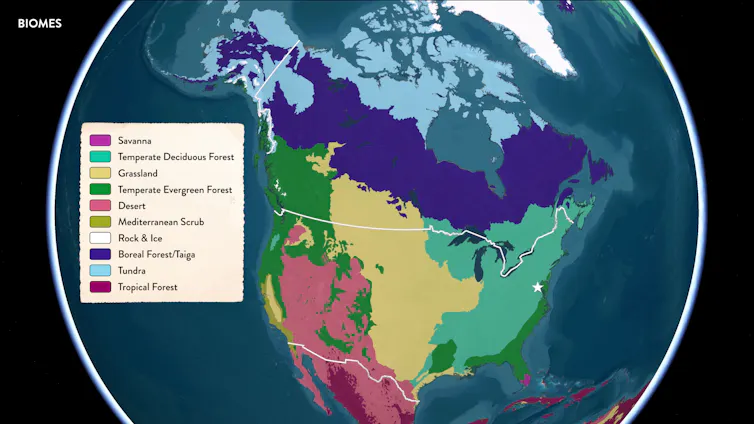
  • The Conversation US theconversation.com explanatory-journalism journalism 2026-06-12 12:23
    ↗

    Federal protections promise a fair trial in a language you understand, but for millions who speak lesser-known languages, courts can’t keep that promise.

    A court interpreter checks the day's schedule of assignments. AP Photo/Brennan Linsley

    In northern Oregon, just before dawn in October 2025, Immigration and Customs Enforcement officers arrested and shackled two farmworkers on their way to work. The man and woman were Guatemalan citizens who spoke no English and very little Spanish. They spoke Mam, an Indigenous Mayan language.

    Despite the man trying to tell an ICE officer as much, he was not provided with an interpreter, according to his sworn declaration. Suspected of being in the country illegally, they were detained in an immigration processing center and signed papers they did not understand. They were released later with ankle monitors and placed under an intensive supervision program requiring frequent check-ins at an ICE office in Portland.

    Their experience points to a problem that reaches far beyond Oregon.

    The civil liberties guaranteed by the U.S. Constitution broadly apply to everyone in the U.S., regardless of immigration status. Courts have held that the right to an interpreter is protected by the Sixth Amendment, which guarantees the right to a fair trial – including understanding court proceedings and communicating with counsel. It’s also protected by the Fifth and 14th amendments, which state that no person can be deprived of “life, liberty, or property, without due process.”

    But in a multilingual society, these rights collide with how little most Americans, including law enforcement and court professionals, are taught about language itself. Speakers of minority languages, or languages that are not commonly used in schools, courts or government, are often disadvantaged by this lack of linguistic awareness. This can even affect nonstandard English speakers or people who speak a variety of English that differs from the mainstream varieties privileged in courts and schools.

    Imagine an English speaker detained abroad and forced to navigate a criminal trial in a language they do not understand. Most people would recognize that as fundamentally unfair, but speakers of minority languages often face this reality in U.S. courtrooms.

    These failures are poised to multiply. Early in his second term, President Donald Trump issued an executive order designating English as the official U.S. language and rescinding a 2000 executive order that directed federal agencies to provide language access – despite the fact that around 25 million people in the U.S. have limited English proficiency.

    At the same time, the Trump administration has sharply expanded an immigration crackdown that targets Latino communities. In immigration enforcement, heavily reduced training may be leaving ICE officers with limited understanding of constitutional protections, sweeping growing numbers of Indigenous-language speakers into a legal system unequipped to communicate with them.

    As a linguist, translator and courtroom interpreter for the Ch'ol language – a Mayan language spoken by roughly a quarter of a million people – I see firsthand the ways in which the court system is unprepared.

    Minority and Indigenous languages

    More than 30 Mayan languages are spoken today by roughly 7 million people; they’re not dialects of Spanish but members of a separate linguistic family and have their own vocabulary, grammar and sound systems, as distinct from one another as the languages spoken across Europe. A speaker of Ch'ol would not be able to understand Mam, as is the case for thousands of other minority or Indigenous languages worldwide.

    Since 2015 I have worked in southern Mexico with speakers of Ch’ol, and since 2023 I have been an expert witness and court interpreter. I have twice worked with defendants suspected of having learning disabilities, when, in reality, they had just been provided interpretation in the wrong language.

    Consequences in the courtroom

    A lack of awareness about language diversity and linguistic needs can have serious consequences in the courtroom. In the 1980s, a speaker of a Mixtec language was wrongfully convicted of murder after a trial conducted through a Spanish interpreter, a language he barely spoke. Four decades later this problem persists: In Texas in 2022, a man who spoke the Northern Tepehuan language was convicted of possession of marijuana with intent to distribute and sentenced to 24 months in prison despite not understanding his court proceedings.

    Data on linguistic diversity is more available in Los Angeles and New York City, two cities with large Indigenous populations. But in other areas of the country, court systems are unprepared for diverse linguistic needs. Even the 2020 census, which researchers and Indigenous-rights advocates say undercounts these communities, recorded more than 1.3 million people identifying as Latin American Indian. Still, in court files and immigration records, Indigenous-language speakers are typically logged as Hispanic or Spanish-speaking, erasing the distinction that determines whether someone gets an interpreter they can understand.

    Although neither ICE nor Customs and Border Protection tracks Indigenous immigrants or the languages they speak, reporting at the border suggests as many as 1 in 5 people in immigration detention are Indigenous.

    By one estimate, speakers of Indigenous languages represent between 10% and 44% of new arrivals at the U.S.-Mexico border, but without the right language services, misunderstanding and bias can push asylum-seekers to abandon valid claims and return to dangerous situations or otherwise jeopardize their chances of gaining entry.

    Indigenous language–speakers are denied asylum in the U.S. more often than speakers of more commonly spoken languages. In one instance, when a woman was asked to describe a domestic abuse injury to a judge, one interpreter used the word “heel”; another, later, used “ankle.” In Mam, “heel” and “ankle” are the same word, but the inconsistency led the judge to think the asylum-seeker was changing her story. The judge ordered her removed.

    A broader impact

    The failure to respect language and dialect diversity threatens the fairness of the legal system for immigrants and citizens alike, as linguistic discrimination can extend to varieties of English as well.

    Court reporters are required to transcribe at a minimum of 95% accuracy, but that measure does not evaluate their ability to transcribe nonstandard English. In one study, researchers tested more than two dozen Philadelphia court reporters and found that when it came to African American English, their transcriptions were less than 60% accurate, sentence by sentence. AAE is a group of varieties of English spoken by many Black communities in the U.S. with their own rule-governed syntax, lexicon and phonology that make them distinct from mainstream American English. Inaccurate transcription, the study explained, can lead to errors that “change the official record of who performed what actions under which circumstances, with potentially dramatic legal repercussions.”

    In 2012, George Zimmerman killed unarmed Black teenager Trayvon Martin and was charged with second-degree murder. Rachel Jeantel was on the phone with Martin before his death and, so, was a key witness for the prosecution. She testified for nearly six hours – including about the start of the encounter and who confronted whom, a question central to Zimmerman’s self-defense claim – but jurors found her testimony not credible and ended up disregarding it. One said it was hard to understand. Zimmerman would eventually be acquitted.

    A young woman testifying on a witness stand, sitting near a microphone
    Rachel Jeantel, a key witness in George Zimmerman’s trial, testifies in Florida in 2013. AP Photo/Orlando Sentinel, Jacob Langston

    It is difficult to show how many people are affected by linguistic discrimination. Unlike people whose proficiency in English is low, AAE speakers are not counted as a distinct linguistic group, so the scale of the harm is undocumented. Nevertheless, one study showed that witnesses with foreign-accented English are viewed as less credible, and studies in both the U.K. and the U.S. found that speakers of nonstandard varieties of English are perceived to be guiltier.

    In cases involving stigmatized varieties of speech, expert witnesses could help jurors understand linguistic diversity and separate how someone speaks from whether they are credible. Expert witnesses could also help jurors understand what linguistic discrimination is and explain that biases against someone’s language are often masked biases against their race, gender or socioeconomic background.

    ‘The last bastion of overt social discrimination’

    The case against the two Mam-speaking farmworkers in Oregon was challenged in court, and in January 2026 a federal judge found the agents’ actions to be “reckless and erroneous.” The judge ordered ICE to remove their ankle monitors and end the supervision program imposed on them. Neither was convicted of a crime.

    Despite the ruling in the farmworkers’ favor, though, their case reflects a broader problem: Although the right to an interpreter is constitutionally protected, that right means little when courts and officers are unaware of linguistic needs. Education for law enforcement and court officials on linguistic diversity, early language identification and increased funding for interpretation services are all essential before the courts can deliver on the rights the Constitution guarantees.

    As sociolinguist James Milroy argued in a 1998 essay about linguistic discrimination in education, unless societies become more educated about linguistic diversity, “the last bastion of overt social discrimination will continue to be a person’s use of language.”

    The Conversation

    Carol Rose Little does not work for, consult, own shares in or receive funding from any company or organization that would benefit from this article, and has disclosed no relevant affiliations beyond their academic appointment.

  • The Conversation US theconversation.com explanatory-journalism journalism 2026-06-12 12:23
    ↗

    El Niño can trigger intense periods of extreme ocean warming known as marine heat waves that can devastate marine life.

    It’s official: El Niño is back. By late fall 2026, forecast models give a 2-in-3 chance of a strong-to-very strong El Niño affecting the weather, climate and ocean temperatures across the planet.

    El Niño is the climate system’s biggest player and one side of the El Niño-Southern Oscillation, or ENSO. It’s the heads to La Niña’s tails.

    During El Niño, a swath of ocean stretching 6,000 miles (about 10,000 kilometers) westward off the coast of Ecuador warms for months on end, typically by 2 to 4 degrees Fahrenheit (about 1 to 2 degrees Celsius). A few degrees may not seem like much, but in that part of the world, it’s more than enough to completely reorganize wind, rainfall and temperature patterns all over the planet.

    White corals cover a reef.
    Marine heat waves can trigger coral bleaching. Alexis Rosenfeld/Getty Images

    I’m a climate scientist who studies the oceans. With an El Niño expected to strengthen through the summer and fall, water temperatures will heat up even more. It’s time to start preparing.

    How does El Niño affect the planet?

    No two El Niño events are exactly alike, though we’ve seen enough of them that forecasters have a pretty good idea of what’s likely to happen.

    People tend to focus on El Niño’s impact on land, justifiably. The warm water affects air currents that leave areas wetter or drier than usual. It can ramp up storms in some areas, like the southern U.S., while tending to tamp down Atlantic hurricane activity.

    How El Niño forms. NOAA.

    El Niño can also wreak havoc on the many marine ecosystems that support the world’s fishing industries, including coral reefs and seagrass meadows.

    Specifically, El Niño tends to trigger intense and widespread periods of extreme ocean warming known as marine heat waves.

    Global ocean temperatures are already near record highs, so El Niño-induced marine heat waves could push many sensitive fisheries to a breaking point.

    What is a marine heat wave?

    A marine heat wave is just that: a “wave” of extreme heat in the ocean, not dissimilar to an atmospheric heat wave on land.

    At their smallest, marine heat waves can inundate local bays and coves with hotter-than-normal water for a few days or weeks. At their largest, marine heat waves like the Northeast Pacific Warm Blob of 2013-2014 can grow to gargantuan proportions, with regions three times the size of Texas experiencing ocean temperatures 4 to 6 F (about 2 to 3 C) above average for months or even years.

    Warm water might not seem like a big deal, especially to surfers hoping to leave their wetsuits at home. But for many marine organisms that are highly adapted to specific water temperatures, marine heat waves can make living in the ocean feel like running a marathon.

    For example, some fish increase their metabolism in warm waters by so much that they burn energy faster than they can eat, and they can die. Pacific cod declined by 70% in the Gulf of Alaska in response to a marine heat wave. Other impacts include bleached corals, widespread harmful algal blooms, decimated seaweeds and increased marine mammal strandings. All told, billions of U.S. dollars are lost to marine heat waves each year.

    Marine heat waves flare up for a variety of reasons. Sometimes, ocean currents shift warm water around. Sometimes, surface winds are weaker than normal, leading to less evaporation over the ocean and warmer waters. Sometimes, cloudy places just aren’t as cloudy for a few months, which lets more sunlight in and heats up the ocean. Sometimes, both weaker winds and fewer clouds happen at the same time, producing record-breaking marine heat waves.

    How does El Niño fit in?

    In the climate system, El Niño is king. When it dons its fiery crown, the entire planet takes notice, and the oceans are no exception. But the likelihood of increased marine heat wave activity during El Niño depends on where you are.

    Along the U.S. West Coast during El Niño, surface winds that normally blow from the north tend to subside. This weakens evaporation and slows upwelling of colder, deeper water. That increases the chances of coastal marine heat waves. California waters are already extremely warm. El Niño could make things even hotter for longer.

    Peruvian fishers have for centuries weathered periods of extreme ocean warming that drive fish away. It wasn’t until the 1920s that scientists realized that these South American marine heat waves were related to the Pacific-wide ENSO.

    In the Bay of Bengal east of India, interactions between El Niño and a tropical air flow pattern known as the Walker Circulation elevate the risk for marine heat waves.

    Seafloor heat waves are another risk

    Even if marine heat waves aren’t obvious at the ocean surface, that doesn’t mean all is well down below.

    In a 2023 study, my colleagues and I showed that marine heat waves also unfold along the seafloor of coastal regions. In fact, these “bottom marine heat waves” are sometimes more intense than their surface counterparts. They can also persist much longer. For example, a 1997-1998 bottom marine heat wave off the U.S. West Coast lasted an extra four to five months after surface ocean temperatures had already cooled.

    Events like this can be related to El Niño and put a lot of stress on bottom-dwelling species. Bering Sea snow crab landings were down 84% in 2018 after a marine heat wave reached the seafloor.

    We’re in (for) hot water

    With El Niño on the horizon, what can we expect for this year?

    The good news is seasonal forecast models can skillfully predict marine heat waves three to six months in advance, depending on the region. And forecasts tend to be most accurate during El Niño years.

    Maps show increasing risk, particularly off California and in the Indian Ocean. The Arctic Ocean also heats up
    Marine heat wave forecasts from May 2026 show the probability, left, based on the North American Multi-Model Ensemble, and magnitude, right, of marine heat waves expected in 2026 and early 2027. Marine heat waves were already developing off the Pacific Coasts of North, Central and South America as of June 2026. NOAA

    The latest forecast predicts several marine heat waves developing as El Niño ramps up, with damaging heat reaching close to half the global ocean by the end of 2026. The California and Mexican coasts in particular have a very high likelihood of strong marine heat waves, and the Indian Ocean and parts of the Southern Ocean are also likely to see damaging heat.

    These predictions are far enough out that conditions could change. Time will tell whether they hold (hot) water, but we would do well to prepare.

    This article incorporates details from an article originally published April 18, 2023.

    The Conversation

    Dillon Amaya does not work for, consult, own shares in or receive funding from any company or organization that would benefit from this article, and has disclosed no relevant affiliations beyond their academic appointment.

  • The Conversation US theconversation.com explanatory-journalism journalism 2026-06-12 12:23
    ↗

    Efforts to protect land and environmental resources, including fighting climate change, often end up displacing people who have lived in those places for generations.

    Fred Ngusilo, left, a member of the Ogiek community, works with a relative to sift through the ruins of their grandfather's house in the Mau forest, destroyed by Kenyan police. Tony Karumba/AFP via Getty Images

    Imagine living in the same forest as your parents, grandparents, great-grandparents and all your ancestors as far back in time as stories can tell, and depending on the forest for food, shelter, recreation and education. Imagine, then, that the forest depends on you, too, because you and your people have protected it for generations.

    Then, along come government officials who tell you what you already know: The forest is precious, an environmental and ecological gem that should be preserved. And then they tell you that to protect it, you all have to leave.

    That’s the latest reason given in a series of efforts to evict the Ogiek people, an Indigenous group of hunter-gatherers in the Mau forest of East Africa. For more than a century, British colonial authorities and, later, Kenyan government officials, have all sought to evict the people who have lived there since time immemorial. And in 2017 the Ogieks won a landmark court case before the African Court on Human and Peoples’ Rights, which recognized their legal right to the land.

    But in 2023, Kenya’s government began evicting them again, citing a new justification. The government wants to preserve the forest undisturbed, as a commercial resource in global markets for carbon credits, a system in which companies can claim they are doing no harm to the climate even while continuing to emit greenhouse gases that are raising global temperatures and changing the climate. Instead, they purchase credits to support the absorption from the atmosphere of an equivalent amount of carbon dioxide, such as by trees.

    This story is still unfolding. And the Ogiek are not the only Indigenous group experiencing this type of pressure in a pattern that extends well beyond Kenya.

    The Ogiek people seek to protect the forest that has been their home for centuries and generations.

    As countries, companies and nonprofit organizations around the world seek to protect land, conserving precious environmental resources and reducing the effects of climate change, the communities most likely to be displaced are the Indigenous people who have lived there for generations.

    The Indigenous people involved often find they are left out of the planning process and have few legal options available to defend the homes they and their ancestors have cared for over thousands of years.

    I am a researcher and consultant working on how Indigenous peoples and their land rights are affected, and often undermined, by outside interventions. I have seen that there is one principle designed to ensure Indigenous people are included in decisions about their land. From East Africa to Central Asia, the principle exists, but it is almost entirely unenforceable.

    A right without teeth

    Under the United Nations Declaration on the Rights of Indigenous Peoples adopted in 2007, Indigenous communities have a recognized right to be meaningfully consulted before anything is done to the lands where they live. This principle has a name: “free, prior and informed consent.”

    This right means Indigenous groups must be told what governments or corporations want to happen on their lands and why, and must be given the chance to object or propose changes. And the final approval for whatever might happen must come voluntarily from those Indigenous people.

    The principle of free, prior and informed consent was developed after decades of documented harm to Indigenous people by governments and companies that ignored their long-term presence on the land and their perspective on its use. But it is a principle, not an enforceable law or regulation in most countries.

    So, many governments and corporations have interpreted the principle loosely, or even disregarded it entirely. Often they just tell a few representatives of an Indigenous group what’s about to happen, sharing key details too late for any opposition or revision. That’s what happened to the Ogieks in 2023: The Kenyan government decided it wanted to preserve the forest and told the people to leave, again.

    A man sifts through materials left after a building was destroyed, while part of the building burns in the background.
    Kenyatta Ngusilo, a member of the Ogiek community, salvages what was left after his storehouse was burned down by Kenyan police in Sasimwani, in the Mau forest. James Wakibia/SOPA Images/LightRocket via Getty Images

    Other decisions without consent

    Something similar happened in the Arctic between 2008 and 2025. The Arctic Ice Project, initially called ICE911, was a nonprofit organization founded to find ways to reflect sunlight away from the Earth’s surface and slow the melting of Arctic ice. The effort decided to focus on spreading tiny reflective silica microspheres on the ice.

    The project was ultimately discontinued because of concerns it could harm the algae and plankton that form the base of the Arctic food chain, which sustains both wildlife and Indigenous communities in the region. But since its beginning, the effort had been opposed by the local Indigenous people, who said they were excluded from discussions.

    One Indigenous leader told me:

    “Involvement doesn’t mean … a predetermined intervention, (with the organization) inviting us to a restaurant of their choosing, eating a meal they ordered to discuss our future. … We warned them about the potential impacts, and after all that, they want to hire us as consultants for a predetermined intervention. And they told us to set our price.”

    The leader’s point was simple: What was being offered wasn’t consent and meaningful consultation. The proposal from the Arctic Ice Project was essentially a fee to sign off on a plan that had never really been open to change or input from the Indigenous people.

    Some research also highlights that community-led conservation projects are more effective because Indigenous peoples are not relics of the past, but rather are active, present-day stewards with dynamic and sophisticated knowledge systems rooted in their relationship with their land.

    People in traditional clothing sit in chairs in a crowded meeting room.
    The Ogiek community has fought in courts for their rights over many years. James Wakibia/SOPA Images/LightRocket via Getty Images

    Competing interests

    What connects these cases is not malice. Governments, corporations and nongovernmental organizations all operate in competitive environments where financial pressures and inadequate regulations can push social and environmental considerations to the margins. That means the people with the most direct relationship to the land are often the last to be consulted about what happens to it.

    The principle of free, prior and informed consent was designed specifically to break that pattern. But as long as it remains a principle rather than an enforceable obligation, I worry that meaningful consultation will continue to be replaced by the appearance of it, in the form of a meeting that’s held too late, a document signed by the wrong people, or a consulting fee offered to approve a decision that had already been made.

    Some countries have ratified the International Labour Organization’s Indigenous and Tribal Peoples Convention, agreed in 1989, which contains this principle. Some countries, including the Philippines, Colombia and Peru, include the principle in their national laws. But other countries have not made so formal a commitment, and still others, including the U.S., have not ratified the international agreement in the first place.

    In my view, not until the communities it was designed to protect are brought in at the beginning, as decision-makers with veto power, will the principle achieve its goal.

    The Conversation

    Buket Altınçelep does not work for, consult, own shares in or receive funding from any company or organization that would benefit from this article, and has disclosed no relevant affiliations beyond their academic appointment.

  • Loading more…
Maibook — your private personalized AI community
  • rcanand.com
  • mlaillc.com
  • @rcanand (X)
  • LinkedIn
  • Feedback
  • Credits